The modern Ukrainian state is celebrating the 34th anniversary of the restoration of its independence. For more than a third of a century, this day has remained a bitter one for the Russians, marking the loss of the cornerstone of their political and historical myth — Rus. That loss was feared by the Black Hundred monarchists at the dawn of the 20th century, by Lenin and Stalin during their dictatorial reigns, and even by the so-called democrats of the perestroika era. From 24 August 1991 until the Kremlin’s first acts of aggression, many Ukrainians believed that the old tensions had finally run their course.
Moscow’s politicians, however, could not imagine Ukraine breaking away — and at times they openly stated that war was inevitable. Compelling evidence of this mindset can be found in the memoirs of Ukraine’s first independence-era leaders, particularly the country’s first diplomatic envoy and inaugural ambassador to Russia, Volodymyr Kryzhanivskyi.
Yeltsin gambled on Ukraine, convinced he’d win it back
Ukraine secured no fewer than three key independence documents in the final decade of the 20th century. The Declaration of State Sovereignty had already laid the foundation for a nation of its own, but 24 August 1991 became the decisive moment that firmly set the country on its path. The process reached its legal and symbolic conclusion on 1 December, when a nationwide referendum delivered overwhelming support for full independence.
The importance of 24 August is magnified by the context of the failed coup in Moscow. In its aftermath, Kyiv’s powerful Communist bloc suddenly found itself on the defensive and effectively sided with the pro-Ukrainian movement — only four Communists voted against independence. In many ways, Independence Day also marked the end of Communist dominance in Ukraine, even if the party itself was not formally banned, as it arguably could have been.
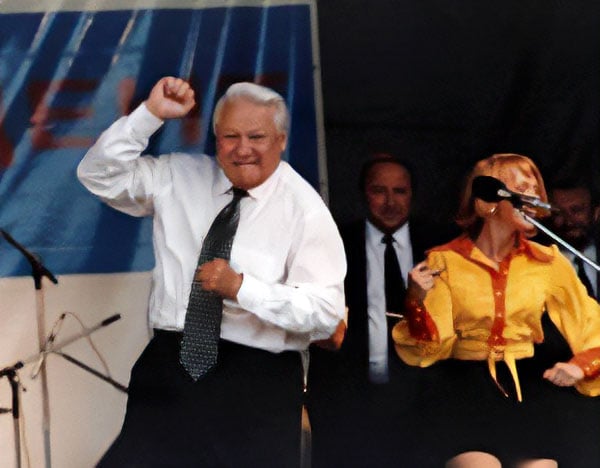
As Ukraine’s first ambassador to Russia, Volodymyr Kryzhanivskyi, recalls, Galina Starovoitova — notably the only one to congratulate him on Ukraine’s independence — once walked into the office of a tipsy yet cunning Boris Yeltsin after 24 August and tried to warn him that “they will leave.” In other words, Ukrainians were determined to build their own state and break away from Moscow.
Yeltsin, however, remained unfazed, seeing in the so-called “parade of sovereignties” an unprecedented opportunity to advance his own career. It was unlikely he would ever have reached the top echelons of the Communist Party, but in the democratic chaos of 1991, his chances skyrocketed. He told Starovoitova not to worry — the immediate priority was removing Mikhail Gorbachev from the Kremlin.
As for the Ukrainians, Yeltsin made a gesture with his fists, mimicking millstones: we’ll deal with them later, grind them to dust.
In 1991, Yeltsin’s press secretary, Pavel Voshchanov, didn’t mince words, publicly dismissing Ukraine’s independence as “God knows what.” In many ways, his comment reflected the views of Russia’s first president himself. Yet Yeltsin’s relentless hunger for power made him unexpectedly accommodating toward Ukrainians, who in large part legitimised his position at Belovezhskaya Pushcha. Bound by his own presidential ambitions, Yeltsin was effectively forced to play the role of “look at all the good I’ve done for Ukraine.”
Did he immediately embark on a “mission” to crush Ukraine? Most likely not. He already had plenty on his plate: tanks shelling Moscow’s White House, subjugating free Chechens, and struggling with alcohol abuse that sapped his strength. Meanwhile, Ukraine showed complete loyalty — Moscow officials visiting Kyiv didn’t even feel they were in foreign territory. Yet behind the scenes, the tentacles of Russian security agencies, the mafia, and the church were quietly laying the groundwork for future aggression.
For Moscow, separation always meant war
Volodymyr Kryzhanivskyi recalls that in 1993, Sergey Baburin, then deputy speaker of Russia’s State Duma, approached him in the presence of others and bluntly said: “Either we \[Russia and Ukraine] unite, because I see no other alternative. Either we unite, or we go to war. I see no other way out of this situation.”
Even during a period of relative cooperation between Ukraine and Russia, the notorious politician Vladimir Zhirinovsky — now long gone, resting among the fans of Kobzon — went so far as to suggest that Kryzhanivskyi, as ambassador, should take charge of one of the “provinces” he dreamed of carving out from an independent Ukraine. This came at a time when Russian stores were short of food and the federation’s economy resembled little more than a makeshift Somalia. What Moscow pursued instead was raw expansionism, conquest, and a total unwillingness to engage in constructive dialogue with its neighbours — a pattern that has repeated for centuries.
The phrase “zachyem vam eta nezalezhnost?” — “why do you need this independence?” — with the word “independence” deliberately mocked in heavily Russian-accented Ukrainian, was a constant refrain from most Moscow politicians in the early 1990s. Few, of course, grasped why the idea of freedom for a neighbouring nation was so hard for them to accept.
It’s unlikely that Russian scholars will ever confront the deep-seated social phobia in their country about “bidding farewell to Ukraine.” They never matured enough to recognise Ukraine as the “jewel in the crown of the empire,” instead striving to erase Ukrainian identity from history altogether. And it’s hardly surprising: in their imperial imagination, Ukraine was not India to Britain’s empire — it was England itself.
Ukrainian soldiers were something Moscow chose to ignore
In the 1990s, Russian journalists would often ask Ukraine’s ambassador, Volodymyr Kryzhanivskyi: “They say that when your soldiers take the oath, they’re asked whether they would fight Russia if it came to that. Is that really true?” Kryzhanivskyi usually replied along the lines of: “Of course no one asks such ridiculous questions. But what is an officer supposed to do when his country is under attack? Defend it, or say: ‘Wait, show me your passport — ah, you’re Russian? Go ahead, then — kill, kill!’”
Alongside this constant suspicion — that Ukrainians might be preparing to defend themselves against Moscow — ran a steady current of contempt for Ukraine’s armed forces. It reached the point where the country’s then defense minister, a “brilliant pilot,” grew so uneasy that he cancelled a scheduled meeting with Russian journalists, turning back just a few blocks from the press centre. Meanwhile, despite the fact that most Russian generals were mediocre at best and often heavy drinkers, Russia’s brand of chest-thumping militarism always cast them as invincible superheroes.
In reality, Russians preferred to pretend Ukrainian soldiers didn’t exist. Their popular culture offers ample proof: right up until 2014, caricatured “khokhols,” a derogatory term Russians use for Ukrainians, were everywhere, but never depicted in military uniform. There’s also a darker kind of evidence — the memoirs of Moscow’s occupiers in Galicia, filled with chilling lines like, “Ukrainian Insurgent Army officers were wiped out methodically,” or, “such beautiful Ukrainian girls by day — well-dressed, singing — but by evening, each one might be carrying a grenade.” Perhaps that’s why today’s Kremlin propagandists never so much as mention the occupation of Western Ukraine.
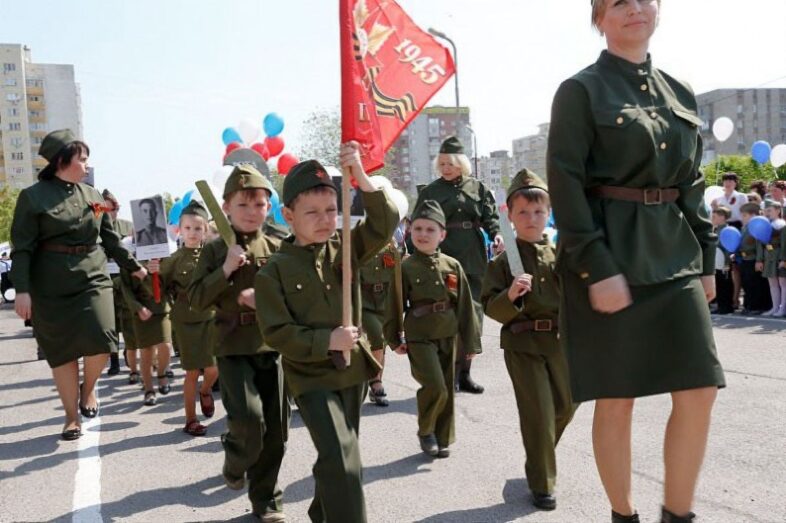
It would be logical for Russians today to respect the Ukrainian Armed Forces as an equal — if not an unbeatable — opponent. Yet even now, as their army suffers yet another strategic defeat and, at the cost of horrific losses and destruction, carves into history something between a new Afghanistan, the Winter War, and Korea, it is unlikely the Kremlin will abandon militarism as the foundation of “educating” its youth. Defeats are recast as victories, murderers, torturers, and traitors are celebrated as heroes, and preparations are already underway for the next reckless failure.
Kremlin built flaws into Ukraine from the very start
The Kremlin’s hybrid actions began immediately: almost unnoticed, Ukraine suddenly found itself in debt for gas. To this day, Ukrainians still need to determine who actually needed that gas and whether the country could have managed without it. As for the pervasive presence of pro-Moscow politicians and officials in Ukrainian offices — that hardly needs repeating.
Although the Kremlin formally returned Crimea, from the early 1990s it was already “pressing” to reclaim the peninsula by every means available at the time. None of its politicians hid their desire to take it. And when Moscow still had to maintain a veneer of “diplomatic decorum,” it did not hesitate to sponsor criminals. Volodymyr Kryzhanivskyi recalls seeing the Bashkov brothers in the Kremlin — mafia bosses who controlled one of Crimea’s three main organised crime groups.
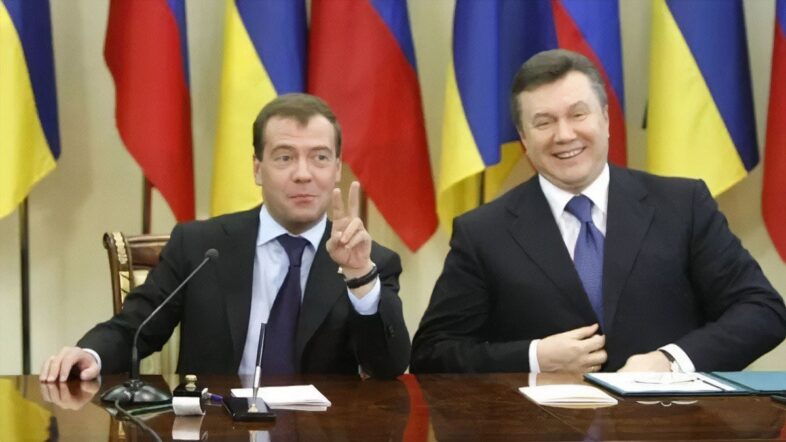
The naval base in Crimea was a central issue in the early negotiations with Russia following Ukraine’s independence. Ukrainians who agreed to host the base insisted that the Russian Black Sea Fleet remain “in Sevastopol,” while Moscow insisted that the base was “Sevastopol” — in other words, they wanted control of the entire city from the outset. In many ways, the fleet issue helped pave the way for Yanukovych’s ousting and the ongoing confrontation with Russia, though Moscow rarely acknowledges just how determined it was to impose this dependence on Ukraine.
Russian imperialists’ fatal miscalculation
Had a full-scale war broken out in 1991 between a fledgling Ukrainian state and a decaying, pseudo-democratic, half-starved Russia, the outcome for Ukraine would almost certainly have been catastrophic. Even in 2014, Russian tank columns would have rolled across Ukraine with far greater ease than they attempted in 2022. Putin’s invasion is terrifying — but it came with one crucial mistake: it came too late. While Russia slid from fragile democracy into outright tyranny, stockpiled gas and oil dollars, and indoctrinated its people for war, Ukrainians had a quarter of a century — not to forge swords or dig trenches, but to live their own lives. Those lives were often poor, corrupt, and still heavily shaped by Moscow’s influence — but, above all, they were free.
A whole generation of Ukrainians has grown up with a natural immunity to imperial nostalgia — they simply can’t imagine why anyone would want to reunite with Moscow. Earlier generations who fought for liberation, especially those from Ukraine’s historic Left Bank region, never had the privilege of such perspective.
By 2014, a major Russian offensive would have hit a still-fragile civil society and an army just beginning to rebuild. Yet even then, for all its chest-thumping militarism and culture of soldiering from childhood, Moscow wasn’t ready. Over the years, Ukraine built a civic organisation that left most former Soviet nations far behind. Putin’s chance has slipped away, and it won’t come back. This is likely his last attempt — but only if Ukrainians stay strong, clear-eyed, and united.