The Ukrainian Week spoke with historian, serviceman, and Slobozhanshchyna native Oleg Korniyenko about how this northeastern Ukrainian region has upheld its connections to the Hetmanate and European traditions in art and social organisation, adapting them over centuries of continuous interaction.
— What makes Slobozhanshchyna unique, and when did it begin to take shape?
– Slobozhanshchyna, a historical and geographical region in northeastern Ukraine, began to take shape in the second half of the 17th century. This was largely due to the large-scale Ukrainian settlement of lands that formally belonged to the Moscow Tsardom but were, in practice, unclaimed. As Herbel and Kulish, the writers, put it, these lands weren’t owned by either the tsar or the Crimean Khan. They were part of the so-called Wild Field—a vast area stretching from what is now the Sumy region all the way to the Don and even beyond to the Volga.
In just 20 to 30 years, Ukrainians fleeing the devastation of the Ruin and ongoing wars settled these lands, establishing five Cossack regiments: Sumy, Okhtyrka, Kharkiv, Izium, and Ostrohozsk. However, in 1765, after the regimental system was abolished, the region’s autonomous status was revoked. Over time, much of Slobozhanshchyna, particularly its eastern parts, was incorporated into what are now the Kursk, Belgorod, Voronezh, and Saratov regions of Russia. As a result, the Ukrainian ethnic population and its material culture found themselves outside the borders of Ukraine.
For a brief moment in 1918, during Pavlo Skoropadsky’s Hetmanate, these lands were reunified with Ukraine. But by 1919, the Bolsheviks started their reoccupation, and Slobozhanshchyna was divided once more.
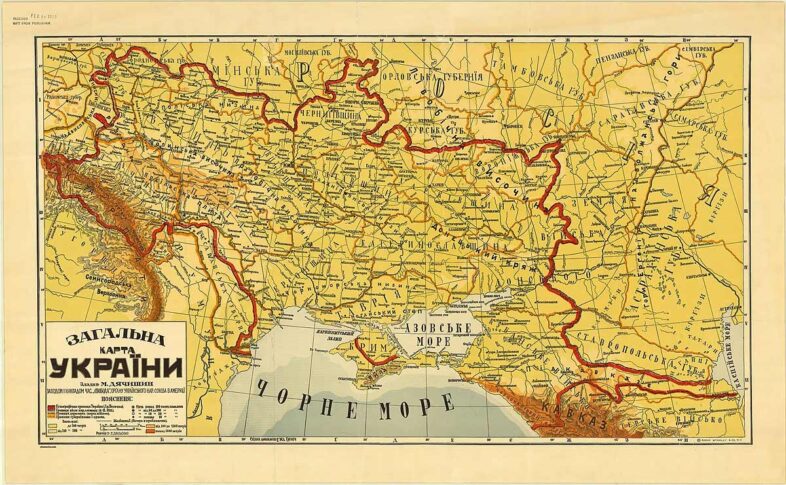
Photo: General map of Ukraine, 1918
— Is it accurate to describe the settlement of Slobozhanshchyna as Ukrainian colonisation?
– It’s crucial to grasp that this was both a return and a form of colonisation. Take, for example, the Kursk region, part of Eastern Slobozhanshchyna, where Ukrainian settlers encountered a unique population they called “bychky.” These people spoke a mix of Slavic and Turkic languages, revealing that the area had once been home to nomadic tribes and descendants of ancient peoples.
From the 14th century, parts of this land were under the control of the Grand Duchy of Lithuania, with the Tatars who served the Lithuanian princes settling there. But by the late 15th century, after the Muscovite-Lithuanian wars, the region fell under the rule of Muscovy. However, Muscovy, with its relatively small population, couldn’t fully settle the area, leaving it largely untouched and uninhabited for a long time.
— What impact did the Cossacks have on the region?
– The Cossacks were key players in shaping the region. On one hand, Ukrainians settled in these lands as farmers, but on the other, they also served as protectors against Tatar raids. Several key routes—Muravsky, Izium, and Sagaidak—cut through Slobozhanshchyna, and Tatars often used them to launch their incursions. As Kulish put it, the Muscovite tsar “shielded himself from the Wild Steppe with the Sloboda regiments.”
Most of the settlements in Slobozhanshchyna, particularly those that became the centres of Cossack regiments, were founded by Ukrainians. The Sloboda regiments operated as autonomous military and administrative units. The tsar granted their colonels special charters, ensuring local autonomy, the right to self-govern under customary law, and, in many towns, the privileges of Magdeburg Law. This made the region unique, a place where European governance norms, brought by Ukrainians from the Hetmanate and the Polish-Lithuanian Commonwealth, took hold.
— How did Slobozhanshchyna evolve socially and culturally?
– Ukrainians brought with them European culture, traditions of self-governance, and a high level of social organisation to Slobozhanshchyna. Even in financial matters, they maintained their independence— for years, they refused to accept Muscovite money, not recognising its value. In response, the tsar had to mint imitation European thalers at the Sevsk mint to pay the Cossacks.
European influences were visible in local institutions, like guilds that survived into the 20th century, and in church and urban architecture. Remarkably, even after the Bolsheviks came to power and throughout the Soviet period, these traditions didn’t vanish right away. Instead, they remained an essential part of local identity in many Slobozhanshchyna communities, where daily life still carried traces of old Ukrainian customs with deep European roots.
Slobozhanshchyna became a stronghold of Ukrainian identity in the East. Even though its territories were divided and began to decline, the region stayed a place where Ukrainian traditions, language, and culture were kept alive.
Now, with the war ongoing, we see this rich history resurfacing in public memory—though, tragically, it’s also being physically destroyed.
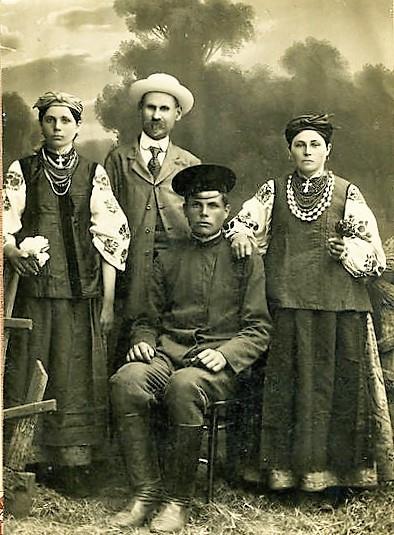
Photo: Kursk, 14 June, 1915
— What did Russia bring in return? One example would be the role of the hussars in the region’s cultural and social life.
– The hussar regiments represent one of the most painful chapters in Slobozhanshchyna’s history. Many who joined them didn’t realise they were losing their identity, their customs, their lineage, and their culture. It was a pivotal moment for people at the time. After the Sloboda regiments were abolished and the Cossacks were forced to surrender their weapons, horses, and uniforms to form hussar units, many couldn’t come to terms with this new reality. It was a heavy blow to their dignity and their sense of freedom.
This struggle is reflected in the folklore of the time. There was a saying, for example: “Marko’s horse, but not Marko on it; Marko’s weapon, but not Marko’s language.” People looked down on those who became hussars, viewing them as traitors who had abandoned their roots. You can even find this sentiment in folk songs, where hussars were mocked.
It was a time of profound social and cultural rupture. In many cases, like in my own family, it even led to divisions within households. Some joined the hussars and were disowned by their fathers, stripped of their inheritance. It was a source of shame for the family.
— How did the Sloboda elite present themselves?
– The families in this region had deep ties with the Hetmanate and often had fascinating genealogies. Take Harasym Kondratiyovych, for example, one of the founders of Sumy. I believe he was a nobleman. He married the daughter of Hetman Olefir Holub, which alone speaks volumes about his social standing. Families from the Sumy Regiment, like the Krasovskys, were also heavily involved in the region’s public life, with their lineage tracing back to the Grand Duchy of Lithuania. Their connections with other noble families, like the Chetvertynskys, Myklashevskys, and Hamaliyas, further solidify the high status of the Slobozhanshchyna elite.
After 1765, when the Cossack regiments were disbanded, many families saw their situation change drastically. At first, many nobles, including Cossacks, were reclassified as military settlers, which essentially reduced them to the status of peasants. This was a major shift for those who had once been part of the Cossack elite. However, the process wasn’t entirely the same for everyone. Some families, like the Krasovskys, managed to maintain a certain level of social standing, even securing recognition of their noble status under the new system. The Stishevskys, for example, remained active in cultural and educational fields, holding important administrative roles.
Unlike Muscovy, where land ownership was more centralised and strictly governed by feudal laws, Slobozhanshchyna enjoyed a degree of autonomy for a while. This allowed for free land ownership and greater freedom for local peasants and Cossacks.
But after 1765, with the collapse of the Sloboda regiments, this system started to break down. Russian landlords began acquiring land, reshaping the region’s social structure and forcing the local population into an unfamiliar system of governance.