Can the Russians break through Ukraine’s defences, and what can we expect on the front lines — a ceasefire or another enemy push? What role does the Corps system play in the Ukrainian Armed Forces, and what other changes are needed within the military? What sets the Third Assault Brigade apart, what innovations are emerging at the frontline, and how has the war really transformed the Ukrainians? The Ukrainian Week sat down with Maksym Zaychenko, commander of the anti-aircraft missile artillery division of the Third Army Corps, and until recently, of the Third Separate Assault Brigade.
***
— How’s the transformation of the 3rd Separate Assault Brigade into a corps progressing? What does it mean, and how challenging is it to carry this out while still in active combat?
— The shift to a corps system, with the 3rd Assault Brigade at the core of the newly formed 3rd Army Corps, is a big step for us. When the full-scale invasion began, we started as a volunteer unit. Over time, we evolved into the 3rd Assault Brigade, and now, drawing from our combat experience and operational practices, we’re laying the foundation for this new corps.
Colonel Andriy Biletskyi, our corps commander and formerly the brigade commander, has been a strong advocate for this reform. The corps structure is essential for better control and coordination. Unlike temporary military groupings—tactical or operational—this system offers a stable command structure with brigades assigned clear responsibilities. It means there’s a designated corps commander, a solid management framework, and a clearly defined set of units.
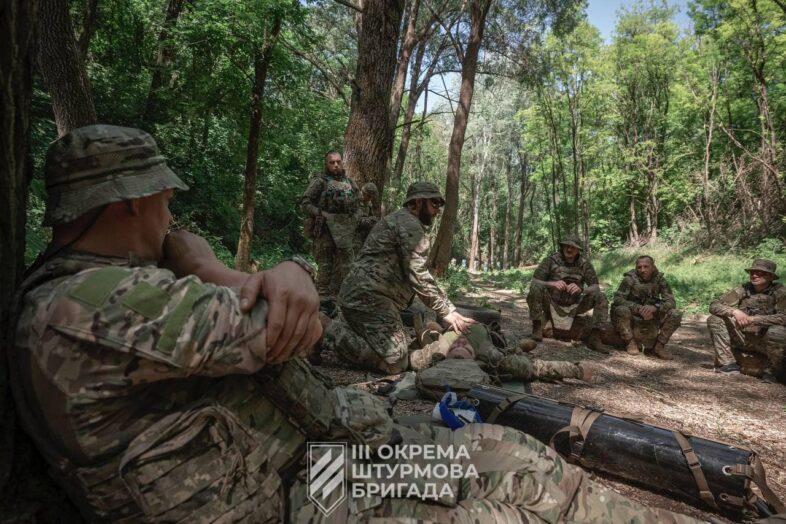
The corps commander’s role covers a lot – from overseeing combat training, recruitment, and personnel replenishment to managing combat operations with these forces. This gives the commander a clear view of their unit’s capabilities, available resources, and the ability to manage them effectively across a defined area of responsibility. From a management perspective, it’s a far more streamlined and efficient system.
The formation of the corps is still ongoing. While it’s not something we’re making public, I can share a few details. Typically, a corps includes four to six line brigades – infantry and mechanised brigades with various modifications. You also have artillery brigades, and possibly a tank brigade or separate tank units, like a tank regiment. Along with that, there are UAV units, anti-aircraft missile units, and various support units.
One key thing is that the corps will be equipped with corps-level weapons – strike systems for operational depth, something we’re currently missing. Brigades often have limited capabilities because these systems aren’t available, and operational-tactical groupings didn’t have them at all. In the corps, we’ll have these capabilities, which will massively boost our effectiveness in the area of responsibility, where combat operations occur on both horizontal and vertical levels. This is one of the reasons why we’ve been, and continue to be, so committed to the shift towards the corps system.
— How will this help change the situation on the front?
— The corps system brings much better coordination between units. One of the main issues we’ve faced so far is disjointed actions or a lack of resources on certain breakthrough sections, which military experts have pointed out. What the corps system does is create a clear structure, where you can see the established groupings working together. This makes it possible to build a solid defence line, and the senior commander always knows exactly where everyone is. With that clarity, the commander can quickly reinforce any part of the front that’s in trouble, bringing in the right resources, because they have the full picture.
The introduction of the corps system will help reduce the gap between the overall command strategy and what’s actually happening on the battlefield. These units will be led by commanders with solid experience at both battalion and brigade levels, which will make coordination, interaction, and management much smoother.
Another key factor is the depth of our reconnaissance and the ability to strike the enemy. This is huge. The enemy typically builds up its forces in the operational zone – they train, deploy troops, set up command posts, and run their operations from there. If we start targeting their reserves and command centres at the brigade and division levels, it’s going to have a real impact on how things unfold on the front line.
— How will this new reality affect you personally?
— Right now, I’m commanding the surface-to-air missile artillery division of the 3rd Separate Assault Brigade. With the move to the corps system, we’ll be scaling up. I’ll be in charge of a corps-level unit – though I’m not revealing which one just yet. But the main tasks will stay pretty much the same as before.
Over the past six months, as part of the 3rd Separate Assault Brigade, our division has taken out 350 aerial targets. That’s the best result among the line brigades in the Ukrainian Ground Forces. We’ve got video proof for every single one, so we can compare our unit’s effectiveness in a really objective way. Why mention the line brigades of the Ground Forces? Because that’s how we can make fair comparisons based on staffing, specifics, and conditions. So, in terms of destroyed targets, we’re number one among the Ground Forces since this system was introduced in the Ukrainian Armed Forces.
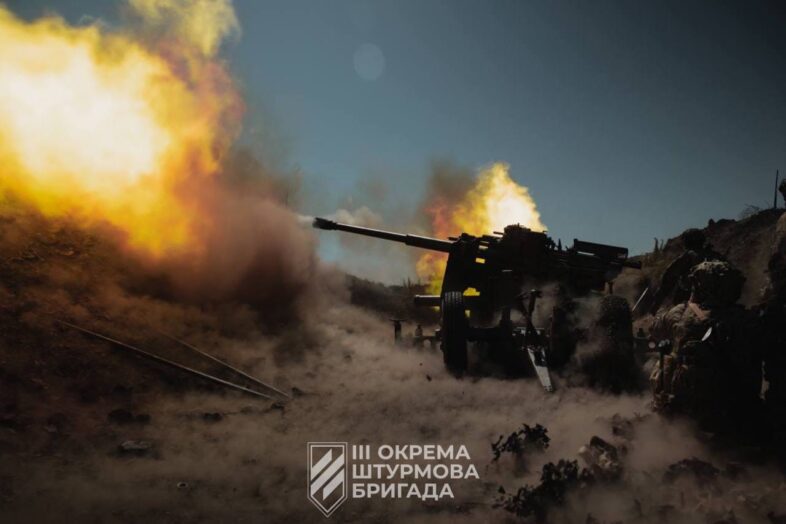
— Among those 350 targets we’ve taken down, we’ve destroyed enemy strike drones trying to hit our personnel, weapons, tanks, armoured vehicles, and command posts. We’ve also eliminated reconnaissance drones like the Orlans, Supercams, and Zalis. On top of that, we’ve targeted loitering munitions, such as Lancets, Privet-82, Privet-120, small strike quadcopters, and Shaheds flying across Kharkiv, heading towards Kyiv, Dnipro, and Poltava. One of the main flight corridors runs through Kharkiv, where we’re operating.
— How do you take them out?
— One of the main challenges for the Ukrainian Armed Forces is outdated weaponry, which we’re working hard to address. We’re solving this by bringing in new technology and approaches. Our high success rate is largely due to these efforts. For example, mobile fire groups are now equipped with 7.62mm and large-calibre 12.7mm machine guns, like the Browning. We’re also upgrading their targeting and guidance systems.
In some cases, the shooter only needs to confirm the target for destruction — the rest is done automatically. While we haven’t scaled this up completely yet, we’re actively working on these solutions, aiming to boost efficiency, reduce human error, and automate the process as much as possible.
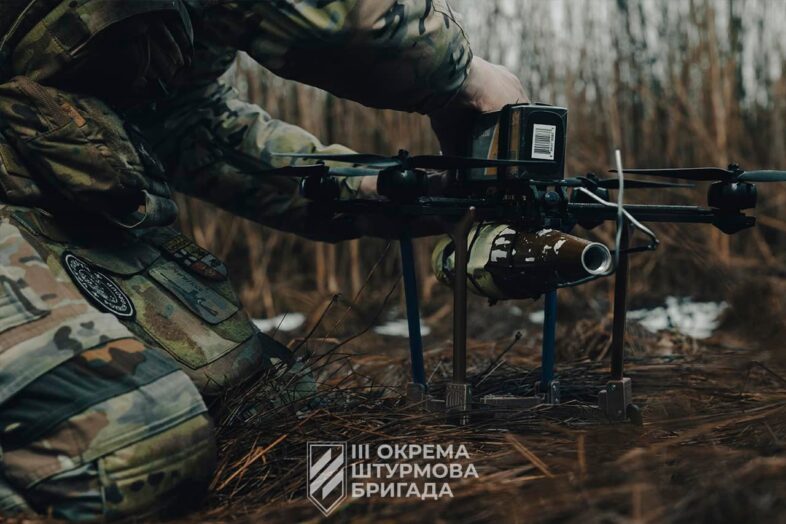
The same goes for unmanned systems: we’re rolling out automated solutions for target detection and acquisition. While the experience of the pilot and shooter is still crucial, we’re definitely moving towards more automation.
— It sounds like you’ve got entire institutes working on this, right?
— We’ve got our own workshops and people on the ground. You can be an operator or an anti-aircraft gunner, but you’ll still be fully invested in making sure your anti-aircraft system or drone works as efficiently as possible and takes down enemy targets. As commanders, we’re also focused on making sure everything runs smoothly, which is why we go out of our way to find resources, support initiatives, and help drive new innovations. It all boils down to three things: time, people, and money. If you want to modernise something, you need those resources. It works for us because there’s trust between commanders and soldiers, and also trust from the senior command in us.
— The 3rd Separate Assault Brigade has always been built on volunteers. How’s recruitment going to work now the corps is forming? Will it still be volunteers only?
— Absolutely, we’re still focused on volunteers. That’s a key principle for us. We’ve built a solid recruitment system over time, and it works. Our job is to be upfront about what military service really is. This isn’t a holiday — it’s about defending the country. But we also offer a lot in return: proper training, top-notch gear, and commanders who’ve been through it all themselves — from the trenches up. They know what’s doable and what’s not, and that’s why people trust us. They get it, they step forward, and they sign up.
We’re really pushing forward with the new “18–24 contracts” for young people, bringing in reservists and giving many of them a second shot. More often than not, these are people who still want to serve — and we’re more than happy to have them back.
A lot of the time, those who left didn’t do so because they didn’t want to fight. It was more about problems in their previous units — bad leadership, poor conditions, that sort of thing. But now, many of them are back on the battlefield proving themselves again — real warriors, some even stepping into command roles. We’re also actively bringing in people from other units. So, yes, we’re attracting both fresh recruits and seasoned fighters. But one thing hasn’t changed: joining us is still entirely voluntary. That’s a core part of who we are.
— What is it about the Third Assault Brigade that makes people want to join? Why do you think they trust you?
— First and foremost, it’s our combat experience. We’ve been at it for 11 years now, since 2014. And it’s not just time served — it’s real frontline experience. We’ve been in the thick of it from the very beginning, always on the front line of this war, constantly adapting to how fast things change. The battlefield never stays the same for long, so we’ve had to keep learning, taking the initiative, and coming up with new approaches — whether that’s with weapons, tactics, or strategy. We’ve never stood still.
Second, it’s our mindset. We’re not looking for excuses to avoid doing the job — we’re focused on getting results. That might sound obvious, but trust me, it’s not something you see everywhere. A results-first attitude makes a huge difference.
And third — it’s the commanders. Every single one of our leaders started out in the trenches — assault troops, infantry. We’ve all been there, so we know what’s realistic and what’s not. That means when we plan missions, we plan for what can actually be done — not some abstract theory. That builds trust.
Fourthly, it all comes down to solid preparation and detailed planning — plus how we train our people. We put a huge amount of time, energy, and money into getting our soldiers ready. Because even the smartest, most brilliant plan won’t work if the people carrying it out aren’t properly trained. That’s why we place so much focus on combat training and making sure everyone has what they need to do the job properly.
And it’s not just about the fighters themselves — there’s a whole support system behind them: logistics, supplies, psychological support, medical help, all of it.
When we plan an operation, we go over everything in detail — every step, every role. And then we make sure those carrying it out actually understand the plan. There’s the command chain, sure, but there’s also the chain of execution — and both are fully involved. We even consider the input of the last soldier in the chain if they’ve got a specific task. We spend a lot of time on planning, preparation, drills, and coordination. That’s why most of our operations work.
And of course, personal courage matters hugely — it’s down to the bravery of the guys out there doing the job on the ground. We’ve managed to build a system that gets results, but they’re results we know are actually achievable.
— Other brigades in the Armed Forces are picking up on what you’re doing. Do you share your secrets?
— We do, yeah. Alongside our recruitment centres, we’re setting up our own training schools in different areas — mainly to train our own people. Even after basic training, everyone who joins us goes through extra, specialised courses. On top of that, we run a bunch of different training programmes that also bring in soldiers from other units. So there’s a proper exchange of experience going on. We’re open with our training systems and share them actively.
— What other changes do you think the Armed Forces need right now, beyond the corps reform? Especially when it comes to shaking off all that leftover Soviet stuff — from how people are treated to all the pointless red tape?
— The biggest thing is finishing what’s already been started. A lot of the changes are known and understood — we just need to push them through. Take mobilisation reform, for example. We need to complete it and properly shift to a recruitment-based system. That means a new mindset when it comes to how we deal with people in the army.
Anyone joining should understand exactly why they’re doing it. If someone’s motivated and focused on getting results — and by results, I mean completing a combat mission — they don’t need to be dragged or forced into anything. That’s not to say mobilisation should be scrapped entirely — no. But it’s about reaching people properly, talking to them straight. Defending the country is a duty, and it has to be fulfilled. But the state also has to step up — to make sure these people aren’t left alone on the battlefield against Russian troops. They need the right training, proper gear, and everything else to feel confident and ready to win.
Another big change we need is the development of the sergeant corps. It’s already been set up and we’re making progress, but there’s still work to be done. The sergeant rank needs to have real authority and influence. They’re the ones responsible for combat training, they know their soldiers inside and out, and they work closely with the troops. Meanwhile, officers can focus more on the planning side. That doesn’t mean officers aren’t busy, it’s just that time and resources are being allocated more effectively.
Building on that, we also need a fully developed system for training soldiers. This means better infrastructure, updated training programmes, and highly qualified instructors — many of whom should come from the sergeant corps itself.
Another key area is modernising the organisational and staffing structures across the board. There are some clear issues, like mismatches between staffing plans and actual needs, or shortages of administrative and officer positions in places like headquarters and companies. This is especially true for new units dealing with unmanned systems, which have already shown how effective they can be on the battlefield. To scale this up, we need proper organisational and staffing structures in place for these units. We’re making strides in the right direction, but there’s still more work to do.
And, of course, there’s the issue of technical equipment and modernisation. This is crucial for improving effectiveness. Take the BM Strela-10 surface-to-air missile system, for example – it’s from the 1980s. Its specifications limit the range and altitude at which it can target airborne objects. If the enemy flies higher or further than its reach, the system becomes ineffective. So, we need to either upgrade the weapons we already have, buy new ones, or find alternative solutions. We’re actively searching for and testing these alternatives.
But the problem still persists. This Strela-10 system isn’t going anywhere. It has a combat crew, it’s on the roster, and it’s supposed to be ready for combat — and it is. We’ve managed to make it work, but its effectiveness is far below what modern systems could offer. The main task right now is to complete the ongoing changes. There’s been some progress, but a lot more needs to be done to make the Ukrainian army as effective as it can be.