What does inclusion — access to all parts of life — actually mean for a severely wounded veteran in Ukraine? Is it simply about entering buildings without physical barriers, or is it, at its core, about basic human dignity? And how should society respond when veterans must ask for doors to be opened or for physical help just to get through the day?
And what should the state do to ensure that a servicemember whose body has been permanently changed by war still feels like a person, rather than a defender left to cope alone and forced to figure out how to move forward by themselves?
We spoke about these and other questions with Dasha, a Ukrainian veteran who, together with her husband, has spent more than six months navigating the difficult journey from his injury through to prosthetic rehabilitation.
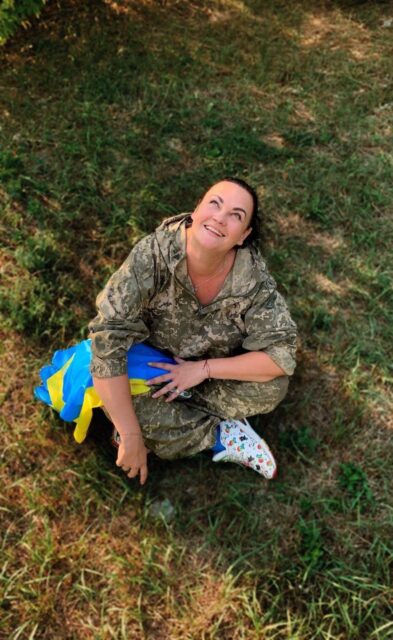
“This is just simply how it should be” has become something like a family motto for Dasha and Oleksandr. It captures a certain outlook shaped by war and time: the past cannot be rewritten, and the future only exists in what you choose to do next. Daria Andrusenko-Yakotiuk and her husband, Oleksandr Amosyonok, are both servicemembers. For them, the war began back in 2014–2015, during the Anti-Terrorist Operation (ATO). Over the years, Dasha has been through repeated loss, including many comrades killed in the war.
In autumn 2025, Oleksandr was severely wounded in both legs while serving in the Kharkiv region. One leg was shattered; the other, though he lost his foot, was saved thanks to doctors. The family does not dwell on how they have ended up here. Even as they navigate hundreds of bureaucratic and psychosocial hurdles, they are determined not to give in to despair.
One evening, Dasha felt she needed psychological support and called a mental health hotline. She spoke about how she was feeling and the difficulties she was facing, while a woman on the other end listened and responded from time to time. But when the call was accidentally cut off, no one called back.
“They’ll probably need to call a psychological support hotline themselves now,” Dasha joked during our interview.
— When did the war start for you personally, and who did you turn to for support when, for most people in the country, it still felt far away?
— I’ve been involved in the war since 2014. My main role was supporting the unit — making sure logistics actually worked, keeping up morale among my comrades, and handling an endless flow of bureaucratic issues, from paperwork to documentation. It was rear-line work, but carried out in a combat environment. Before I joined the military, I was involved in supplying a military hospital. Over time, I realised there were also frontline needs that, if properly addressed — like proper first-aid kits — could help reduce the number of injuries.
I was introduced to the 43rd Battalion by Yuliia Seheda, a lawyer and volunteer from Dnipro. That was how I met the battalion commander, Oleksandr Vodolazkyi. In 2015, after several high-risk missions under fire, I decided to sign a military contract. It meant my son would be protected if anything happened to me. It also made it easier to resolve supply issues through official channels and in direct communication with the military leadership.
— Can you walk us through the operations you were involved in through your role, and what you remember most from the hardest periods of the ATO/JFO?
— I was in Bakhmut — then still called Artemivsk — as well as Zaitseve near Maiorsk, the Svitlodarsk salient, Shchastia and Krymske. I covered almost the entire Donbas. Later, closer to 2019, there were deployments to Manhush and Volnovakha. Every time we drove towards Pisky, after crossing ourselves beforehand, it was clear it could be a one-way trip. The first losses among my comrades came in 2015. We would barely have time to hug someone before a mission, only to be told shortly afterwards that they had been killed.
From the very beginning, I tried to keep a rational distance from it all. I told myself this was war, and that people die in war.
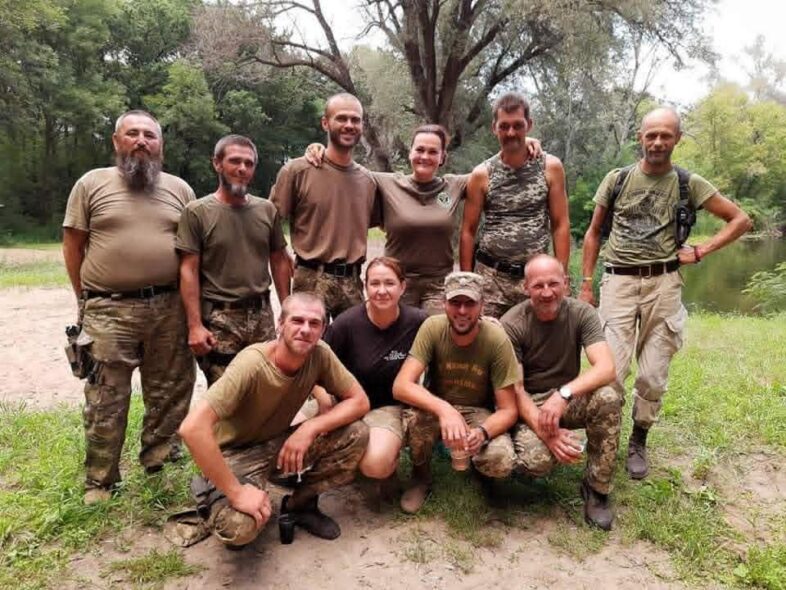
Some losses hit especially hard. When Serhii — callsign “Odesa” — was killed, I couldn’t bring myself to go out to the position. There were also moments when I was tasked with identifying bodies. The decision would come down with a simple line: “Dasha can do it.” At the time, I was overwhelmed by fear. I struggled to hold myself together; sometimes I couldn’t even get out of the car.
I never worked with psychologists, but I realised I had to focus on the future — on what I could do here and now. The past couldn’t be changed, and there was no point getting stuck in it. I had a choice — I could have stayed in Dnipro with my child and stepped back into civilian life — but I found the strength to keep helping my comrades. That became my way of coping.
On 1 May 2017, three of my comrades were killed. I was on a short break in the Carpathians at the time. Someone sent me photographs of the fallen. For the first time since the start of the ATO, I felt the ground give way beneath me. But I pulled myself together and carried on. Because if not us, then who? There was still a huge amount of work ahead — supporting our comrades, helping with rehabilitation, and helping them return to something like normal life.
— When did you first learn about your husband’s injury, and who was there to support you at the time? And what has the recovery journey been like since then, for both of you, and the challenges you’ve had to deal with along the way?
— I was in Vinnytsia region when a fellow serviceman called to say Sasha was in “serious condition”. I got in the car and drove to Kharkiv, where he was being evacuated from a stabilisation point. By the time I arrived, he was already in intensive care.
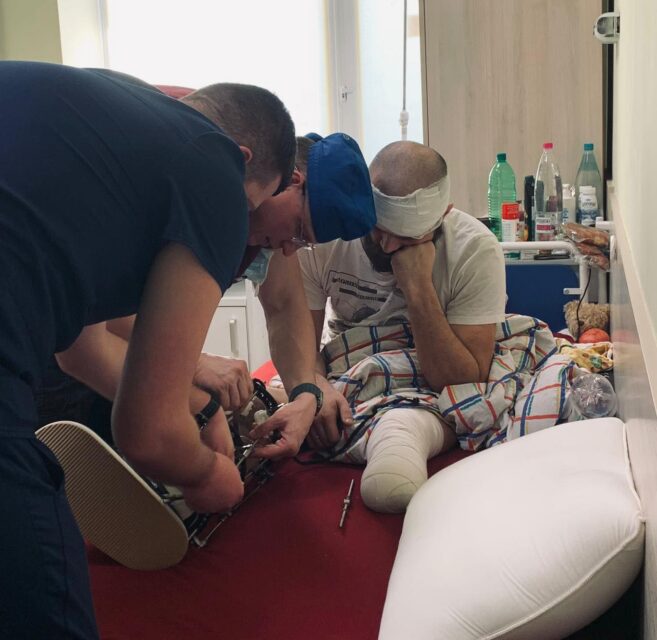
Sasha was remarkably composed throughout. One leg had been torn apart, the other had lost its foot. He used straps from his AK rifle to tourniquet both legs and then reported his own injury over the radio himself. His driver managed to get him into a vehicle, but for around 40 minutes Sasha effectively treated himself, carrying out first aid while still conscious. The team at the stabilisation point did what they could to keep him alive and get him to hospital. In the end, his left leg had to be partially amputated, with prosthetic rehabilitation now ahead.
By now, necessity has given me what feels like professional experience in dealing with mobility issues alongside my husband. At one point, a state military hospital was unable to carry out a CT scan of Sasha’s head because the building that housed the equipment did not have a ramp.
All the servicemen I’ve met in hospitals tend to say the same thing: what matters most is staying independent — being able to decide where to go and how to get there on their own. Before the war, and during their service, they were fully self-reliant. After severe injuries — loss of limbs, hearing or sight — that independence often disappears almost overnight in everyday Ukrainian life.
Ramps, lifts, adapted doors and basic accessibility features aren’t about comfort. They’re about dignity — and about whether people can still trust that they can move through the world without constantly asking for help. In many state hospitals and military medical facilities, even the basics are missing: toilets wide enough for wheelchairs, sinks that can actually be reached, corridors and doorways with enough space to pass through. As a result, servicemen are often forced to rely on others for even the most personal things, including using a bedpan. It takes a real toll on their wellbeing and morale.
In some cases, they can’t even get outside without help. Door handles or closing mechanisms are simply too high for someone in a wheelchair. They have to ask someone else to open the door for them. Once, I was standing outside when a soldier came up and asked me to open a door — he had lost both arms.
The situation in private clinics is different. They tend to have ramps, lifts, specialist patient-transfer equipment, accessible elevators and no thresholds. We’ve been to Kyiv, Vinnytsia and Dnipro, and everywhere we still ran into problems when it came to accessing procedures without barriers. That said, the quality of treatment and rehabilitation in state facilities is no worse than in private ones.
We’re currently at a rehabilitation centre in Dnipro, which we chose deliberately for the next stage of recovery. In my view, Ukraine’s strongest specialists in surgery, trauma care and rehabilitation work in the state system. The reason is fairly simple: many of them rotate through combat zones. They see these injuries first-hand and bring that experience back with them, which means they understand exactly what they are dealing with in practice.
— How is your husband doing now, and how is he adjusting to this new stage of life?
— My husband is a lieutenant colonel, a combat officer who sustained what I would describe as an infantryman’s injury. It’s been extremely difficult for him. One thing that frustrates him in particular is when people don’t follow through on their word. His motto is simple: “Words must be followed by action.”
But the biggest challenge is the loss of independence. He used to be able to move around freely; now everything depends on a chain of conditions and circumstances. Even everyday things become complicated. Going out for a coffee or a quick trip to the shop can turn into a logistical exercise.
Of course, the fact that I’m with him almost 24/7 makes daily life easier. But I’ve met servicemen who don’t have anyone like that. Under Ukrainian law, there is a patronage support service meant to help veterans after injury — with paperwork, certificates, benefits and so on. In practice, though, many of these issues still end up being handled on their own.
How is someone with a serious injury supposed to get anywhere on public transport? At one point, we needed to do a blood test at a local lab, but it was simply impossible to get inside. People could have carried Sasha in, but first, he’s a large man — and second, it comes down to dignity and self-respect. He doesn’t want to be carried around in someone’s arms.
As a result, almost every trip now has to be planned in advance, down to the smallest detail, just to manage a constant stream of medical, social and everyday tasks.
— How does the state support injured veterans as they try to recover?
– There are plenty of programmes available, but not all of them are actually accessible because of physical barriers. Take dental care, for example — the state covers almost the entire cost, and in Dnipro that includes the First and Second State Dental Clinics. We tend to go to the second one, mainly because the staff are noticeably more attentive to servicemen.
At one point, we were prescribed an ultrasound of the blood vessels, but couldn’t get it done in Dnipro and had to travel to Kyiv instead. There, a doctor from the military hospital helped us find a private clinic with proper wheelchair access.
Every military hospital now has a Civil-Military Cooperation office, and you see notices about it everywhere. I remember one representative coming into a ward and asking the servicemen: “What problems do you have? What complaints do you have?” But the situation was obvious — there were three men in the room, and between them only three legs.
People in those roles should come in already prepared to offer concrete solutions. They should be able to explain what financial support is available, help patients check whether they have the right documents for treatment, and guide them through the paperwork. It needs to be proactive — focused on practical help, not just questions.
The scale of the problem is amputations, loss of sight or hearing and, in some cases, head injuries that leave people struggling to understand how to cope at all. A “Veteran Assistant” support system now exists, which I have used myself. I was offered a consultation, but in practice I can find the information I need online on my own.
In other words, the system is there, but it still depends heavily on the human factor. And until a veteran is able to physically go and handle things themselves or has someone there to help in person, the bureaucracy doesn’t really move quickly.
You can apply for disability status or a one-off payment while still in treatment, which gives a kind of buffer — almost a year of relative stability. But what is really missing is simple: someone who can actually be there alongside you.
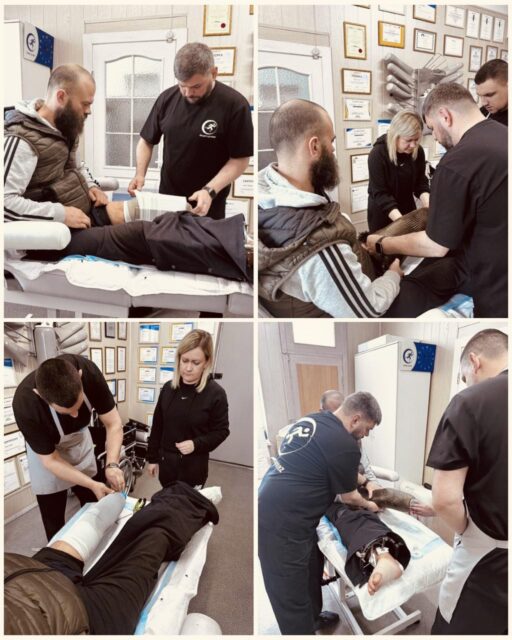
Oleksandr Amosyonok has a prosthesis on one leg, while the other is still being treated and monitored
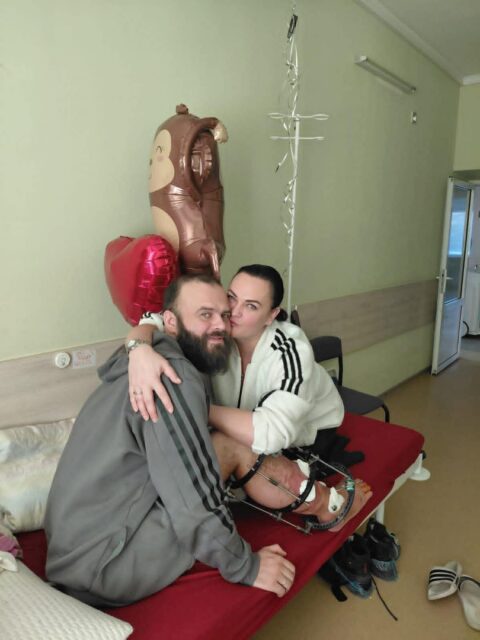
We were lucky to have found the Superhumans rehabilitation centre and Iryna Tkach from “Dniproprotez” — it became a key step in his treatment and recovery. My husband now has a prosthesis on one leg, while the other, fitted with an external fixation device, is still under observation and continues to cause him pain. We also don’t have a lift at home, and he is not yet able to manage the 21 stairs, so the rehabilitation centre has become an important space for recovery.
— What about clothing and underwear — are servicemen actually getting what they need, or are there still gaps?
– The state provides a basic clothing set, but no underwear — trousers, shorts, a T-shirt and a sweatshirt. Everything comes with Velcro fastenings, which quickly wear out and don’t hold properly. And the clothing is not designed for external fixation devices.
In Vinnytsia, however, women from a local “sewing unit” have come up with their own fix: trousers with one wider leg and a shortened one for the amputated side. They have also designed underwear with button fastenings, which makes everyday life significantly easier.
Throughout treatment, we were supported by nurses and orderlies. All of them not only have golden hands, but also genuine warmth. They ask carefully what is needed and, without hesitation, help with bathing or using the toilet.
— What’s been holding you up mentally through all this, and what gives you the strength to keep moving forward?
– Sasha’s biggest struggle is the loss of independence — and it’s been there from the start. At one point, a psychologist came to see us and later admitted we had reached a level of acceptance she usually only sees after dozens of sessions. We’re under no illusions about the situation. Sasha and I both understand the injury can’t be undone. He went to war consciously, knowing what it might cost.
In the first months, we lived as if things might suddenly improve the next day. We set our own recovery timelines, as if the process could somehow be sped up. It didn’t take long to realise that wasn’t how it works. So we stopped, took a step back, and shifted to living day to day — without giving up on the future, but no longer trying to force it.
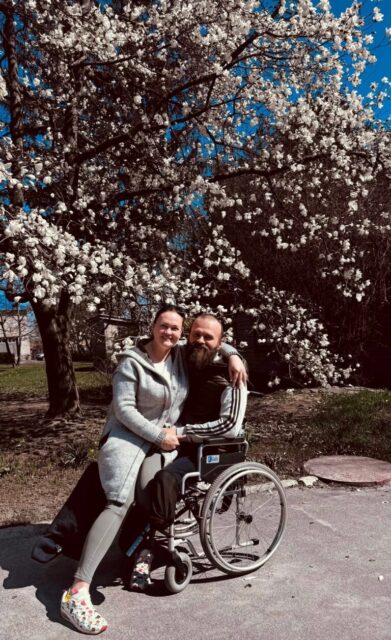
Now it’s the small things that carry us through: a good coffee or tea, a magnolia tree in a park we hadn’t noticed before. We even went out to a restaurant once. My son helps in his own way too — he sees that life goes on and that you have to keep noticing the good moments in it. I’ve raised a strong, empathetic child.
— What are your plans as a family once this recovery is behind you?
– Sasha doesn’t see himself outside the army. At the same time, he says life is starting again from scratch. Still, both of us are focused on building a new life that can work — and succeed.
That said, a return to military service is very much on the table. He went to war at 23 and rose to platoon commander and later deputy brigade commander. His experience, he says, could still be useful — especially to younger, less experienced servicemen.
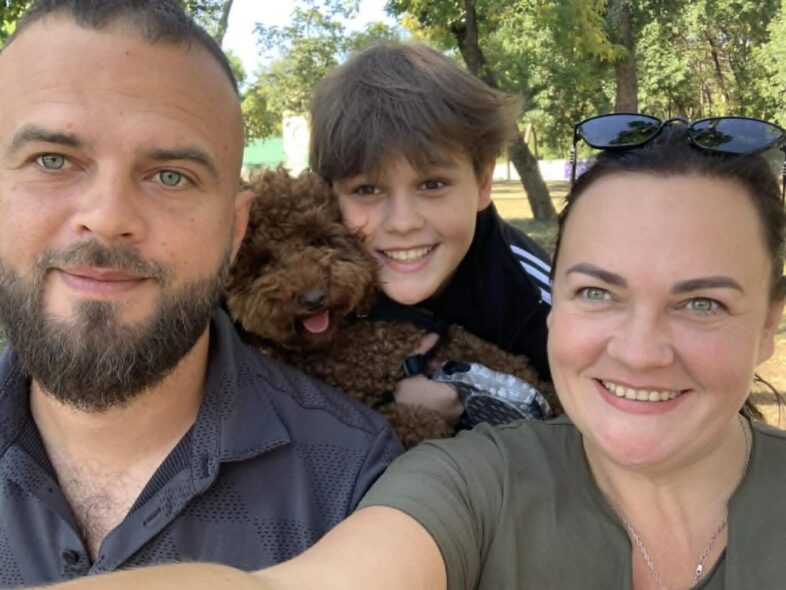
— And how have you personally dealt with all of this?
— My loved one is in a worse situation than I am. That means I have to find the resources to keep myself going — to stay motivated, and to be able to support him through this period of life. Psychologists won’t help me solve the practical problems of my husband’s treatment. But my friends can cry with me and share the weight of it — they’re the ones who, like me, are living through the realities of war.
I can’t stay down for long, so the usual support circles for military families can sometimes have the opposite effect on me. I need to stay in a stable place mentally, both for myself and for my husband, because “that’s just how it is…”. And I really want him not to feel like he owes me anything.
— What would a genuinely accessible, comfortable life in Ukraine look like for servicemen and women with severe injuries?
— Our defenders shouldn’t have to go looking for help on their own. Specialists should come to them with concrete options, and then they can decide what support they actually need — or whether they need it at all.
The same goes for inclusion policy. A serviceman or veteran shouldn’t be in a position where he has to figure out which places he can physically get into — that’s not really a choice at all. Everything should be accessible: shops, pharmacies, cafés, schools and universities, restaurants, hairdressers, gyms, even garages and repair services.
People with disabilities or reduced mobility are no different in what they want out of life. They want independence too — the ability to choose their own routes, and to live on their own terms.