After Iran crushed massive nationwide protests in January 2026, the EU ramped up pressure, imposing new sanctions and officially designating the Islamic Revolutionary Guard Corps (IRGC) — the key pillar of Iran’s military — as a terrorist organisation. Amid the heightened tensions, Ukraine made a bold move: on the sidelines of the Munich Security Conference, President Volodymyr Zelenskyy met with Iranian opposition leader, and exiled crown prince, Reza Pahlavi.
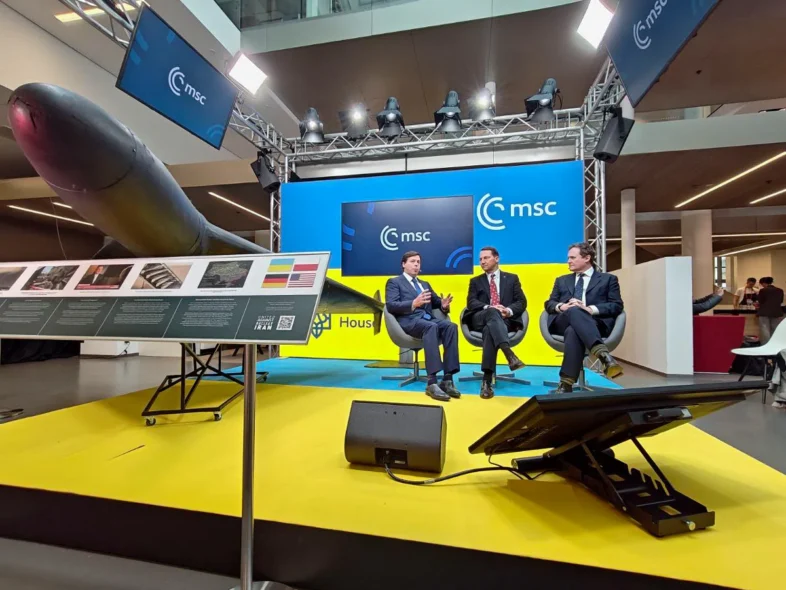
One of the conversations at the Ukrainian House during the conference focused on the ties between the Russian and Iranian regimes. It was there that The Ukrainian Week spoke with American diplomat Mark Wallace, head of the NGO United Against Nuclear Iran (UANI), about pushing for sanctions on Iran, the connections between the Ukrainian and Iranian peoples, and the loopholes that still exist in the sanctions system.
— Your organisation’s website says its mission is to “combat the threats posed by the Islamic Republic of Iran.” Ukrainians are dying and suffering from Iranian drones that Russia is actively using in its war against Ukraine. Are you working with the Ukrainian authorities to tackle this threat?
— My ancestors were Ukrainian, and I’m a committed supporter of the Ukrainian people. We’re doing everything we can to help. For years, we’ve been warning about the unholy alliance between Russia, Iran, and China. Four years ago, we first sounded the alarm when Iran began selling Shahed 136 drones to Russia — now called “Geran-2.” Tens of thousands of these drones have since killed innocent Ukrainians. Just two days ago, one of them struck in Ukraine, killing small children. I believe this has been a wake-up call for Europe about the threat from Iran and this [unholy — Ed.] alliance.
Just recently [29 January — Ed.], the European Union slapped sanctions on the Islamic Revolutionary Guard Corps (IRGC) for the first time. We’ve been pushing for these sanctions for years. The United States first put the Quds Force — an elite unit of the IRGC — on its sanctions list back in 2007. [The IRGC itself was added to US sanctions in 2019 — Ed.].
I joked with the organisers of the Munich Security Conference that next year, Tom [Tugendhat, advisory board member of UANI and British MP] and I would bring not just a drone, but a supertanker. [During the discussion, a downed Shahed drone was displayed on stage — Ed.].
It will be massive — about 500 feet long [around 152 metres] — and we probably won’t be able to fill it with oil. But it’s precisely that oil, along with the shadow fleet of Iranian and Russian tankers, that fuels these regimes, giving them the money to wage war in Ukraine and kill people in Iran. In that sense, the Ukrainian and Iranian peoples are tragically linked.
The Ukrainian people are dying at the hands of dictator Vladimir Putin, while Iranians, desperately resisting the ayatollah, are being slaughtered by the same ruler by the tens of thousands. This Shahed drone, of Iranian origin but manufactured in Russia, stands as a brutal symbol of that tyranny and those killings.
— Does your organisation get support from European governments, even though it’s non-governmental? Especially since these drones often include parts sourced outside Russia and Iran…
— That’s a fair question. I can’t go into too much detail because there are ongoing matters, but you’re right — these drones do include parts from the West. The real issue is the supply chain. I’ve seen some of these components, which come from the West and Asia, and I’m confident these companies didn’t sell them directly to the manufacturers — it’s a supply chain problem, plain and simple.
Just as the European Union has realised it needs to strengthen its armies and boost defence spending, I think it also needs to understand the urgency of imposing sanctions and confronting this [Russian-Iranian] alliance. That means no more buying Iranian goods or Iranian and Russian oil. And an alliance that survives on arms sales and hydrocarbon smuggling needs to be dismantled.
The US, Europe, and our partners in Asia need to find a way to completely halt arms sales and hydrocarbon smuggling. I’m deeply concerned about the fate of the Ukrainian people. According to our latest estimates, these weapons [Russian-Iranian drones — Ed.] have killed people from more than 80 countries, including Americans. We have to recognise that this threat isn’t just about Ukraine — it affects Europe and the US as well.
— Is your organisation working with the Polish government, and are you also coordinating with Ukraine to tackle the threats from Russian-Iranian cooperation?
— Poland has been a leader in supporting Ukraine. Vice Prime Minister and Foreign Minister Radosław Sikorski is a long-time friend of mine and a former board member of United Against Nuclear Iran.
Ukraine is at war. Those of us who aren’t on the front lines have to do everything we can to raise awareness about the challenges this war brings. That’s why we work closely with Ukraine, mindful that your people are already under enormous pressure — we don’t want to add to that. We want to help.