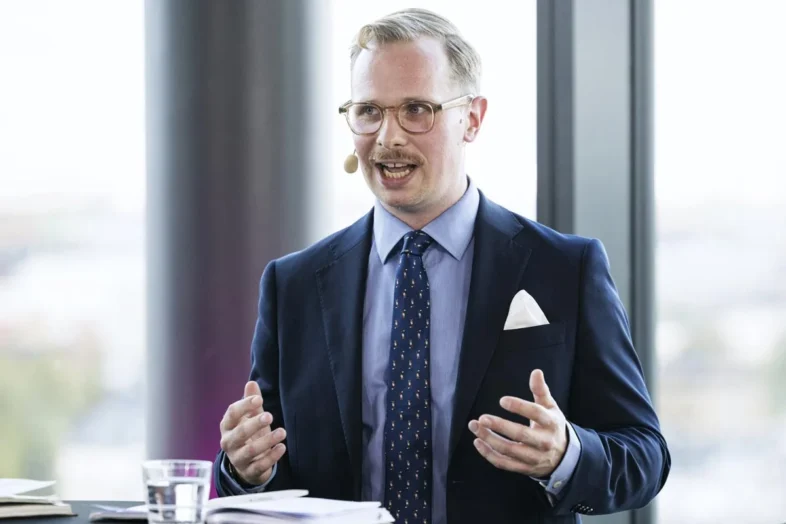
Joel Linnainmäki is a research fellow at the Finnish Institute of International Affairs, focusing on Finland’s foreign policy, Nordic security, and NATO. From 2019 to 2023, he served as special adviser to Foreign Minister Pekka Haavisto, overseeing preparations for ministerial committee meetings on foreign and security policy, as well as contributing to Finland’s official reports on foreign policy and NATO accession. He has also worked in the Finnish Parliament and with several non-governmental organisations.
In an interview with The Ukrainian Week, Linnainmäki discussed the potential threat of a Russian incursion into Finland, the country’s strategic reassessment of its security policy, and the role of U.S. support — both for Finland and for Ukraine.
— The New York Times recently reported that Russia could triple its military presence along Finland’s border within five years, raising it to what the paper called a “threatening level.” How real is the threat of a Russian invasion today? And is it fair to say that much hinges on how the war in Ukraine unfolds?
— Right now, the situation on the Finnish-Russian border is calm. Most of Russia’s combat forces have been shifted to Ukraine. That said, Russia is laying the groundwork for a future military build-up — constructing infrastructure that could host troops once they return after the war. It’s preparing to expand its military presence in our region, and this is driven by two main developments.
First, Russia has re-established the Leningrad Military District. In the long term, this will increase the number of troops stationed closer to Finland and the Baltic states. Second, back in 2022, Moscow made it clear that it would “respond” to Finland and Sweden joining NATO. What we’re seeing now is part of that response.
The troop build-up is nominally defensive, but here in Finland — as in neighbouring countries — we’re well aware that those same forces could be used for offensive purposes if Russia chose to go that route. That said, as long as Moscow is compelled to keep large numbers of troops bogged down in Ukraine or nearby, any broader military shift toward our border is likely to proceed slowly, if at all.
— In April, Finnish President Alexander Stubb announced that Finland would boost defence spending to 3% of GDP by 2029 to guard against possible Russian aggression. The country is also preparing to withdraw from the Ottawa Convention banning anti-personnel mines. How fast has Finland’s shift in security policy taken shape — and what’s driving it?
— The security environment we’re in today is both serious and unpredictable. While Finland doesn’t currently face an immediate military threat, that could change quickly if the broader strategic landscape shifts. Finland takes a pragmatic approach to security. We plan for worst-case scenarios not because we expect them, but because that’s how you prevent them.
Our defence investments aren’t aimed at any one country in particular — they’re about strengthening our own security. At the same time, we believe Europe must shoulder more responsibility for its own defence. These investments take time to mature, and frankly, there’s no better time to start than now.
— The Guardian recently reported that many Finns have grown used to the looming threat from Russia, with hundreds enrolling in emergency training courses. From your perspective, what’s the mood like among the Finnish people? How do they view Russia today? And are they closely tracking the security situation?
— Overall, the situation remains calm. Finns have a strong sense of crisis awareness. Unlike in some neighbouring countries, our political leaders haven’t had to spend much time trying to alert people to the worsening security climate—it’s something that’s already well understood.
There’s also a deep commitment to national defence. Surveys show that over 80% of Finns say they’re ready to defend the country, even if the outcome is uncertain. People trust the government is doing everything possible to keep Finland safe.
At the same time, given our long and complicated history with Russia, many Finns are deeply worried about how the war in Ukraine will unfold. There’s little belief that relations with Russia will improve in any meaningful way once the fighting ends. Any real change would depend on Russia abandoning its aggressive, expansionist policies—something people here remain very sceptical about.
— At the end of last year, the leaders of Latvia, Estonia, and Finland urged NATO to stop the “endless debates” over how to handle the threat from Russia, warning that Europe couldn’t be defended against Moscow without the United States. But more recently, Donald Trump said he isn’t worried about the Russian military buildup near Finland and Norway. So, can Finland still rely on U.S. security guarantees?
— Finland’s ties with the United States have never been closer. For the first time, we are a formal treaty ally of the U.S. Donald Trump seems to have a positive view of Finland—from defence cooperation to icebreaker production and forestry training. President Alexander Stubb has also built a personal rapport with the American president. And the U.S. has made it clear it has no plans to leave NATO.
That said, the pace, direction, and intensity of changes during Trump’s presidency are unprecedented. If broader challenges arise in transatlantic relations—like a U.S. withdrawal from NATO—it would seriously impact Finland’s security. In other words, we have every reason to keep investing in our national defence, deepen Nordic defence cooperation, and push for greater European defence spending.
— Despite the risks, Finland continues to support Ukraine and strongly rejects any idea of “Finlandisation,” knowing from its own history the consequences that approach can bring. With Finland recently announcing it will supply Ukraine with ammunition funded by frozen Russian assets, do you think the threat from Russia might affect Finland’s support going forward?
— Russia cannot force Finland to halt or reduce its support for Ukraine. That said, with Russia’s presence in our region and the high level of threat awareness here, we naturally have to weigh our national defence priorities carefully when deciding what kind of aid to send. Many Ukrainians understand this well. No matter the circumstances, Finland has been — and will remain — a steadfast supporter of Ukraine, regardless of how broader negotiations between the U.S., Russia, and Ukraine unfold.