At the end of May, Russian state media once again pushed the Zaporizhzhia Nuclear Power Plant into the international spotlight. Rosatom CEO Alexey Likhachov claimed a Ukrainian drone had struck the turbine hall of Unit 6. The IAEA later confirmed damage to the building’s exterior but said there was no threat to nuclear safety.
Volodymyr Omelchenko, director of energy programmes at the Razumkov Centre, sees such claims as part of a broader Russian effort to control the narrative around the Zaporizhzhia Nuclear Power Plant. In his view, Moscow is not using the facility only as a military or energy asset — it is also using it as a way to shape international debate and advance its own version of what is happening at the plant.
The pattern has repeated itself in recent months. In June, Rosatom representatives claimed that a ZNPP employee had been killed in a Ukrainian strike on Enerhodar. Russian officials described the incident as part of the “systematic killing of ZNPP employees” and warned that those responsible for keeping the plant safe were being targeted.
Russian reports focus on the plant’s employees, its safety, Ukrainian drones and alleged threats to nuclear security. What they leave out is the central fact shaping the situation on the ground: the Zaporizhzhia Nuclear Power Plant has been under Russian occupation for over four years now, while dozens of employees and Enerhodar residents have been abducted, tortured or unlawfully imprisoned. By casually leaving that context out, Russia tells a very different story about what is happening at the plant. In Russia’s coverage, the story is simple: the plant is in danger, and Russia is the one protecting it. Ukrainian drones, sabotage groups and shelling are presented as the main threats, while Moscow casts itself as the guarantor of the facility’s safety.
What is largely missing from this portrayal, however, is the Russian occupation itself. There is no mention that Russian forces seized the Zaporizhzhia Nuclear Power Plant in March 2022, that Russian military personnel remain present on the site, or that Ukrainian employees who refused to cooperate with the occupation authorities have faced mounting pressure and systematic intimidation. Nor is there any mention of what happened beyond the plant’s walls: Enerhodar, once a city built around the nuclear facility, has become a place where civilian abductions and repression have become part of everyday life under occupation.
From secret basements to public courtrooms
Oleksandr Nosko’s investigation provides one of the clearest accounts yet of repression in occupied Enerhodar. In An Atomic City in Shackles: How Russia Persecutes, Tortures and Illegally Imprisons Residents of Enerhodar and Employees of the Zaporizhzhia Nuclear Power Plant, he traces how abductions, torture and intimidation became tools of control under Russian occupation.
The investigation follows the experiences of former detainees, Zaporizhzhia Nuclear Power Plant employees, their families, human rights defenders and city officials, whose accounts reveal a system built around disappearances, coercion, pressure to cooperate with occupation authorities and the persecution of civilians.
But the most significant change is not only the scale of the abuses — it is the way they are carried out. Human rights defenders and Ukrainian officials say that, over three years of occupation, Russia has moved from arbitrary abductions toward a more formal system of prosecutions and imprisonment.
In 2022, people were abducted with no explanation and no formal charges. They were held in basements, police stations and facilities inside the Zaporizhzhia Nuclear Power Plant itself. Many were eventually released – after enduring torture, of course.
By 2023 and 2024, the pattern changed. Russia moved from secret detentions to a formal system of prosecution. People were no longer simply disappearing; they were transformed into defendants. Abductions gave way to criminal charges, investigations, trials and prison sentences. It is this transformation — from the torture chamber to the courtroom — that has become one of the clearest signs of how Russia’s system of repression has evolved.
In March 2025, a Russian court sentenced Serhii Potynh, an engineer at the Zaporizhzhia Nuclear Power Plant, to 19 years in a maximum-security penal colony. According to his wife, Potynh had refused to obtain a Russian passport, rejected employment under Rosatom and taken part in volunteer activities in the city. She also said members of their family had been subjected to torture.
Russian court documents present a very different version of events. In them, Potynh is described as “a member of a terrorist organisation” and accused of “preparing acts of sabotage.”
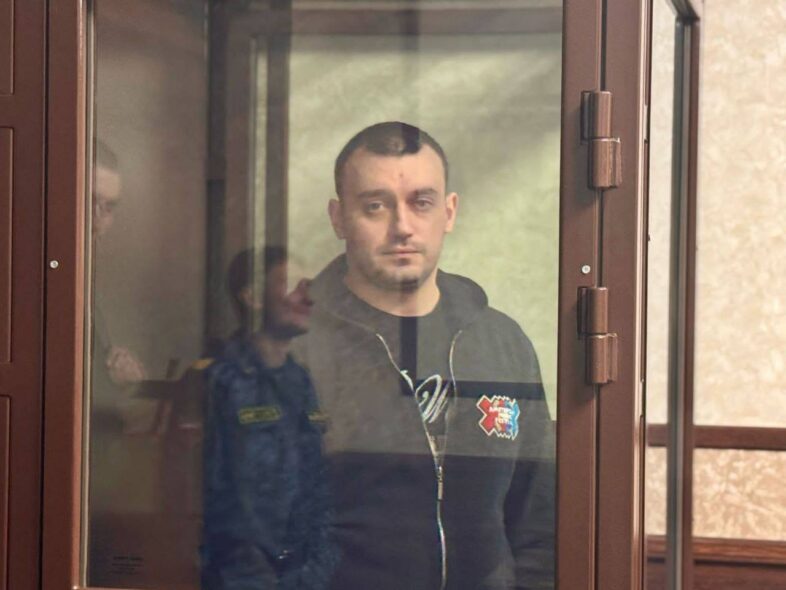
Serhii Potynh, an occupational safety engineer at the Zaporizhzhia Nuclear Power Plant, was sentenced by a Russian court to 19 years in prison on 26 March 2025. Photo: Telegram channel of Enerhodar mayor Dmytro Orlov
Serhii Spartesnyi’s case follows the same pattern. A shift supervisor in the turbine department at the Zaporizhzhia Nuclear Power Plant, he was sentenced to 12 years in prison on espionage charges. According to his family, Spartesnyi endured electric shocks, broken ribs and months of unlawful detention. Russian reports, however, present him not as a victim of occupation, but as a person accused of passing information to Ukrainian intelligence services.
Step by step, employees of the nuclear power plant were slowly transformed from witnesses of the occupation into defendants in criminal cases.
Reports from Russian state agencies, courts and law enforcement bodies on the detention of residents in occupied territories tend to follow a familiar script – first comes the announcement of an arrest, with the person labelled a saboteur, spy or member of a terrorist organisation. Then comes the criminal case, followed by news of a trial and, eventually, a verdict.
What is often missing from these reports are the basic questions behind the cases: Did the detainees have access to lawyers? How were their statements obtained? Did their families report torture? Was there any independent way to verify the accusations? Those questions rarely appear. Instead, the verdict itself becomes the proof. For Russian audiences, that changes the entire picture. People such as Serhii Potynh and Serhii Spartesnyi are no longer presented as civilians from an occupied city, but as convicted criminals.
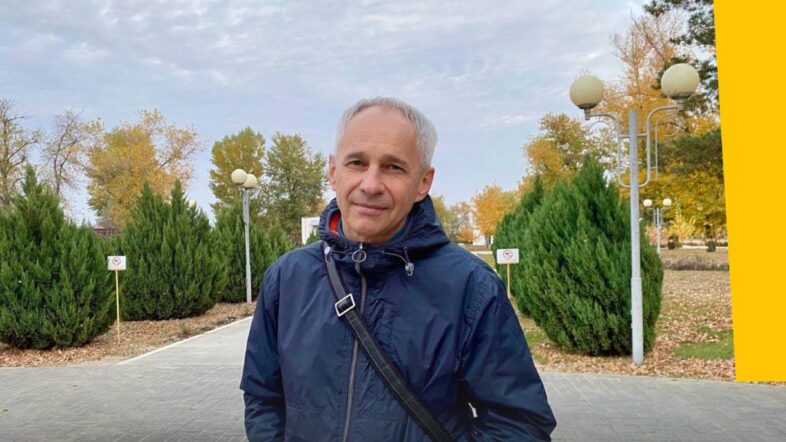
Serhii Spartesnyi, shift supervisor of the turbine department at the Zaporizhzhia Nuclear Power Plant, was sentenced by a Russian court to 12 years in a high-security penal colony on 19 September 2024. Photo: Telegram channel of Enerhodar mayor Dmytro Orlov
When repression takes legal form
According to Enerhodar’s city authorities, at least 28 residents are currently being held in Russian captivity, including 13 employees of the Zaporizhzhia Nuclear Power Plant. For Ukraine, they are civilian hostages. They include engineers, electrical technicians, social workers, pensioners, volunteers and relatives of Ukrainian military personnel. But in Russia’s legal system, these same people are labelled terrorists, saboteurs, spies or members of an underground resistance movement – and that difference is not just about words.
A civilian hostage can become the subject of international negotiations and campaigns to secure their release. Someone convicted of terrorism or sabotage is treated instead as a criminal serving a sentence within Russia’s prison system. That is why the labels attached to these people matter far beyond the information war.
Russia’s portrayal of Enerhodar goes beyond claims about Ukrainian shelling or attacks on the Zaporizhzhia Nuclear Power Plant. It changes the entire frame through which the events are viewed. An abduction becomes a detention. Torture becomes an investigation. Forced confessions become evidence. And a civilian hostage becomes a convicted terrorist.
Russia has gradually moved from carrying out repression outside the law to embedding it within the legal system. What once happened in secret is now processed through criminal cases, court rulings and lengthy prison sentences.
The stories of Enerhodar’s residents are not only a record of alleged war crimes. They also reveal a broader effort to transform acts of coercion into acts of law enforcement — to give the appearance of legality to the actions of an occupying power. The question is therefore not only how Russia describes what is happening in Enerhodar, but whether those detained can continue to be recognised as civilians unlawfully imprisoned during the occupation.
That distinction matters. It will determine not only how these cases are remembered, but how these people are treated in efforts to secure their release.