Russia’s full-scale war against Ukraine has triggered a surge in the country’s defence industry, particularly in drone production. In just a few years, Ukraine has become a global player in combat UAVs, with exports emerging as a major economic and political focus. Interest is spreading abroad: the Danish government is in talks with Ukrainian drone maker Skyfall to set up production on Danish soil, while in the UK, Ukrspecsystems is launching its first Ukrainian-run production facility.
The Wall Street Journal recently reported on a new plant near Munich — a joint venture between German drone manufacturer Quantum Systems and Ukrainian military tech company Frontline Robotics. It’s the first Build With Ukraine project to reach full-scale production, with plans to manufacture 10,000 Linza drones a year.
For now, the joint German-Ukrainian production line will focus on meeting the needs of the Ukrainian front. But once fully operational, the plan is to supply the wider European defence market. On top of that, up to ten more agreements have been signed between Ukrainian and European companies. While some are still in the very early stages, they hold enormous potential.
“By the 13th year of the war, Ukraine has become a unique country capable of exporting its defence tech and expertise worldwide. We have tools, skills, and technologies that are truly one of a kind — and they’ve all been tested under real battlefield conditions. Drones themselves are more or less the same everywhere — the same chips, microcircuits, and so on. But what really matters is how they’re used: the software, whether a drone can fly five kilometres or 150, and whether it can hit its target. We’ve learned how to package all of this effectively; on top of that, we can make drones largely independent of Chinese components. Equally important, we have the know-how to train and prepare operators,” said Viktor Taran, head of the Kruk UAV Operators Training Centre, in a comment to The Ukrainian Week.
Challenges remain
After the full-scale war began, exports of Ukrainian weapons were effectively blocked. In the fall of 2025, Volodymyr Zelenskyy announced the launch of “controlled exports,” stipulating that only surplus products not needed on the frontline could be sold abroad. Yet it wasn’t until 12 February 2026 that Ukraine’s defence industry received its first export licences.
“The relevant commission grants permits to some companies and denies them to others. And when you dig into who actually received them, interesting stories start to surface, along with names tied to specific companies. It raises serious questions about integrity, fairness, and transparency in how this market operates,” Viktor Taran told The Ukrainian Week.
Meanwhile, Ukraine faces another challenge: it still can’t properly scale its unique expertise.
“Russians are easily scaling up and selling their products as much as possible, while we are not. This creates a paradox: we have unique technologies but lack the funds and resources to scale them. Without that, it doesn’t work — you can build one or two unique prototypes, but beyond that, it falls apart. The Russians, who are developing at roughly the same pace, are taking a very different approach. They scale everything to the maximum, sell prototypes abroad, reinvest the money into their defence industry, and improve their drones. Then those upgraded drones are used against the Armed Forces of Ukraine,” Viktor Taran told The Ukrainian Week. It’s no surprise, then, that Ukraine is starting to lose ground in the drone war. Organisation and funding are allowing Russia to outpace Ukraine’s quality and expertise.
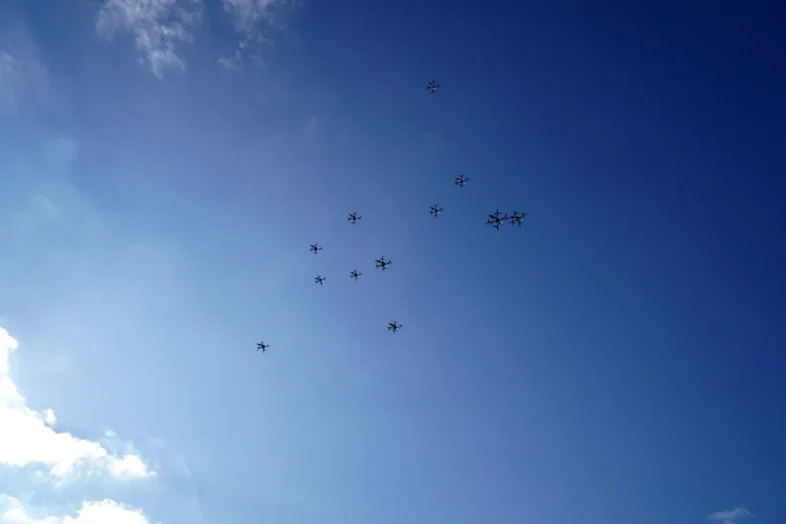
Similarly, NATO partners are also scaling up technologies. They send various drones to Ukraine free of charge; we test them and send them back. The allies analyse the data, make adjustments, and then begin scaling production.
“In other words, our technological edge will soon be neutralised. They’ll be producing similar drones, using real combat experience from the Russian war against Ukraine. In a year or so, our drones may no longer be in demand. Instead of claiming this niche, earning revenue, and creating jobs, we’re sitting like a dog in the manger, losing ground strategically,” Viktor Taran adds.
Ihor Fedirko, executive director of the Ukrainian Council of Gunsmiths, told The Ukrainian Week that the hurdles to signing contracts with foreign partners are largely practical.
“Partners agree to cooperate when they see a budget and guaranteed demand for serial production. Then there’s compliance and export control — clear rules on what can be transferred to joint production without risking the front or exposing sensitive technologies. Third, you have standards and production discipline: manufacturing has to meet the partner’s requirements from day one. On top of that, contracts need built-in regular updates, because drones evolve faster than approval cycles. And finally, security — protecting data, cybersecurity, and controlling access to critical components. All of this can be managed, but it demands the same discipline from both sides and clear rules of the game,” he says.
What role should Ukrainian manufacturers play in overseas production?
In Ukraine, three major verified associations — NAUDI, the Ukrainian Council of Gunsmiths, and the Armada Association — play a key role in the defence sector. Viktor Taran says the government needs to set up a clear procurement system for them.
“They don’t just sell equipment — drones, electronic warfare systems, radios, situational awareness systems — but also interesting ammo types, simulators, and more. Think of it like a Brave1 Market. At the same time, there should be a separate track focused on training, so our UAV operator centres can provide instruction. Ukraine has an Association of Drone Operator Schools, with just over 20 verified schools. Once verified, our NATO partners could review them and pick what interests them. This way, Ukraine can officially sell not only drones but also training services — all while retaining intellectual property rights,” Taran told The Ukrainian Week.
He adds that the state should work more closely with UAV training centres — helping to strengthen them and taking an active role in scaling up their operations.
“Unlike Ukrainians, the Russians know how to work systematically — they’ve built a full system. In the drone war, they’ve already overtaken us. In areas where we were ahead, we’re now behind. And we could even lose out in the international arms market. For example, the Russians could quickly deploy their operators to countries in the Persian Gulf and tell Qatar, which supplies 20 % of the world’s gas, ‘Let us train you.’ After all, who better than the Russians to show how to shoot down Shaheds? I know it might sound odd at first, but from a pragmatic perspective, it makes perfect sense. That’s why the Russians could easily capture this niche,” Viktor Taran notes.
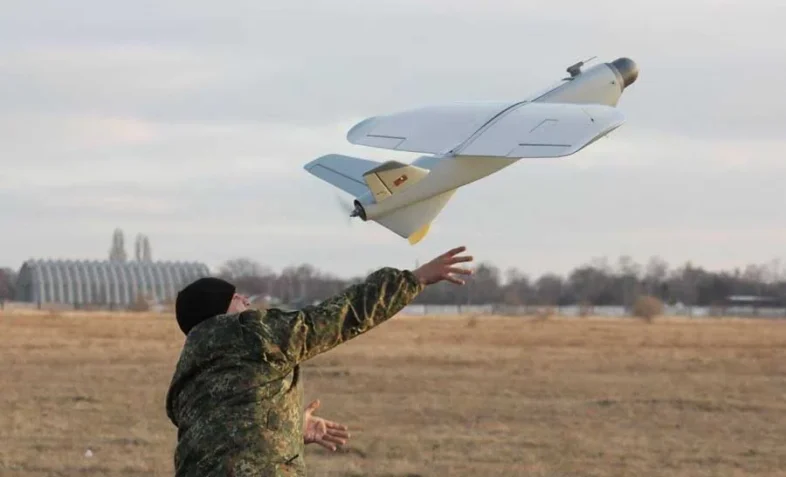
According to Ihor Fedirko, Ukrainian manufacturers should focus on cooperation and scaling in foreign projects — but without moving the technological core out of Ukraine. There’s also talk of localising up to 80 % of production.
“The practical model looks like this: engineering, R&D, battlefield upgrades, software, real-combat testing, and critical expertise all stay in Ukraine, because that’s where our speed and advantage come from. Abroad, part of the serial production can run as a second manufacturing line. This gives partners predictability and transparency, while letting Ukraine scale up without losing momentum — and ensures that what’s produced ultimately serves the needs of our Defence Forces,” Fedirko told The Ukrainian Week.
Does interest in Ukrainian UAVs vary across NATO, Asia and Middle East?
Ihor Fedirko says interest does vary, and you can see the priorities in the regions where cooperation infrastructure is already taking shape. Right now, the most structured demand is coming from Europe and NATO countries.
“There are budgets, compatible procedures, standards, and clear jurisdictions, which is why this track is our priority for 2026. That’s exactly what led to the creation of export offices in Berlin and Copenhagen. At the same time, we’re already seeing production being deployed in practice: Ukrspecsystems has started drone manufacturing in the UK, and in Germany the joint venture between Quantum Systems and Frontline Robotics is already up and running,” he says.
Northern Europe and the Baltic states look especially promising, Fedirko adds, because there, cooperation is already being formalised into concrete packages.
“Most recently, Ukrainian manufacturers who are members of the Ukrainian Council of Defence Industry signed partnerships with companies in Denmark, Finland, Latvia, and Germany under the Build With Ukraine initiative. The goal of these agreements is to use partner facilities and financing to scale up production and create additional manufacturing capacity that serves Ukraine’s Defence Forces,” the council’s executive director, Ihor Fedirko, told The Ukrainian Week.
Asia is also showing interest, though decision-making there tends to take longer, and export controls and compliance rules are stricter.
“For us, these tend to be targeted projects with a specific partner and product profile, with full verification of the end user and protection of intellectual property. The Middle East has traditionally had strong demand for unmanned systems, and the current security situation is driving the need even higher — especially for counter-drone solutions and infrastructure protection. But any such work can only happen in a controlled way, without reducing our own capacity in Ukraine,” Fedirko stresses.