Ukraine’s information space, like the wider world around it, has become a kind of minefield — where a headline can sometimes hit with the force of a physical attack. Every day, social media is filled with reports of major strikes, Russian advances, emergency evacuations, disputes over mobilisation, and yet another confident prediction from bloggers or self-proclaimed experts about when the war will end.
But the same piece of news can land very differently depending on where you stand. For a soldier on the front line, it may mean another position lost, another comrade killed, another difficult decision to make. For someone far from the battlefield, it may bring a new wave of fear, grief, or anxiety — especially for those still hoping to return to some sense of normal life.
In modern warfare, information can be as powerful a weapon as a drone or missile. Air defence protects against physical attacks; against manipulation, the only real protection is the ability to question, verify, and think critically.
Russia’s information and psychological operations are built around exploiting exhaustion and uncertainty. When reports emerge of a Ukrainian withdrawal, a devastating strike on infrastructure, or evacuations from frontline communities, social media quickly fills with panic, speculation, and claims about the scale of the disaster. Algorithms then push these emotions even further, turning fear and frustration into a wider sense of defeat. For many civilians, this constant stream of alarming information can leave them feeling powerless — as if events are moving beyond their control.
The Ukrainian Week spoke with civilians and service members about how they make sense of the constant flow of information, which sources they trust, and how Ukraine can better withstand Russian propaganda — a central weapon in the Kremlin’s broader information war.
Iryna Badanova, coordinator of the Bilateral Contact Group on Humanitarian Issues, an expert in searching for and securing the release of prisoners of war, and former member of the Search and Release Department of the General Staff of the Armed Forces of Ukraine:
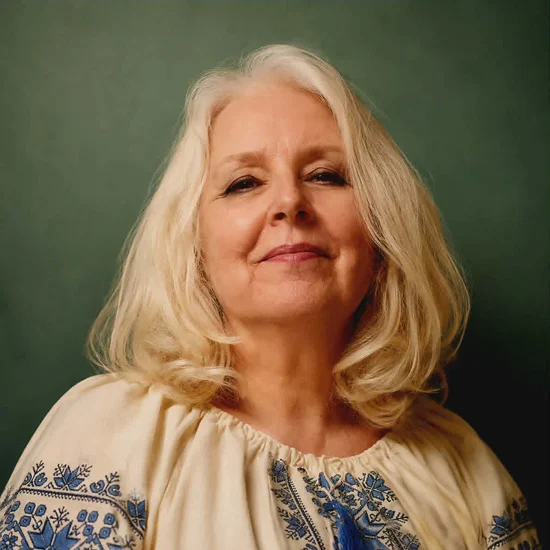 “It is important not to depend on a single source of information — I always try to compare several different ones, including alternative sources. I usually follow news from channels I trust, such as Michael Nacke and Vasyl Holovanov. On Facebook, I often check updates about strikes on Ukrainian cities, mainly to make sure that friends and people I know are safe. I also receive information directly from military personnel, and that is the source I trust the most. On Telegram, I follow the Conflict Intelligence Team and the channel of the Coordination Headquarters for the Treatment of Prisoners of War.
When it comes to changes on the front line or shifts in defensive positions, I usually check DeepState. For international news, I rely on CNN Breaking News, The Daily Telegraph, and the BBC. I do not usually take one report as the full picture — I compare what different sources are saying, look for where they overlap, and then form my own understanding of what is happening. For me, the anxiety doesn’t come so much from following the news — it comes from having lived through it myself. On 6 January this year, our apartment was damaged in a Shahed drone attack. After that, air raid alerts stopped being just another sound in the background. You don’t hear them the same way anymore. You know how quickly life can change — how in just a few seconds everything can be completely different.
For me, the Armed Forces are the part of Ukrainian society that deserves the greatest respect. Of course, like any other group, the military includes people with different personalities and backgrounds. But every person in uniform, regardless of their character or circumstances, deserves recognition from society — respect and support without conditions attached. That is how I have viewed the military since 2014, and that has not changed.
When people return from the front, they will need support — from their families, their communities, and most importantly, from the state. They will need rehabilitation, opportunities to study, find work, and rebuild their lives, along with financial support, pensions, and compensation. But I also believe that supporting those who defend us means taking care of ourselves and finding ways to keep going. For me, that means spending time with family and friends, continuing my literary work, and writing analytical essays about contemporary Ukrainian literature. Being able to donate and help in practical ways also gives me a sense that I’m contributing and doing my part for our victory.
Those who are fighting often look at current territorial losses in a completely different way than people far away from the battlefield. For some of us, watching it all from home, losing a position can feel like a disaster — like the whole situation is collapsing, or like someone has made a terrible mistake. But for a soldier, it is usually a much more practical calculation: what are our resources, what are the enemy’s capabilities, what are the next steps?
Of course, it is painful, but what those on the front need is not just despair or words of support online — they need practical help: drones, vehicles, equipment, donations, and better coordination. Their priorities are simple: protect their comrades, fight effectively, and bring everyone home alive.”
Bohdan, call sign “Manul,” a serviceman with the Officer Corps Service of Ukraine’s National Guard, a former border guard and historian:
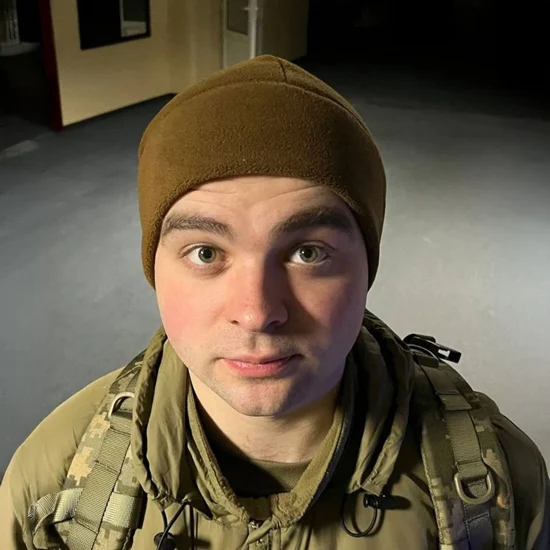 “For me, propaganda and disinformation are not simply false information. They are messages designed to discredit, manipulate, and exploit people’s emotions — to make them afraid, turn them against each other, and erode trust in the state, the military, or society itself.
Since I volunteered and signed a military contract in 2022, the way I follow the news has changed completely. I no longer take reports at face value. I compare Ukrainian, Russian, and international sources, because I’ve often seen a gap between what was happening on the ground and how it was being reported — whether in northern Ukraine or the Kharkiv region. In the end, I trust what I see myself, and what I hear from fellow soldiers on the front line.
Sometimes the media paint a picture that is far too optimistic. The reality on the front is much more complex. I remember a day when my commander’s unit lost 15 people in the north, Russians captured a settlement, and a strategically important bridge was destroyed — yet none of it appeared even in the regional news.
Another problem is the imbalance in how different groups are represented. We often hear about contracts for young people, social programmes, and new opportunities, while older generations of fighters receive far less attention. The same goes for coverage of mobilisation and the work of Territorial Recruitment and Social Support Centres (commonly abbreviated as ‘TCK’ in Ukrainian). This kind of reporting has real consequences — it damages morale, fuels distrust, and creates divisions when unity is more important than ever.
It is still too early to talk about the end of the war. But as long as the fighting continues, civilians need to understand the price the Defence Forces are paying — not only to protect Ukraine’s security, but also to preserve the stability of the wider world.”
Few issues have been exploited by Russian propaganda as effectively as the controversy around the Territorial Recruitment and Social Support Centres. For years, social media has been flooded with videos of confrontations — often lacking context, selectively edited, or manipulated — that are then amplified by anonymous channels to fuel frustration and undermine trust in mobilisation.
The goal is clear: undermine mobilisation, deepen social divisions, and weaken morale within the military. That does not mean every criticism should be dismissed. There have been genuine cases of misconduct and mistreatment at individual TCKs, but the reality is far more varied. Several people I know who were approached on the street, for instance, described the process as calm and respectful, and said they were given the opportunity to choose their branch and unit.
Among civilians, however, negative stories often spread quickly because they tap into a wider sense of exhaustion, frustration, and fear. Over time, this has helped create a distorted narrative of a “people hunt” — a narrative that not only damages trust but can also become a way of rationalising attempts to avoid the responsibility of defending the country.
For soldiers who have been fighting since 2022 or even 2014 [when Russians occupied Crimea and the east of Ukraine – ed.], often without any clear prospect of demobilisation, these attitudes are viewed very differently. They are not seen as a debate about the rights of those who were “not made for war,” but as a painful reminder of the imbalance between those carrying the burden of the fighting and those far from the front line. For people who have spent years without proper rest, stability, or a normal, personal life, the issue is ultimately about having a chance to recover — and about restoring a basic sense of fairness and social justice.”
Liubov Huk, musician, founder of the band WAHOMO, and sound producer:
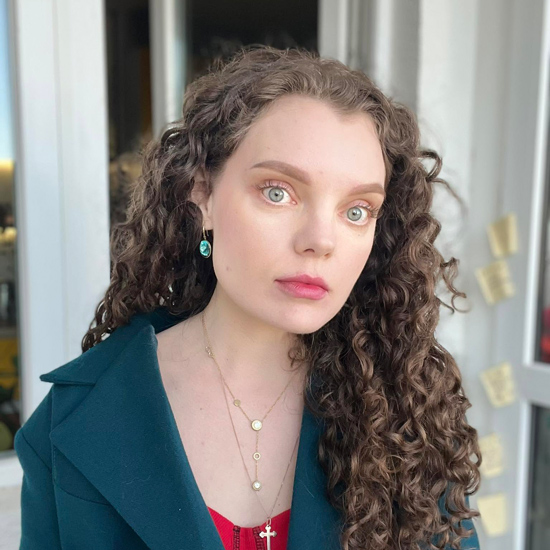 “Most of what I know about the war comes from the internet, conversations with friends serving in the Armed Forces of Ukraine, and trusted Telegram and YouTube channels run by military units. My own sense of security is shaped less by headlines and more by proximity — how close I am to the fighting, and how often I find myself in situations where my life, or the lives of those around me, are at risk.
For me, information resilience is about learning how to deal with difficult news without letting it overwhelm you. Everyone has their own limits, but I don’t think the answer is to simply turn away from what is happening. What matters is staying critical —looking beyond sensational headlines, and not accepting every unverified claim at face value.
After a missile hit the courtyard of my apartment building, one thing became openly clear to me: we are alive because of the people defending us. Everyone can play a part in supporting the Armed Forces. We cannot simply wait for the war to end on its own without asking what we can do. Real understanding between civilians and the military will come not from words, but from meaningful support — standing with those on the front line now, and helping them rebuild their lives when they return home.
Perhaps the most damaging illusion to take hold in Ukraine was the belief that the war would be over in a matter of months. Confident forecasts from politicians and self-proclaimed commentators painted a picture of a short, decisive fight — one that reality quickly shattered. As the war dragged on and victory proved far more distant, that broken expectation became a source of disappointment and exhaustion across society.
Those serving in the military never had the luxury of such expectations. Every day, they see the reality of Russia’s military capacity, its resources, and the human cost of every metre of Ukrainian territory — not as lines shifting on a map, but as the lives of the people fighting beside them. Their assessments are shaped by what is in front of them: how many shells are available, whether there are enough vehicles, and how many people remain on the battlefield. They are preparing for a long war, while some segments of Ukrainian society are still waiting for a sudden breakthrough that will suddenly make it all end.
The responsibility for honest information does not lie with the media alone. Civil society and organisations supporting soldiers and their families also have a vital role: not only helping people understand the reality of war, but helping them cope with the consequences it has brought into their lives.”
Yuliia Dmytrova, head of the TAPS Foundation, which provides psychological support and assistance to families of fallen service members:
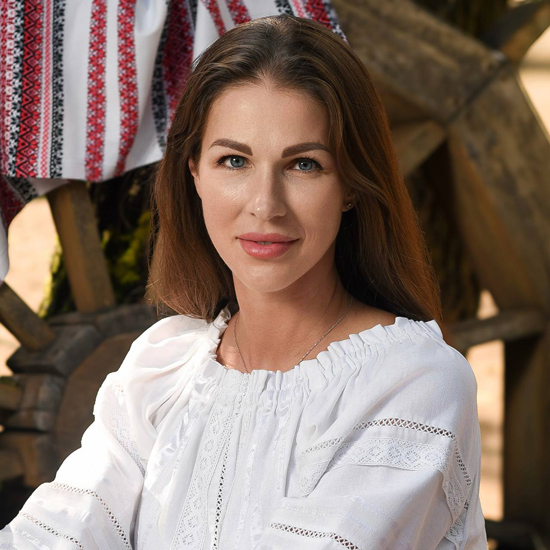 “In my work, I often find myself caught between two realities that increasingly feel worlds apart. On one side are veterans, active-duty soldiers, and families who have lost loved ones — people who carry the war with them every day, not as a news story, but as something they have lived through. On the other side are ordinary civilians, for whom the war often arrives through a stream of images, updates, and headlines on a screen — a reality that can feel both overwhelming and strangely distant. The gap between these two experiences is becoming harder and harder to ignore.
Many soldiers I speak to feel there is a growing disconnect between the war they experience and the one portrayed in the news. They see the human cost behind every position held, every metre gained or lost, and every decision made under pressure. Yet those realities are often flattened into simple narratives — setbacks downplayed, and difficult choices judged without understanding what happened behind the scenes.
Over time, this gap fuels distrust, not only towards the media but also between the military and civilian society. “They simply don’t understand” is a phrase I hear repeatedly from soldiers and their families during counselling and rehabilitation programmes.
Civilians, meanwhile, are trying to make sense of a constant flood of information, often without knowing what to trust. Social media can amplify fear and anxiety, but it can also create distance — a feeling that the war is happening somewhere else, and that somehow things will resolve themselves.
The only way to bridge that gap is through real human connection and shared experience. It happens when civilians take part in rehabilitation programmes alongside veterans, or when families who have lost someone in combat receive support from people who have never been to the front but have chosen to stand beside them. This is where genuine understanding begins. Trust is not built through the right words in the news, but through real presence and genuine engagement. What undermines this understanding is information populism — when, in the pursuit of views and reach, complex realities are reduced to simple narratives, manipulated, and human tragedies are turned into attention-grabbing content. This is especially painful for the families of fallen soldiers whom we work with. They see the death of someone they loved reduced to a “news hook” rather than treated as a human story.
After one of the TAPS CAMP programmes, the wife of a fallen defender came up to me and said: “Yuliia, I don’t read the news anymore. One moment it says my husband was killed, and the next story is about supermarket discounts.” Her words captured a much wider problem: the reality of loss and trauma is often placed alongside everyday updates, reduced to just another item in the news cycle. But these stories do not carry the same weight — and they should not be treated as if they do.
As the war drags on, the distance between those who have lived through combat and those who have carried on with everyday life far from the front line continues to grow. The hardest question may come when the fighting stops: how will these two parts of society find a way to understand each other?
On one side are veterans who have lost friends, their health, and years of their lives — people who have faced death directly and fought for Ukraine’s survival. On the other is a part of society that has chosen to remain removed from the war, sometimes explaining that distance by saying, “this is just a political game.”
Dmytro Verbych, serviceman of the 59th Separate Mechanised Brigade, ATO veteran, author of Point of No Return and creator of the By azimuth video project:
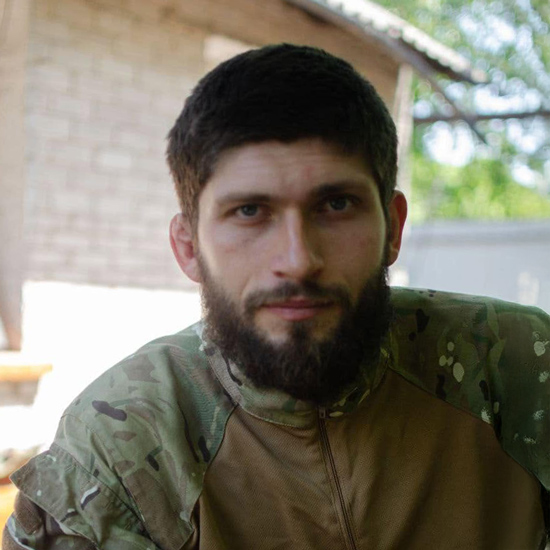 “I cannot speak for everyone in uniform, but I believe there is a clear difference between deceiving the enemy and misleading your own society. Any false information that does not serve a real military purpose ultimately does more harm than good.
Information warfare is about creating uncertainty for the enemy — making them look in the wrong direction, forcing them to prepare for threats that may never come. That is the point. If, for example, in 2023 Russia had been convinced that Ukraine’s main effort would come somewhere other than the direction of Robotyne, the outcome might have been different.
The problem comes when we announce our plans publicly and then simply go ahead and do exactly what we said we would do. At that point, it is no longer really an operation — it becomes a public message. We raise expectations at home, try to keep morale high, but at the same time, we may be giving Russians information they can use. Sometimes I see a small but real achievement presented as a historic victory, and I can only shake my head. People deserve a clearer picture of reality. In a long war, credibility matters — and once trust is lost, it is hard to regain.
At the same time, there is another problem. When Russia has effectively taken Pokrovsk, but people are still being told that everything is under control, and official statements seem far removed from what is happening on the ground, the biggest impact is felt by the military themselves. It naturally raises questions: are they trying to create an illusion for society that everything is fine, or have they simply lost sight of how grave the situation really is?
A lot of public communication is built around trying to reassure society or, sometimes, to influence public mood — especially among people who are far from the war and experience it mostly through the news.
But there is often much less attention paid to how these messages sound to the soldiers who are actually fighting. And that matters. Communication should not only be aimed at the wider public, but also at the people who are directly involved, carrying the burden of war, and ready to do their part.
Disinformation has always been used primarily to deceive the enemy, not to reassure your own voters or audience. Any information we release should be shared with the understanding that the Russians are watching and analysing it as well. Sometimes creating the impression of weakness or unpreparedness can work to your advantage — if it pushes the enemy into making rushed decisions they later regret.
The same logic applies to military technology. Ukraine has shown remarkable ability to innovate and rapidly develop new capabilities — and the battlefield is already showing the results. Yet some people still publish technical details online, explaining exactly how new systems work. The question is simple: why? Every unnecessary detail gives the enemy a better understanding of these technologies and helps them develop ways to counter them.
At the same time, Russia continues to exploit the growing divide between civilians and the military, including through narratives around the TCKs. But there is also a wider social problem: some people who have become exhausted or frightened by the war have turned that fear into anger towards soldiers and the Ukrainian state. In the process, frustration can become something far more damaging — a loss of empathy and a sense of responsibility towards those carrying the burden of the war.
I am a soldier who has the option to leave the service, but I choose to stay and continue fighting. I do get periods of rest, and I am fortunate to be part of a strong unit, but building anything resembling a normal life outside the war is almost impossible.
At the same time, there are men who are fit and able to serve but have left the country or found ways to avoid taking part in the defence effort. I cannot see myself as equal to them. And that raises a difficult question: how do we bridge that divide? They cannot fully understand what I have experienced — and I cannot fully understand the choices they have made.
That said, there is an important distinction. If someone did not go to fight and honestly says, “I am afraid,” or explains their reasons, but at the same time actively supports the country, contributes to the defence effort, and understands how to communicate and interact respectfully with military personnel, I will view that person positively – that is a completely different situation. The real problem begins when someone completely disconnects from what is happening and chooses not to care. When some people continue living as if nothing is happening while others are paying the highest price, it creates a painful feeling that they are benefiting from someone else’s sacrifice. In that situation, genuine understanding becomes much harder.
And this is not only about men. The same applies to women. Those who contribute — whether by serving, volunteering, raising funds, supporting the war effort, or simply staying engaged and informed — are naturally seen differently.
It is a different matter when someone completely distances themselves from this reality. And when that is combined with a refusal to engage with the country’s wartime experience — for example, continuing to ignore Ukrainian language and culture or living as if the war does not exist — it becomes much harder to understand. From my perspective, it raises a difficult yet valid question: how do you find common ground with people who seem unwilling to acknowledge what is happening?
What really makes a difference is when socially responsible businesses recognise the reality we are living through. While soldiers are fighting, businesses continue to operate, earn money, and have the opportunity to grow. So when you walk into a shop, a restaurant, a leisure venue, or rent accommodation, and you do not have to ask whether there is a military discount because they approach you first and say, “We have a loyalty programme for military personnel” — that kind of support genuinely matters.
Recently, I bought a traditional Ukrainian embroidered shirt — a vyshyvanka. I didn’t see any mention of a military discount on the website or in the shop, and nobody said anything when I was paying. I only found out afterwards that there was actually a 30% discount available. But if no one tells you about it, how are you supposed to know? I am not going to walk into a shop and ask, “Do you have a military discount?” as if I am asking for a personal favour. If a business genuinely wants to support those defending the country, that support should be clear and visible — not something people have to discover by chance.
There is a lot of discussion nowadays about future “reconciliation” and “reintegration”. But there is a difficult question behind it: can trust really be rebuilt through symbolic campaigns alone? You cannot force a veteran to respect someone who stood aside, dismissed their sacrifice, or said, “I didn’t send you there.” But the opposite is also true: civilian society cannot be expected to automatically respect a veteran who treats their service as a lifelong entitlement or a reason to believe everyone owes them something.”
Roman Kandybur, junior sergeant and military psychologist:
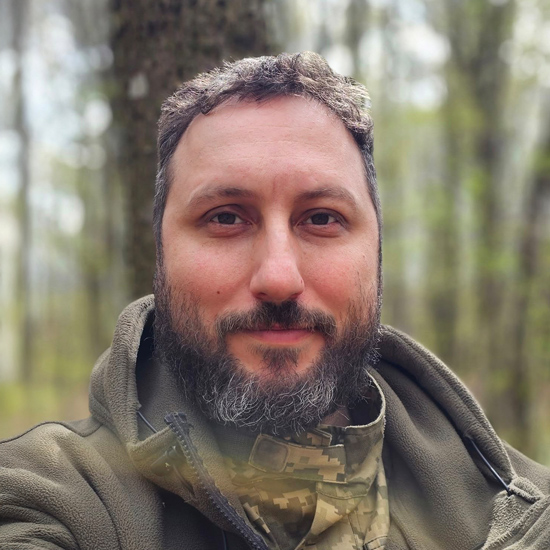 “The information space, in my view, is a battlefield in its own right — no less significant than the air, land, or sea. The battles fought there can be just as important as strategic or tactical gains made by Ukraine’s Defence Forces.
News becomes especially vulnerable to manipulation during periods of heightened social or political tension, or on particularly difficult days when Ukraine faces large-scale attacks. At such moments, certain stories are deliberately amplified, presented as the main focus, and pushed to attract attention — encouraging people to click, share, and follow the trail back to the original source. I rely on a number of fact-checking sources that I follow regularly. At the start of the full-scale invasion, I consumed pretty much every piece of information I could find. Now I am far more selective. Sometimes I even look at meme pages, because that is where information often turns into symbols, metaphors, and stories that shape how people understand what is happening.
The narratives we build as a society matter. They influence how we understand the war, preserve memory, and imagine the future. Of course, both the state and society make mistakes, and internal political battles can weaken us when unity is essential. But we should not ignore the fact that endless online battles have become almost a national habit — one that Russia is very skilled at exploiting.
What worries me is that we still have not really had an honest conversation about what kind of society we want to build after this war — and how we want to remember what we have all been through. Ukraine introduced a nationwide minute of silence at 09:00, but we have not yet managed to turn it into something that feels like a genuine shared tradition.
I also think we need a much stronger approach to patriotic education, starting from schools and kindergartens. It is difficult for me to accept decisions like allowing men aged 18–24 to leave the country, the constant disputes over military pay, or the wider attitude of expecting the state to provide without asking what each of us can contribute — whether in debates around cashback programmes or subsidised utilities.
I also think we are not doing enough to prepare society for what comes after the war. Ukraine will not simply return to the way things were — the experience of war will shape the country for years to come. Civilians need to understand that and start preparing now, whether through courses in tactical medicine, psychological first aid, or other skills shaped by the realities we are living through.
The state and the media have a role to play in making the military experience part of the wider conversation in society — not something separate, understood only by those who have served.
We saw something similar with Ukrainian-language music. When quotas were introduced, many people pushed back at first. But over time, they helped create space for a much stronger Ukrainian-language market and a real cultural revival. You cannot make people think the same way overnight, but culture and media can help bring people together and stop civilians and the military from drifting into completely separate worlds.
We also need to move away from the idea that the war will somehow resolve on its own without our involvement. Understanding is not built through words alone — although words matter. It comes through action: supporting the military, volunteering, helping veterans rebuild their lives, and standing with military families. What Ukraine needs is a new social contract — one where respect for those defending the country is not reserved for ceremonies and anniversaries, but becomes part of everyday life.