Three years ago, on 24 February 2022, Russia launched its full-scale invasion of Ukraine. The Kremlin badly miscalculated the level of patriotism within Ukraine’s Armed Forces, its other defence structures, and society as a whole. Moscow thought the sight of Russian soldiers draped in St. George ribbons, stars, and red flags would be enough to have Ukrainians greet them as “liberators.” As we now know, the reality couldn’t have been more different.
Putin and his inner circle were misled by intelligence from Ukrainian collaborators and their own security services. But what indeed fuelled their disastrous decisions were long-held illusions—narratives they’d clung to for decades, despite all evidence to the contrary. The Kremlin still viewed Ukraine through the lens of 2014, when the country’s military and security forces struggled to perform their constitutional duties. By 2022, however, they were facing a very different Ukraine.
In the summer of 2014, thousands of newly mobilised Ukrainian soldiers fled the ATO (Anti-Terrorist Operation) zone in droves, escaping in convoys of yellow Bohdan buses. By winter 2022, however, hundreds of thousands of men were heading to recruitment centres, eager to take up arms.
The first major shift in Ukraine since 2014 was a widespread surge in patriotism across the country. The second, just as critical, factor that made all the difference in February-March 2022 was a real-life combat experience. Of the 180,000 Russian troops that invaded Ukraine on 24 February, most had never seen battle. In contrast, they faced Ukrainian contract soldiers and mobilised troops, many of whom had already honed their skills in the ATO and JFO (Joint Forces Operation) operations.
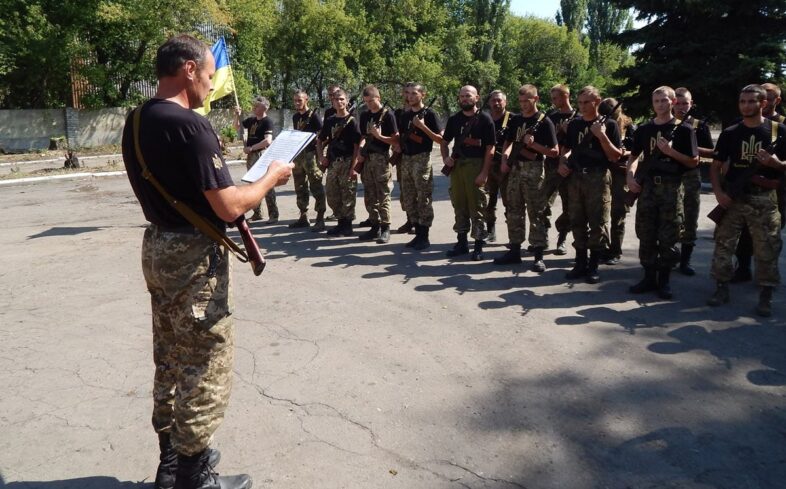
At the start of 2014, Ukraine’s Armed Forces officially boasted around 120,000 personnel, but the actual number was much lower due to chronic understaffing. Only about 6,500 troops were considered combat-ready—and even among them, some betrayed their oath, either staying in Crimea or leaving the military altogether.
By 2015, the real strength of the Armed Forces had reached 215,000, a figure experts had seen as optimal for Ukraine since the early 1990s. This surge came after six waves of mobilisation in 2014 and 2015, along with a boost in contract-based military service.
Credit goes to the then Acting President and Commander-in-Chief Oleksandr Turchynov, who led Ukraine through a rapid mobilisation effort, deploying military units at an impressive speed. But with threats emerging from nearly every direction—including from Belarus and Transnistria, where Russian military bases were stationed—Ukraine had no choice but to reinforce its defences across almost the entire border.
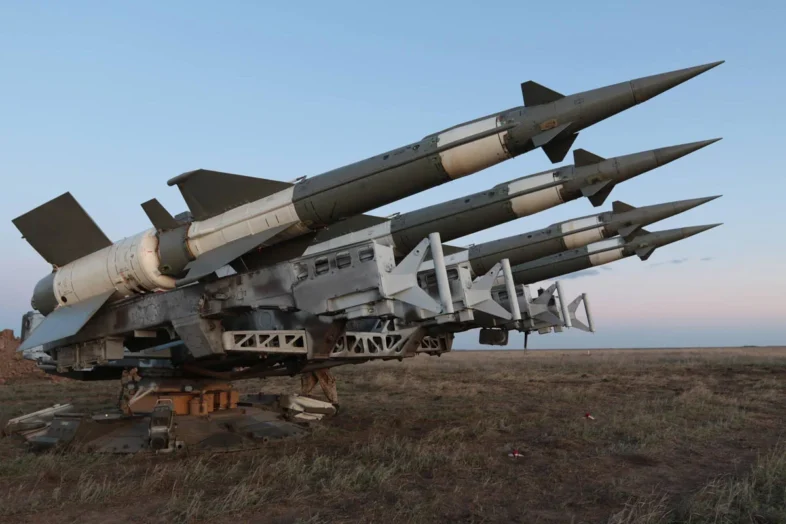
It wasn’t just the Ground Forces that saw an increase in numbers. The Air Force, particularly its anti-aircraft missile brigades, also expanded significantly. Between 2014 and 2015, their numbers nearly doubled, largely thanks to equipment pulled from storage. This restoration and strengthening of Ukraine’s air defences remains critical today in the fight against enemy aircraft, missiles, and drones.
During the three waves of mobilisation in 2014, Ukraine called up around 110,000 people and mobilised nearly 6,200 vehicles. Of these, 95,400 reservists—including 10,500 reserve officers—along with 5,500 vehicles, were assigned to the Armed Forces of Ukraine. The rest were deployed to the National Guard and the State Border Guard Service.
In 2015, nearly 90,000 people were conscripted. However, by then, military units were sufficiently staffed, and active combat had eased, so the numbers for the sixth wave of mobilisation were nearly halved.
The soldiers drafted in the third and fourth waves were a marked departure from those who came before them. Driven by patriotism, mentally prepared for combat, better trained, and led by commanders with battlefield experience from the summer of 2014, they were the kind of soldiers Ukraine’s military and political leaders had hoped to field as early as the spring of 2014.
Conscription of young men aged 19 to 20 for mandatory military service continued throughout the conflict, with 30,000–31,000 drafted each year. In 2015, 31,000 were called up, with 19,000 joining the Armed Forces of Ukraine, while the rest were assigned to the National Guard and the State Border Guard Service. The following year, around 30,000 were drafted, with 16,000 joining the Armed Forces. A significant number of those mobilised later signed long-term contracts, becoming the backbone of Ukraine’s military. By the end of the first five waves of mobilisation, more than 69,000 men had stayed on, signing contracts—7,500 officers and 61,500 soldiers and sergeants. This helped create an operational reserve of over 100,000 personnel, including 7,700 officers, ready for front-line duty.
By 2016, a final tally was made of how many citizens had completed their mandatory service before 2014, how many had remained on Ukrainian territory, and how many men hadn’t been drafted for various reasons during the six waves of mobilisation. The result was 400,000 military reservists. When Russia invaded, most of these reservists voluntarily enlisted in the Armed Forces of Ukraine in the early days of the conflict.
During the first five waves of mobilisation in 2014–2015, around 15,200 reserve officers were called up. Nearly half of them (7,500) later signed contracts with the Armed Forces and stayed on for several more years. The rest were discharged, though by 2022, nearly all had returned to the military. Thanks to these reserve officers and the graduation of new lieutenants from military training institutions between 2014 and 2016, by the end of 2016, Ukraine had finally reached the officer numbers that had been on paper during Viktor Yanukovych’s time.
According to the “White Book 2016,” the Armed Forces of Ukraine started the year with 37,103 officers, but by the end, that number had surged to 47,224. This impressive increase was driven by a record state order—2,900 young lieutenants, university graduates, and nearly 7,500 reserve officers who signed contracts. While the number of places in military training institutions had steadily dwindled in the 2000s and 2010s, since 2014, those numbers have been on the rise.
Following the active phase of the war in Eastern Ukraine, the structure of the Armed Forces underwent some significant changes. The Ground Forces were divided into four operational commands: West, North, South, and East. The leaders of these commands were responsible for ensuring Ukraine’s defence in their respective areas. In addition, there was the headquarters of the Joint Forces Operation (based in Chasiv Yar, Donetsk region), which led troops in Donetsk and Luhansk. Interestingly, the need for such a structure, with four or five commands, had been discussed as far back as 1992–1993. However, Ukrainian leadership at the time prevented it, leaving the military with a “Soviet legacy” in its organisation until 2014.
Between 2015 and 2016, 10 new units were formed, thanks to the territorial defence battalions and those conscripted through mobilisation, bringing the total to 24 brigades—adding to the 14 existing mechanised, tank, and airborne brigades. Most of these new units were stationed in Left-bank and Southern Ukraine, helping to rectify the deployment gaps that had been a lingering result of the Soviet military past.
Of the 24 brigades, half were on rotation in the Joint Forces Operation area, while the other half rested at their permanent locations. When Russia launched its full-scale invasion, 12 of those brigades were stationed at their bases.
Had Belarus not betrayed Ukraine by allowing Russian forces to pass through its territory and later conducting rotations and supplying invaders in northern Ukraine, those 12 brigades could have repelled the attack from the east and south on their own.
But with Russian troops entering the Kyiv and Chernihiv regions and the looming threat of an invasion from the Volyn region, most of the brigades stationed at permanent locations were redirected to defend Kyiv and the northern front. As a result, only three brigades were available to defend Southern Ukraine (due to logistical constraints), and just two were left to defend Slobozhanshchyna, Ukraine’s northeastern region.
In 2019–2020, the command and personnel of the Territorial Defence Forces and the Reserve Corps of the Armed Forces of Ukraine were established. The Territorial Defence Forces (initially 25 brigades and separate battalions) were tasked with protecting their regions and settlements. The Reserve Corps consisted of trained brigades that were meant to be ready to deploy in the event of an armed invasion by the enemy. The Territorial Defence Forces and the Reserve Corps were primarily replenished with individuals from the mobilisation reserve.
Between 2019 and 2020, Ukraine established the command and personnel for the Territorial Defence Forces and the Reserve Corps of the Armed Forces. The Territorial Defence Forces, initially made up of 25 brigades and separate battalions, were tasked with protecting local regions and settlements. The Reserve Corps, on the other hand, consisted of trained brigades, ready to deploy in the event of an enemy invasion. Both forces were primarily staffed with individuals from the mobilisation reserve.
Under General Ruslan Khomchak’s Commander-in-Chief of the Armed Forces, training became a priority for both command staff and personnel of the Territorial Defence Forces and Reserve Corps. Local volunteer groups were set up at each military recruitment office, and on weekends, they would head to training grounds and shooting ranges. Their focus was on combat skills, covering everything from shooting and grenade throwing to making Molotov cocktails. They also tackled tactical challenges, such as defending Kyiv with just a handful of rifle companies armed with automatic weapons and other improvised tools. Between 2019 and 2021, many officers and territorial defenders were taken aback by such tasks… but when February–March 2022 came around, they looked back on those experiences with a sense of nostalgia.
When Russia launched its full-scale invasion, the Territorial Defence Forces and Reserve Corps brigades quickly saw an influx of volunteers. After some training, they performed remarkably well in the summer and autumn battles of 2022, playing a key role in pushing Russian forces out of the right bank of the Kherson and much of the Kharkiv regions.
From 2014 to 2022, Ukraine managed to repair and restore a significant number of Soviet-era weapon systems. The 2012 “White Book” of the Armed Forces of Ukraine listed the service life of weapons and military equipment at the time. Over 53% of these systems had been in service for more than 25 years, while nearly 39% had been used for 20 to 25 years. Only around 5% had seen between 15 and 20 years of service, and 1.8% had been used for 10 to 15 years. Less than 1.5% of the equipment was under 10 years old. This meant that by 2012, only about 8% of Ukraine’s weaponry was fully operational, with the rest in need of significant repairs and modernisation.
During the summer of 2014, amid the Anti-Terrorist Operation, it became apparent that Ukraine lacked the capacity to produce artillery ammunition of all kinds, particularly for multiple-launch rocket systems. At that time, the only thing that allowed Ukraine to obtain the necessary ammunition was the pause in active fighting brought about by the Minsk agreements. This allowed the country to purchase supplies abroad while also starting to build its own production capabilities. The same issue applied to ammunition: Ukraine had to rebuild this capacity from scratch after losing Luhansk, where an ammunition factory was based.
By the autumn of 2015, experts estimated that Ukraine’s domestic defence industry could produce just 5 to 10% of the weapons and military equipment needed by its armed forces.
By 2022, the defence industry was still one of Ukraine’s weakest links. However, despite these challenges, the country not only managed to repair a significant amount of old Soviet-era equipment, but also set up mass production of various types of ammunition, quality protective gear, and military uniforms.
The years between 2014 and 2021 were far from wasted for both Ukraine’s Armed Forces and society as a whole. The country prepared effectively to resist Russia’s invasion, even achieving the nearly impossible: halting the enemy where they least expected (from Belarus) and executing successful counteroffensives in the autumn of 2022. However, by 2023, much of the military potential built up before the invasion had been depleted, posing a challenge for continuing the campaign.