Even in territories temporarily occupied by Russia, some people cling to the belief that Ukraine will eventually defeat the invader. They resist Russian propaganda and, at considerable personal risk, share an honest picture of life in cities seized by the aggressor — and they do it in Ukrainian.
Our interlocutor, due to her particular circumstances, splits her time between two settlements, moving between Donetsk and another town in the region. What follows is her account of daily life in the temporarily occupied territories today.
“Residents keep water tanks in apartments amid shortages”
People living in the temporarily occupied territories face countless daily social problems that the occupation authorities do nothing to resolve, offering only empty promises.
At the same time, residents of the temporarily occupied cities try not to speak about these problems openly, or they blame not the “Russian world” itself, but those who stayed in their positions after 2022. “The same people remained,” they say, “so the problems remained too.”
Among my acquaintances, almost no one, unfortunately, even attempts to explore an alternative view of the world beyond the official Russian narrative. When you tell them that fuel prices will rise because of attacks on oil refineries, they reply that nothing of the sort was mentioned on television.
The water supply in Donetsk and Volnovakha remains dire. In central Donetsk, for example, water barely reaches the upper floors of apartment buildings. Large containers have been set up across the city, and for winter, they’ve been wrapped in special insulation to protect against the frost. In some areas, old pipes are slowly being replaced with plastic ones.
Among themselves, people do not hesitate to blame Pushylin for the city’s chronic communal problems. Still, the common refrain is: “We just have to put up with it, they’ll sort it out.”
The contrast with how Ukrainian officials were criticised for the smallest misstep before 2022 is striking. Under occupation, authorities are only ever criticised in whispers — for obvious reasons. One widely reported incident this year involved a woman who recorded a video appeal to Putin over the lack of water in Donetsk; she was fined 20,000 roubles. Interestingly, local media reports described her like this: “A local resident who took part in the fighting on the side of pro-Russian forces in 2014 has now ended up in the dock.”
In Volnovakha, the water quality is appalling: rusty and fit only for flushing toilets. Those without a well or borehole have no choice but to buy water. A small water-delivery business has sprung up, bringing supplies directly to people’s flats, where residents keep tanks to store extra water.
Electricity in Volnovakha is also unreliable, cut periodically for so-called repairs, with accidental outages common, particularly in certain neighbourhoods.
Showy improvements mask harsh reality
People in Volnovakha are pleased about the new roads. They take heart in the hospital repairs. On the site of School No. 3, which was completely destroyed, a sports centre has been built. Yet everyone agrees that, regardless of the professional field, there are hardly any specialists left in the town. The Volnovakha employment centre confirms the same painful reality — and it, too, continues to hold its scheduled events largely for the sake of appearances rather than effecting real change.
From the conversations I overhear, it’s obvious that most people know life in the temporarily occupied territories is a daily struggle, a patchwork of shortages, uncertainty, and frustration. And yet, despite seeing it with their own eyes, many cling to the illusion of some very distant “bright future,” pretending to believe in it, as if holding on to that fragile hope could somehow make the chaos around them less real.
At the same time, young people are trying to leave for Russia, while others quietly look for ways to reach territory controlled by Ukraine. For many, these journeys can become a one-way ticket, as Ukrainian citizens now face major obstacles entering Russia, with travel largely limited to Sheremetyevo Airport. As a result, much of the housing in the temporarily occupied territories sits abandoned, and local authorities move in to appropriate these empty homes.
At Moscow’s Sheremetyevo Airport, people from the temporarily occupied territories undergo a strict filtration process that can last for hours, with their phones and social media accounts scrutinised and an “interview” that is, in reality, an interrogation. No mitigating circumstances — whether illness or the death of a relative — allow anyone to bypass the procedure. If one family member is denied exit, the family must either turn back or be split up.
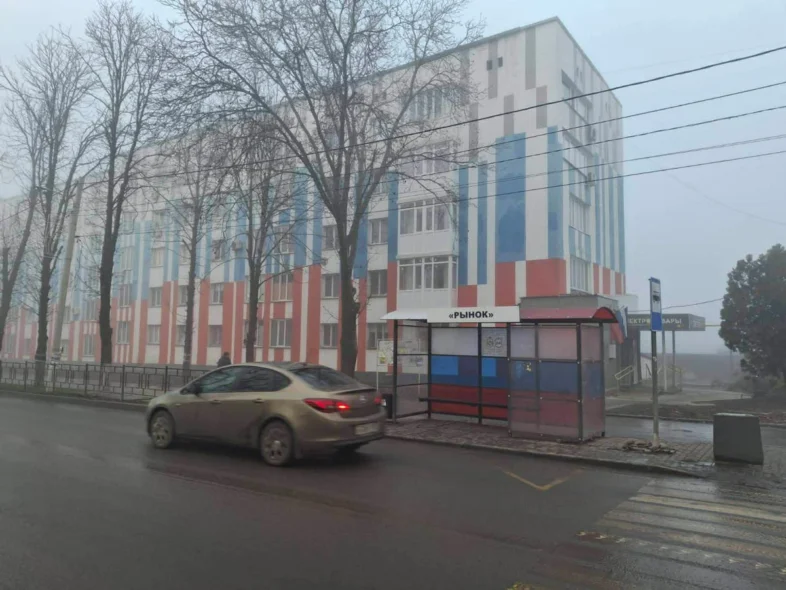
In Volnovakha, the bus station destroyed during the town’s capture has still not been rebuilt. Initially, a small ticket booth was set up on the central square next to the stage; it has now been moved to the site of the old station. Despite this, buses continue to run from Volnovakha to Moscow and St Petersburg.
The market — the town’s main hub for gathering, socialising, and trading — has also not been fully restored by the occupiers. The old section remains closed, while the newer part, damaged during the so-called “liberation,” has been rebuilt, possibly with money from local entrepreneurs.
Volnovakha has numerous pick-up points for orders from Russian online marketplaces — Ozon, Wildberries, and others. They are popular, as the town’s selection of consumer goods remains extremely limited.
Once a major strategic railway junction, Volnovakha now sees electric trains running only to Mariupol. There are no long-distance passenger services. The nearest city from which people can travel to the “mainland” is Rostov-on-Don in Russia. Freight trains still occasionally pass through Volnovakha, but the scale is a shadow of what it was before the war. The Russian occupation authorities mainly transport coal, gravel, sand, and sometimes metal.
In Volnovakha, queues outside the military enlistment office are a constant sight. But this doesn’t mean everyone is preparing for war — without military registration, securing a job is impossible.
In Donetsk, the once-famous Mayak shopping complex has long fallen into disrepair. Without heating since 2014, it is now completely closed, its shop windows broken and empty. The city still has a handful of functioning shopping and entertainment centres, cafés, and Shcherbakov Park is maintained reasonably well. Yet these small glimpses of normal life do little to lift the pervasive grey reality that dominates the city.
“Here, you’re only safe if you don’t ask questions”
Recently, on the road from Donetsk to Volnovakha, I struck up a conversation with Russian soldiers. They said the war has no end in sight and placed no hope in Trump. Once you join the “special military operation” [the term Russians use for its 2022 invasion of Ukraine – ed.], they added, you can leave only as a 200 [dead] or a 300 [injured].
On the streets, no one speaks of “peace deal” or “negotiations.” Here, personal safety exists only for those who keep their heads down and don’t ask questions.
Even a simple conversation deemed “undesirable” can get you in trouble. There is a law against searching for materials the authorities label as extremist — just typing a phrase into a search box can put you at risk. In local Telegram channels, complaints and dissent occasionally slip through, but they are swiftly “shut down.” Screenshots are strictly forbidden; the only workaround is to photograph the screen with another device.
Lately, all messaging apps and YouTube have been blocked by the Russian authorities. Anyone who doesn’t know how to use a VPN is completely cut off from relatives living in Ukrainian-controlled territory. Advertising VPNs is also banned, with fines for anyone caught. I suspect telecom operators keep a record of everyone using a VPN, just in case. Officially, it is framed as a way to protect citizens against fraud, but in reality, it serves as a tool of control.
Seeking Ukrainian pensions
Even the most pro-Russian residents of Volnovakha still try to claim Ukrainian pensions. This year, a new requirement under Ukrainian law added another hurdle: in their personal account on Ukraine’s Pension Fund website, pensioners must declare that they do not receive payments from other countries, including Russia.
The challenge is compounded by poor connectivity and the inability to receive Ukrainian SMS messages with banking codes. Not everyone has the Ukrainian government’s Diia app to use a digital signature, and banks that issue certificates remotely are few and far between. At Oschadbank, for example, a physical visit to a branch is unavoidable. Even here, there are “fixers” who, for 5,000 roubles, are willing to help pensioners navigate through modern digital technologies.
“Even die-hard ‘z-patriots’ concede: this is not Russia”
Temporarily occupied territories is not Russia — even in the worldview of its residents, let alone for Russians from the “mainland Russia.” From my own experience, Russians who don’t follow the news sometimes get confused when you say you’re from the ‘Donetsk People’s Republic’. Their immediate response is often: “But that’s Ukraine?” At the same time, in Volnovakha, when I began complaining about the quality of goods in a shop, someone asked me, “Are you from Russia?”
Today, the overall mood of life in the temporarily occupied territories can be summed up in one phrase: “We just have to suffer through it.”