French-Belgian architect and urbanist Martin Duplantier divides his time between France and Ukraine, overseeing projects that range from small-scale architectural designs to broad urban strategies. Working in Paris, Bordeaux, Lviv, and Kyiv, and teaching at the Kharkiv School of Architecture, he tells The Ukrainian Week how Ukrainian architectural identity is being reimagined, and explores the opportunities emerging in the country’s reconstruction — a place where rediscovered traditions, local resources, and a new spirit of solidarity come together.
— You’re both an architect and an urbanist. How do those roles come together in your work?
— For me, it’s about thinking beyond a single building — looking at construction, real estate, and public spaces as a whole. How do people actually learn to live together? How do you ease conflicts in a city that’s, by nature, full of tension, friction, and disagreement? Today, being an architect and an urbanist means engaging with that entire messy, interconnected system.
— How did you end up working so closely with Ukraine?
— There are two reasons — one obvious, one less so. The obvious one: my kids are Ukrainian. The less obvious: back before 2014, I entered an urban planning competition in Moscow. The project never went anywhere, but it caught the attention of Kyiv’s city administration, which invited our bureau right at the start of Russia’s invasion. The collaboration didn’t really take off, but that’s when I first connected with Ukraine’s academic community.
— What did you see in Ukraine back then?
— Ten years ago, I saw a country eager to grow and break free from its Soviet past and Russian influence — but also one where the developer was the main player. Private interests dominated, often clashing with the public good and even common sense. Despite huge potential, Ukraine struggled with weak governance and competing power centres that mostly served private agendas. That’s not exactly the best environment for urbanism.
At the same time, this mix gave Ukrainian cities, especially Kyiv, their unique character — chaotic, organic, almost chaotically organic — something that really sets it apart from other European capitals. For all its contradictions, it’s a city I’ve grown to love deeply.
— And Ukrainian architecture?
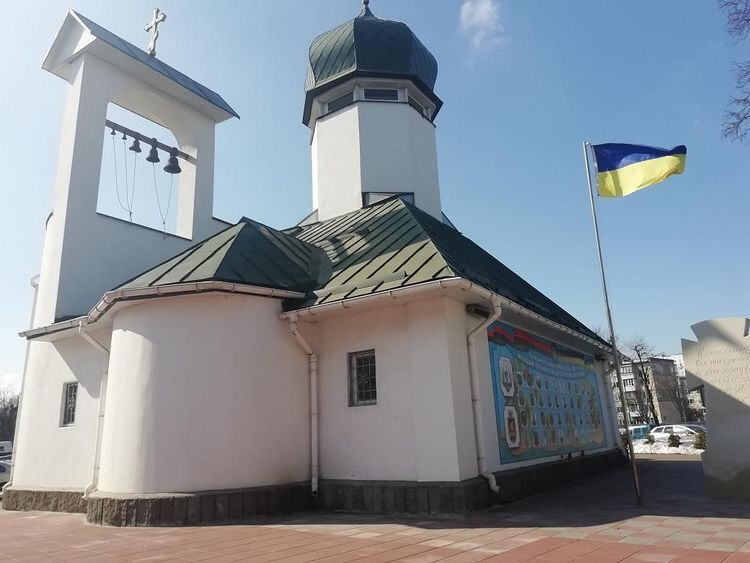
— Ukraine has some remarkable examples of 20th-century architecture, even from the Soviet era. Take Kharkiv, for instance, rebuilt in an exceptional constructivist tradition. Most of the architects were Ukrainian, so constructivism here is also a Ukrainian story. That brilliant early modernist period went on to inspire Le Corbusier and many European and American modernists.
But Ukraine has also endured repeated waves of destruction, which can be jarring for Western Europeans like me, used to the continuity of historical heritage. You really feel it when you arrive in Kyiv, Kharkiv, or even Izium. I was in Izium with the mayor right after the city was liberated — he said, “Martin, you know, this is a city with a long history.” We step out of city hall, I look around, and all I see are Soviet buildings. I ask, “So where is this city?” It’s gone, erased again and again. Sometimes only a fragment of a church remains, and even that is often not that old.
Ukraine is truly a “land of blood,” crushed repeatedly under the weight of history.
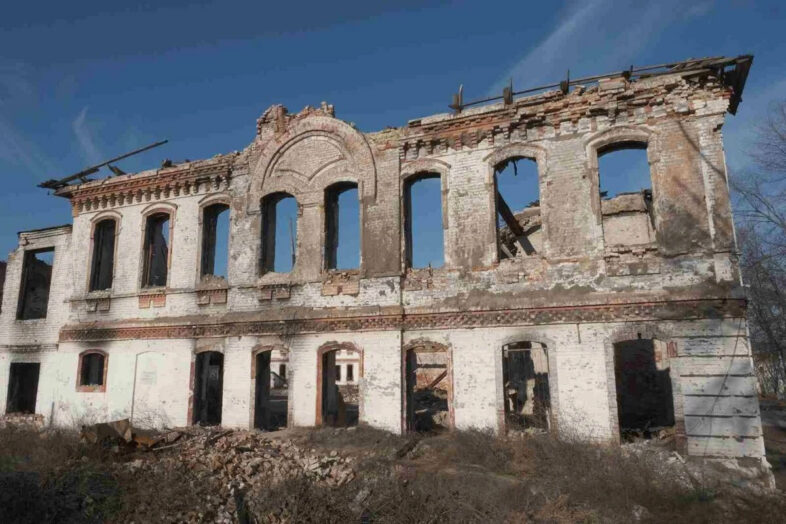
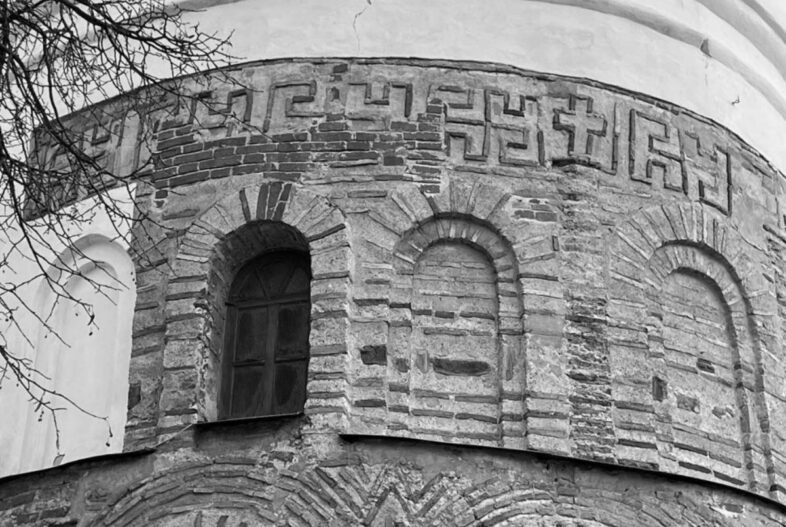
In addition, the Russians spent so long and so deliberately trying to wipe out any expression of Ukrainian identity that today, to really feel the continuity of the country’s architectural heritage, you often have to go to the tiniest villages, the most remote corners of the country.
— Are you talking about traditional architecture?
— I see Ukrainian traditional architecture as genuinely remarkable for many reasons. These are structures built almost without architects, shaped organically over centuries using local materials and local know-how, rooted in craftsmanship unique to each region. What stands out most is their durability — some homes have lasted three, even four centuries. And contrary to popular belief, wood holds up remarkably well over time, preserving both the building and its character across generations.
What feels distinctly Ukrainian to me is the skill in working with wood and straw, and the way these homes can be heated using very few resources. That becomes especially clear during the harsh winters the country faces today: when temperatures drop to -15°C, those living in traditional houses are often in a far better position than someone on the 25th floor of a high-rise with no heating or electricity.
Ukraine’s architectural identity is rooted as much in knowledge and the way people inhabit space as in buildings themselves — a vital form of intangible heritage. Today, Ukrainians are working to rediscover these traces, reinterpret them, and breathe new life into them.
Since Russia’s invasion in 2014, this effort has gained real momentum, accompanied by a deepening awareness of roots: where they come from, what this centuries-old craft knowledge represents, and how local resources help keep that continuity alive.
— Are you part of this movement?
— We try to get these projects moving, even on a small scale. We’re bringing back the use of stone, wood, and straw so Ukraine can see it has access to renewable, low-carbon, and highly versatile materials — the same ones that are in demand across France, Belgium, Germany, and elsewhere.
Even in the middle of such a devastating war, there’s a chance to ask the right questions. It’s about survival: when we talk about independence, it starts with making the most of what’s available — traditional, local materials like agricultural waste, timber, and clay. Ukraine also has an industrial base, so production chains can be built around these resources.
My role is to teach, spark interest, and inspire younger generations to engage with these questions, experiment, and take risks. It’s crucial to keep this momentum of thoughtful renewal rooted in rediscovered tradition, while also developing industrial approaches through pilot projects.
— From what you’re saying, it sounds pretty straightforward…
— It’s simple and complicated at the same time. In 2025, Ukraine is still working under construction standards inherited from the Soviet era, which favour concrete and steel — materials that take enormous amounts of energy to produce. These rules also create duplicated engineering work: when you submit a project for review, you have to prepare it as if state funding still exists, just like in Soviet times — even though it doesn’t.
There are a lot of obstacles, and plenty of people who benefit from the status quo — engineers, firms, and others with a financial stake in the system. They aren’t exactly eager for change. Seeing this, I think: a country at war, trying to resist and develop against all odds, mobilising its own resources, can’t afford to stay tied hand and foot to a regulatory system left over from the USSR.
The entire system needs a rethink. In Europe, you don’t navigate multiple layers of approval at every stage of a project. In most countries, no one tells you that you must use steel or concrete beams — you just have to follow local urban planning rules. Ukraine faces a real challenge in decentralisation, one that hasn’t yet been fully realised.
— And what about the Ukrainians themselves — the people who live in these cities and buildings? What do they think?
— When people have been denied the ability to make choices for decades, as under the Soviet system, it’s not always easy to know what you want or reach consensus. That’s why involving citizens in shaping a vision for the common good is so important. It’s challenging even in France, but people need to learn to think about the city. That’s why I turned to teaching: I believe change comes first and foremost through education. This is your country, your future, your heritage. My role is to help spark dialogue.
— And does it work?
— What strikes me most about Ukraine is the sheer vitality of its civil society. There’s a real hunger for self-expression. On projects in Zaporizhzhia or Kherson, we consult with thousands of people, including those forced to leave the country. They remain deeply tied to their cities — writing to us, joining long online meetings to discuss their future. It’s remarkable.
For me personally, it’s a huge source of energy. Since 2022, there’s been a clear shift in focus toward the quality of the projects themselves — their social impact, how they can help heal physical and psychological wounds, rebuild connections, and even draw children out of digital isolation. I never imagined architecture could shape daily life so profoundly. Amid such immense tragedy, there’s something extraordinary — a resilient, collective spirit.
— Could this experience be useful for other European countries?
— We tackled these questions at the French pavilion during the 2025 Biennale, which focused on challenges and risks — geopolitical, environmental, and natural. The parallels are obvious: from bunkers and shelters to the broader idea of resilience — how to operate with limited resources, function in degraded conditions, and keep learning and working under pressure.
In France, we’re extremely vulnerable. Shelters are almost nonexistent; in Paris, practically none. We’ve known for decades that preparation is needed — but we haven’t done much.
Ukraine, however, is actively developing practices we could all learn from — from shelter regulations to risk mapping and technological innovation. There are real opportunities for collaboration between Ukrainian and French mayors, urban planners, and engineers. What’s happening in Ukraine today offers valuable lessons in resilience, both environmental and geopolitical.