Just days ago, Germany’s newly elected Chancellor Friedrich Merz said his government would no longer engage in public debate over specific weapons deliveries to Ukraine. Decisions on the type and scale of military aid, he noted, would continue to rest with the Cabinet and be coordinated with international partners — but they’d now stay behind closed doors.
Asked whether Ukrainian President Volodymyr Zelensky could still expect Germany to send Taurus long-range missiles, Merz said yes. That message was reinforced by Bundestag Vice President Omid Nouripour, who reminded the public of Merz’s previous support. “Friedrich Merz put his name behind getting the Taurus delivered as soon as possible. Forgetting that right after being sworn in wouldn’t be the smartest move,” he told n-tv. “I hope we’ll soon be in a position to help Ukraine with everything it needs.”
Still, Merz’s decision to draw a line under public debate about arms deliveries feels like a throwback to the early days of Chancellor Olaf Scholz’s wartime policy — a period marked by tight-lipped communication and behind-the-scenes decision-making that lasted until about June 2022. Back then, however, Merz was on the other side of the aisle and had little patience for that kind of approach.
“We’re being made to wait, there are excuses, there’s no clear information about what Germany is actually supplying,” he said in a joint interview with NTV and RTL in April 2022. “And then it’s all justified by saying it needs to be kept secret for security reasons.” When pressed on what he would do differently if he were the one calling the shots, Merz didn’t hesitate: he would keep the public better informed.
That’s why, now that he’s the one steering the ship and opting for the same kind of discretion he once condemned, the backlash has been swift. Ukrainian diplomat Andriy Melnyk didn’t hold back, saying that the renewed push for secrecy “brings back bad memories of the time when the government tried to hide the lack of military support behind a veil of secrecy in the spring of 2022.”
According to Andriy Melnyk, it remains crucial for Ukrainian society to know what weapons Germany is sending — and how fast they’re arriving. He argues that publicly disclosing this information isn’t just about accountability at home; it also sends a clear message to Moscow. “Putin needs to know exactly what the new German government is doing militarily to force him towards a just and lasting peace,” the diplomat said.
But not everyone shares that view. Ukraine’s current ambassador to Germany, Oleksii Makeiev, sees value in keeping things quiet. “A good chess player thinks several moves ahead. What he doesn’t do — is reveal those moves to his opponent,” he told the dpa news agency, adding pointedly that the Ukrainian ambassador is “privy to such secrets.”
Still, the push for transparency hasn’t faded. Marie-Agnes Strack-Zimmermann, who heads the European Parliament’s Defence Committee, has called on Merz to clarify Germany’s position on the delivery of Taurus cruise missiles. “It’s clear that Friedrich Merz doesn’t want to continue the public debate about individual weapons systems — decisions that affect security should be made in the appropriate committees, with people who have the right level of detail,” she said. “Nevertheless, when it comes to supplying the Taurus, we expect transparency. The CDU itself played a major role in initiating this debate — now it must also take responsibility.”
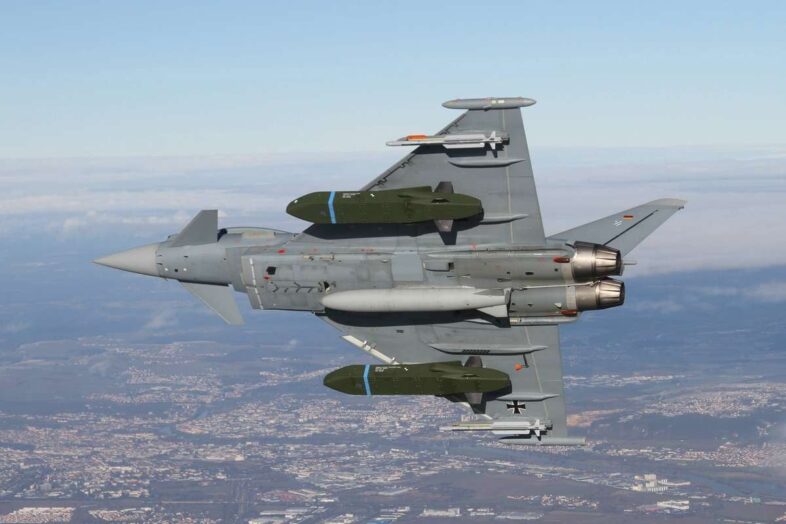
Merz’s team, for its part, has framed the move as a matter of “strategic ambiguity” — a way to keep Russia guessing and complicate any potential countermoves. But not everyone is sold on that line of thinking. Carlo Masala, a political scientist at the Bundeswehr University in Munich, told Germany’s RedaktionsNetzwerk Deutschland that the rationale only goes so far. “Germany has supplied Ukraine with nearly the full spectrum of weapons, aside from the Taurus and the Eurofighter,” he said. “And since I see the Eurofighter as completely off the table, that really just leaves the Taurus.”
Lars Klingbeil, leader of the SPD, recently pointed out that unlike the previous coalition, where decisions on weapons supplies to Ukraine were solely made by the Chancellor’s Office, the current government will take a more collective approach. This shift, according to Carlo Masala, may explain why Merz has opted for secrecy — likely to keep internal coalition disputes under wraps. Masala also raised another important issue: with the effective suspension of the debt brake on defence spending, funds could now be directed to Ukraine, allowing it to either purchase or produce its own weapons.
Meanwhile, government spokesperson Stephan Cornelius stated, without providing specifics, that Germany is already preparing a decision to supply “long-range fire” — a reference to long-range weaponry. This strongly suggests that Taurus missiles will likely be part of the package.