Moscow is setting up student “media patrols” to monitor pro-Ukrainian posts on social media in the temporarily occupied territories. The Yellow Ribbon movement, a resistance movement operating in the Russian-occupied territories, has condemned the system as a form of digital denunciation, drawing comparisons with the Stalin era.
According to Yellow Ribbon, Russian authorities have approved plans to create so-called “cyber militias”. These “online patrols” would be tasked with monitoring young people’s social media activity. “These new structures will be made up of students from secondary schools and technical colleges. They will regularly monitor the social media pages of students and young people,” Bakhmut.in.ua reported. The aim, it said, is to identify what the occupation authorities describe as “destructive content”.
The project is part of a longer-term strategy, with plans to expand it under a programme running through to 2030. Representatives of the Yellow Ribbon resistance movement say it revives a system of denunciation that flourished under Stalin — now updated with digital surveillance tools.
Efforts to tighten control over people in the occupied Ukrainian territories began in the early days of Russia’s invasion in 2014. According to multiple accounts, Russian forces quickly moved to identify those openly expressing pro-Ukrainian views. They targeted people whose relatives had served or were serving in the Ukrainian military, as well as anyone promoting Ukrainian language and culture.
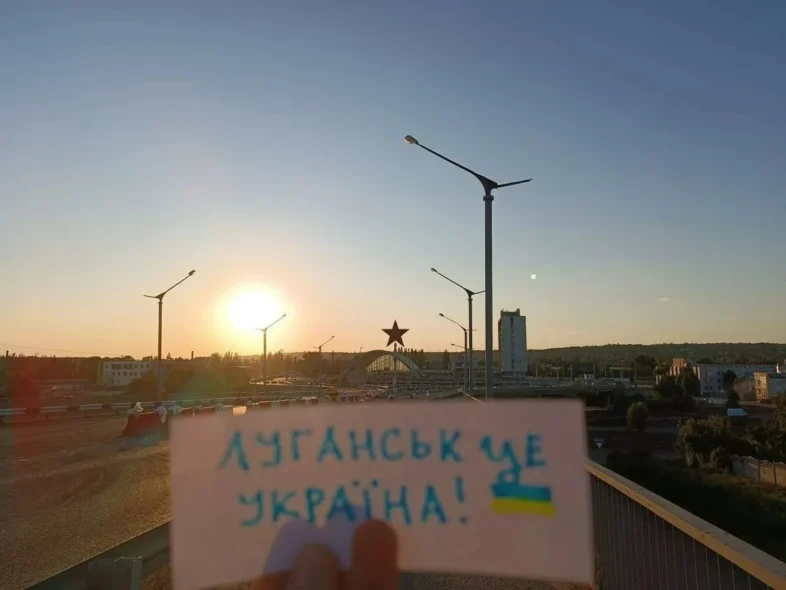
In one case, Sevil Velieva, an activist with the Yellow Ribbon movement, was detained in 2024 after photographing Ukrainian symbols in occupied Melitopol. Russian security services reportedly traced her using the geolocation of the images and surveillance footage. Ukrainian children’s writer Volodymyr Vakulenko was tortured by occupying forces in Izium after volunteering in support of the Ukrainian army.
A few weeks ago, the Yellow Ribbon movement found itself at the centre of a media row after the Kyiv Independent published an investigation into resistance groups operating in the occupied territories — including Yellow Ribbon and the women’s guerrilla movement Zla Mavka (“Evil Forest Witch”). The report sparked a heated online debate, particularly over the safety of such protest activity under occupation, the role of donors and subcontractors, and how far journalists should go when reporting on resistance networks on the ground.
According to the investigation, both Yellow Ribbon and Zla Mavka received support from the British company IN2, based in Dubai. IN2 itself has received funding from the British and Canadian governments. The authors concluded that activists were encouraged to take part in resistance activities despite repeated warnings about the risks involved. IN2 said it “categorically rejects any claim that the programme’s activities could have led to the arrest, torture or death of activists from the Yellow Ribbon movement”.
Ukrainian researcher Hanna Shelest, director of security programmes at the Foreign Policy Council “Ukrainian Prism” and chair of the supervisory board of the Ukrainian Institute, also strongly criticised the Kyiv Independent article. Since 2022, she has supported the Yellow Ribbon movement by helping mobilise resources, expertise and funding, but says she has not been involved in its day-to-day activities and has had no direct contact with activists.
Shelest argues the article relies on questionable sources, distorts information about funding, and makes what she calls unfounded insinuations about possible links to the deaths or torture of activists, alongside misrepresenting individual cases. She also stressed that members of the resistance movement act entirely of their own free will and “can decide for themselves whether or not they want to join the resistance movement.”
By contrast, Andriy Dikhtiarenko, editor-in-chief of Realna Gazeta, which reports on life under Russian occupation, says acts of civil resistance in the occupied territories are especially important for Ukrainians living there, helping preserve identity, dignity and a sense of belonging to Ukraine. Dikhtiarenko himself took part in protests in Luhansk in 2014.
Still, the Yellow Ribbon movement continues to operate in the occupied territories, gathering firsthand accounts of pressure on civilians under Russian control, tracking changes to school curricula, and sharing practical guidance on how children living under occupation can safely apply to Ukrainian universities.