In the 2010s and early 2020s, Ukraine’s IT sector was predominantly driven by outsourcing, with companies fulfilling orders for foreign clients. There were few product-focused firms, though some, like Ajax Systems and Grammarly, stood out. Achievements in Ukrainian IT were often gauged by acquisitions by tech giants—such as Looksery’s purchase—or the enduring legacy of the 2007 game S.T.A.L.K.E.R., alongside sporadic efforts to digitalise public services. The market was saturated with promises of quick career changes, offering courses to “become an IT specialist in three months and earn $3,000.” Niche media outlets enthusiastically reported on 45-year-olds switching careers to tech, while “Ukrainians in global IT” lists frequently celebrated figures like Jan Koum, WhatsApp’s founder, and Vlad Yatsenko of Revolut, emphasising their Ukrainian roots.
In 2022, the landscape shifted dramatically. Ukraine’s technological achievements during the first year of war were defined by an internet that remained operational during blackouts, Nova Poshta delivering parcels to the frontlines, and a resilient, user-friendly electronic payment system that transformed the population into a nation of donors—buying satellites, drones, and, when possible, other forms of weaponry. Given the scale of the challenges posed by prolonged power outages, it seemed inevitable that the outsourcing IT sector would fade into obscurity.
Over the past two years, Ukraine’s IT exports have seen a modest decline, with outsourcing companies scaling back operations. However, this period has also witnessed the rapid rise of a new sector—DefenseTech, or MilitaryTech—focused on technological innovations for military applications. Yet, Ukraine’s IT sector is far from defined by the war alone. The highly anticipated release of S.T.A.L.K.E.R. 2 in November 2024 shattered numerous records for audience engagement, while Ukrainian startups continue to attract significant investment. With initiatives like Reserve+ and Army+, designed to digitalise military records and workflows, it’s clear that Ukraine’s IT sector has not only endured but has adapted and thrived in the face of new challenges. It remains a crucial pillar of both the country’s economy and its defence.
Therefore, The Ukrainian Week has decided to highlight the key achievements of Ukraine’s IT sector in recent years. This ranking will not only showcase products developed by Ukrainian companies but also spotlight significant technological events and processes in Ukraine, even those not directly tied to the IT industry. Among these is the country’s successful push to move away from Russian software, including the widespread rejection of Russia-linked Telegram by Ukrainian society.
DefenseTech, or MilitaryTech: the new frontier of Ukrainian IT
Valerii Zaluzhnyi, Ukraine’s ambassador to the UK and a former commander-in-chief, has often described the full-scale invasion as a war of technologies. The ongoing conflict, marked by the use of drones, robots, and elements of artificial intelligence, highlights the growing role of technology in modern warfare. In this context, the need to strengthen battlefield protection has led to the emergence of a new segment in Ukraine’s tech market—DefenseTech, or MilitaryTech—focused on technologies used in military operations and on the frontlines.
The global rise in investments in DefenseTech is mirrored in Ukraine, where D3 Venture Capital, the first and only investment fund dedicated to this sector, is supporting innovations in military technology. The fund has already backed seven startups, and experts predict that investments in Ukrainian DefenseTech could reach $50 million in 2024.
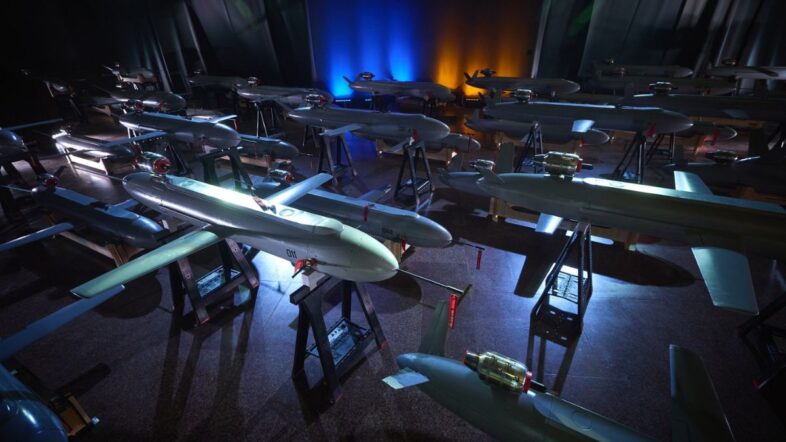
The Peklo (“Hell”) drone missile can reach speeds of up to 700 kilometers per hour.
Ukrainian DefenseTech is further supported by the Brave1 defence technology cluster, which has proven highly effective. Additionally, the sector’s growth is evident in the participation of over 200 DefenseTech companies in the special tax regime “Diia.City.”
Notable examples of Ukraine’s military innovation include the “Peklo” rocket drones, the Droid TW 12.7 robotic combat system equipped with a Browning 12.7 machine gun, the MAGURA V5 maritime drones, and the “Palianytsia” missile drone. Ukrainian engineers have also developed the “Tahran” unmanned ground robotic system, marking another significant achievement.
In recent years, a range of cutting-edge military software solutions has emerged. Among them are the “Kropyva” tactical command and control system and the Griselda automated system, which uses artificial intelligence for data input, processing, and transmission.
Two other noteworthy projects include the Kolossal OSINT system, created by the DeepState UA team to analyze open-source information for military use, and a forthcoming real-time situational awareness and risk management platform from Mantis Analytics. This platform has already secured $240,000 in funding from the Nezlamni Fund.
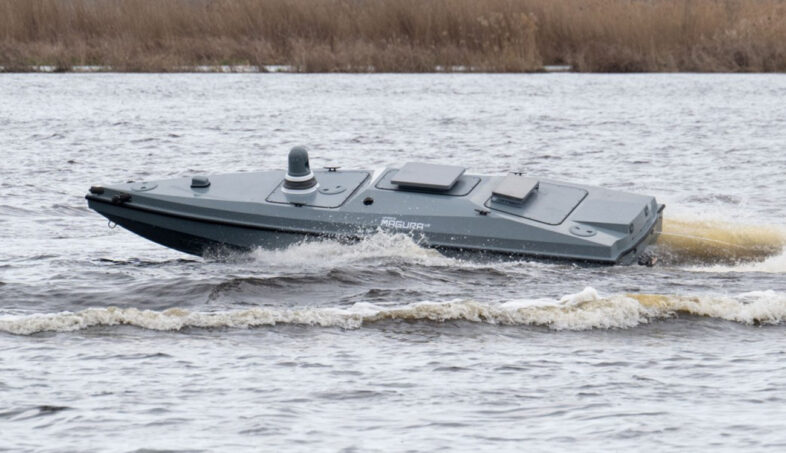
The Magura V5 kamikaze maritime drone.
Reserve+ and Army+: Ukraine’s move to digitise the military
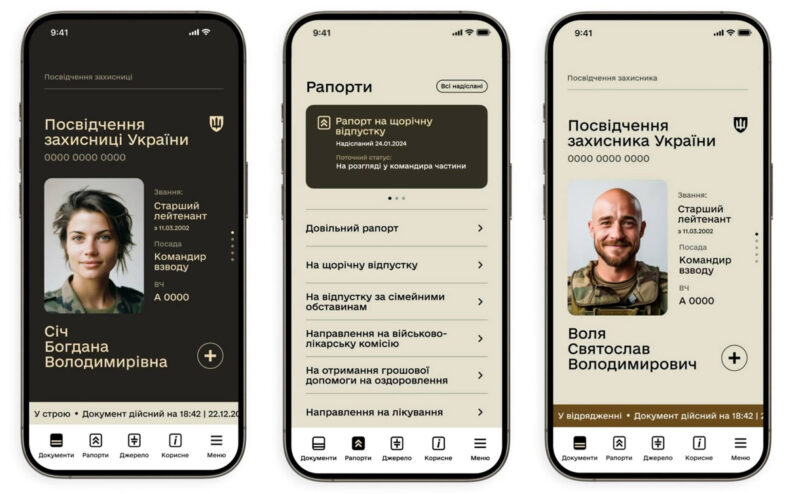
In 2024, the Ukrainian apps Reserve+ and Army+ became indispensable tools for conscripts, reservists, and those subject to military service, providing easy access to information, facilitating updates to military records, and streamlining communication and digital processes within the armed forces.
Reserve+, designed to simplify the updating of military records, was downloaded over 1.5 million times within just a month of its launch. By September 2024, the app had reached approximately 3.4 million users.
Despite its success, users have reported technical issues, such as incorrect data display and difficulties with authorisation. As a result, the app has received a low rating of 2.6 out of 5 stars. However, given the challenges of mobilisation and the task of updating military records, Reserve+ remains a notable achievement for Ukrainian IT.
Launched in August 2024, the Army+ app has become a key tool for mobilisation and military resource management. Designed to ease the lives of service members, it offers features such as electronic reporting. By the end of August, 264 military units had adopted the app to manage reports for their divisions.
Army+ was conceived to streamline administrative processes and enhance management efficiency, marking a significant step towards digitising routine military operations. Although some service members have reported challenges with the app, its introduction remains a noteworthy achievement for Ukraine’s IT sector during wartime.
S.T.A.L.K.E.R. 2: Heart of Chornobyl – how the game became Ukraine’s global ambassador
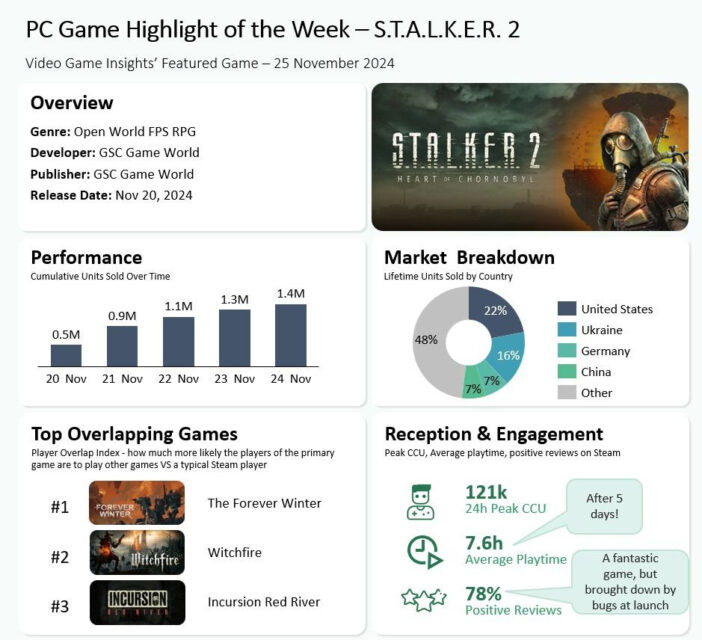
One of the standout achievements of Ukraine’s IT sector in 2024 was the release of S.T.A.L.K.E.R. 2: Heart of Chornobyl. Developed by GSC Game World and launched on 20 November, the game quickly became not only one of the year’s most popular releases but also a powerful symbol of Ukraine’s gaming industry resilience amid the war. It demonstrated that Ukrainian developers could produce world-class content that competes on the global stage.
In the first two days of release, the game sold over 1 million copies, and its launch day drew more than 416,000 viewers on Twitch. It also set multiple records, including a peak of 117,928 concurrent players on Steam, surpassing the original S.T.A.L.K.E.R.: Shadow of Chernobyl, which peaked at just 2,300 players. Soon after, the game reached over 121,000 simultaneous players, setting a new record for Ukrainian-developed games.
S.T.A.L.K.E.R. 2: Heart of Chornobyl quickly became the highest-grossing game of its release week, surpassing big titles like Counter-Strike 2 and Dota 2. In just the first two days, nearly 80% of reviews were positive, with players praising the game’s immersive atmosphere and emotional impact, especially after 15 years of waiting. One of the standout features of the game is how it incorporates Ukrainian culture and history, adding a deeper layer to the experience. This makes S.T.A.L.K.E.R. 2 not just a game, but a significant cultural product that brings Ukraine to the global stage. Unlike earlier versions of S.T.A.L.K.E.R., which had a Russian-language interface, this new release won’t include that.
Ukrainian startups keep thriving
In 2024, Ukrainian startups continue to attract significant investments despite the ongoing challenges of war and global economic instability. In the first quarter alone, Ukrainian startups secured over $42 million in funding, with more than $35 million raised in the second quarter.
In recent years, eight Ukrainian startups have reached unicorn status, including names like Grammarly and GitLab. Potential new unicorns include Ajax, SoftServe, and Intellias.
At the 2024 Web Summit, Ukrainian startups gained further recognition, with HealUA, the country’s first doctor consultation app, standing out. Created by the Global Medical Knowledge Alliance (GMKA) in partnership with the startup studio Empat, HealUA was featured in the Startup Alpha program and received the Impact Startup award for its significant contribution to global health and social impact.
Ukraine’s war with Telegram
The story of Telegram in Ukraine can’t be neatly classified as a success for the country’s IT sector. It’s not about technological milestones or product innovations but rather the rejection of a highly controversial service with Russian ties. Nevertheless, the efforts of the activist community, which has spent over two years speaking out, writing, giving interviews, and researching Ukraine’s dependency on Telegram, serve as a testament to the strength of civil society in Ukraine. These activists not only repeatedly demonstrated Telegram’s connection to the Russian government but also persuaded intelligence agencies, government officials, and bureaucrats that the issue needed to be addressed—potentially through less popular and democratic measures, such as bans and blocks. As a result, the use of Telegram has been prohibited in the Ukrainian Armed Forces, among specialists working in critical industries, and at various universities. Furthermore, some companies and media outlets have chosen to voluntarily abandon the platform.
A key turning point in this story was the arrest of Telegram founder Pavel Durov, which, by an odd coincidence, occurred on Ukraine’s Independence Day, August 24, alongside complaints from French intelligence services. Since then, Telegram has undergone significant changes: the service removed some controversial features, such as “People Nearby,” which allowed users to see others in their vicinity, and announced a new partnership with intelligence agencies to assist in de-anonymizing users suspected of criminal activity.
While the ultimate victory for the anti-Telegram movement in Ukraine would be the disappearance of anonymous Telegram channels, that goal remains, unfortunately, still out of reach.
Tech resilience
Ukraine’s IT sector in 2024 showcases its resilience and adaptability in the face of ongoing challenges. Even with a 5% dip in IT service exports compared to last year, Ukrainian companies are still drawing in new clients and leading the way in innovation, especially in generative AI and military technologies. The rise of new startups, growing investment in miltech projects, and the digitisation of the military are all shaping a promising future. These developments suggest that, once the war concludes, Ukraine’s IT sector could emerge as one of the most dynamic globally.