Oleksiy, born in Mariupol in 1979, spent part of his childhood in Pevek, a small town in Chukotka, where his family had moved for work. Each summer, though, he and his brother returned to Mariupol to stay with their grandmother. In 1992, following Ukraine’s declaration of independence, the family returned from the north, and since then, Oleksiy’s life has been inextricably linked to his hometown. He studied there, worked at Azovstal and the Illich Steel Plant, and later returned to Azovstal, where he built a family.
But the war changed everything. As Russia launched its full-scale invasion, Mariupol became the epicentre of fierce fighting. Those who hadn’t fled in the early days of the war found themselves trapped, with little hope of survival. The city didn’t fall right away, and in response, the enemy unleashed devastating waves of artillery. Oleksiy was able to get his family out of the city’s hellish grip, but the horrors of those days still haunt him, like a terrible nightmare.
Below is his story.
Before the invasion
Until the very end, I refused to believe it, despite all the warnings from Western politicians telling us, “You don’t have much time; the war is coming to you.” Just days before 24 February—on 16 February 2022—Rinat Akhmetov and Volodymyr Zelensky visited Mariupol. They met, walked through the city, and for me, that felt like a signal that everything was fine. We didn’t sense any immediate threat. No evacuation was announced, and local authorities reassured us: “Calm down, everything will be fine. Mariupol is protected by strong, layered defences and plenty of troops. Don’t worry; everything is under control.”
After 2014, the city became heavily militarised. On the Left Bank, the Azov Regiment was stationed at a sports school, and there were soldiers and checkpoints everywhere. When the fighting started in Donbas that same year, a defensive line was set up near Mariupol. We lived on the Left Bank, near the Skhidny district, just three kilometres from that line. On days when the artillery was active, we could hear the shells landing nearby—whether they were ours or theirs. But there was never a real sense that we needed to leave. Many people did leave but eventually returned when they saw that our forces had held the front line, and a positional war had begun. Businesses even started reopening.
In 2015, Renat Akhmetov’s appointee, Vadym Boichenko, became the mayor of Mariupol. Akhmetov, once focused on transforming Donetsk into a European-style city, shifted his attention to Mariupol after Donetsk fell on the other side of the contact line. With a vision to create a similar appeal, they invested heavily in the city’s makeover, bringing in significant funds and attracting foreign investment.
The city centre was transformed into a polished showcase. The Drama Theatre and the surrounding buildings were meticulously renovated and restored, with vibrant lighting adding to the charm. Mariupol even introduced battery-powered trolleybuses, able to travel certain stretches of their routes without overhead wires. Everything felt new, modern, and polished.
The war
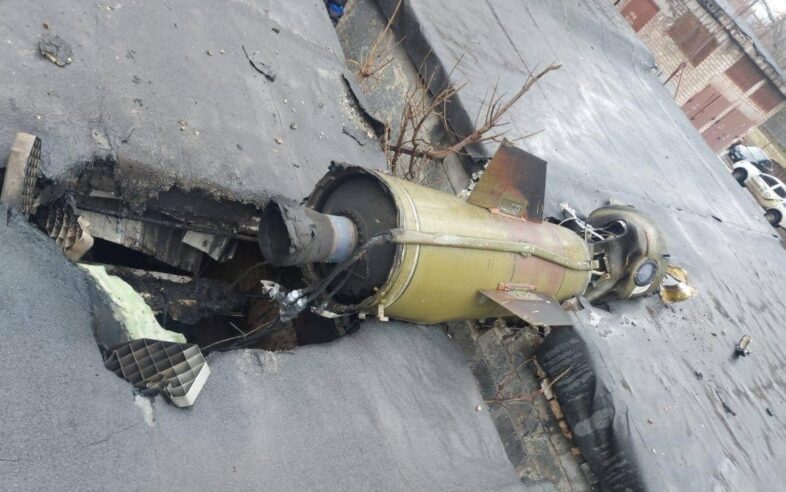
We were no strangers to the sound of incoming strikes, but this time, it was different—so powerful that the entire house shook. It was around 5:20 or 5:30 in the morning when a missile struck a private house about 800 metres away. Unsurprisingly, everyone there was killed. That’s when we realised this wasn’t the usual shelling we’d become accustomed to. We immediately checked our phones. On every social network, we saw Putin’s address. The war had begun. So, it was war, then.
A week before February 24, my wife and I had packed suitcases and documents, just in case, but we hadn’t planned on leaving the city. When the attack began, we thought that if the Russians were to enter, they’d come from the east—which, coincidentally, was where we lived. So, we decided to head to my mum’s place in the city centre, figuring we’d wait it out and see how things unfolded. After all, we’d been told the city was well-fortified and would hold its ground.
We moved to my mum’s, but it was there that the gravity of the situation truly hit me, especially after seeing footage of Russian sabotage groups moving through the Obolon district in Kyiv.
We spent the night at my mum’s, and on February 25, my wife and I went to the blood transfusion centre to donate. Social media buzzed with reports of rising casualties and urgent calls for donors. After that, we headed to the supermarkets. They were still open, but people were clearing out the shelves. We managed to stock up on some dumplings, flour, and grains, then took them back to our freezer at the house on the left bank. We thought we’d be back in two or three days, so we wanted to have some food supplies on hand.
We returned to my mum’s in the centre—and never made it back to the left bank. From that point on, everything just spiralled out of control.
Start of the blockade
At first, the Drama Theatre became a central hub. It wasn’t a shelter from the shelling but rather a place where people gathered to organise convoys to escape Mariupol. After the 24th, there was a brief three-day window to get out. I know people who managed to leave during those days, before the Russians advanced from Crimea and sealed the city off. Unfortunately, we didn’t leave in time. By the 27th or 28th of February, it was no longer possible. The city was completely encircled.
A few days later, we went back to the Drama Theatre to ask if convoys were still being organised or when we might be able to leave. We were told it was no longer an option. The city was surrounded, and civilian convoys were being fired upon. With all communications cut off, there was no way to verify this information. By then, the shelling of Mariupol had become relentless.
I believe only about 5% of people—those who acted quickly, either before February 24 or during those critical three days—managed to escape. It’s hard to say for sure, but it was very few. Mariupol’s population at the time was around 560,000 to 570,000. All my relatives and friends stayed behind.
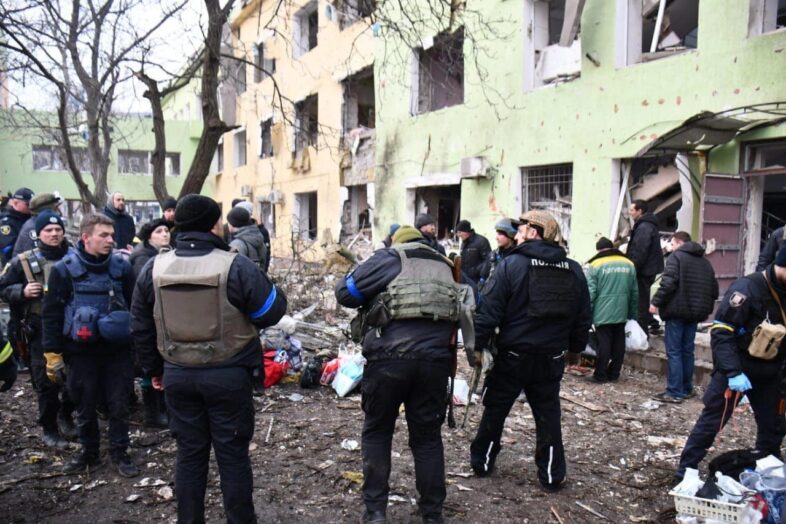
Around March 2, the power went out across the entire city. Television and home internet stopped working, and we were left in the dark, unable to understand what was happening. Mobile signals began to falter, and mobile internet quickly disappeared. By March 4 or 5, the gas supply was cut off. Until then, we had been using the gas burners to warm the air just a little, but when the gas ran out, it hit me—we were on the brink of total collapse.
Around the same time, the water supply stopped. The Russians had immediately targeted all strategic infrastructure—power plants and pumping stations. We had filled the bathtub with water to use for flushing the toilet, but even that eventually ran out. When it snowed, my daughter, my wife, or I would go outside, gather snow in buckets, and dump it into the bathtub to melt for use.
When the snow was gone, I had no choice but to go down to the basement and drain water from the heating system. It was rusty and dirty, barely fit for flushing the toilet—certainly not for drinking. Once, while looking for firewood to cook with, I passed by a group of guys sitting around a fire, preparing something. They offered me some tea. “Sure,” I said, and in exchange, I gave them some firewood. They poured me a cup, and I took a sip. The taste was odd, almost like soda. “What’s that taste?” I asked. They shrugged, saying, “It’s water from the heating system. We filtered it. It’s safe to drink, don’t worry.”
Drinking water quickly became a serious issue. In the early days, when it was still possible to move around the city, I went to the municipal water company, where UNICEF trucks were delivering drinking water. I’m not sure where it came from, but long queues had formed, and people were filling up whatever bottles they had. Eventually, that stopped. The whole city was under fire, and some areas were already being entered by Russian soldiers. Thankfully, we still had a small reserve—about 40 litres—so we managed for a little longer.
There was one particularly curious incident. While we were cooking with a group of guys, a group of people walked by, clearly hauling a cart full of alcohol. It was obvious they’d looted the liquor section of a supermarket. They asked, “Do you have any drinking water?” “Yes, we do,” we replied. “Could you share some?” they asked. “We need it ourselves,” one of the guys said. “But we can trade.” “Alright, let’s trade. What do you want for a five-litre bottle?” “Five litres of vodka.” And just like that, they agreed. They handed over 10 bottles of vodka in exchange for a five-litre container of water.
When the looting started, people took whatever they could find. I remember walking past a household goods store—its doors had been smashed open, and women were pulling out soap and laundry detergent. What for? Where did they plan on doing laundry? Perhaps it was just the instinct to grab something, anything, for free. I also saw people taking random trinkets from gift shops—things completely useless for survival. Taking food and provisions, I could understand. But these other items? It didn’t make sense.
War enters the city
At my mum’s place, we had everything we needed. That’s just how she is—she always kept a solid stock of sugar, flour, pasta, grains, and canned goods. The only thing missing was meat. When the electricity went out, people spent the first couple of days cooking whatever meat they had to prevent it from spoiling—chicken drumsticks, shashlik, anything. After that, of course, we switched to canned food.
We even managed to celebrate the 8th of March [International Women’s Day – ed.]. Mum had a bottle of champagne tucked away, so I opened it, and the women had a small drink. At that time, our windows were still intact. The following day, on the 9th of March, we heard that the Kyivstar office in Svoboda Square had started running a generator and that mobile service and internet were available. These rumours spread quickly, since there was no reliable communication. I was able to call my brother, who had left Vyshhorod for Lviv. He was relieved to hear that we were alive and safe in Mariupol, but still trapped, as the city was completely surrounded.
Some stores stayed open until the very end. Anything left in the warehouses was being sold off. There were a few days when we’d get up at five in the morning just to queue for entry. No one knew how long the stock would last. My mum would go first, and then, a couple of hours later, I’d go. We took turns because it was freezing cold.
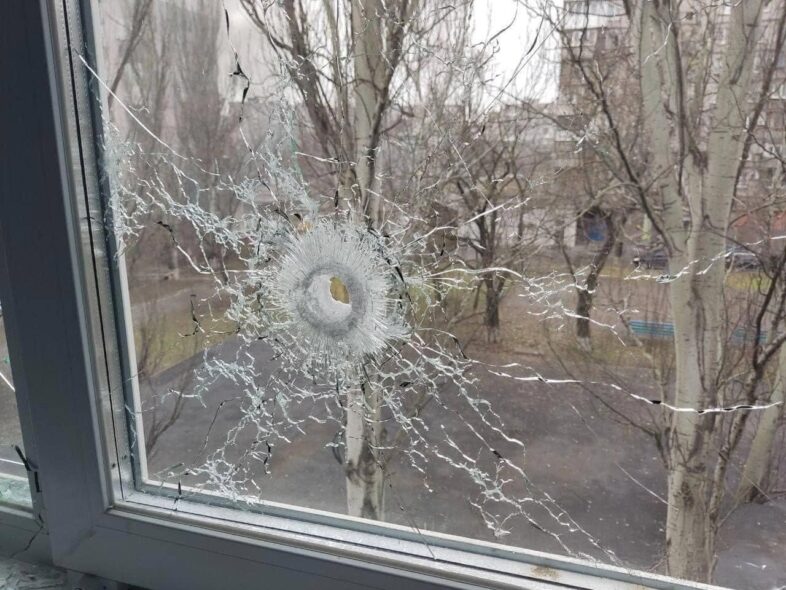
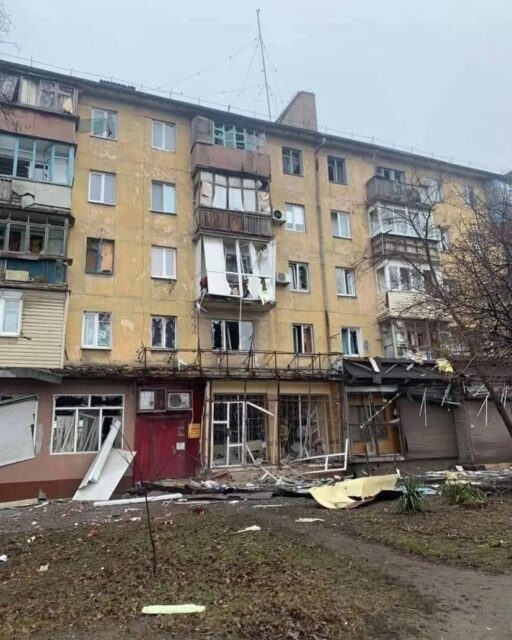
By around March 10th, Russian shelling had intensified, hitting residential areas. Our windows shattered, so I started boarding them up with plywood. I used back panels from wardrobes, nailing or screwing them into the frames, but the blast waves kept knocking them loose.
My relatives were growing increasingly worried as the explosions got closer, and neighbouring houses started catching fire. At first, firefighters tried to put out the flames, but the water supply had already been cut off. To refill their tanks, they had to drive across the city to a fire pond, but it was just as dangerous there, with shells landing nearby. Eventually, no one made any attempt to extinguish the fires.
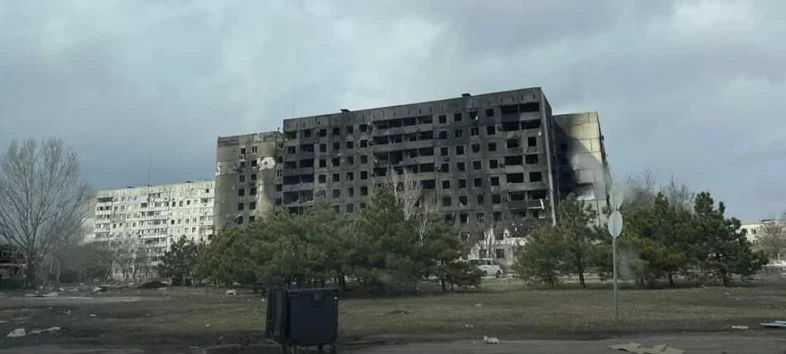
The Epicenter supermarket burned down—it was aflame for days, the fire fueled by building materials stored inside. Soon after, the large Silpo supermarket caught fire, too. By then, street battles had begun. From a distance, I could hear the thudding sound of heavy machine guns and automatic rifles.
The fight for survival
The following day, we decided to move to the basement. My mother had carpets on the floor, so I carried them down to help reduce the dust, as the basement floor was made of slag. We set up a small corner for ourselves, laid out blankets, and tried to sleep there.
We also had my grandmother, who was 89 at the time. She was less mobile and struggled to move, so the basement, with its steep stairs, wasn’t an option for her. We set her up at a neighbour’s on the first floor, covering her with three blankets. The neighbour’s daughter, who had a lifelong disability, was also there. I would regularly go upstairs to board up the windows with plywood to keep the drafts out. The neighbour stayed with my grandmother and her daughter, while my mother stayed with us in the basement.
In the beginning, for a day or two, we used the toilet in the apartment—my mother lived on the second floor—but soon, Russians started targeting the courtyards, and it became too dangerous to go up. So, we set up a few buckets in a quiet corner of the basement, and that became our makeshift toilet. The pets also had their own little space there.
We cooked over an open fire. At first, I made a small grill from bricks to cook for myself. Twice a day, I prepared hot meals and tea for the family, but soon, it became clear that I couldn’t manage everything on my own—gathering firewood, tending to the fire, and cooking. So, I joined a group of others who had set up their own cooking area. They had broken a bench by the entrance, thrown some refrigerator grates on it, and created a large grill. There, they kept the fire going round the clock. Of course, at night, everyone would retreat to the basement for safety.
The most terrifying part wasn’t even the mortar shelling. After a while, we could hear the shells coming, and we even got good at judging whether they were heading our way. We learned to orient ourselves by the sound.
But the real fear came from the Russian planes. That was a whole different level of terror. The sound of an aircraft overhead would send us into a panic. As soon as we heard it, everyone would drop whatever they were doing and rush to the basement. The bombs were so powerful—if one hit, it could take out several floors in an instant.
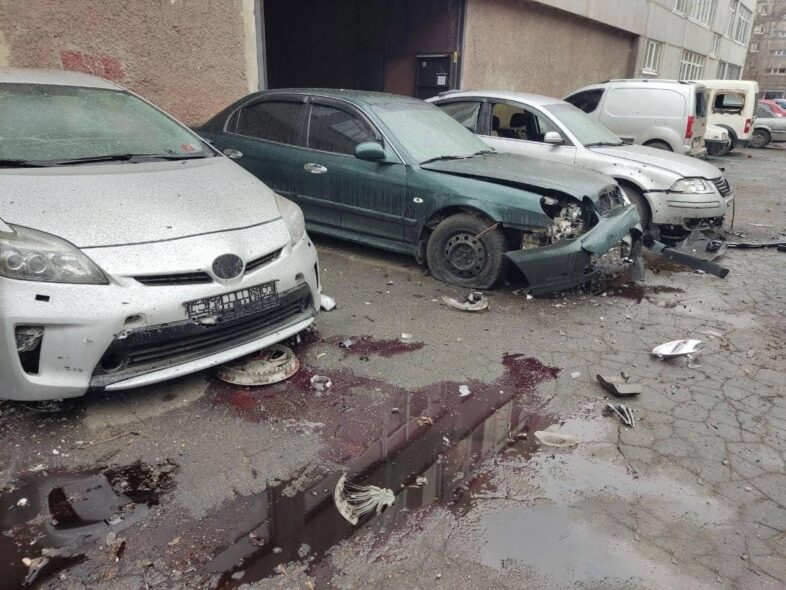
My car was initially parked near the entrance. However, after witnessing the shelling getting dangerously close, I moved it to the other side of the house. To charge my phone, I would warm up the engine. If the signal returned, the phone would have enough charge. One day, my mother said, “I’ll go with you. I’m too scared to let you go alone today.” So, we set off. As soon as I started the car, I heard the sound of a mortar firing—getting closer and closer. I told my mom, “I’m going to turn off the car now, and we’ll hide in the basement.” The moment I turned off the engine, and we began walking around the house to get to the basement, shells started landing near us. I quickly pushed my mom into the entrance, and a shell hit our yard. All the cars parked there were engulfed in flames.
I was fortunate that I had moved the car. Yet, even in its new spot, a shell hit close by. Shrapnel struck the building, damaging the car’s rear wing and shattering three windows. When we left, I covered the windows with stretch film to keep the car a little warmer.
The collapse
The local authorities continued their work until the very end. Even after the mayor fled, Mykhailo Kogut, the first deputy, remained in Mariupol. I saw him myself. Every morning, they gathered where we were filling our bottles with water, holding meetings and operating a coordination centre. Police officers and military personnel were present.
At first, all services were still functioning, but by around March 11–12, I stopped seeing police officers on the streets. Before that, they communicated via radios, and if someone was killed on the street, vehicles would arrive to collect the bodies.
A few times, I heard screams… Then, when passing by the burned buildings, the smell was not just of fire, but of charred flesh. People were being burned alive. These were often the ones who had been at home when a shell struck, either concussed or killed on impact. Or even worse, those with limited mobility who couldn’t escape in time.
Fleeing home
On the evening of March 14, rumours began circulating that there might be a way out of the city. People started gathering, talking about heading to Melekine, a resort village in the western part of Mariupol, where it was said there could be a route to escape. When my daughter heard, she immediately started urging us: “Let’s leave, what are we doing here? Let’s go tomorrow.” We hesitated for a while, but after breakfast the next morning, we finally made the decision to go.
The evacuation route from Mariupol passed through Mangush, a small village. There were two roads—one leading directly to Berdyansk, where many people were heading, and the other through Mangush toward Zaporizhzhia. About five kilometres from Mariupol, the mobile signal returned, and my wife was able to call her parents. They had left the city an hour earlier and were already at their relatives’ house in Mangush. They suggested we come there, and we agreed.
The house wasn’t heated, as there was no gas. Electricity was available, but we didn’t have a heater, just an electric stove for cooking. The temperature inside was only about 2–3 degrees Celsius, so we slept in jackets, huddled under two blankets. I slept with my son, and my wife with our daughter—together, it was warmer.
On March 15, we finally left Mariupol. There were huge traffic jams at the city’s exit, and we spent nearly half the day stuck there, but we heard that some were making it through. We didn’t know where we were headed. In the car, we had my mother, grandmother, wife, daughter, son, dog, and cat. We packed only the essentials—two suitcases for four people and two small bags from my mother.
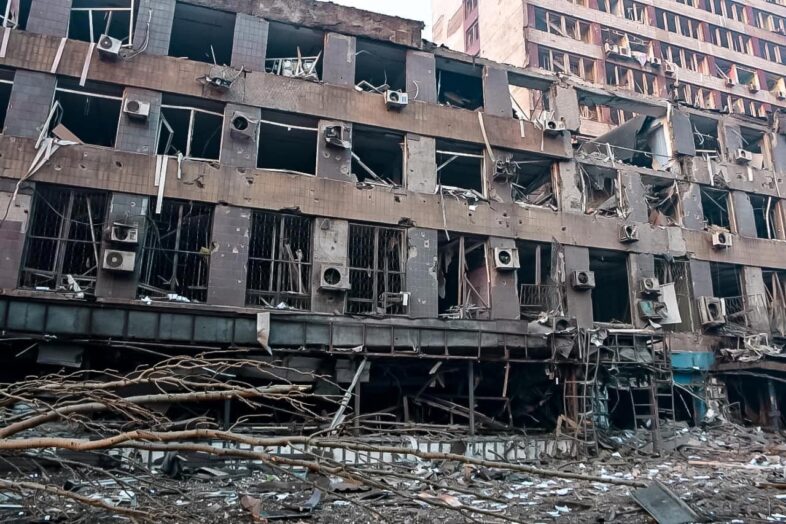
The day after we arrived in Mangush, we heard a deep, resounding explosion from Mariupol, even though it was 20 kilometres away. Later, we learned it had been a strike on the drama theatre.
One afternoon, we queued at a makeshift food shop—a simple truck with a booth selling pasta, canned goods, and even sausages. While we waited, a pickup rolled up, and someone shouted, “Who needs food?” Instantly, people surged toward it.
Russian soldiers began throwing green army rations into the crowd as if tossing scraps to dogs. It was a jarring sight—people scrambling, shoving, desperate for the packets. At that moment, I realised just how quickly desperation can strip away a person’s dignity.
The journey into the unknown
We spent eight days in Mangush, staying in a house owned by relatives who lived in Dnipro. We were in touch with them, and they kept urging us, “Come here, why are you still there?” I could see the situation worsening—supplies dwindling, the cold biting harder. What were we waiting for? It was clear we couldn’t stay much longer.
I asked my mother if she would come with my grandmother. She shook her head and said, “No, we’ll stay. I don’t know what’s happened to my house back there. I want to go back.” It wasn’t what I’d hoped to hear, but I respected her decision. “Alright,” I said, “you stay.”
On the morning of March 24, just after six, we finally left for Zaporizhzhia. The drive was gruelling—14 hours with shattered car windows letting in the chill. By 8 p.m., we reached Dnipro, exhausted but relieved.
The journey was a gauntlet of checkpoints. After the 18th one, I stopped counting. At some, the guards barely glanced inside and waved us on. At others, they demanded we unpack the car, rummaging through our belongings, inspecting suitcases, and even opening the trunk. In one village, we were stopped by a group of men who stood out starkly from the rest. They were likely Chechens, judging by their accents and the way their uniforms fit—sharp and professional. They were a stark contrast to the others, who looked more like vagrants armed with rifles than soldiers.
While one soldier was checking our belongings, another said to me, “Come, I’ll show you something.” I leaned toward my wife and whispered, “Make sure he doesn’t plant anything in the car.”
He led me to a spot where three men were digging a hole. “Look,” he said, laughing. “You’ll tell the khokhols [Russian slur for Ukrainian – ed.] how the Russians dig holes for themselves. Ha-ha-ha.” His laugh felt forced. I shrugged—what else could I do? He had a rifle. Later, I realised these were likely newcomers or alcoholics in their units, punished with tasks like this. The hole was probably meant for fortifications or trenches. He just seemed interested in my reaction.
At the second-to-last checkpoint, things got worse. A soldier ordered all men over 18 out of their cars and lined us up along the roadside with our backs to him. I told my wife quietly, “If anything happens, you know what to do. Get behind the wheel and drive.” The soldier lined up his men in front of us and began clicking the bolt on his rifle. “Maybe we’ll shoot you here,” he said, his tone cold. Then he added, “Anyone with sharp objects or alcohol, hand them over.” I had a folding knife and held it up. “Is this sharp?” I asked. He glanced at it and said, “Keep it.” Others weren’t so lucky. Those with hunting knives tossed them into the field. They said it was forbidden under Russian law. The alcohol was confiscated. The soldier gathered the bottles and smashed them with a metal rod. Perhaps it was to prevent drinking, or maybe so they wouldn’t be taken at the next checkpoint. Whatever the reason, it added to the tension.
We made it to Vasylivka quickly, but there, the Russians stopped us, claiming Ukraine was firing, so they couldn’t let anyone through. We joined another convoy and decided to drive through the fields—a reckless decision on my part. We bypassed the checkpoint, but in one of the villages, they stopped us and began conducting checks. They ordered all the men to strip and inspected their tattoos. I was made to strip twice during the journey.
When they saw the children, one of the Russians started talking to me.
“Why are you heading to Zaporizhzhia? What for? In a week, it’ll be ours.” I replied, “Where else can I go? I’m from Mariupol; the city’s been destroyed.”
“Come on,” he said, “I’ll find you somewhere to live.” He walked up to a random house and knocked on the door. A frightened woman appeared, and he told her, “I’ve brought you some guests.” She glanced at the convoy behind us, confused. “Guests?” she asked.
“Not the convoy, just this family. Will you take them in?” he clarified. She looked at us and hesitated before saying, “Well, I’ll take you in.”
I told them, “No, I’ll try to keep moving. My relatives are in Dnipro, waiting for us.”
“What are you worried about? We’ll take Dnipro in two weeks,” he shot back.
Again, I insisted, “No, I need to get to my relatives. My children need to go to school.” He pulled a face and finally relented. “Fine, go ahead.”
We bypassed the checkpoint and continued through the grey zone toward the village of Kamyanske. Unexploded mines jutted out from the middle of the road, a chilling reminder of the danger. The southern part of the village was under Russian occupation, while the northern part remained Ukrainian-controlled. The bridge connecting the two had been destroyed, forcing us to navigate through a ravine. The roadside was mined, leaving only a single track for vehicles—straying even slightly could mean disaster.
At the dry watercourse’s slope, we reached a Ukrainian checkpoint. There, a convoy was being organised to head to Zaporizhzhia, specifically to the Epicenter supermarket, where volunteers, international aid workers, and police were assisting evacuees. They recorded the details of those leaving to keep track of who was entering Ukrainian-held territory. Those without a place to go were offered temporary accommodation in a dormitory in Zaporizhzhia, while others, like us, were free to continue their journey. Our destination was Dnipro.
When we finally arrived at my relatives’ house, the warmth was overwhelming. The indoor temperature was 26°C—after weeks of freezing conditions, it felt like paradise. For three days, we lay on the sofa, soaking up the warmth, like seals basking in the sun, finally thawing out from the brutal cold.
Meanwhile, my mother and grandmother remained in Mangush for two more weeks before deciding to leave. By then, transport services had resumed, but it came at a cost. My mother paid around eight thousand hryvnias to have them brought to Dnipro, where I met them. After spending some time in the city, we decided to move on to Vyshhorod, where my brother lived.
The special caste
“Are you from Mariupol?” a woman interrupts our conversation in a café in central Kyiv. Her tone is curious yet cautious.
“Yes,” Oleksiy replies. “Are you?”
“I am.”
“Where in Mariupol are you from?”
“Kirov Square.”
“I’m from the left bank, near the Stakhanivska Highway, close to the ‘Monolit’ store.”
“Ah, I see.”
“We stayed in the basement at Zelinsky’s.”
“We stayed home until our house burned down.”
“Did you leave on the 15th?”
“No, on the 25th.”
“Then you saw everything. After the 15th, it was unbearable.”
“Yes…”
After the brief exchange, the woman leaves. Oleksiy smiles faintly, watching her go. “It’s like we’re part of some unspoken caste now,” he says. “‘From Mariupol? … Where in Mariupol?'”
Mariupol today
It feels like the 1990s there—an anarchic chaos marked by a mix of uncertainty and survival. The area has become home to many ethnic minorities, mostly construction workers, who’ve ended up there by chance or necessity. To make a living, people have few options: join the army, take up jobs in the service sector as hairdressers or shop assistants, or work in construction. There’s no trace of manufacturing industries.
The central streets are seeing some semblance of restoration. Buildings that require only minor repairs are being patched up, while larger, long-term projects are simply covered with banners—for example, the drama theatre. Debris from destroyed structures has been cleared, and precarious buildings have been dismantled. Commissions have been set up to inspect damaged properties and determine whether they’re salvageable or need to be demolished entirely.
I know many people who’ve gone back to Mariupol. Why? Well, the authorities set up this vague commission that oversees undamaged homes and properties without owners, essentially taking them into a “housing fund.” That way, they can assign whoever they wish to those abandoned houses. Many people don’t want to lose their homes, so they return. But, of course, to do that, they have to go through filtration—and that happens only at Sheremetyevo airport. There are a few options for leaving—Minsk, Georgia, or Turkey—but without passing through Sheremetyevo, you won’t make it to Mariupol. Once you’ve gone through the filtration, you’re supposed to get Russian citizenship and a passport. And you don’t have much of a choice, because without it, you can’t open a bank account or process any documents. However, it seems they don’t take away the Ukrainian passport.
Starting from scratch
After a while, I sent my wife and children to Warsaw, where we had some acquaintances, and I began looking for work. I sent out resumes and soon received an offer to work as a security specialist for a humanitarian organization. I had no experience in such a role, but I went through the interview and was hired.
My wife completed a two-year technical course in Poland and worked as a nanny at a special school for children with intellectual disabilities. It was emotionally challenging for her. Later, she found a job in a private depository. Now, they live in Warsaw, and whenever possible, they come to visit me in Ukraine. We manage to see each other about four times a year.
Looking back, the time I spent reflecting on why I didn’t evacuate my family sooner is behind me now. Today, with the situation as it is, if there were any hint that evacuation was necessary, I wouldn’t hesitate—I’d pack up and leave right away. Who is to blame for not acting sooner? Probably me, as a father and the head of the family. If I had the chance again, I would have done it earlier.