“There’s no middle ground, no ‘maybe later.’ Donating to the Armed Forces once in a while means nothing. If you’re not a soldier, then in civilian life, you need to give your all to support the army and be useful to those on the front lines,” says Senior Lieutenant Roman Tlustyi of the 10th Separate Mountain Assault Brigade “Edelweiss” in an interview with The Ukrainian Week.
Before the full-scale invasion on 24 February 2022, Roman lived in Kyiv, working as a customs broker. His wife and two-month-old son, along with his parents, remain in the capital, while his younger brother is also serving in the military.
When the Russian invasion began, Roman volunteered for a newly formed security company in the Khmelnytskyi Region. As a reserve officer, he was appointed platoon commander.
“Our main tasks were guarding strategically important facilities and standing watch at checkpoints. But we also focused heavily on training, teaching ourselves by finding lessons online and practising everything we could. Many of us, myself included, had no prior military or combat experience,” Roman recalls of those early months of the war.
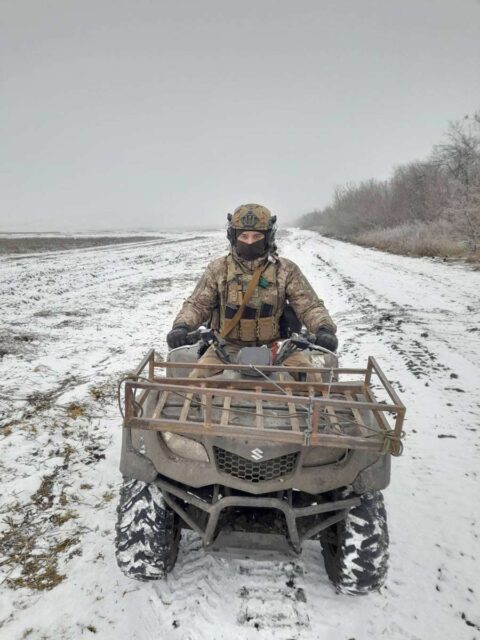
These days, Roman has plenty of frontline combat experience under his belt. The Edelweiss 10th Separate Mountain Assault Brigade, where he serves, is a specialised unit that tackles complex combat missions directly on the battlefield, often engaging in intense, close-quarters fighting with the enemy.
“I’ve learned modern strategies and combat tactics mostly through firsthand experience — whether defending or attacking, in open steppe, dense forests, or urban environments. Each setting presents its own challenges that a soldier must understand in order to survive and accomplish the mission. For me, the most important priority in war is preserving the personnel — the life of every servicemember is vital. That’s the bottom line,” Roman explains.
He also notes that the tactics used by the Russians in their assaults have changed significantly since the start of the full-scale invasion. “At first, they relied on long columns of armoured vehicles, which our artillery easily destroyed. Now, our drones have largely taken over that task. But the Russian forces have adapted their strategy — they’ve switched to using modified buggies, which can carry four to six infantrymen, along with quad bikes and motorcycles. Our main job now is to stop these columns before they get too close to our infantry and neutralise them from a distance,” Roman says. “Even with the extensive use of drones, nothing can replace infantry on the ground. They’re the ones who carry out missions that robotic systems simply can’t manage.”
During our conversation, I ask Roman what soldiers think about some of today’s most debated topics, such as lowering the conscription age and shifting to contract-based service.
“Lowering the conscription age is essential right now. But an 18-year-old is still essentially a child — he doesn’t have the strength or the character yet,” Roman explains. “It’s a different story when a man is 22. Those extra five years allow him to build physical strength, undergo proper military training, and become a fully capable soldier.”
Today, the government’s task is to motivate citizens to join the military, especially by offering attractive contract terms. However, Roman believes Ukraine could learn from Israel’s approach to military training. “Every citizen must be ready to defend their homeland. But to do that, they need the right skills.”
“Of course, I’d love to rest, live a peaceful life, and spend more time with my family and loved ones,” Roman shares. However, the lack of proper rest is a struggle for nearly every soldier on the frontlines, especially those without regular rotations. They can’t leave their service because there’s no clear demobilisation timeline, and they can’t end their contracts even once they’ve expired — not until martial law is lifted in Ukraine.
“There’s hardly anyone to replace us. Most people just don’t have the motivation to join the Armed Forces on their own, largely because of the lost information war. We — the ones fighting today — continue on, despite being physically and emotionally drained, driven by a sense of duty and the knowledge that no one else will defend our land from Russian aggression. This war isn’t about territory; it’s about the survival of our nation,” the soldier emphasizes.
This belief — that everyone fit for service should fight, without separating the ‘ordinary’ from the ‘untouchable’ — is shared by Maksymilian Zhovtovskyi. At just 25, he’s already a seasoned assault soldier. Even now, after suffering numerous concussions (seven officially recorded) and while recovering from a gunshot wound, this member of the 10th Separate Mountain Assault Brigade “Edelweiss” sees his future solely in combat, continuing the fight to liberate Ukrainian territory.
“Storming enemy positions, leading the charge — that’s where I belong. That’s when I feel like I’m in the right place, and the adrenaline fuels me, pushing me forward. Assault missions are always hard, with losses that come with the territory, but we’re taking back what’s ours! The purpose of this war is to free our homeland from the Russian invasion,” the defender shares with The Ukrainian Week. “For me, the greatest motivation is protecting my family. I advise everyone who chooses to stand up for Ukraine to think about their loved ones — their safety, their peace, and ensuring that our future children never have to experience war.”
Maksymilian has been serving in the Armed Forces of Ukraine since 2020, when he signed a contract. Originally from Chernivtsi, he serves alongside his father, while at home, his mother, sister, and two younger brothers wait for their defenders’ return.
“Over the course of my service, I’ve lost many comrades — some of them died in my arms. One, older than me, whispered as he passed, ‘I want to see my mum.’ You never forget moments like that. Those losses are something you can’t just forgive. The fear of not coming back alive from this war is something I’ve long since overcome.”
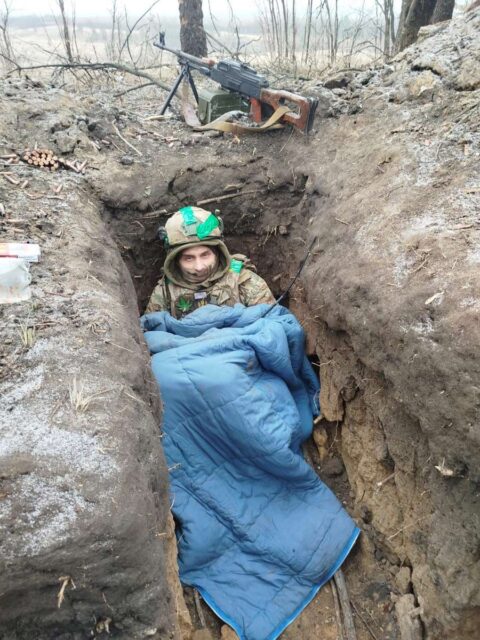
Maksymilian’s first assault mission took place in the Kyiv Region in 2022, during the liberation of Lukianivka from the occupiers. “That was probably the first time I felt uncontrollable fear. What helped me get through it was a conversation with a comrade — he spoke to me like a father to a son: ‘I know you’re different, like me — I can see it in you.’ That gave me the strength to push through. But I always make sure to tell my loved ones where I am. In case we don’t see each other again, I want them to know what happened to me.”
In the liberated village of Novomlynsk, in the Kharkiv Region, it was Maksymilian who had the honour of raising the Ukrainian flag. “It was an order from the battalion commander — to raise the Ukrainian flag,” he recalls. “I told him I was ready to carry out the task, even though I was a long way from the position. My comrades guided me with a drone. And I did it! The feeling of incredible joy and pride was overwhelming, knowing that we had reclaimed what was ours. Of course, there were moments of fear — the Russians were just across the river behind me. But in that moment, I understood one thing: it was all worth it.”
Maksymilian is married — he met his wife during the war. He first saw her, a nurse, in a hospital in the Donetsk Region while recovering from a concussion. Now, they serve in different parts of the front and don’t get to see each other often. “But everything will work out!” Maksymilian Zhovtovskyi says with a hopeful smile.