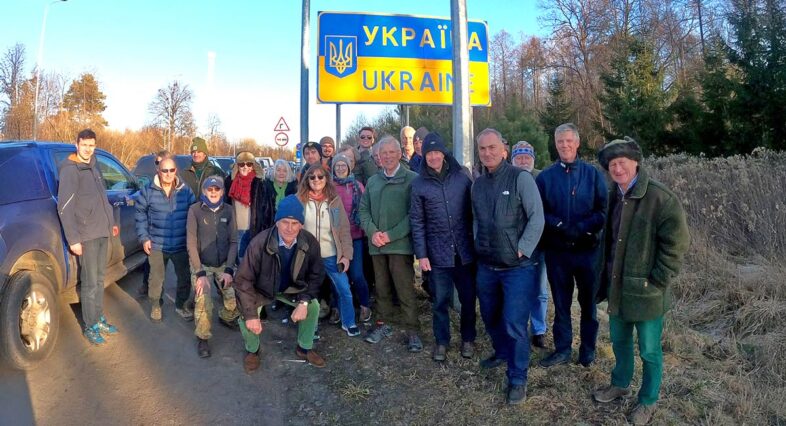
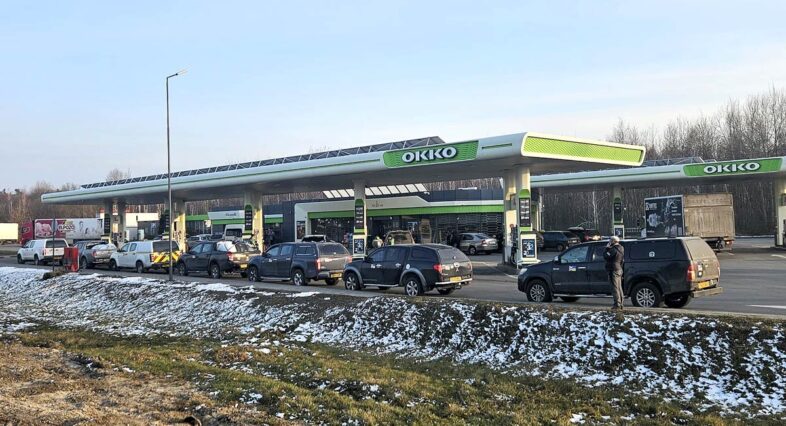
One winter afternoon, a convoy of more than a dozen SUVs with British license plates crosses the Ukrainian border. Packed with supplies, the vehicles are driven mostly by men and women of retirement age. They have already covered 1,300 miles—nearly 2,100 kilometres—but their journey is far from over. For now, they’re headed to Lviv, though that’s not their final destination. In a few days, they will continue on to the Sumy region, where they’ve been eagerly awaited for some time.
It’s not hard to guess that these vehicles are destined for the military. Over the past few years, this has become one of the most common types of transport entering Ukraine. It sometimes feels as though every SUV in Europe has already been hauled away. Yet, those who continue to search still manage to find decent options.
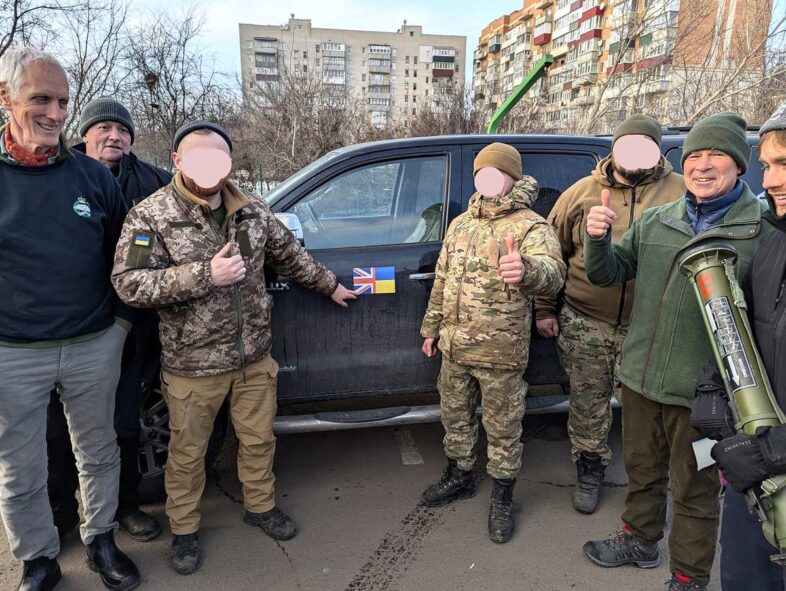
Without these vehicles, the front line would be in real trouble. Pickups are vital for evacuating the wounded, delivering ammo, setting up mobile workstations, and getting through areas where the roads have been obliterated. As long as the war drags on, Ukraine will always need more—there’s never enough, and they’ll keep rolling in. But convoys like this one are a rare sight. Normally, it’s just a few vehicles at a time, but this? This is a whole mission from the UK.
For MedivactruckstoUkraine, a group of like-minded friends from Britain, this marks their eighth trip to Ukraine. Over the past two years, they’ve purchased and delivered 53 pickups, an ambulance, and a quad bike to Ukrainian defenders. But the vehicles don’t arrive empty—they’re packed to the brim with aid. Each one carries around €10,000 worth of supplies, the maximum allowed under a standard customs declaration when bringing goods from the UK into Europe.
“The aid is purchased and delivered based on specific requests,” says Oleh Naida, one of the few Ukrainians in the MedivactruckstoUkraine team. “People reach out, place orders, and we bring what’s needed. We don’t differentiate between ‘ours’ and ‘theirs’—we’re happy to help everyone.”
This time, for example, the volunteers delivered high-end ultrasound equipment for retinal examinations, made by the British manufacturer Keeler, to a military hospital in Lviv—something the doctors had specifically requested. For soldiers on the front line, they brought much-needed tourniquets, but not just any kind—the very best, because “every tourniquet can save a life, so it’s a worthwhile investment.” They also brought Celox haemostatic agents, sleeping bags, backpacks, stretchers, generators, and more. During the trip, they even received an urgent request and managed to purchase two large batteries for a field hospital.
The money for all this aid comes from the volunteers’ own pockets and donations from friends and family. Funds are raised by those planning the next trip to Ukraine, with each person or family responsible for covering the cost of a vehicle, its repairs, and supplies. The collected money goes into a shared fund, which is then used to purchase everything needed. Those who wish can donate their own vehicle—many do, even driving it to Ukraine themselves. The journey itself—fuel, hotels, food along the way—is also paid for by the driver and co-driver.
“The idea to help the Ukrainian army came from a British podcast by the Daily Telegraph called Ukraine: The Latest,” says Paul Parsons, the organiser of MedivactruckstoUkraine. “It’s been airing daily since the full-scale invasion began, and it’s been an invaluable source of information about Ukraine and the war.”
Paul, a former lawyer, has been retired for ten years. He lives with his wife in a picturesque historic estate in Northamptonshire. He has four children and just as many grandchildren. He recalls that after Russia’s invasion of Ukraine in 2014, people in the West had only a limited understanding or interest in what was happening. It was only after the full-scale invasion in 2022 that the sheer scale of Russia’s actions truly shocked public consciousness, including in the United Kingdom.
“My initial idea wasn’t to help the Ukrainian army,” Paul says. “I just wanted to do something to help Ukraine, but I didn’t know exactly what.”
One day, Paul heard on a podcast about how British farmers were donating pickups to the Ukrainian army, where they were used as combat or medical vehicles. “That inspired me,” he says. “I managed to raise money. I knew I could do it, given the number of contacts I had in the UK. And I knew I could travel and invite friends to join me in Ukraine. But what we didn’t have at the time were contacts in Ukraine. We established those through a local church in our district.”
Paul Parsons made his first trip to Ukraine with Oleh Naida in February 2023. Oleh had already been driving vehicles from Britain for the Ukrainian military. As a father of many children, he had an exemption from military service, which allowed him to cross the border freely. On that trip, the two men delivered two vehicles packed with aid.
“The key moment of that trip was visiting Bucha,” Oleh recalls. Nearly a year had passed since the occupation, and while the most harrowing traces of Russian crimes had faded slightly, what Paul saw and heard there affected him deeply. Oleh says it was as if Paul suddenly understood that this was a story he could influence—by helping. From that point on, their efforts gained momentum.
For the next trip, Paul brought in his friends, then friends of friends, acquaintances… With each journey, the group kept growing, and more people wanted to support Ukraine in its fight. What started with vehicles gradually turned into a kind of pilgrimage.
Notably, most of the volunteers are retirees, primarily aged 65 and older. Many are former officers of the British Army. They say that when they served in the military after the Second World War, they were trained with the expectation that one day they might have to fight against Russia. But as fate would have it, that duty has fallen to the Ukrainians, and now they want to help in any way they can during this brutal war.
The British volunteers stay in Lviv for a few days, but their schedule leaves no time for sightseeing. Instead, it’s packed with endless meetings with local volunteers, distributing the aid they brought, visiting hospitals, rehabilitation centres, veterans’ centres, and paying their respects at the cemetery on Marsove Pole.
“We were shocked to see how much the military cemetery has expanded since our last visit in September,” the British volunteers will later write in their report upon returning home. “As many as 60 new graves since December… For those used to visiting the war graves of the First or Second World War, this is a completely different experience. The youthful, smiling faces in the photographs of the fallen—many of them the same age as our children, or even younger—stare back at us.”
“They really value personal connections,” Oleh explains. “It’s about understanding the bigger picture—how everything is unfolding in society. Direct communication with the soldiers is key for them. When they raise funds, they’re committed to personally delivering the aid, ensuring it gets to the right hands.”
Even seemingly small things, like watching volunteers weave camouflage nets, captivate the British visitors. It’s a powerful demonstration of the collective resistance of an entire society. They deeply admire those who simply get on with the work—people who, despite limited financial resources, contribute whatever they can to support the army.
At first, many of Paul’s friends told him that since he was only traveling to Lviv, he couldn’t really know who was receiving the aid. “Ukraine is corrupt, and what you’re delivering will never reach its destination,” they said. That’s why Paul wanted to go east himself, to see everything with his own eyes. His second trip, arranged specifically for him by volunteer Ira Vovk, took him along the front lines—to Kharkiv, Dnipro, Kherson…
“Paul saw these vehicle handovers firsthand, he spoke to the soldiers,” says Oleh. “For him, this direct contact is essential. He wants a personal connection with them. The soldiers send him videos—showing how his vehicle is being used, how his EcoFlow power station is working in the trenches—and that brings him a lot of joy and motivation.”
When asked why he does this, Paul Parsons responds, “It was almost impossible to believe that, in the 21st century, an all-out war was happening in Europe. It felt like such a horrifying clash between good and evil that staying on the sidelines simply wasn’t an option.”
He describes Russia’s war against Ukraine as an aberration and is steadfast in his belief that “Russia must be defeated, and Ukraine must regain sovereignty over all its territory.” He adds that the majority of the British public supports Ukraine, a sentiment shared by both politicians and ordinary citizens.
It’s worth noting that the MedivactruckstoUkraine mission is not unique in Britain. At least a dozen such groups of like-minded friends operate across the British Isles, and perhaps even more. They regularly send caravans of aid to Ukraine, a phenomenon unlike anything seen in other Western European countries. What’s more, this isn’t about Ukrainian emigrant groups helping their homeland; it’s British citizens, in collaboration with Ukrainians, assisting the Ukrainian Armed Forces on an extraordinary scale.
Explaining why they do this—and why they feel so strongly about Ukraine—is not easy. Each person has their own motivation. Some help because they believe it’s the right thing to do, because Ukraine is on the right side of history. For others, there’s a geopolitical subtext. And for some, the current events are a trigger, evoking memories of what happened in Europe a century ago, which ultimately led to the start of the Second World War.
The phrase often attributed to former British Prime Minister Winston Churchill, “The fascists of the future will call themselves anti-fascists,” has become particularly popular in Britain today.
“In the 2.5 years I’ve lived in Britain, I’ve come to understand that the country’s greatest value is not its architecture, culture, or nature, although all of that is impressive,” says Oleh Nayda. “It’s their values—the values they cultivate. These are the very reasons why so much help is coming from them—not just at the state level, but on a personal level. It’s this sense of truth, justice, and freedom. Although it sounds strange, because we know Britain was once an empire, I’d say they’ve transformed quickly—probably faster than any other empire. Also, the British don’t know what it’s like to live in slavery. They were never enslaved. And that has allowed them to develop these values. When you’re enslaved, someone tells you what to do, but when you’re free, you decide for yourself.”
The only stop the British made in Kyiv on their way to the East was at the memorial wall for fallen Ukrainian soldiers near St. Michael’s Golden-Domed Monastery. The culmination of their expedition was in Sumy, where they handed over vehicles to soldiers from several Ukrainian brigades stationed on the Kursk front, as well as to combat medics who evacuate the wounded.
Although to be precise, the culmination was spending the night 30 km from the front line with the marines of the 36th Brigade. This night was especially memorable for the subjects of Her Majesty. But not because of the constant cannon fire on the horizon or the work of anti-aircraft guns, but because of the warmth of the encounter. “They give us their cots, prepare treats of Ukrainian borscht, fried potatoes, and homemade sausages,” the chronicler of the expedition will later write in his report. “They tell us about their determination, despite everything that’s been going on.”
During their expedition, the British brought 12 pickup trucks, a Volkswagen Passat, and aid worth £100,000. But that wasn’t all. “We provide material assistance, but there’s also the intangible,” says Paul Parsons. “Ukrainians feel largely abandoned by the West—especially today. The fact that we and many others are coming gives them a sense that they haven’t been forgotten. From conversations with ordinary soldiers and junior officers, I sense they don’t want to give up what they’ve fought for. There’s no chance that Ukrainians will agree to an unjust peace without security. And if this isn’t achieved, I fear the war will continue for some time. I’m almost certain our help will be needed.”