Seldom do I write something personal in public, and this is a unique and rare occasion when I can share my very personal thoughts. Sitting in freezing Kyiv, my heart was filled with warmth and celebration as I started receiving photos of women in Kolkata posing with the Ukrainian “vinok” on their heads, or someone holding a bulava in front of a pavilion with “Ukraina” written in Ukrainian, Bengali and English. And then there was a quote in Bengali from a Shevchenko poem translated by me! I could not believe my eyes.
This warmth travelled from my native city of Kolkata, where Ukraine, for the first time, participated in the annually held International Kolkata Book Fair — or, as we call it in Bengali, “Kolkatar Boi Mela” — from January 22 to February 3. Since my secondary school days, when the fair was first launched in 1976, I spent my early youth visiting it every year. Unbelievably, Ukraine’s presence this year was special. I was in Kyiv, but for my brothers and family members it felt like a celebration — Ukraine had come to them. They happily joined in and helped in whatever way they could.
Across the corner there was the Russian pavilion, studded with photos of the Second World War, and it was not very well visited. But local bloggers, YouTubers and influencers hopped around and took due note of the presence of Ukraine. They asked such naïve questions as whether the presence of Ukraine and Russia at the same fair meant some kind of understanding, or perhaps a possible ceasefire and end of hostilities. They were given a patient hearing at the Ukrainian pavilion; diplomats and volunteers explained to them the complexities of this horrible war. Riju Basu, a top journalist and my friend from the Anandabazar Patrika with a multi-million readership, wrote a column about the pavilion of Ukraine. This could not but trigger a lot of attention among people in Kolkata and its vicinity.
Contrasting these realities of today, I recall requesting the Ukrainian Embassy many times over the past fifteen years — the last time was in 2019 — to take part in this event. Back then, there was little enthusiasm for such activities. Now that Ukraine struggles to mend its burnt bridges with many countries of the so-called Global South, this Kolkata event was an eye-opener for many — for several reasons.
The main reason is the opportunities that Kolkata offers were ignored. After the Frankfurt and the London Book Fairs, this is the third largest. By number of visitors, it is the largest in the world. This year, the total number of people who visited was 3.7 million. A caution, however, needs to be made. Those who participate in London and Frankfurt know that this is a very special professional event exclusively for the publishing and bookselling industry. Authors with their recently published books are also welcome. It is not a platform for politics or other campaigns, nor is there any competition. It differs from literary festivals; it includes all types of books. Foreign participants can be state or non-state organisations. They showcase their literature and culture through books. Of course, national interests and priorities matter.
Boi Mela is a platform for meeting ordinary people and talking to them. It is about building people-to-people networks at grassroots level, not among think tanks or elites. There will be no expected change in state policy as a result. Nor will research papers or books be written after this event. People will carry impressions in their hearts and may change their perception of Ukraine. Fewer stereotypes, more facts, more direct communication. And that is an opportunity for Ukrainian cultural diplomacy. But for sure, serious publishers and booksellers could have made valuable contacts (and contracts) for their books to be reprinted or published in India at a fraction of the cost they spend in Europe, while also reaching a much larger number of readers than anywhere else in the world.
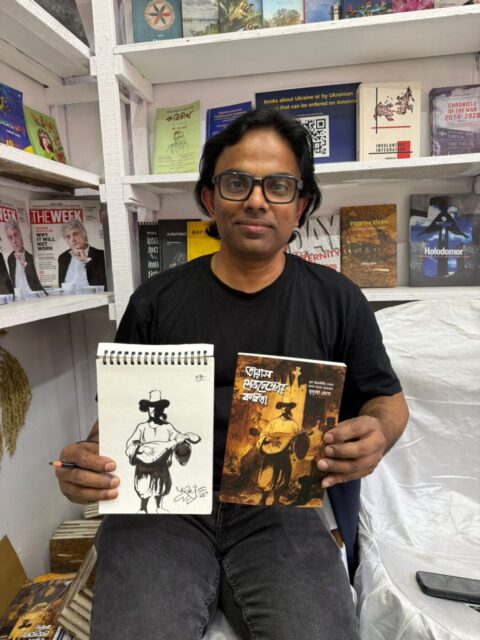
Language matters. Books in Bengali are preferred among its more than 230 million speakers around the world. English-language books come next. Books in Hindi are more popular in Delhi and other Hindi-speaking areas of India. That is why my Bengali translations of Taras Shevchenko’s poetry, published in March 2025 by Jadavpur University Press, a novel by Zhanna Słoniowska translated from English into Bengali by Sulagna Mukhopadhyay, as well as poetry by Iryna Vikyrchak, also translated from English into Bengali, were in great demand.
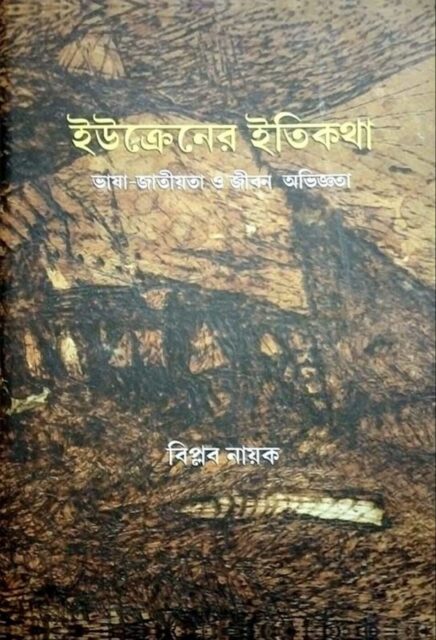
Surprisingly, my brother was approached by an author, Biplab Nayak, who wrote an excellent book in Bengali, “History of Ukraine, Its People and Culture”, first published in 2020, with a second edition in March 2022, drawing on 34 major world-renowned titles. Nothing similar exists in any language in India. The history of Ukraine in this book begins with Kyivan Rus and ends with the Orange Revolution, as I could see from the photographed fragments sent to me. I sincerely hope this book is updated and published again. This underscores the point that vernacular literature is essential in the Indian context. If India’s linguistic diversity is respected, information about Ukraine will flow faster and more deeply.
Until the very last moment, no one was certain whether Ukraine would take part. There was no funding available. Only the travel costs of the writer Lyubko Deresh, who was already planning to attend the Delhi Book Fair and the Jaipur Literature Festival, were covered by the Ukrainian Institute. The Embassy was told by the Ukrainian Book Institute that no publishers were interested.
Thanks to the strong commitment of the Ukrainian Ambassador, Dr Oleksandr Polishchuk, and the dedication of three young diplomats — Volodymyr Prytula, Tetiana Sharma and Ayush Bakshi — who invested their time and resources, Ukraine’s participation ultimately became possible.
Screenshot
For several days, the Ukrainian diplomats became stall managers, speaking to ordinary visitors without protocol or formalities. They organised three events in halls packed with audiences: discussions on contemporary Ukrainian poetry, a session on Taras Shevchenko, and readings of his poems in Bengali. Among those attending were professors, journalists, and teachers of Bengali and Sanskrit — as well as 16-year-old Grand Prix winner Aandrita, who recited “Zapovit” in both Ukrainian and Bengali. At one of the events, diplomat Ayush Bakshi read out the first-ever Kashmiri translation of Shevchenko’s “Testament” (“Zapovit”) by the well-known poet Santosh Shah Nadan, who happens to be his grandmother.
At the end of the fair, the Booksellers and Publishers Guild presented Ukraine with an award of appreciation. Among the 14 participating foreign countries, only Ukraine, China and Argentina — the focus country this year — received such recognition. While accepting the award, Third Secretary Tetiana Sharma also presented the organisers with a plate featuring Petrykivka painting.
Although exhausted, the Ukrainian diplomats and their Indian friends were happy — people in India were curious about Ukraine and expressed enormous support. Wasn’t that what truly mattered? I am sure they are already looking ahead to 2027, to take part in the 50th anniversary of the Boi Mela and make it a grand success.
A word of advice to publishers: children’s books, folk tales and the classics of Ukrainian literature are in highest demand. Books on Ukrainian history are also sought after. Why the classics? Simply because there is nothing to present as a comparable balance when other participating countries showcase their literary masterpieces. Ukraine has a deep literary tradition, yet there is little to no awareness of it in India. I have written before about the anti-imperial and anti-colonial role of Taras Shevchenko, which opens a door to understanding Ukraine’s historical trajectory. Drawing parallels between Shevchenko’s role in nation-building and that of Rabindranath Tagore proved to be a key to the Bengali soul. Simple truths, put in simple words, do not require hefty honoraria for brand-management companies. For Ukraine’s cultural diplomacy, the Shevchenko brand is eternal and invincible. And Boi Mela awaits Ukraine in 2027!