
Nearly three decades after being forced to hand over its strategic bombers to Russia, Ukraine has turned the tables—destroying 41 Russian military aircraft, including some of those very same bombers, in a bold strike deep inside Russian territory. The operation, carefully orchestrated with the aid of artificial intelligence, marked one of Kyiv’s most ambitious attacks to date.
Using FPV drones, Ukraine hit Russian airbases spread across the vast interior of the country. The operation—code-named “Spider Web”—had been in preparation for more than 18 months and targeted airfields in the Murmansk, Irkutsk, Ivanovo, Ryazan and Amur regions, Ukraine’s Security Service (SBU) said.
The drones reportedly struck aircraft involved in Russia’s nightly bombing campaigns against Ukrainian cities. A total of 41 aircraft were said to have been destroyed. According to Ukrainska Pravda, damage to Russia’s air fleet could exceed $2 billion. Fires were reported at the Belaya, Dyagilevo, Olenya and Ivanovo airfields.
A state of emergency was declared in the Usolsky District of Russia’s Irkutsk region after a Ukrainian drone strike targeted the Belaya airbase, regional governor Igor Kobzev announced on his Telegram channel. “I’ve arrived at the site of the drone attack in Usolsky District. For security reasons, I can’t show much,” he wrote. Kobzev said authorities had intercepted the truck used to launch the drones and noted that this marked the first such attack ever recorded in Siberia.
Far to the northwest, in the Murmansk region, Governor Andrei Chibis urged residents to “remain calm” and refrain from posting photos or videos of air defence operations on social media. The Olenya airbase—home to Tu-22M3 long-range bombers—was also reportedly struck, according to eyewitnesses.
The attacks may have involved drones trained with artificial intelligence, according to Clash Report. “Last year, Ukrainian military intelligence scanned Russian bombers and taught an AI system to recognise them and carry out automatic dive attacks,” the outlet reported. “Today, we’re seeing the results.”
The attack involved two types of drones: standard quadcopters capable of vertical takeoff and fixed-wing drones launched from a mini-catapult. Ukraine is reported to have used Soviet-era bombers housed in a museum to train AI-driven drones for targeting Russian airfields. According to Clash Report, the aviation museum in Poltava, Ukraine, holds Tu-95MS and Tu-22M3 models—aircraft that Ukrainian intelligence leveraged to teach the AI how to accurately identify and strike similar targets deep inside Russia.
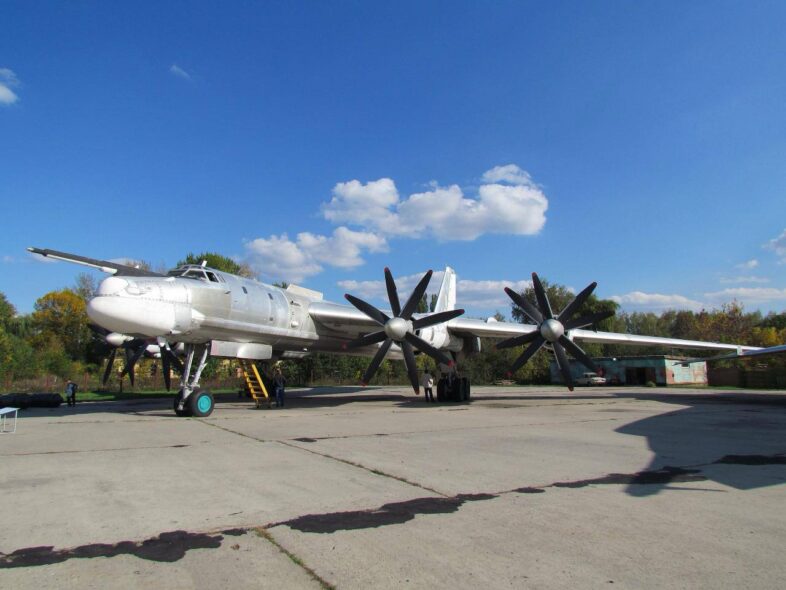
According to the Ukrainian news agency UNIAN, more than 40 Russian aircraft were destroyed or damaged in the attack, including some rare strategic bombers. Unlike previous strikes on Russian airfields, this time the drones didn’t have to make the long journey from Ukraine itself. Instead, they were transported by truck to locations close to the targets, where they took off and launched a sudden, precise assault on the aircraft.
Russian media have reported arrests of individuals allegedly involved in the drone attack. But sources within Ukraine’s Security Service (SBU) say those who carried out the operation have long since returned home. They argue that any high-profile arrests staged by the Kremlin are likely just theatrical moves aimed at shaping public perception in Russia.
The full extent of the damage to Russian aircraft will become clearer in the coming days, once satellite imagery is made public. Still, the strike represents a significant blow. Russia is known to have just over 100 strategic bombers, roughly half of them Tu-95MS models—outdated, subsonic planes. With sanctions hampering Russia’s ability to produce new aircraft quickly, the frequency of the devastating bombings on Ukrainian towns and villages is expected to decline.
“The operation on June 1 was not just a military strike—it was a moral statement,” wrote the Azerbaijani newspaper Minval. “After a string of night raids where Russian Tu-95 and Tu-22M3 bombers relentlessly targeted Ukrainian residential areas with impunity, Kyiv launched a daring counterattack that destroyed those very aircraft. It was a blow delivered squarely in the face, at the most unexpected moment, in the thick of the campaign—just when Moscow believed itself invincible. These strategic bombers are more than just military machines; they embody the military power of the Russian Federation. Their reduction to scrap metal is a symbolic act of retribution.”
Ukraine has demonstrated it can strike not merely in retaliation but proactively. Kyiv has learned to wait patiently, to avenge innocent lives, and to send a clear message: every new night attack on Ukraine risks igniting fires deep inside Russia itself. One detail stands out: on June 1, 1996, Ukraine handed over its strategic bombers to Russia in exchange for the “security guarantees” outlined in the Budapest Memorandum. Exactly 29 years later, on June 1, 2025, Ukraine found a way to reclaim a portion of those very bombers. Sources within the army’s command suggest this timing was no accident.