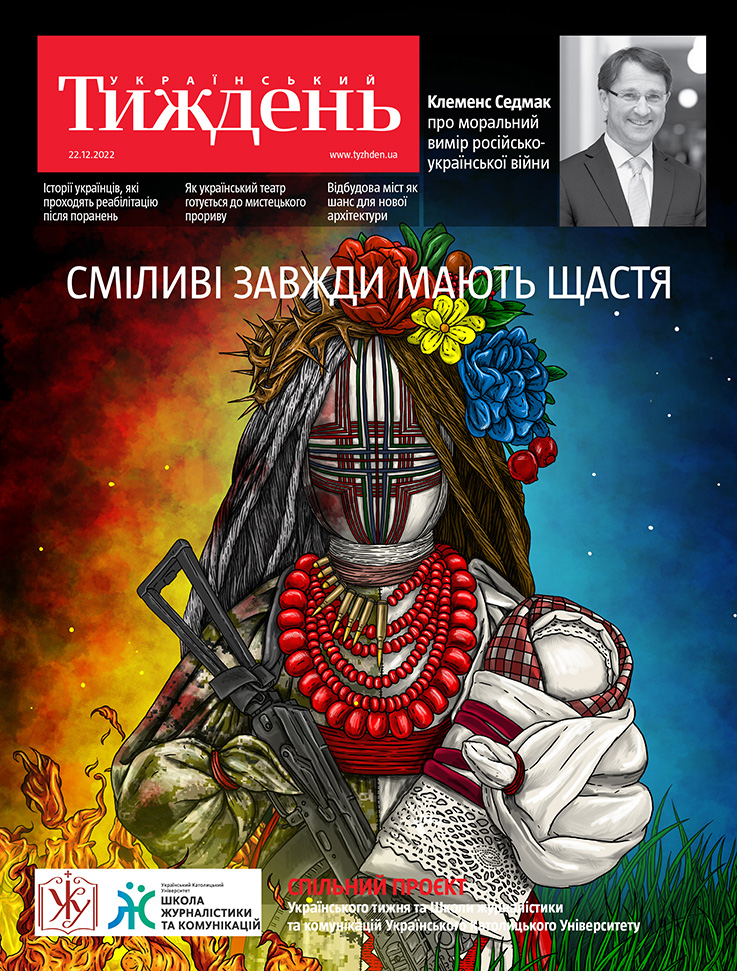
In his book The Hero with a Thousand Faces, American scholar Joseph Campbell, by comparing myths from different corners of the world, identified the underlying structure that forms the foundation of every story about a person’s journey. In the monomyth, the hero feels the call to adventure, overcomes numerous obstacles, reaches their goal, and ultimately returns home. Yet even in fairy tales, not everything happens with the wave of a magic wand, and the road home can be more treacherous than the journey to the goal. Specifically, after spending a long time on an adventurous quest, the hero changes—refusing to return because they feel they will be a stranger to their own home. Eventually, it is only with the help of external forces that the hero crosses the final threshold between two realities, becoming the master of both worlds and flourishing anew within the community.
In this mirror of myth, we see a reflection of our own reality, where each veteran experiences a unique yet shared challenge of difficult reintegration. The role of society, and of each one of us, on this path is to be a source of support as they navigate civilian life.
***
Myth is now a reality
Myth is no longer confined to ancient texts—today, heroes are right in front of us. Hundreds of thousands of soldiers stand as guardians of our peaceful world, bearing the weight of the frontline on their shoulders.
Junior Sergeant Oleksii Bobela, from the 117th Separate Mechanised Brigade of the Ukrainian Armed Forces, is one of them. Despite his lack of military experience and his 50 years, he had no hesitation about answering the call. In the early days of the full-scale invasion, he volunteered to enlist, heading straight to the recruitment office while it was still operating. However, it wasn’t until December 2022, after a second attempt at the military-medical commission, that he was able to officially join. Throughout his service, Oleksii Bobela had only two brief leaves.
“When I came home for a long-awaited leave, it felt like I hadn’t been anywhere at all,” reflects the soldier in a conversation with The Ukrainian Week. “It was as if I hadn’t been to war; the calm, peaceful life just carried on as if nothing had interrupted it. It’s strange. On the front, we experience such intense, turbulent emotions, and they linger in our minds. But peaceful life is so soothing that those moments—coming home, reuniting with loved ones, family, and friends—almost erase the unpleasant memories from the front. Still, they quickly return. As my leave comes to an end, the emotions about going back to the front only grow stronger.”
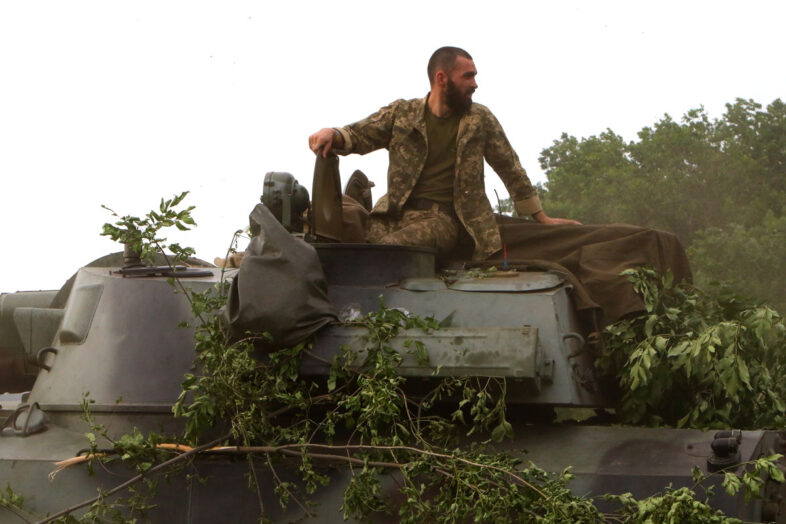
The way we perceive things can differ; even when people go through similar experiences, their reactions can be completely different
Chaplains, too, face a similar experience as they act as spiritual support and mediators between the civilian and military worlds, working to maintain the integrity and connection between these two realities. “The entire leave period (for a service member) is spent adjusting to peaceful, civilian life. Just as you begin to settle into it, the time is up, and you have to return to the combat zone. As a chaplain at a military college, I’m mostly in Lviv. But when I do have short trips to the front, coming back is difficult. That’s why I’m in awe of our heroes who manage to return and find the strength to be present here. It’s not easy, and the chaplain’s role is to help the service member settle in, rest, and find time for their family and for themselves,” says Father Roman Mentukh, chaplain at the military college for non-commissioned officers at the National Academy of Land Forces.
Emotions can vary greatly, even among those with shared experiences. As a result, crossing the threshold between the battlefield and civilian life can be either a smooth, welcome transition or a difficult, unwanted challenge for defenders. The shift from the survival mode of the front lines to the calm rhythms of daily life is a tough adjustment for both the body and mind.
It’s crucial to accept and normalise the full spectrum of emotions that service members go through. Just as we’re familiar with the disorientation of jet lag after crossing multiple time zones, we also need to understand the emotional toll defenders face when returning to civilian life.
Natalia Hrynko, a candidate of medical sciences and associate professor at the Clinical Psychology Department of the Ukrainian Catholic University, explains to The Ukrainian Week that the transition to civilian life can have far-reaching effects, impacting not only emotions but also the body, cognition, and interactions with others through hypervigilance, avoidance, or hyperarousal.
“When we talk about the emotional changes that often accompany a service member’s return to civilian life, we see feelings like anger, aggression, anxiety, fear, and guilt — particularly the infamous survivor’s guilt when a loved one has died in the war. In terms of cognition, memory issues, distrust, a distorted sense of time, changes in the day-night cycle, night wakings, and flashbacks can occur. Along with this, constant self-blame can emerge if something was done wrong, along with intrusive or even obsessive thoughts that replay repeatedly, nightmares, dissociation, and difficulties with concentration and decision-making. All of this suggests the struggle of coping with trauma. On the physical side, fatigue, insomnia, various somatic complaints, hyperarousal, and headaches or stomach pain are common,” she adds.
The hum of daily life
Even in the darkest times, it’s crucial to recognise the rays of light and hope, and to appreciate the small things. In civilian life, we often lose sight of this — we fall into a steady routine and sometimes take everything for granted. In truth, we should be grateful for even the ordinary moments, as they can hold joy and hope if we only stop to notice.
Oleksii Bobela, a soldier from the Ukrainian Armed Forces, shares a personal experience: “On one of my trips home, after travelling over a thousand kilometres across more than eight regions of Ukraine, I stopped in the early morning in my native region, in a spring forest. During this unexpected pause, I got out of the car and heard the forest come alive with birdsong. It was early spring, just before dawn, and the road was quiet, so the chorus of birds completely stunned me. We had become so unaccustomed to such sounds in the frontline areas that the experience felt like a heavy blow to the head. It reminded me of the simple, peaceful life we have here.
Now, when I return, I watch the lives of civilians — especially the children, students, and young people — and it fills me with joy to see them learning, resting, listening to music, and walking in relative safety. But when I look at the destroyed schools and kindergartens in the frontline areas, I realise rebuilding them is probably out of the question. It’s simply not worth it. It’s easier to build new ones. So much has been lost, and few people will return. The contrast between peaceful life and the harsh reality of war is striking,” he reflects.
The everyday sounds of birdsong, so common in civilian life, can often prompt a deeper reflection on the current state of affairs. Yet, this story also underscores the pressing need to work toward a reality in Ukraine where there is only one world — a peaceful one. Achieving this requires unimaginable efforts from soldiers on the front lines. Meanwhile, those in the rear must fulfill their role as active citizens, taking on responsibilities that support the wider mission.
Father Roman speaks to the importance of this mutual exchange: “The primary resource for any priest is prayer. We practice it in Lviv at the Garrison Church, which is visited not only by soldiers but by many civilians as well. They come to the military church because they want to be close to the soldiers and offer their support. For us, as priests, it’s a valuable opportunity to share our military experiences and spiritual reflections. At first glance, it may seem like we’re trying to connect the unconnectable. But I believe it’s essential to inform civilians about the challenges our soldiers face — this is a form of mutual exchange. When you, as a priest, go to the front line, the soldiers there don’t expect you to bring a ‘military’ atmosphere. They want your presence to mean something different. Simply put, they want the prayer to offer them a break from their routine duties. To be in prayer is to step into the sacred, away from the daily grind. So, this exchange goes both ways — the soldiers enrich us, and we share that with the civilians. Civilians, in turn, provide their own support to the soldiers, which we can pass on to them.”
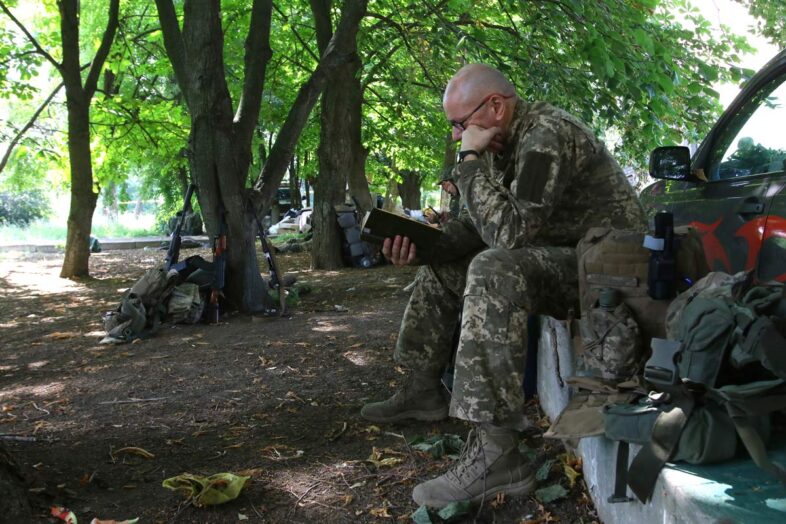
Hope saves, and even in the darkest times, it’s crucial to find the rays of light
A duty-bound society
Society must be prepared to support soldiers as they transition back to civilian life, as interpersonal dynamics affect everyone. But how can civilians best offer that support? First and foremost, it’s important to give soldiers the personal space and free time they need to adapt. Psychotherapist Nataliya Hrynko emphasises that it’s crucial not to overdo the care and support. Excessive attention can unintentionally provoke resentment, as soldiers may view help as a sign of personal weakness, a loss of control over their own lives.
Additionally, it’s vital to recognise that change has occurred on both sides: for the soldier, and for the family, which has had to adjust its daily life in the absence of the defender. As a result, conflicts and disagreements within the family may arise, but these should not be feared. Conflict is often a sign that dialogue is taking place and that people are working together to resolve issues. It’s far more damaging when there is no communication when no one seems to care. This lack of connection can lead to feelings of alienation and social isolation — something soldiers may struggle with, as they might feel others won’t fully understand what they’ve been through.
Another key element in bridging the gap between the civilian and military worlds is the willingness to listen. “In my therapy method, there’s a powerful phrase: ‘I want you to hear this with my ears, see this with my eyes, and feel this with my heart,'” says Nataliya Hrynko. “We need to be fully present with the person we’re talking to — not distracted, but genuinely focused on listening, understanding, and caring. In this moment, decisions and advice are secondary. What’s most important is encouragement, approval, and offering hope that, even in the darkest times, there are moments of light and beauty. During the toughest experiences, only what is false is destroyed, while what is true stays with you.”
Hrynko emphasises that it’s crucial not to push a soldier to speak if the trauma is still too raw. Instead, involving them in daily routines can be a more helpful approach. Feeling part of something bigger, a valuable member of a group, fosters emotional connection and aids in psychological recovery.
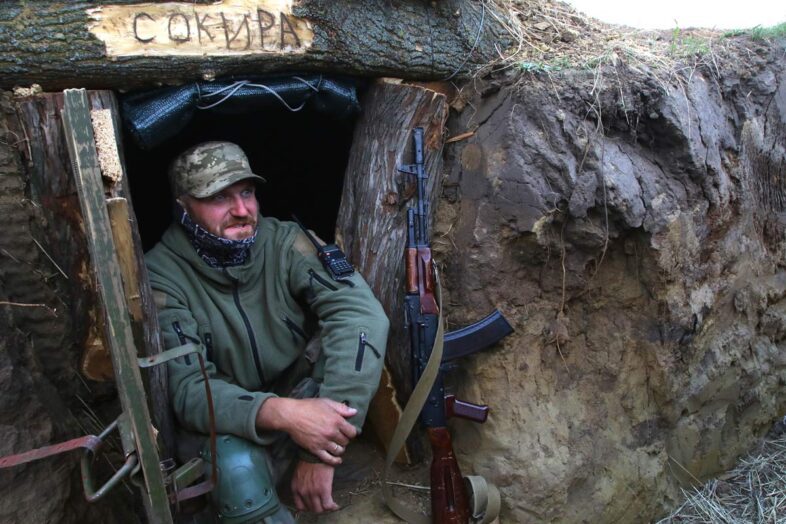
“Order will be restored…” Soldiers view it as passing the buck when people expect them to get involved in politics after returning from service
Father Roman echoes a similar sentiment in his conversation with The Ukrainian Week: “Soldiers often feel that society doesn’t truly understand them. This is completely natural because society can’t fully grasp what they’ve experienced or the harsh conditions they’ve had to endure. And that’s okay. What’s most important is not leaving them alone with this burden. We need to talk about it, try to help, and listen. The ability to listen is crucial — not just hear, but truly listen. I also believe that society needs to engage in psychoeducation as a whole. Only by working together, addressing emotions, spirituality, and rehabilitation, can we help restore a person’s integrity. This is a challenge for our entire society, and we all need to be part of it.”
Oleksii Bobela also stresses the importance of support from family and society: “I think I’m voicing something that many soldiers feel. We don’t want to return to the front, but we understand that someone has to do it. And it’s better that we do it — those of us who already have experience, know what the job entails, and understand the risks. Maybe that’s for the best, but we also need help. We get tired too; there are fewer of us, and without society’s support, assistance, and rotation, it will be very hard for us.”
In political debates or even casual kitchen conversations, it’s common to hear the idea that veterans returning from the front will “set things right” in the country. However, the military disagrees, viewing this as just a way of shifting responsibility onto others.
Instead, society needs to mature and take on this responsibility itself. “I come across these opinions quite often,” says Oleksii Bobela. “I think there are some soldiers who would like to continue their careers in politics and make a change. But in my opinion, there aren’t many of them. Most servicemen, I believe, have one main goal — to end this war and return to a peaceful life. So, expecting soldiers, who have already made heroic sacrifices on the frontlines, to come back and ‘fix’ the political situation in the country will only lead to disappointment. It won’t happen. We shouldn’t place unrealistic expectations on the military.”
This highlights the importance of building a society of responsible citizens, where the home front actively supports the defenders. As Father Roman Mentukh wisely stated in his comment to The Ukrainian Week: “It’s not the servicemen who should adapt to civilian life now, but civilian life that should adapt to the veterans returning from the front.”