This is the story of Inna Pecherytsia and her son, Yaroslav. Inna has lost two husbands to the war, and Yaroslav has lost two fathers. The heartbreaking news came at different times, but through it all, Yaroslav stayed by his mother’s side, clinging to the hope that she would keep going—for him. The pain of loss was no easier for him. He withdrew, pulling away from his friends, retreating into himself. Now, as he approaches adolescence, Inna is working tirelessly to reconnect with him. Above all, she is determined to preserve the strong, nurturing bond that continues to bind them.
“I want my loved ones, my heroes, to be remembered and honoured because these men stepped forward to defend our country without a second thought, giving their lives in the process. That’s why my son and I attend events to commemorate the fallen, share their stories across all platforms, and ensure their photos are displayed in memorial alleys in Dnipro and Kyiv. This autumn, we’ll plant trees in their honour. My endless love for them is what gives me the strength to carry on,” Inna reflects as she speaks about the difficult path life has set before her.
At times, it feels as though this war is our last chance. And in many ways, it truly is—because when you scroll through the news and witness the daily farewells to our friends, our men, women, children, and their mothers; when every hour brings reports of missile strikes across Ukraine; when the brutal deaths of our prisoners or the enemy are paraded without restraint—it forces you to ask yourself: How do I hold on, how do I keep going without burning out—physically, emotionally, mentally?
Then another question arises: If a loss has been our constant reality since 2014, how do we speak and write about it, share and show these stories in a way that ensures, no matter what political or military scenario unfolds, Ukraine and its people are never forgotten?
We must amplify these losses in every form of media, so the world understands the true cost of our struggle. At the same time, we must help the families of fallen soldiers keep the memory of their loved ones alive. And we cannot forget those who are currently enduring hell on every front line, mustering all our resources to support them. There’s no alternative. What’s at stake is the future of our nation and the lives of children who, tomorrow, may never see their parents’ faces again—parents who serve in the military.
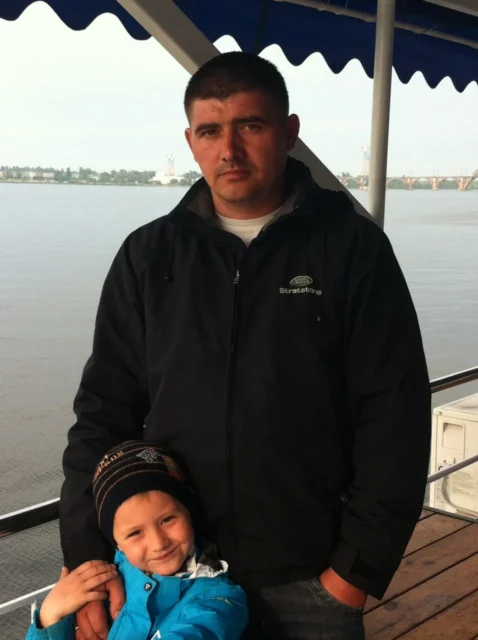
“…This cursed war took two of my beloved from me. My first husband, Yuriy Pecherytsia, was killed in 2015, and my second, Oleksandr Tikhomirov, in 2022,” Inna shares her story. She is also one of the central figures in the documentary series Human Bridges.
Yuriy Pecherytsia
Yuriy Pecherytsia was born in Mashivka, a small town in the Poltava region, and was the only child in his family. In 2006, he moved to Dnipro, where he founded an international transportation business. A year later, he married Inna, and two years after that, they welcomed their son, Yaroslav.
“My first husband was reliable, decent, and always ready to lend a hand,” Inna recalls with a warm smile. “Energetic and full of life, he inspired everyone around him.”
It feels like a lifetime ago, but in June 2014, Yuriy volunteered for the Anti-Terrorist Operation (ATO). At that time, volunteers were few, and their actions were seen as extraordinary acts of bravery.
Yuriy fought in the battles for Debaltseve, Vuhlehirsk, and Luhansk, and served in Bakhmut. He was a staunch believer in a free Ukraine, one where children could grow up in a country where everyone had the right to speak their mind and make their own choices. Knowing the risks, he first chose to defend his home and family, with the intention of returning to his business and career once the country was secure.
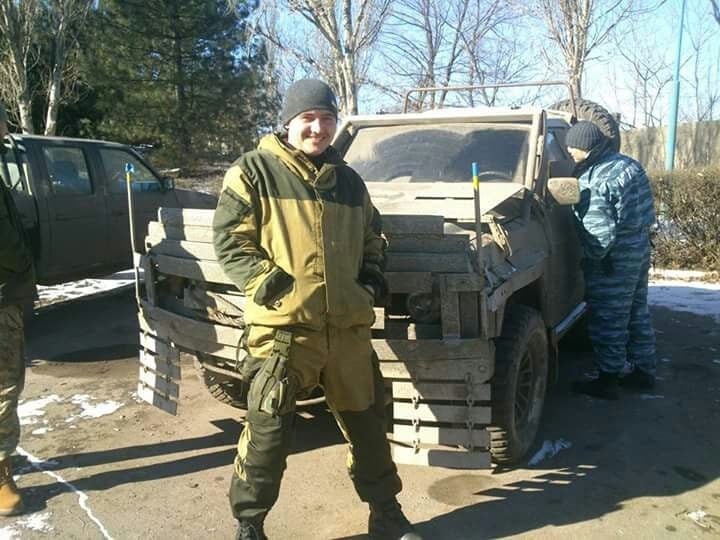
“Yura saved his comrades. On the night of 30 to 31 August 2015, around two in the morning, near Horlivka, my husband was killed by a landmine while carrying out a combat mission,” Inna recalls, her voice steady but heavy with the weight of the memory.
On 2 September 2016, a memorial plaque was unveiled in Yuriy’s honour at the school in Mashivka, Poltava region, where he had once studied. The street where he had lived—and where his parents still reside—was renamed Yuriy Pecherytsia Street.
“The war took everything from me. In that moment, it took my one true love, my happiness, my hope, my sense of security, my confidence, my joy…” Inna pauses, her eyes distant. “You live your life, and then, in an instant, you lose it all—as if you yourself have died. It felt like I had been buried alongside him. You stop feeling anything, and then comes the crushing realisation. When you understand that this isn’t a dream, that this really happened to you… For months, I didn’t live—I merely existed, crying, asking myself the same question: why? I don’t even remember how the year after Yura’s death passed. I had no will to live.”
Her young son and her parents were there, by her side. Inna recalls receiving Yuriy’s watch, returned to her along with his belongings—a gift from his commander, given in gratitude for Yuriy rescuing his comrades under fire.
“When Yaroslav got older, I showed him the watch and told him it was a symbol of the lives his father had saved. It might seem like just an object, but sometimes, things left behind by those who died in war carry a deep, sacred meaning. They become something more—something that can protect us.”
“The only person who brought me warmth and comfort during that time, the one I could talk to endlessly about Yura, visit his grave with, and spend hours with, was my husband’s best friend—Sasha. Over time, I realised I was starting to feel something more for the person who had supported me through it all. I truly fell in love again. Some might not believe me, others may judge. In Ukrainian society, there’s still a taboo when it comes to a woman finding happiness after losing a loved one. But that’s wrong. I almost destroyed myself after losing my first husband. If not for Sasha… and my son… I honestly don’t know.”
“Sasha was so much like Yura. I felt as if I was loving both of them. After losing my second husband… I don’t even understand how I survived. I don’t know. Maybe… maybe God has other plans for us,” Inna says, her voice breaking, as tears fill her eyes while she shares her memories.
About Oleksandr Tikhomirov (call sign: Bars)
Inna’s second husband, Oleksandr Tikhomirov (call sign Bars), was born and raised in Dnipro. He pursued higher education, built his own business, and served with honour in a special forces unit. He was always responsible and fiercely hated the idea of the Soviet Union, becoming a staunch opponent of the sovok [the Soviet system or people who cling to the so-called Soviet-era values – ed.].
In 2014, he voluntarily joined the war in eastern Ukraine, serving as a reconnaissance company commander with the 25th Airborne Brigade. Oleksandr fought in some of the fiercest battles, including those in Avdiivka, Savur-Mohyla, and Debaltseve.
For his role in liberating Sloviansk, he was awarded the Order of Courage. However, in 2017, combat injuries forced him to leave active duty for health reasons and return to civilian life. But when the full-scale war began, he once again took up arms to defend Ukraine.
Inna didn’t want to lose him too. But Oleksandr assured her that, for the memory of Yura—his fallen friend—he would survive, to be there for her and their son, Yaroslav. She had no choice but to believe him, so with a heavy heart, she helped him pack.
Bars earned the rank of senior lieutenant and led a special reconnaissance unit. He and his comrades were among the first to liberate Izium, raising the Ukrainian flag at the first checkpoint and capturing Russian soldiers. After their success in Kharkiv Oblast, his unit was redeployed to the Donetsk region, advancing towards Lyman.
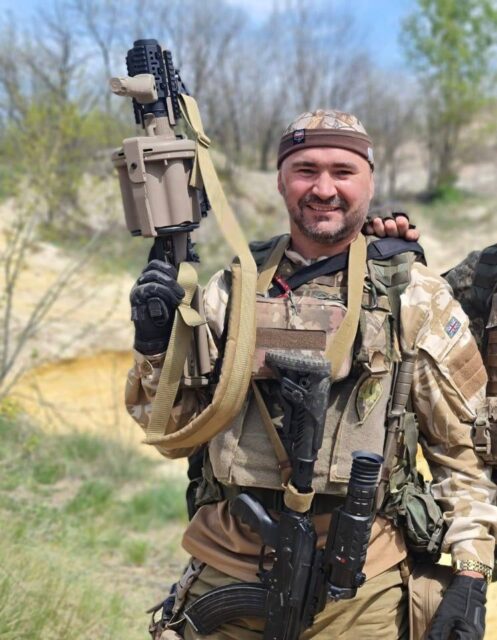
On September 29, 2022, Oleksandr Tikhomirov (Bars) was killed while carrying out a combat mission near the village of Kolodyazi in Donetsk Oblast. He was posthumously awarded 14 military honours, including the Order of Bohdan Khmelnytskyi III class. His comrades remember him as a dedicated commander and a true friend.
After Sasha’s death, Inna received his belongings, including a cap bearing the emblem of the 25th Brigade. She keeps it alongside his photo and a flag with messages from his comrades, including a birthday wish from her. She also cherishes all the medals of her heroes—Yura received four, while Sasha earned fourteen.
“I used everything I could—antidepressants, psychologists, hospital visits—anything just to survive. Then, fate gave me the chance to choose, to love and be loved again. But once more, it was all taken away so suddenly. And again, I was left asking: why? The hardest part was that both times, after hearing the news of my husband’s death, my son Yaroslav was right there by my side. The first time, he was still too young, but when he heard me scream, he came running. The second time, when he saw me collapse in despair, as though in a nightmare, he knelt beside me and said, ‘Mommy, live for me… I need you,'” Inna shares.
She remembers Yura’s constant willingness to help, even strangers. If he saw a broken-down car while driving, he’d always stop to lend a hand. That same selflessness followed him into the war. During the retreat from Debaltseve, Yura drove his APC, evacuating soldiers and the wounded under heavy fire.
Oleksandr, too, never turned his back on those in need.
“As the commander of the reconnaissance platoon, he saw unimaginable horrors during the war in 2014, particularly during the liberation of Sloviansk and the battles for Shakhtarsk and Savur-Mohyla, for which he was awarded the Order of Courage. Through it all, Sasha always put the safety of his men first. He never hid behind anyone—he was always at the front. He died because he was in the first vehicle… He never bragged about his feats. But I know that once, against all odds, he led all of his fighters out of an enemy ambush,” Inna recalls.
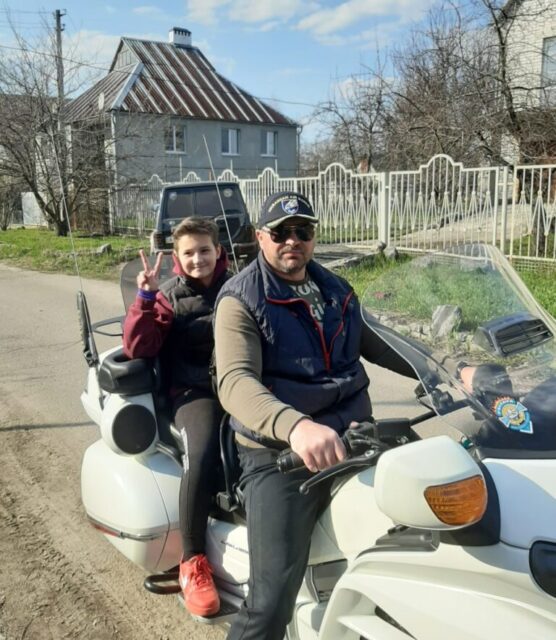
When asked about the more personal side of her life and why men were drawn to her, Inna opened up, saying that despite the pain of loss, she feels blessed to have experienced true love, mutual care, and affection.
“Love doesn’t end; it lives on in our hearts. It transforms into memory, gratitude, and strength, but it stays with me, forever,” Inna says.
Another key theme is the bond between a son and his father. Children feel both pain and joy deeply, yet they often struggle to express those emotions to adults. When Yaroslav attended camps for children of fallen soldiers, he began to open up, gaining a clearer understanding of his feelings and their significance for his future.
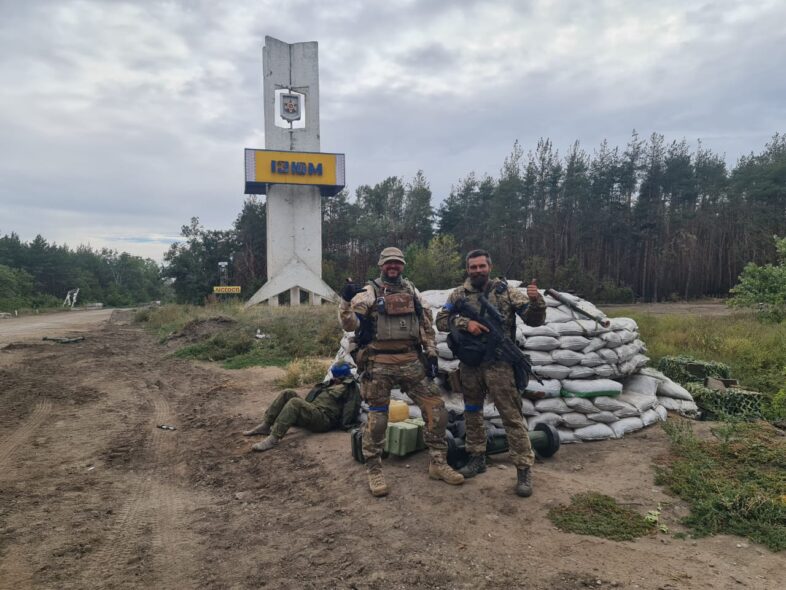
Inna managed to capture her son’s thoughts on his relationship with his parents.
“I barely remember my biological father… He passed away when I was six, after being at war for almost a year, starting in 2014. I was just a little kid, but Mom always told me how much he looked forward to my birth and how badly he wanted a son. It makes me sad that I don’t remember him well… But sometimes, it feels like I do, because Mom shared so much about him, about my dad, Yura.
I remember Mom crying a lot. When she tried to talk to me about my dad without breaking down, I could see how much it hurt her. And sometimes, I couldn’t help it—I had tears in my eyes too.”
Then Sasha came into our lives. Well, how did he come into our lives? In a way, he’d always been there—he was a close friend of my father. But when he and my mom started living together, everything changed. Our life improved. Mom stopped crying all the time, and I got a second father, the one I’d been longing for.
Sasha never said no to me. I loved fishing, and we often went together. I had a dream of buying a boat to fish from, and Sasha and I had started looking for one. But we never got the chance to buy it… I had so much respect for him; I loved him like a father. He and my dad were so similar—in their character and their moral principles.
“I want to live up to their example,” Yaroslav says, his voice steady. “I don’t know if I could do what they did—give my life for the country without a second thought. But I know they wouldn’t be ashamed of me. I promise.”
He holds on to their memories—awards, patches, flags. From his biological father, he has a watch, a keepsake. And from Sasha, he treasures a pair of binoculars, a small but meaningful gift.
Yaroslav speaks of his mother with deep affection. “I see how hard she works to make sure I have everything I need. I’m really proud that she runs her own business. Sometimes it’s really tough for her, but she never gives up because everything depends on her…”.
“I don’t often tell my mom I love her anymore,” Yaroslav confesses. “I’m not a little boy, and it feels a bit awkward. But when she asks, ‘Do you love me?’ I always say, ‘Yes.'”
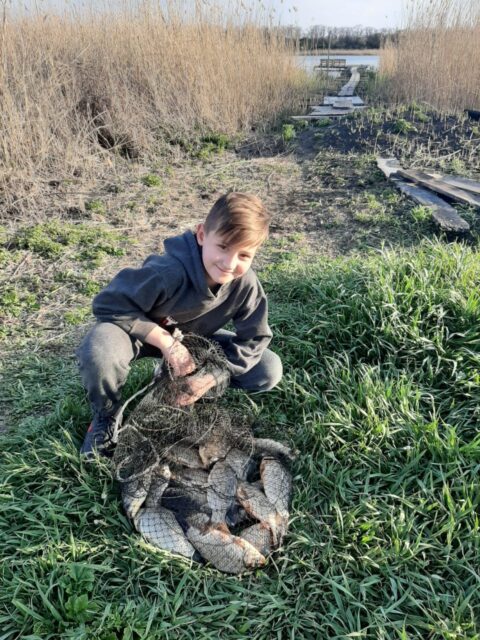
Inna reflects on love and loss with a quiet intensity. “What does it mean to love people who are no longer here? For me, it’s like a prayer. Every day, I thank God for the men who were in my life—those who became role models for my son and for me. It’s about carrying their memory forward because they deserve it. True love gives you the strength to keep going. And for love, death doesn’t exist. I will tell the world about my heroes.”
In Ukraine, support for those who have lost loved ones in the war is a recent development. It wasn’t until after 2022 that organizations and foundations began emerging to provide help. “TAPS,” for instance, has been offering support since 2018.
“I’m so grateful to them for the camps they offer for wives and children, for the sense of community,” Inna says, her voice soft but strong. “It helps us psychologically, to stabilize and reconnect. Thanks to ‘TAPS,’ I’ve found friends who truly understand me and can support me. My son, Yaroslav, went to a camp for children of the fallen. When he returned, he was a different person—more open, friendlier, and more in touch with his peers.”
Inna Pecherytsia has worked tirelessly to rebuild her life after the loss of her husband. Through consultations with psychologists, group activities, and a trip to a camp for wives of fallen soldiers, she’s slowly found her way back.
“My advice to other women coping with the pain of war-related loss is not to isolate yourself,” Inna says, her voice steady and filled with understanding. “Connect with others who have also lost loved ones. We’re all different, but we’re equally hurt. We’re all trying to move forward. Our loved ones fought so we could live. And now, I know that life after loss is possible. It’s different, but it continues.”
She pauses, a quiet strength in her words. “We, the women of warriors and heroes, must be strong, so our loved ones can be proud of us—even in the afterlife.” Inna’s words resonate deeply, a reminder that even through unimaginable grief, the will to live, love, and carry on is powerful.