Every city, large or small, has its own unique spots—its defining features, if you will. These places, much like fingerprints or the intricate pattern of a retina, become part of what makes a city instantly recognisable. They could be landscapes shaped over millennia, but more often, they are man-made creations—crafted by artists, sculptors, architects, and builders over time.
In Kyiv, these include the iconic Kyiv Hill with Saint Volodymyr, Askold’s Grave, Podil, the Lavra with its saints, Khreshchatyk, and the towering statue of Bohdan Khmelnytsky. In Kharkiv, landmarks like the Ozerianska Church on Kholodna Hill, the Mirror Stream, the cascade, Shevchenko Garden, Derzhprom, and Bursatskyi Descent stand out. It’s impossible to list them all at once.
In Izium, however, such places are fewer—and they are becoming increasingly rare.
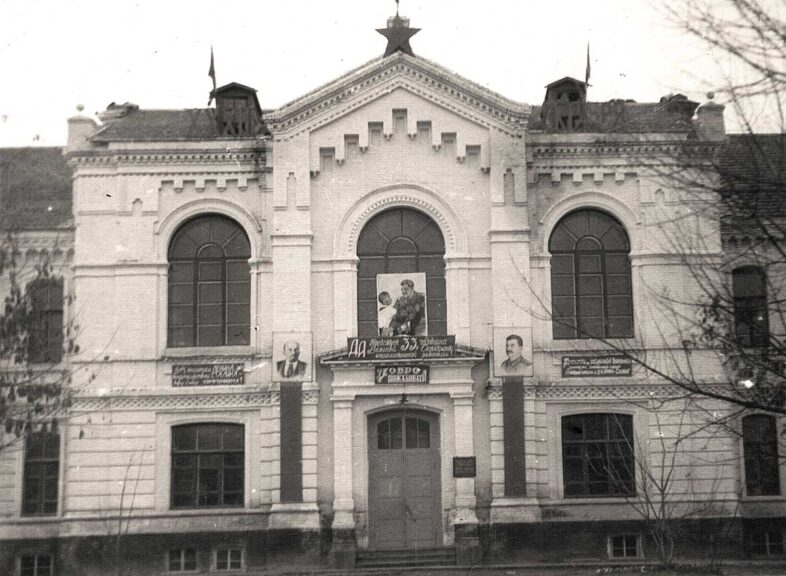
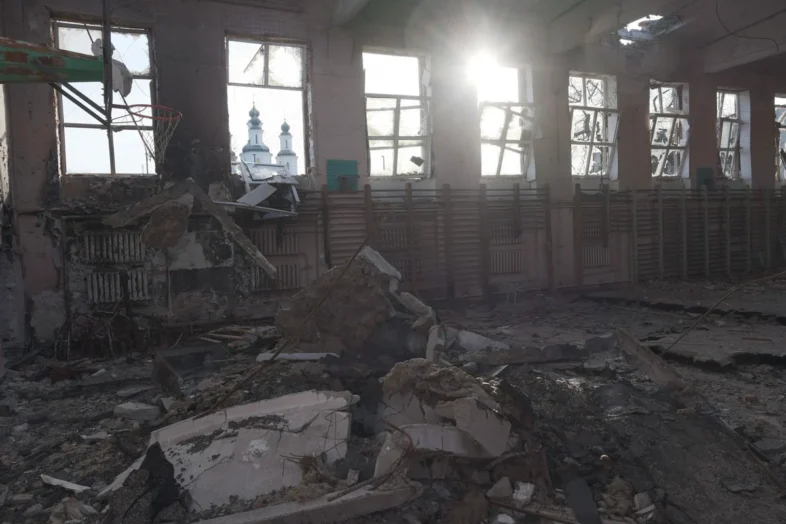
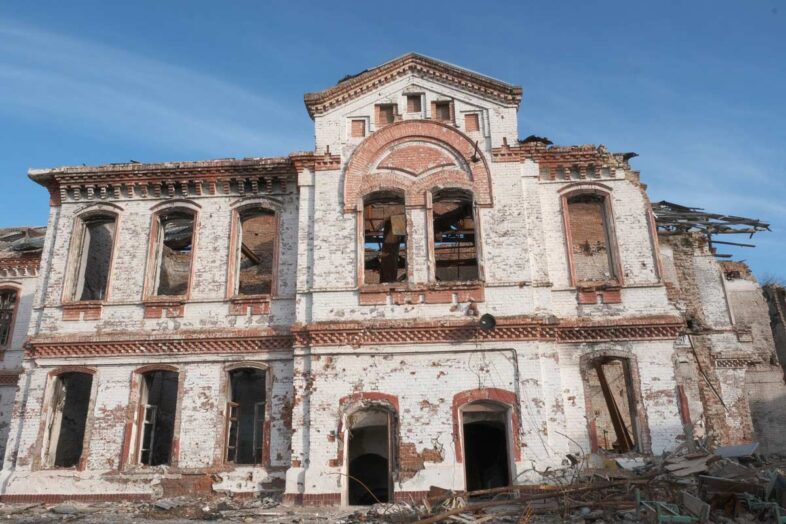
One of Izium’s most iconic buildings, or rather, what remains of it, is the devastated structure of Izium Lyceum No. 4, destroyed by Russian occupiers. Without a doubt, this was one of the city’s most beautiful and majestic landmarks, nestled in the heart of Izium, within its Central Park.
The building had an extraordinary and unique history. It was just five months shy of celebrating its 140th anniversary.
Its story began in the late summer of 1882, when Izium witnessed the ceremonial opening of its first secondary school for boys—the Real School.
It lasted about 37 years, and interestingly, the turn of the century almost perfectly divided this period in half. The 19th century took 18 years, and the 20th century claimed roughly the same amount of time.
Over the years, the school saw six directors, four inspectors, and dozens of teachers pass through its halls. Directors like Posadsky-Dukhovsky and Shevchenko, inspector Bokiy, and educators such as Bekeniev and Dobrokhotov were not only passionate teachers but also authors of scientific studies and textbooks in fields ranging from physics and chemistry to literature and natural history.
Among the students and graduates of the Real School, and later the various educational institutions that took residence in the building over nearly 150 years, were engineers, architects, scientists, military figures, artists, government officials, and even adventurers.
To recount the stories of each individual would require far more time and energy than one could possibly muster. But I’ll simply say this: the people connected to the Real School, whose contributions are deserving of remembrance, could easily fill not just one or two but a dozen memorial plaques on its façade.
Although the Real School closed its doors in 1919, its history didn’t end there. The school bore witness to the revolution, the Liberation Struggle, a brief triarchy of powers, the Austro-Hungarian occupation, and the turbulent rise of various warlord factions.
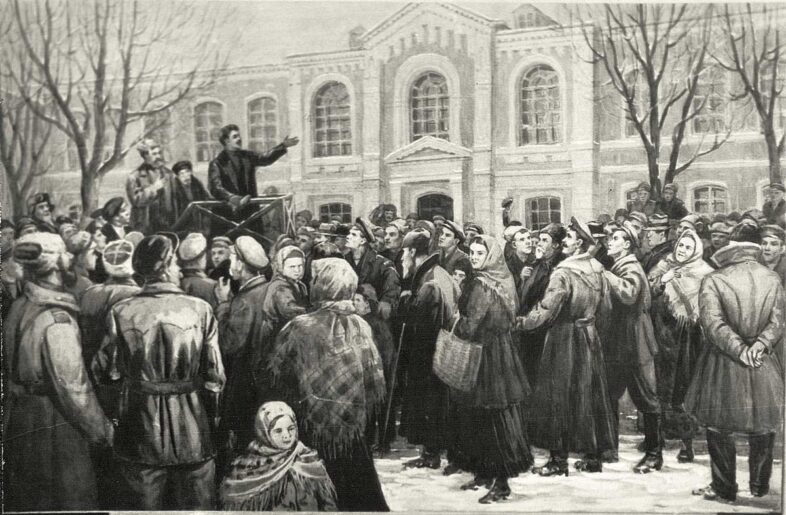
The residents of Izium still fondly remember the memorial plaque commemorating the city’s first Soviet congress and the Bolshevik faction meeting held there in 1918. However, for years, any mention of the five meetings hosted by the Ukrainian Socialist Revolutionary Party, led by government member Odoyevsky, was intentionally erased. During the Soviet era, a single narrative was pushed—that only Bolshevik forces had a hand in the city’s history. The official version of events painted them as the sole architects of state-building, focusing on the workers and their peasant allies, and portraying them as downtrodden and impoverished figures.
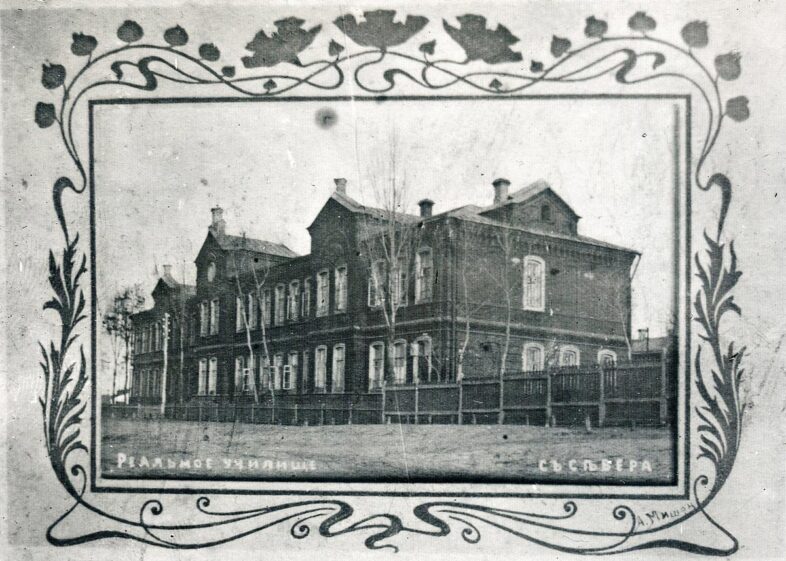
The next chapter in the building’s history, beginning in 1919 and stretching until the establishment of Soviet rule, was marked by tumult and the upheaval of the civil war.
In 1919, the People’s University took root in the building—a place where, for a modest fee, lecturers freely delivered lessons. The teaching staff consisted largely of former educators from gymnasiums and primary schools, while the students were predominantly workers and peasants.
A significant turning point came in 1920 when a fire tragically destroyed the Church of Saint Catherine, once housed within the building. Later that year, the headquarters of the Soviet 13th Army was stationed here, and infantry command courses were established under its watch. The course commander, Mykola Asmus, and commissar Sychov were both repressed in the 1940s. Meanwhile, Sychov’s deputy, Falaleyev, rose through the ranks to become a Soviet Marshal of Aviation. Another instructor, Mykhailo Safir, achieved the rank of general in the armoured forces and went on to become a respected military theorist. Serhiy Petrovych Naniy, who taught music and singing at the courses, led a truly multifaceted life—he was a lawyer, translator, ethnographer, composer, government official, and the founder of the Izium People’s Conservatory. His remarkable journey deserves the attention of historians and calls for deeper exploration.
In those early Soviet years, the building continued to host various educational institutions, marking yet another chapter in its storied past.
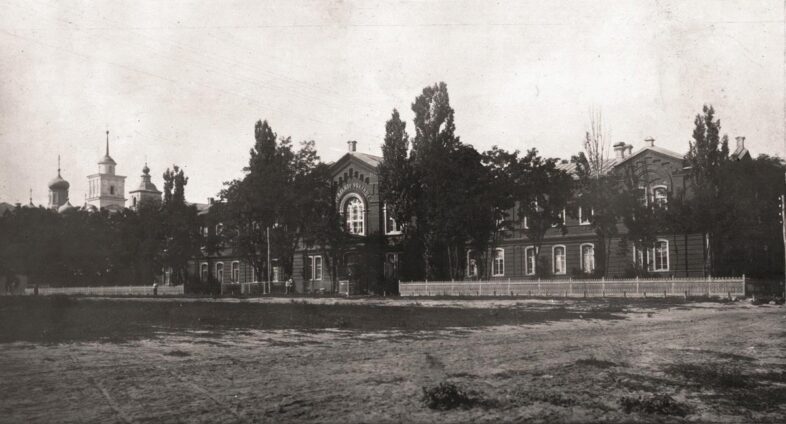
The building’s story continued through a shifting array of educational institutions. Initially, there were three technical colleges, followed by a vocational school, a workers’ faculty, an adult school, and, from 1925 onward, a Unified Labour School. Over time, the school hosted various stages of education—from a primary school to a seven-year school, and by 1935, Izium’s very first secondary school.
This secondary school, like all others of its time, was Ukrainian and officially named Izium Model Secondary School No. 1. Its history, though brief, was marked by seven graduating classes, with the final one on June 16, 1941. Among its alumni were some distinguished individuals—scientists, doctors, military figures, and artists. Some remained in the city, while others moved elsewhere, such as doctors Mohylianska and Yatselenko, teachers Shapko and Lisohorskyi, engineers Zanchenko and Slavgorodskyi, literary scholar Professor Shlapak, and poet Sayenko.
But one graduate stands out for me: Zoya Vasylivna Klyuchko, who was part of the last graduating class. An engineer at the instrument-making factory, she recently celebrated her 100th birthday! It’s thanks to her that I know what I do today.
Izium Model Secondary School No. 1, however, was not immune to the ravages of war—the Second World War, to be specific. By October 1939, the building was transformed into a military hospital, which operated there until the spring of 1940. During this turbulent time, dozens of the school’s students perished, went missing, or were taken prisoner.
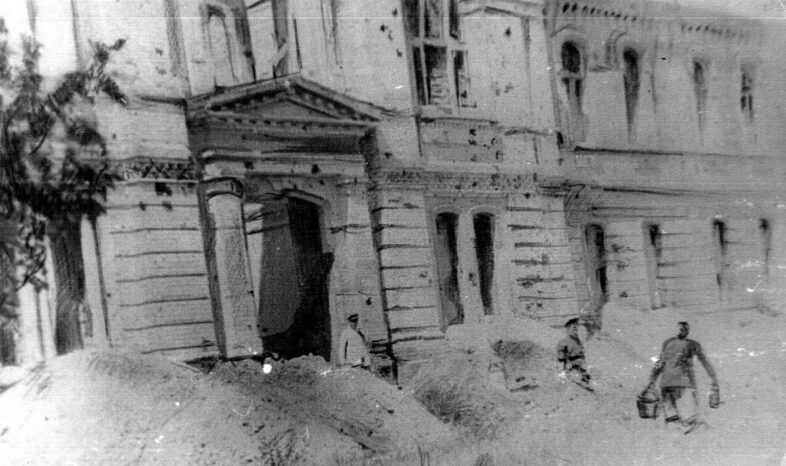
The students who didn’t survive the war perished in different ways—some from hunger, others under bombardments, and many others from torture in either German or Soviet camps. Among those who lost their lives were the former school director, Posunko, and the physical education teacher, Harahulia.
During the second German occupation, which lasted seven months and ten days, the school building once again found itself repurposed—this time as a German hospital. In early February 1943, as the German forces began to retreat, they set the building on fire. By the time the flames were extinguished, the entire school had been reduced to ash, leaving only the walls standing. Though, in comparison to what the Russians have done now, even those walls are gone—but more on that later.
Yet, against all odds, the school was rebuilt—though it took five long years. In the spring of 1951, the first post-war graduation took place. The new school, while rising from the ashes of the original model school, could be seen as a successor to two pre-war Izium institutions: the first Ukrainian school and Russian School No. 4. This “fourth” designation remained with the school right up until today.
Over the next four decades, the school underwent two significant changes in status. In the early 1960s, it was re-established as a Ukrainian school, though only an eight-year institution. It would later become a Russian secondary school. By the late 1990s, the school had grown to become the largest in the city.
It’s impossible not to acknowledge the parents and grandparents—grandmothers and mothers—of today’s residents of Izium. How many of the former graduates of this school went on to work at the city’s key enterprises! From directors to ordinary workers, many began their careers right here, within these very walls. Thousands of them…
I had the privilege of speaking with the former head of the school, Liubov Fedorivna Sinna.
“In 1991, we immediately introduced the first classes with instruction in Ukrainian, except for the graduating classes,” she explained. “At that time, we had around 1,500 students, which made up about 40 classes. By the time I left in 2001, there were around 700 students, and just before the 2022 war, only 500. Birth rates in the 1990s were extremely low. Classes had already shifted to a single session because the number of children in the city had dwindled.”
In the early days of the full-scale war, the school was quickly destroyed, first by airstrikes and then by fires and arson. Izium remained under occupation for half a year.
Liubov Fedorivna mentioned that most of the teachers either fled or moved to other institutions. “But all the schools in Izium are damaged,” she said. “They’re running online now, and staff meetings are mostly virtual…”
Over the three decades of independent Ukraine, the iconic school of Izium became Ukrainian once more. I hope, for good. The fight for that “for good” is happening right now, at an incredibly high cost—one that, for many, has been paid with their own lives.