
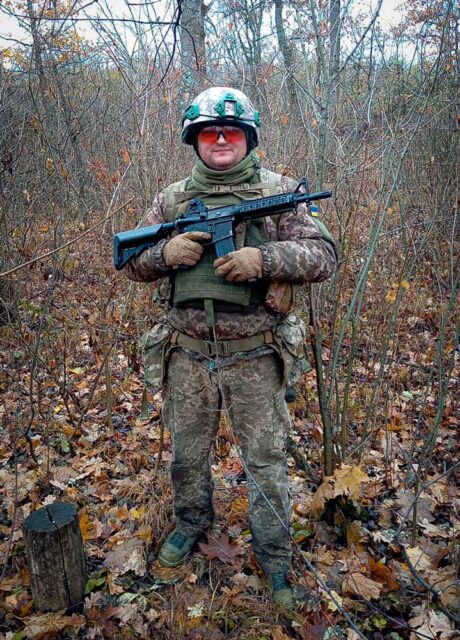
“At every stage of my service, I knew I was playing a part in helping my country hold its ground,” says 40-year-old Serhiy Tymoshchuk of the 32nd Separate Mechanised Brigade. The Ukrainian Week caught up with the soldier at a hospital where he was recovering from a leg injury.
Serhiy is making good progress. He steps outside to soak in the fresh air and watch the peaceful rhythm of the town where he’s being treated. The calm surroundings seem to bring a sense of ease, reflected in his demeanour. There’s no sign, in his eyes, his movements, or his voice, that not long ago, near Pokrovsk, he and his comrades spent 22 gruelling days holding their position. It was their first combat mission as regular infantry, and they faced the challenge with quiet strength and resolve.
– What was your mission?
– Our task was to secure a house near a crossroads and keep watch. We were to report any enemy movement and ensure our position didn’t fall. The situation was constantly shifting, almost like a kaleidoscope. During our preparation, we studied the maps and received one set of information. But by the time we arrived at the position, everything had already changed—three times over.
As a precaution, we were told to move through the area as if we were on completely unfamiliar ground—entering with grenades and providing cover fire. There were six of us at first. Later, three more guys from a nearby position joined us—one of them was injured. They weren’t so lucky; the house they were supposed to secure had already been taken by the enemy. They fought their way out and only managed to reach us a day and a half later.
– When did you first realise the Russians were aware of your position?
– For the first few days, the enemy had no idea there was an observation post right under their noses. That gave us some time to prepare and keep a low profile. We reported enemy infantry movements over the radio, and our drones would take care of them. We didn’t see any equipment, only heard it, and reported that as well. But as the number of Russians grew, they started getting much closer, even trying to peek into the house. Usually in groups of two or three. That’s when we had to open fire. If the enemy is only five metres from your window, you don’t hesitate to take the shot.
At that point, we realised our rotation would be delayed. We began recalling everything we’d learned during combat training about urban defence and storming buildings. We started tearing up the floor, digging, and filling sacks with earth. Those sacks, along with food and water, were dropped to us by drones.
At first, we used sacks to block the window, camouflaging it so it wouldn’t be visible from the street. But then an explosion blew out the entrance door, along with part of the wall, forcing us to set up a solid firing position in the corridor. That blast is how I ended up with shrapnel in my foot.
Through the opening, Russian infantry or the reconnaissance tried to break in, and FPV drones started buzzing around. But, thank God, we all made it out alive. It was loud, with dust everywhere. We had barricaded ourselves well—no grenades got through. Every time we heard the unmistakable sound of a grenade pin being pulled, we’d throw ours right back after it exploded. We weren’t about to wait for anyone to break into our house.
The guys I was with were all transferred to infantry from different units. Some of us, like me, came from air defence, others from rigging. For all of us, this was our first combat mission of this kind.
Before the mission, we had nearly four weeks of training at the range. We fired everything—from disposable launchers and grenade launchers to machine guns. I’d even know how to fire a Javelin if I had one in my hands. By the time we went on the mission, we were already a tight-knit team.
– Was the injury causing you much trouble?
– I could still move around on my own. I just did less digging and focused more on keeping an eye on the street. I remembered some advice from the instructors on how to observe through a window without being noticed, and that turned out to be really useful. We set up round-the-clock shifts, though at night, we relied more on sound.
We had two guys with more serious injuries, both with tourniquets on their legs. But they didn’t let that stop them—they still found ways to help, whether it was loading magazines or cleaning rounds that had gotten dirty. The drones brought us our supplies—ammunition and food.
By the third day on the position, the enemy started trying to storm us. We fought off several assaults a day. Each usually lasted no more than five minutes. Judging by their poor shooting accuracy, they weren’t professionals. I couldn’t tell how many infantry they sent, because our strike drones and mortars always intervened and made things difficult for them.
Our drone pilots were exceptional throughout it all.
The house we were in had two solid walls, but monitoring the situation was tricky because of the outbuildings surrounding it. The enemy used those for cover for a while. One of our guys was hit by machine gun fire from those buildings—he ended up with an open fracture in his arm. To prevent the enemy from getting too close and to improve our visibility, we asked the mortar teams to take care of the sheds, the garage, and the summer kitchen.
By the second week, things started to ease up a bit. The enemy’s forces had changed; the new batch of Russians seemed less experienced, or maybe their predecessors hadn’t shared important intel with them. They began walking openly in front of our house again, which gave us more chances to take out more occupiers.
By the end of the second week, they attempted to storm us. This time, it was harder to repel them because the rain and fog limited how much support our drones could provide.
– So, the supplies started running low, too?
– Inside the house, we found a small stash of water, which helped us hold out for a while. But overall, there wasn’t much, so we had to ration it carefully. Our wounded comrades were constantly thirsty from the medication, so most of the water went to them. The rest of us only had enough to wet our mouths.
What we didn’t have to worry about was ammunition. By the time I left the position, I had 15 loaded magazines, even though I’d arrived with just four and a few loose rounds. If you spend all day eyeing a dead Russian’s backpack and are sure it’s not rigged, you go out at night and take it. Besides ammo, we kept an eye out for power banks to charge our radios. We even collected a few of the enemy’s radios, but their batteries drained quickly because they needed specific charging methods. When they worked, though, we didn’t pick up anything too useful from their communications.
Towards the end of our rotation, they started hitting us with artillery. First, they tried to take the village with infantry, but they got a beating. Then, true to form, they began flattening everything. It was terrifying—hearing the howl of an incoming shell and not knowing if it would land on the house next door or ours.
Their tactics started to shift as well. No one tried charging directly at us anymore. Russians figured out where we were stationed and began trying to approach us from the neighbouring houses. At one point, they even set the house on fire with a rag soaked in fuel, forcing us to relocate.
When we pulled back, I counted about four dozen dead occupiers around our position—more than a platoon.
On the last day, we even captured a machine gun. There was also a grenade launcher, but we destroyed it so they couldn’t use it against us. We left the captured assault rifles behind but threw away the firing pins to make sure they couldn’t be used.
— Were there any attempts to rotate your position earlier?
— We tried to get our equipment in, but the overwhelming number of enemy FPVs and mines made the plan fail. We heard one of our tracked vehicles hit a mine, and half an hour later, it was evacuated by another piece of equipment. Our guys then went on foot to clear the anti-tank mines from the road.
Retreating on foot wasn’t an option either—the area was firmly under enemy control. But somehow, the command managed to arrange our rotation. We heard over the radio that several armoured personnel carriers were making runs to other positions.
I think the Russians had grown complacent—they hadn’t seen our equipment in two weeks. So when our guys drove through the village streets in an M113, it took the enemy completely by surprise. The enemy artillery started shelling about five minutes after our armoured vehicles had already moved out.
— How did your psychological state change during those days at the position?
— In the beginning, there was a lot of confusion. I kept thinking, “What am I even doing here?” Then came a sense of resentment—it felt like we’d been abandoned, like they’d just dropped us here and told us, “Make do.” But at the most critical moments, we felt support from the brigade, especially through the drones. Fear gradually gave way to a more focused mindset: we just had to do our job. There was no thought of running away. We decided to hold out for as long as we could. Whether they replaced us or evacuated us, it no longer mattered. Despite the emotional toll of constant attacks and shelling, I knew there was no option to hide or wait it out—we had to fight.
I won’t deny that by the end of the third week, a sense of inevitability started to creep in. When you’re being stormed, you can at least open fire and rely on yourself. But when the Russians began shelling us with artillery, the constant waiting to see where the next shell would land became unbearable.
When the guys from the neighbouring positions started rotating in, it really lifted our spirits. The thought that we could push through for another day or two, give everything we had, and then have the chance to go home—that gave us the strength to keep going.
— You got through this with a lot of dignity. What advice would you give to your comrades who are about to face their first combat?
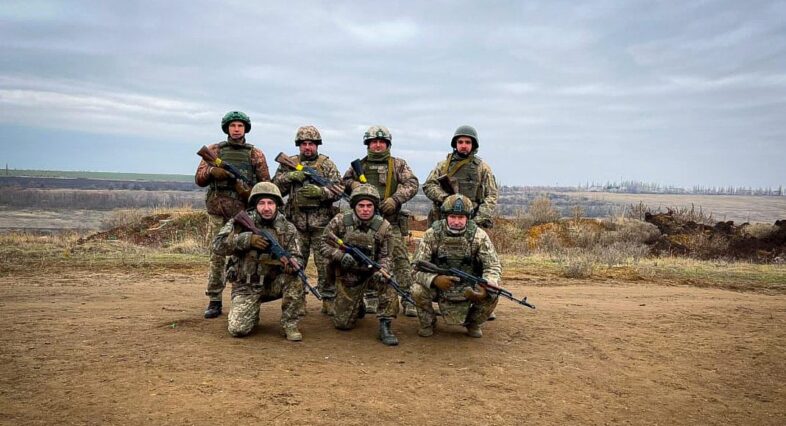
— I’m proud of the guys I was with. The key is to stay calm, hold your ground, and not let panic take over. We didn’t have one standout leader. Before we even got to the position, we’d been working together for a month. We knew what to expect from each person—who could return fire and who’d be reloading magazines. We focused on everyone’s strengths. One of us, for example, was in his element by the window, like he was at a shooting range, always ready for the enemy to show up. Another fired only when necessary—his strength lay in securing the position. Without needing any orders, our group turned into a well-coordinated machine. Responsibilities were divided naturally. Everyone knew who they could rely on, like when it was time to go out and collect ammo from the dead Russians.
— Your strongest trait?
— I was the best at orienting myself in the terrain among the guys. Directions, movements—that’s my thing. I always know exactly where I am and where to go. My experience as a logistics specialist really helped with that. Whenever we moved, I was always at the head of the column.
But at the position in the house, since I had a minor injury, I mostly focused on monitoring the situation—morning till evening, only being replaced at night. We had just three constant tasks there: digging, observing, and shooting.
— Tell us a bit more about your life before the war.
— I’m from the Khmelnytskyi region and studied at the Kyiv Polytechnic Institute. Before the war, I worked in freight transportation as a logistics specialist. I have a family, two sons, aged 5 and 11. I was living in the Kyiv region, where I’d been for the past two decades, when I was mobilised. In the autumn of 2024, I joined the 32nd OMBr after serving in an air defence unit near the capital. In my previous unit, I helped protect the sky, and now, as infantry, you could say I’ve taken up the defence of our land.
I can’t say I was eager to join the military. I tried to join the territorial defence in the early days of the full-scale Russian invasion, but they didn’t take me—they just asked me to leave my phone number. I won’t hide that I was scared to go to war. Now, especially after everything I’ve been through, I’m still afraid to go back to the positions. But just like before, I decided I wouldn’t hide from the summons. If I get it, I’ll go and serve. So, today, I know that when the time comes to return to the trench, I’ll grit my teeth and do my duty.