As Ukraine braces for another winter amidst the ongoing Russian invasion, the country faces not only the brutal realities of continued Russian attacks but also a growing public health crisis. Jarno Habicht, the World Health Organization representative in Ukraine, discussed the expected surge in infectious diseases, challenges in healthcare, and the pressing need for adequate vaccination and medical resources as the country navigates an unprecedented crisis. With health risks rising and shortages continuing, Ukraine’s healthcare workers are still at the forefront, showing incredible resilience despite the harsh conditions.
***
– Dr Habicht, what do you expect Ukraine’s epidemiological situation to be like this winter?
– First off, the war is still ongoing. Over the past several months, Russian attacks have been hitting civilian infrastructure hard, especially energy and heating facilities. This winter, though, it’s different—we’re facing a real energy shortage.
This also means we may see an increase in respiratory and infectious diseases, including seasonal influenza and other viruses. Acute respiratory infections are likely to rise. Walking through the streets of Kyiv, it isn’t as dark yet as it was at the end of 2022, but I suspect it will become darker as winter progresses. This could lead to more trauma-related injuries as well. Additionally, we can expect more illnesses related to the cold weather. Every winter, there is usually an uptick in strokes, which is typical. However, due to the ongoing attacks on civilian infrastructure, we will likely see a rise in chronic diseases as well. In summary, this winter will bring higher rates of infectious diseases, trauma, and chronic illnesses. Another critical concern is water safety—waterborne diseases and the cleanliness of drinking water are public health risks that have also escalated.
– In terms of infection, will we face a new wave of COVID-19, for example, or some more dangerous diseases?
– I believe the last COVID-19 wave in Ukraine occurred toward the end of summer, around July or August. We know that COVID-19 tends to resurge in waves, but predicting whether the next wave will hit in winter or spring is difficult. What’s clear, though, is the need to be prepared. This is why protective measures, such as vaccination, are crucial—not just for COVID-19 but also for seasonal influenza.
There are other potential health threats to monitor as well. For example, we’ve recently dealt with a hepatitis A outbreak, which has now been contained. In 2018 and 2019, Ukraine experienced the world’s second-largest measles outbreak. Diseases like measles and diphtheria remain concerns. To address these challenges, we need to maintain strong public health policies, encourage vaccination, and continue promoting simple but effective measures like handwashing.
What I have seen and learned during the war here is the critical importance of a strong surveillance system. Because Ukraine has managed to keep its surveillance system operational, we know where diseases are emerging and can respond quickly to outbreaks. This has been a key lesson from Ukraine’s experience. For instance, you might recall the vaccine-derived polio outbreak that began in 2021. Thanks to catch-up vaccination campaigns, an effective supervisory system, and strong risk communication with communities, Ukraine was able to contain that outbreak by the end of 2023. This is a clear example of how a well-functioning surveillance system enables rapid responses to health risks.
During the war, we’ve seen increases in strokes, heart attacks, tuberculosis, and mental health issues. No diseases are declining. This highlights the need to think critically about how the healthcare system can address all of these challenges simultaneously.
– Does Ukraine have sufficient numbers of all the vaccines it needs?
– Ukraine has a specific number of vaccines required for routine immunisation, and several partners are assisting with their provision. These include the global vaccine alliance GAVI, UNICEF, and the WHO. We are working very closely with these organisations to ensure an adequate supply of vaccines is available.
We have vaccines for routine immunisations for children, but there are times when larger risks require us to conduct catch-up campaigns. As of November 2024, we currently have the necessary vaccines. However, it remains essential for us, together with the Ministry of Health, to guarantee a continuous supply in the future. It is important not only to have the right number of vaccines but also to maintain a reliable cold chain. This means ensuring vaccines are stored at the correct temperature throughout their journey, from the warehouses to the refrigerators in primary care centres.
Unfortunately, attacks on civilian infrastructure by the aggressor state threaten the ability to maintain proper temperatures in these refrigerators. This poses a significant risk to vaccine storage and distribution. UNICEF, as one of the UN agencies, plays an essential role in addressing these challenges and helping safeguard the cold chain system.
– Can you provide some examples of when Russian attacks affected the storage of essential vaccines, particularly when power outages prevented proper refrigeration?
– I visited primary care centres in Irpin and Bucha after their liberation by the Ukrainian Armed Forces in April and May 2022. In all of those centres, the vaccines had to be replaced because it wasn’t clear whether they had been stored at the correct temperatures or how they had been handled during that time. Over the course of these more than 1,000 days of war, there have been many similar instances where vaccines have been wasted, medicines have needed to be replaced, and so on.
– By the way, what have been the biggest challenges for Ukrainian doctors over the past (nearly) three years?
– First of all, I’d like to thank the Ukrainian healthcare workers—doctors, nurses, and all the professionals in the health sector. I also want to thank the drivers who take primary care doctors to the field, the paramedics, and so many others. Sadly, we have lost many of them. I am deeply grateful for their service and everything they’ve done. This is why I can confidently say that Ukraine still has a functioning healthcare system.
Ukrainian doctors and nurses provide the majority of healthcare services. While we have humanitarian partners like the WHO, and we’re coordinating the humanitarian health cluster with 125 national and international partners, the bulk of the care is being provided by Ukrainian healthcare workers. They’ve been working in incredibly difficult conditions. I remember meeting with several surgeons at Mechnikov Hospital in Dnipro, where they’ve been working around the clock, 24/7, under immense pressure.
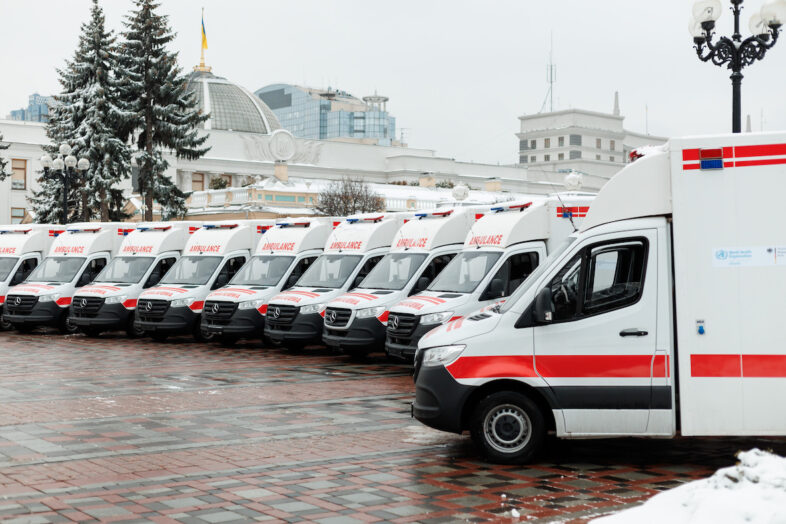
I’ve been in many places, so thinking back to Chernihiv or Mykolaiv, how challenging it has been when there have been attacks on civilian infrastructure, and suddenly you have 20, 30, 40 ambulances, coming with the trauma and other casualties.
However, we also have many healthcare workers who have left the country or relocated from Ukraine’s East to the western regions. I remember visiting a city in the Kharkiv region where only about one in three healthcare workers was present. Of course, the civilian population has also decreased as many have moved, but we’re also seeing a relocation of doctors and nurses. As a result, there are fewer healthcare workers in the frontline areas.
The second issue is that the shortage of healthcare workers in the sector is not a new problem. Even before the war and COVID, we saw an annual decrease of 3% in doctors compared to 2019, along with a 6% decrease in nurses. This will be a challenge. We recently had a discussion about nursing and met with several heads of nursing colleges. As Ukraine moves towards European Union membership, we can see from the data that Ukraine has about half the number of nurses compared to the EU average. This means we need more nurses. We need to train them and ensure they are capable of performing at the same level as nurses in the European Union. We also need enough nurses in managerial roles in hospitals to ensure they can practice in primary care. And most importantly, we need to build trust so that citizens feel comfortable seeking care from nurses as well.
In Ukraine, I think most people tend to believe that they need to get their vaccinations from a doctor. However, when I talk about vaccination, it’s actually the nurses who play a key role. The focus has shifted to addressing trauma, mental health, and chronic diseases caused by the war—issues that are much more prevalent now than before. At the same time, we must ensure that our standards and quality of care are in line with those of the European Union.
– I believe Ukrainian doctors and nurses are better trained to handle trauma than their European counterparts, given that the European medical system hasn’t faced cases as severe as those we’ve seen here. Do you agree?
– That is true, and this is something we looked into at the beginning of the war. After one year, we conducted a study, and what we found was that Ukrainian doctors needed more training on how to manage trauma and injuries. They also needed additional training in mental health and a better understanding of how to address chemical, biological, and radiological risks in public health.
What’s also important is how these needs could be addressed. After 12 months of war, we saw that the majority of healthcare workers had received the necessary training.
Let me give you an example from mental health. Over the past thousand days of war, the WHO, together with 17 partners, has been conducting mhGAP training for mental health. We have trained more than 100,000 healthcare workers in Ukraine, the majority of whom are primary healthcare providers, ensuring they have the tools to incorporate mental health support into primary care services. As a result, 500,000 people have benefited from these services.
Are there enough services in place? I don’t think so. We still have more work to do.
– Russia is increasingly using more dangerous weapons, as we’ve seen recently in Dnipro. With this in mind, my question is about the new challenges Ukrainian doctors may face. What do you anticipate?
– I don’t think these challenges are new; rather, they are ongoing. The first priority is to maintain a well-functioning healthcare system that can meet people’s needs. We’re seeing an increased demand for mental health services and a growing number of amputations. It’s crucial that we focus on ensuring rehabilitation services are readily available. Additionally, we must create a barrier-free environment for those who have been injured—whether on the frontlines or, for example, those recovering from a stroke.
When I was in Zaporizhzhia, I visited a rehabilitation centre for stroke patients, where I saw men and women in their 60s and 70s learning to read and write again, as well as relearning how to move their hands after a stroke. We also see growing needs in chronic disease management, driven by a demographic shift. With six to eight million people having left the country, most of them young, Ukraine’s population is ageing, which presents its own set of challenges.
It’s an ongoing process of adaptation that we must embrace. The list of challenges is long, but like someone once said, during times of war, you must continue to do everything you did before, but more. And that is exactly what lies ahead for us.
– What are Ukrainian doctors particularly good at?
– I think the most remarkable thing they’ve shown is their resilience — the strength to get up after difficult sleepless nights and return to work, helping others.
– When the war broke out, some Ukrainian doctors predicted outbreaks of cholera, perhaps even plague, due to the lack of sanitation and harsh conditions on the front lines. Yet, as far as I know, Ukraine hasn’t seen a major cholera outbreak. Do you have any thoughts on this?
– That’s a great question, and I’d like to acknowledge the efforts of the public health authorities we’ve been working with. Cholera is not a new disease in Ukraine, especially in the southern regions, as it has appeared in the past. Fortunately, we haven’t seen a major cholera outbreak recently, but preventing one requires ongoing effort. I remember, back in the summer of 2022, when we talked about this risk, we teamed up with Ukraine’s public health centres and the regional CDCs to reach 9 million people in the south. We made sure they had the information they needed about cholera and how to prevent an outbreak.
The risks are still present, and it’s crucial that Ukraine continues to take preventive measures. Do we need to do more? Yes, absolutely. We must enhance our efforts to prevent cholera and other diseases, like measles and diphtheria. Ukraine has experienced outbreaks of both in the past and with vaccination coverage rates declining, the risk of further outbreaks increases. It’s something we must stay vigilant about.
– Can you share some insights into the epidemiological situation on the front line, particularly in the trenches? There’s evidence that soldiers are contracting tuberculosis and other diseases due to the lack of proper healthcare and resources.
– First of all, at WHO, we focus on working with the civilian health system, while other partners collaborate directly with the Ministry of Defense and related organisations. One of the key issues we’re seeing, which is indirectly related to what’s happening in the trenches, is the broader impact of the war. You’re right that the war has led to an increase in tuberculosis cases, particularly multidrug-resistant tuberculosis, which was already a concern before the war. We need to be more vigilant in addressing this. Additionally, it’s crucial that we provide mental health services not only to civilians but also to those returning from the front lines, as their needs have significantly grown. At WHO, we’ve also been focusing on spinal cord injuries and building capacities to respond to such challenges. The war has also brought about a rise in other diseases like HIV and TB, highlighting the need for heightened attention to antimicrobial resistance. While I can’t speak directly to the situation in the trenches, what I see in the civilian health system is a range of challenges that didn’t exist before February 24, 2022.
– Thank you for your answer. We’ve mentioned rehabilitation several times, so what are the main challenges in this area?
– One important lesson we can learn from Ukraine is how to rapidly scale up rehabilitation services. Even before the war, Ukraine was implementing medical rehabilitation reforms, working to connect it with the social sector and others. The need for rehabilitation was already clear since the war began in Donbas in 2014, and by 2022, that need has grown exponentially. The challenge now is how to provide services to everyone and ensure that proper rehabilitation is available in communities. Many of us have likely followed President Zelensky’s speech on Ukraine’s resilience, where he emphasised the importance of having rehabilitation services close to home. The challenge, however, is that Ukraine needs to train nurses, physiotherapists, occupational therapists, and doctors to work in rehabilitation. And it’s not just physical rehabilitation—mental rehabilitation is also crucial. Right now, we simply don’t have enough of these professionals.
What I see now is a significant improvement in the availability of rehabilitation services. We have competency centres in place, and where we once had only 50 beds for spinal cord injuries, we now have over 100. There were only a few experts before, but now we’ve brought in a wealth of international expertise. Ukrainian physiotherapists and occupational therapists are actively working in these centres.
I’ve visited hospitals in Rivne, Zaporizhzhia, and just two months ago in Poltava. The difference between what I saw then and what I see now is striking. Young professionals are now helping people, and the system is clearly transforming. Today, we’re learning from countries like Estonia, Lithuania, and Israel. We have experts here from Spain sharing their experiences and insights, so we can apply them quickly in Ukraine. However, these solutions need to be developed and implemented within Ukraine.
A key focus now is the financing of rehabilitation services. These services are essential for many veterans—those who have lost limbs, suffered strokes, or require ongoing rehabilitation. The challenge is ensuring long-term services are available, reaching communities, having enough trained professionals, and finding sustainable funding. It’s also important to connect these services with the wider social sector to provide full support.
I remember when we were setting up a training centre to teach people how to use wheelchairs. It reminded me of learning to ride a bike as a kid—first, you use training wheels, then move to two wheels, trying not to fall. Right now, too many people need wheelchairs, and that’s why this example is important. It raises the question of how we plan our cities—how easy is it to get around in a wheelchair, even in places like Kyiv, Dnipro, and Zaporizhzhia? It’s not just a medical issue. It’s about making sure people can live a full, quality life even if they need a wheelchair because of the war. This is a challenge that lies ahead for us. It’s not just the health sector; the coordination across other sectors to support rehabilitation is crucial.
– According to the latest data from WHO, there have been nearly 2,000 attacks on Ukrainian healthcare facilities, and 128 medical workers have been killed. This is the most recent information I’ve come across, but perhaps you have more up-to-date data. Could you share which medical facilities are being attacked most frequently and what can be done to improve healthcare quality after such attacks?
– It’s truly heartbreaking to witness attacks on healthcare facilities as they violate humanitarian law. Sadly, these attacks continue, and our role at WHO is to monitor, verify, and report on them. To date, we’ve documented over 2,150 attacks, and the number keeps rising. As you mentioned earlier, the attack in Dnipro affected many facilities, including a rehabilitation centre.
Looking at the broader picture over these 1,000-plus days, more than 40% of the affected facilities have been primary healthcare centres. Primary care is critical because it serves as the entry point for the community to access essential services like medicines, prescriptions, and vaccinations.
In 2024, particularly at the beginning of the year, we’ve seen a disturbing rise in double-tap attacks, which have put many healthcare workers—especially paramedics and ambulance teams—at increased risk. This year, we’ve sadly seen more healthcare workers and patients lost in civilian facilities due to these double-tap attacks compared to 2022.
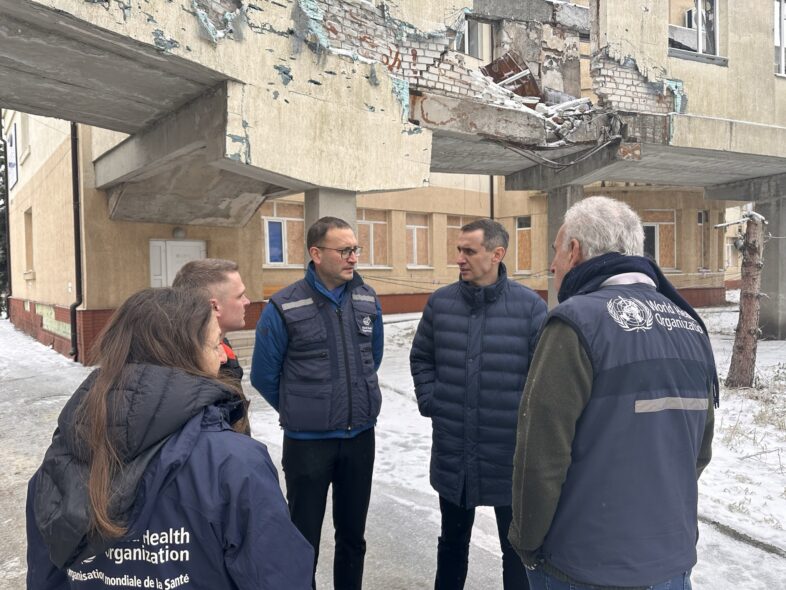
– The WHO set up modular primary care clinics. How effective have they been?
Yes, we’ve been setting up modular primary healthcare clinics. Throughout the war, one thing that stood out to me in Ukraine was the people’s resilience. It’s not just about responding to the war’s impact on health but also focusing on early recovery at the same time. I saw this firsthand in Irpin and Bucha at the beginning, where there was a rapid response to ensure that generators were provided and oxygen was restored in hospitals. Then, after the second wave of the liberation of Ukrainian territories in autumn 2022 and following the first full-scale winter of the war, it became clear that there was a critical need to restore healthcare services, especially given the many attacks on health facilities and primary care.
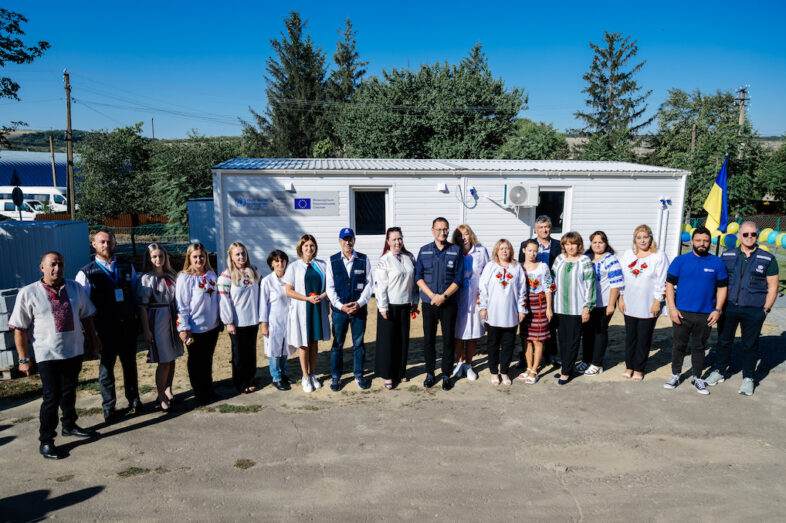
At the start of the war, we invested a lot in enabling doctors and nurses to take cars and travel to different villages to provide services for a day at a time. I’ve visited many of these places in the East and South alongside them. But as time went on, we realised there was a need for a more permanent structure. That’s why we’ve been building centres in places like Sumy, the Kharkiv region, Mykolaiv, and the Odesa region since September. These modular centres are key to restoring healthcare services in those areas.
Through discussions, we recognised that modular primary care clinics are essential to ensure Ukrainian doctors and nurses can provide services close to communities. Over the past year, we’ve installed more than 30 modular facilities of varying sizes, with some designed to accommodate two doctors and others for five, depending on the community’s needs.
I’d like to highlight another important aspect. As the WHO, we’ve worked hard to ensure these centres are built within Ukraine, which helps create jobs for Ukrainians. These centres are designed to last 5 to 10 years, providing enough time for recovery efforts, as Ukraine is heavily investing in rebuilding its healthcare system.
The recovery needs for 2024 are estimated at $873 million, with some of this already having been invested. I’ve visited healthcare facilities that have been fully restored, not as modular or temporary setups, but as permanent structures. One example is the Primary Care Centre in Makariv, which was hit directly in May 2022, leaving nothing but rubble. Just one year later, that centre was fully rebuilt, and patients can now receive care there. This is exactly what I like to see – rebuilding better, restoring, and recovering.
When I speak to Ukrainians in these communities, it’s clear that health services are about more than just medical care. It’s about trust. People feel secure when they have access to healthcare, along with essentials like food, heating, and water. For the elderly, having these services available makes them feel like they can return home. Health and recovery play a critical role in building trust and security, which is why they are so important to the broader recovery efforts.
– Do these modular clinics treat only civilians, not servicemen?
– Yes, only civilians.
– Did the Russians attack those clinics?
– Yes, unfortunately, we lost one of the modular clinics in Lyptsi village [Kharkiv region – ed.]. The only positive thing is that the healthcare workers were unharmed. The clinic was destroyed, but we quickly built a new one nearby, and it’s now up and running, providing services to over 10,000 people in the surrounding villages.
What’s important is that, as international organisations and humanitarian partners, we are not immune to the effects of war. We’re going through much of the same as the Ukrainian people. But if there’s one thing we’ve learned, it’s resilience. When something happens, you rebuild. It’s about response and recovery, working hand in hand.
– Regarding the Kherson region, earlier this year, the WHO identified it as having some of the most severe healthcare challenges. Has the situation improved since then?
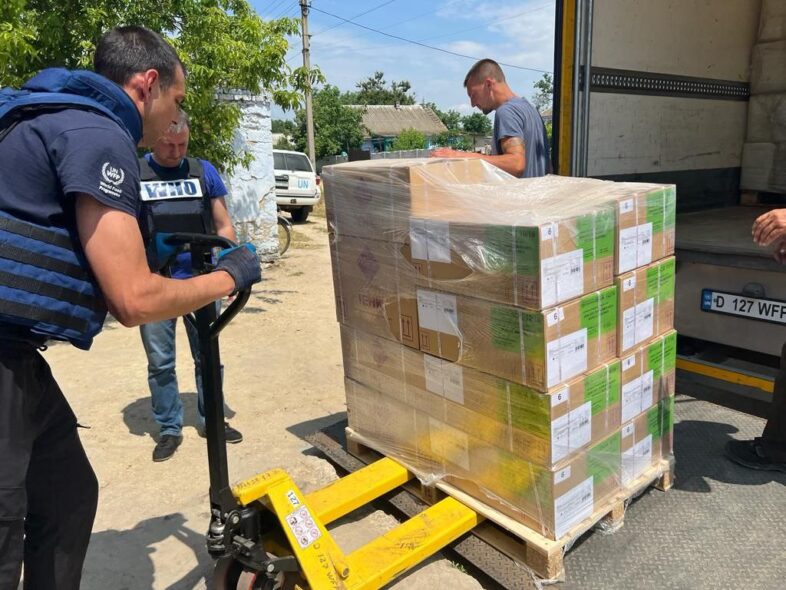
– Kherson is facing an incredibly tough situation, not just in terms of healthcare but also due to the extensive mining—more than 50% of the fields are still mined. The region continues to endure heavy attacks, which has made providing medical care even more difficult. In response, we’ve been prepositioning medicines and trauma kits, investing in emergency medical care and paramedic teams, and setting up points to be closer to both the facilities and the people who need help. Kherson remains one of the most fragile regions, and we’re working hard to ensure that essential services continue. Many doctors, nurses, and residents have been forced to move away. The Zaporizhzhia region is also under constant attack, and parts of the Kharkiv region are similarly affected. I’ve spoken with many paramedic teams in Odesa and Mykolaiv, who are helping support Kherson and its surrounding areas. Significant assistance is coming from neighbouring regions to help ensure that services remain available.
– In September, the WHO reported that nearly 10 million people in Ukraine require psychological care due to mental health issues. What’s your take on how to improve this situation and provide more mental health support?
Ukraine started addressing mental health early, around April-May 2022, with the launch of the nationwide Mental Health Programme led by Olena Zelenska. What stands out is the cross-sector coordination, with all ministries involved in mental health, from schools and railways to workplaces, social services, and healthcare. This collaboration is further supported by the upcoming Mental Health Forum, which will bring professionals from various fields together.
On the practical side, with WHO’s coordination, we’ve rolled out mhGAP training for primary care providers and specialists who aren’t mental health experts. While psychiatrists receive formal training in this area, nurses, primary care doctors, and even teachers need specific skills to address mental health needs.
In the health sector, over 100,000 people have now been trained to provide these services, with many already receiving care through primary care channels. The WHO has brought both national and international organisations into the programme, and the National Health Service of Ukraine is funding primary care doctors to deliver these services.
The second area of investment has been in community mental health services aimed at supporting individuals with the most severe mental health needs. These services are provided by community mental health teams, which include psychiatrists, psychologists, social workers, and nurses. This team-based approach ensures that the specific needs of each person are met. Many of those who require these services are internally displaced persons (IDPs), while others are dealing with trauma and loss, and these teams offer the support they need.
We have 83 community mental health teams across all regions of Ukraine, and this is where a large portion of the investment has gone. But do we need to do more? Yes, we definitely do. It’s extremely unfortunate that this war has increased the need for mental health support, and sadly, that need will persist even after the war, likely for generations.
The experiences some children have had—having to leave their homes and their toys behind because of Russian aggression—will stay with them for the rest of their lives and probably affect their children and grandchildren, too. The 10 million people currently in need of mental health support are facing these immediate challenges. I also want to express my gratitude to the authorities who have prioritised mental health. In many other wars and conflicts, mental health doesn’t get the attention it deserves.
But now, we all need to do more to ensure that services are available. From the data and the feedback I’m receiving, I know that not everyone is getting the support they need, but many more people are receiving it now compared to 2022.