How do foreigners end up fighting in Ukraine’s war? What drives them to fight for our freedom? What’s it like leading a unit made up of both foreign volunteers and Ukrainians? How has the war changed recently? And, perhaps unexpectedly, what do foreign fighters eat while on the frontlines? Oleksandr Yakymovych, commander of Ukraine’s 2nd International Legion of Defence, shared his insights with The Ukrainian Week.
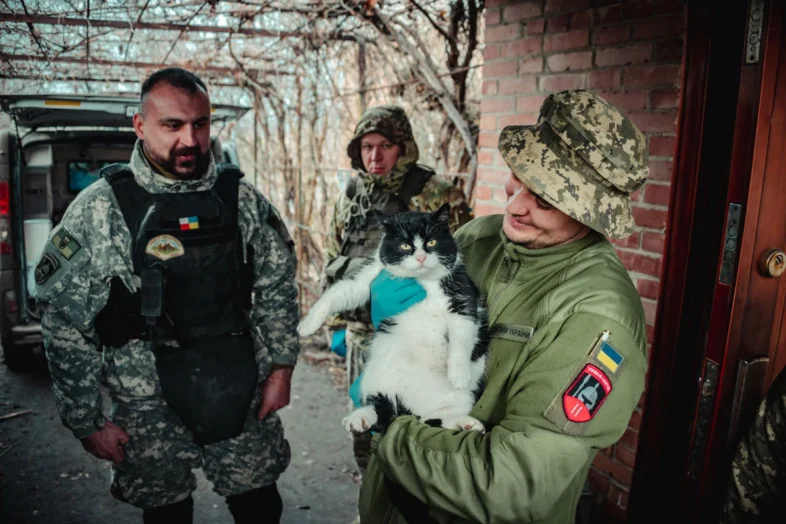
The Ukrainian Ground Forces currently have four international legions. In fact, the 2nd Legion alone is made up of fighters from over 30 countries, all united in their fight for Ukraine.
***
“The legions are probably the last truly volunteer units in the Armed Forces of Ukraine,” says Oleksandr Yakymovych. “These are units where people join entirely of their own volition. Even though they’re from other countries, they know exactly why they’ve come here. The core is made up of individuals who are deeply motivated to fight against the aggressor, against the same forces responsible for the atrocities in Irpin, Bucha, and so many other places.”
“We have people who’ve served with us, seen everything firsthand — the war, Ukraine, our people. Then they return home and spread the truth, sharing their experiences. That’s crucial.”
The 2nd International Legion was originally formed from the 1st International Company of the Bohun Regiment (1st International Special Purpose Company of the 1st Special Operations Brigade of the Territorial Defence Forces of the Armed Forces of Ukraine). In the spring and summer of 2022, the company fought in the Luhansk region, where battles were intense. By autumn of that year, Colonel Ruslan Myroshnychenko began forming the 2nd International Legion from the original company.
At the time, the legion’s core was made up mostly of Georgians, Belarusians, and Americans.
Now, the largest group comes from Latin America, but the number of Europeans and Americans is steadily growing. We’ve fought in places like Serebriansky Forest, Terny, Chasiv Yar, and near Pokrovsk.
– What’s it like leading an international unit? How’s it different from a regular one?
– There are quite a few differences, starting with the paperwork. Even though foreigners sign the same contract as Ukrainians, there’s a bit more admin involved. For example, a foreigner has a two-month probation period, during which the unit can let them go if they don’t meet professional standards. After six months, they can choose to leave, but they’re still required to serve for at least that first half-year.
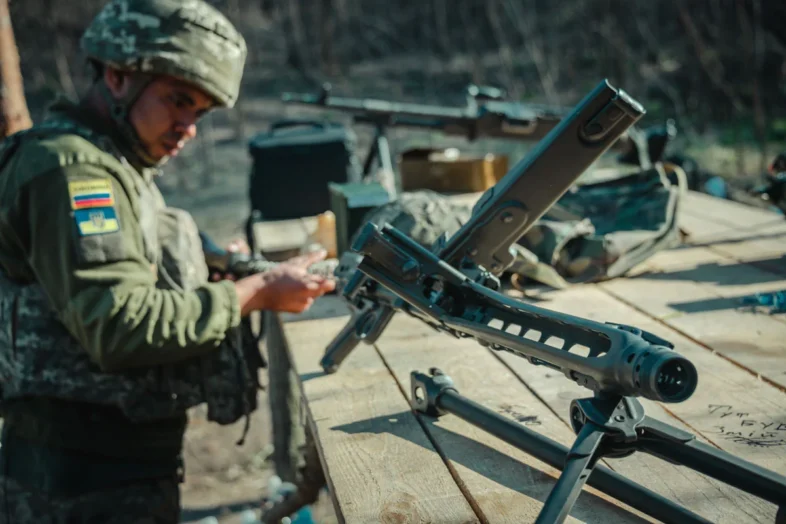
Leadership is shaped by the different mentalities, languages, and even food preferences of the legionnaires. For example, Latin Americans don’t really go for buckwheat, pearl barley, or millet — they prefer rice. So, even on that level, we have to make certain adjustments.
The biggest challenge during combat missions, though, is the language barrier. That’s why we’ve got a whole team of translators, both foreign and Ukrainian. When we were in the Serebriansky Forest in 2023, our sergeant-translators were stationed right at the front lines. But we’ve had to change that approach. We don’t have enough trained translators to risk putting them in such dangerous positions anymore. Most of our legionnaires speak Spanish, so now we rely on military translators at command posts and control centres to relay orders and commands over the radio.
The mindset of Ukrainians, Brazilians, Colombians, and Brits is different, and that’s something we always have to consider. For instance, Colombians need a team leader — someone they respect and will listen to — to perform well. So, when forming a group, we have to take both language differences and cultural mentality into account.
– All the servicemen in the 2nd International Legion are volunteers. Does that bring a different dynamic to your work?
– Absolutely. They each have their own reasons for being here, and that shapes their attitude towards the mission. Some are here for the experience, some for the truth, and others to fight for freedom.
– Do they need extra motivation?
– It really depends on the situation. Most don’t come with prior combat experience, or if they do, it’s from their own armies. But no one had prepared for the kind of war we’re fighting here. Even we didn’t have the kind of knowledge and experience a year ago that we’ve gained since.
The nature of the war shifts constantly. At the start, it was all about trench warfare, like something out of the First or Second World War — something our grandfathers would have known, but not the Latin Americans. Now, with new technologies, the way we fight is changing too.
Newcomers don’t always know what they’re signing up for. Take Chasiv Yar, for example. There, you can’t even raise your head because of enemy drones — day or night. The most you can move is fifty to a hundred metres before you have to duck and cover. Traversing just one kilometre can take an entire day. It’s tough, even for seasoned fighters. And newcomers? They’re often caught off guard. So, yes, they definitely need that extra push to keep going.
But the best motivation? Solid training. When someone sees they can handle the tasks at hand, it builds confidence. After that, the additional motivation tends to come from the rewards and medals.
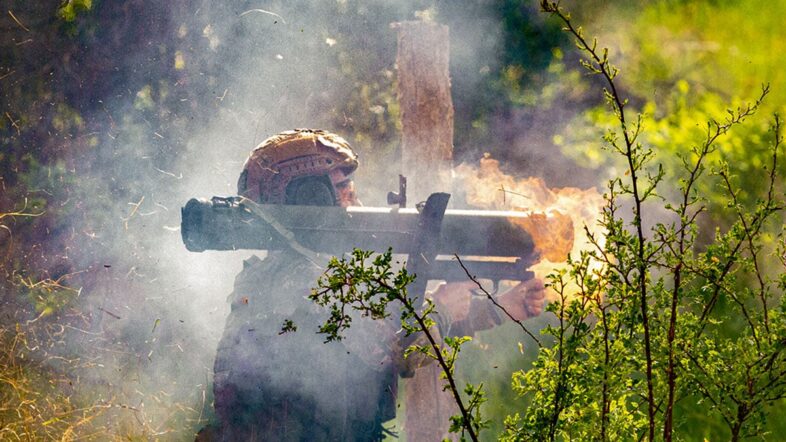
— Does having legionnaires with experience in other armies make a difference in combat?
— Absolutely. Anyone who’s served in the military knows the importance of subordination, discipline, and duty. They’re already familiar with handling weapons, which is crucial. On the battlefield, a soldier shouldn’t be thinking about how to fire — it should be second nature. That kind of experience is invaluable. For those coming from civilian life, it takes a bit of time to adjust, to fully understand what an order means, and why it must be followed.
— What’s the atmosphere like in a unit made up of so many people from different countries?
— It’s fantastic. We have excellent Ukrainian commanders, and at both the unit and company levels, it’s Ukrainians in charge. It makes sense, as they need to stay in close communication with higher command. Plus, there’s a lot of paperwork to handle. But the leadership is focused on creating an environment that’s both combat-ready and efficient. The guys manage to find common ground, and we make an effort to spend free time together. Over time, we’ve built a strong, unified team — company commanders, translator-sergeants, the whole crew. And that side of things is working really well.
— What technical tools help to protect your personnel?
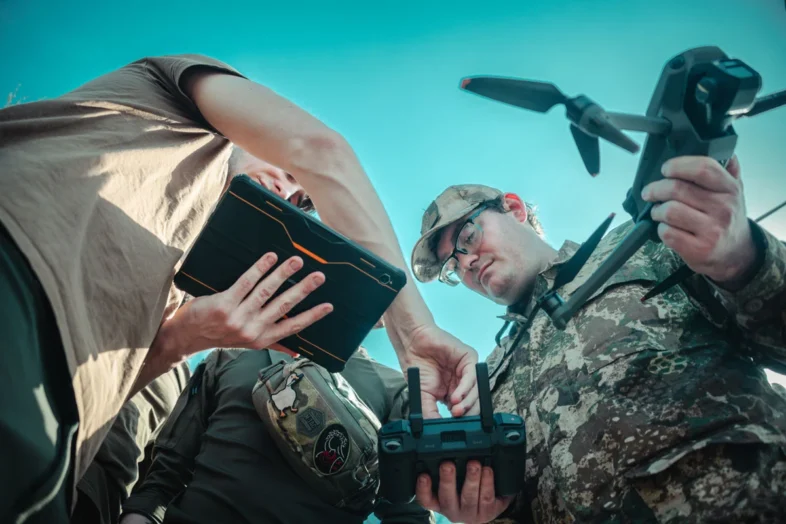
— Apart from weapons, the key tool is UAVs. This has turned into a drone war. Drones impact everything — from how we move on the battlefield to how we choose defensive positions. In the past, you had to rely on your own eyes or deploy reconnaissance teams. Now, drones handle that, though not always. They’re great, and about 99% effective, but they don’t fly in the rain, for example. So that’s when assaults or other movements tend to happen. For a while, international legions weren’t prioritised when it came to getting these tools. But that’s changing now. The state, along with various NGOs, is stepping up to provide us with drones. We have what we need.
— Has the role of infantry shifted with the rise of drones and other new tech?
— The core job of our infantry remains the same: to hold the front line. Infantry are still crucial for surveillance and reporting enemy movements. Drones can’t see everything. They’re a huge advantage, but they’re not a cure-all. You can’t win a war with drones alone, even if you have a billion of them. For one, the positions they’re launched from get targeted and destroyed. And secondly, drones aren’t invincible.
The infantry’s job has certainly gotten more complicated with the rise of drones. In the past, basic trenches with minimal cover were enough. The main threat was a direct hit from artillery or a mine. Now, you’ve got to protect yourself from drones coming at you from all directions.
When it comes to equipment, transportation is key. For rotation and evacuating the wounded, armoured vehicles are essential. It’s impossible to operate without them now. For the first 14 months, we didn’t have a single armoured vehicle — we were relying on pickup trucks. But back then, the threat of enemy drones wasn’t as severe. Right now, we’re seriously lacking armoured transport. We’re in the process of recovery and waiting for reinforcements to bolster our vehicle fleet.
We also have a dedicated unit handling electronic warfare equipment. We’ve got gear for our transport, for trenches, and for broader operations. It’s all essential now — we simply can’t function without it.
— Is the 2nd International Legion an assault unit, or do you mainly focus on holding positions?
— The 2nd International Legion was originally designed as a special forces unit for carrying out specific tasks like assaults and counter-subversion. But up until recently, that wasn’t how we were deployed. At first, we formed a reconnaissance group of 100 people who operated in the Chernihiv region and the Kursk direction, focusing on scouting and counter-subversion. Since June 2023, though, the rest of the legion has essentially become an infantry unit. For the first 14 months, we held the line in the Serebriansky Forest, in the Lyman direction. Then, we spent a month in the Terny area, and after being rotated for reinforcements, we fought in Chasiv Yar and near Pokrovsk.
— How do you recruit volunteers? Can you take us through the process of joining the legion?
— There are a few ways. Anyone determined to fight will find a way in. There are both general and specialised platforms where people can send their resumes. We also rely on cross-border radio — for instance, our guys from Colombia reach out to their friends, sharing what’s good and what’s tough here. On top of that, we have a special recruitment office that foreigners can contact directly.
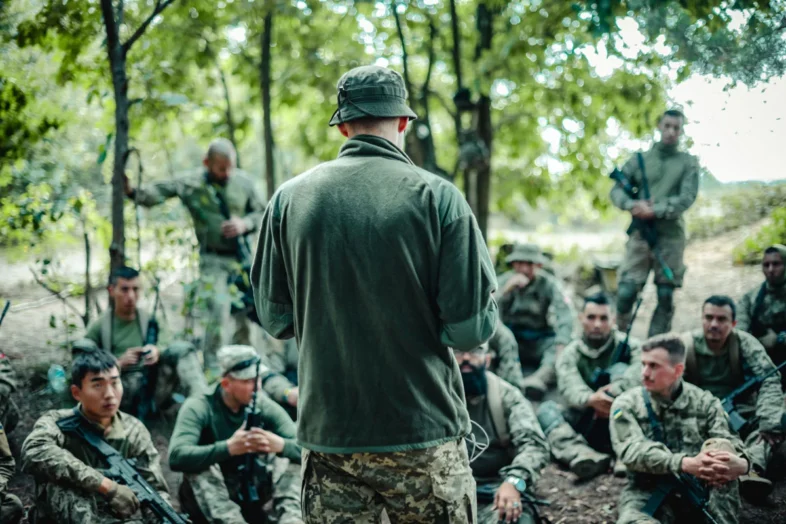
— Some people claim foreigners get paid a lot more. Is that true?
— No, that’s not the case. Once a foreigner signs a contract, they become a member of the Armed Forces of Ukraine and are subject to the same conditions as the Ukrainian servicemen. There are no special privileges.
— How would you assess the effectiveness of your unit’s commanders? And do you sense any fatigue as we enter the third year of the war?
— Of course, they feel it. A unit with foreigners places much more pressure on the commanders. It’s not just about combat, although we’re carrying out the same missions in the same areas as other units. The difference lies in the specifics. Battalion and company commanders have to put in extra effort. For example, as I mentioned earlier, you have to remember that some foreign soldiers prefer rice over pearl barley. More importantly, a foreigner isn’t fighting for their own land, so commanders have to adjust their orders and ensure they’re understood properly.
— Which battle has left the biggest impression on you?
— There have been many memorable ones. For instance, this winter in Chasiv Yar, the mission was to clear buildings in the forest. We didn’t know how many enemy forces were there. To reach the buildings, we had to cross 400 metres of open ground, all while being exposed to drones. It was a very risky mission. Originally, we were supposed to enter via an air landing, but the area was completely mined. We decided to make a run across the field instead — where the enemy least expected us. And it worked. The assault was successful, though it was tough. The building we were clearing was a large, three-storey structure with a basement, and the enemy was holed up in another building nearby. Thanks to careful planning and precise execution, everything went smoothly. During the operation, some of the guys were caught by FPV drones.
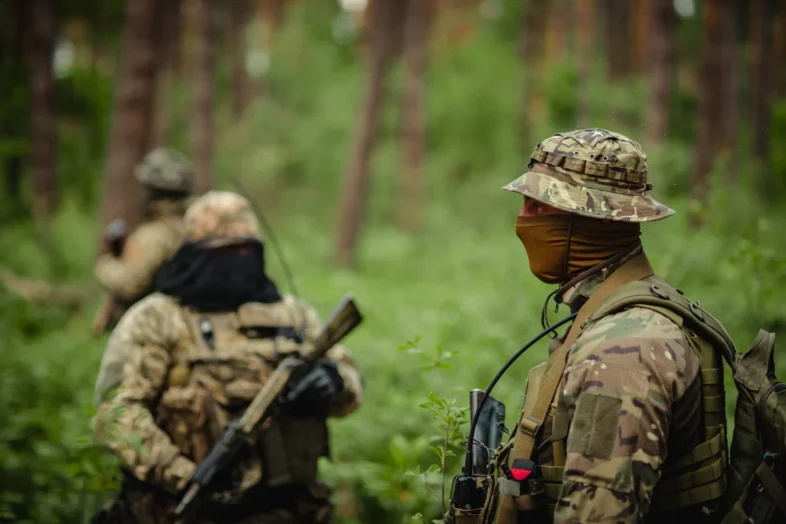
The assault itself went smoothly for us, and we didn’t suffer any casualties.
This year, in Pokrovsk, we held three landing sites and fended off 11 assaults. For two months, we held our ground without losing a single position. It was only when the whole front line shifted that we were forced to pull back.
In the Serebryansky forest, the enemy attacked us for two months straight. Their infantry assaults achieved nothing — they just kept pounding our defences with artillery from dawn until dusk. Sadly, it was during this period that our Colombian commander, Salmo, was killed. He was an inspiring leader, always at the front, leading his men with immense courage. The guys would push back the Russians, leaping from the trenches and charging into the positions they’d taken.
— How do you think the mobilisation is going, and is society ready to keep resisting the Russian invasion?
— I think the steps that have been taken — like creating a corps system, encouraging young people aged 18 to 24 to sign contracts instead of forcing them, introducing a clear service period, and offering a million hryvnias for signing up — are all positive moves. But in my opinion, they’ve come at least two years too late. We’ve lost a lot of time and many lives because the mobilisation approach wasn’t effective enough. A true patriot doesn’t need slogans. They’d join the fight right away, with or without them. What was really needed was encouragement. And for that to happen, people simply needed to understand what they were getting into. We had issues with mobilisation because people didn’t know where they’d end up, what support they’d get, how they’d be armed, or what training they’d receive. Thankfully, that’s finally being addressed. I still think there’s potential, though. Had this approach been implemented earlier, and not just for those aged 18 to 24, many men wouldn’t have ended up being caught in Tysa.