At the end of July, the Kharkiv Military Administration approved a new list of street and landmark renamings, continuing the city’s decommunisation efforts. This has been an ongoing process for several years, but this time, the proposal tapped into Kharkiv’s rich cultural legacy. The public suggested naming one of the alleys after Misko Barbara, the actor, musician, and leader of the band Mertvyi Piven (Dead Rooster), who also co-founded the Arabesky theater. Misko, a Galician diminutive for Mykhaylo, was a pivotal figure in the bold, alternative urban culture of the 1990s and 2000s. He was deeply intertwined with the city where he lived and worked.
In 2021, Misko Barbara passed away suddenly, just shy of his 50th birthday. The news sent shockwaves across the country, leaving his wife, Svitlana Oleshko, a widow and their son fatherless. Barbara’s music, lyrics, and collaborations with other artists had long become woven into the fabric of the people’s culture. Though he did not live to see the full-scale invasion of Ukraine, he witnessed the early days of the war and understood its grim trajectory.
The street names in Kharkiv might seem like small details—if one isn’t changed, what’s the harm? But this overlooks a stark reality: Kharkiv now lies perilously close to the frontlines in Ukraine’s fight for survival. The city endures relentless shelling every day, as Russian forces attempt to obliterate it, clinging to the false claim that it’s a “Russian city.” In this brutal context, Kharkiv’s streets, its history, its culture, and its very identity are not just words—they are symbols of defiance, standing against an enemy that seeks to erase and reclaim them as “theirs.”
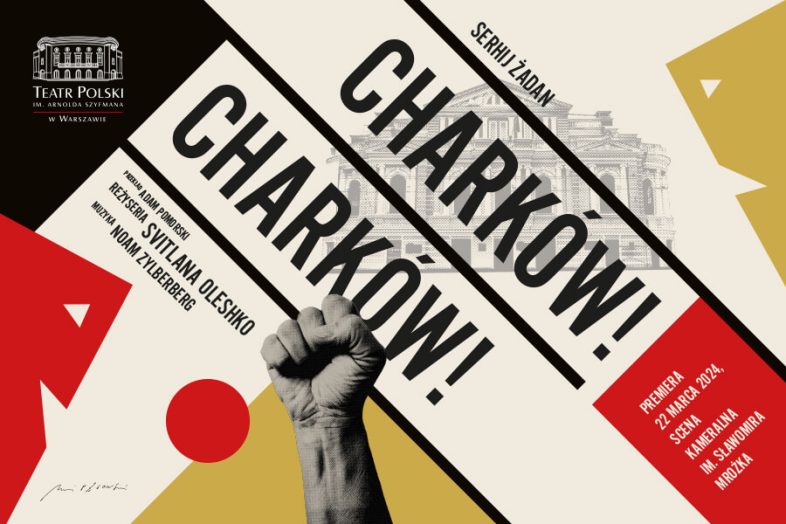
Photo: The ‘Kharkiv Kharkiv’ Poster from the ‘Nashe Slovo’ Publication
Kharkiv in Warsaw
Svitlana Oleshko, director and founder of the Arabesky Theatre and widow of Misko Barbara, now calls Warsaw home. Like thousands of others, she fled there in March 2022 after a missile strike shattered her sense of safety, hitting her street.
In an interview with the Polish magazine New Poland, Svitlana recounted the harrowing experience: “When a missile hit our street, Myronosytska Street, my sisters and I had already packed our suitcases and filled our cars with petrol, but we were hesitating, not wanting to leave. But when the first missiles struck, we knew it was time to go. It felt like a scene from a movie—everything was exploding around us. We escaped through backyards in three cars with our elderly parents, children, and dogs. We finally breathed a sigh of relief far outside the city. It took us another week to reach Lviv. The roads were packed with people, traffic jams, checkpoints, and curfews. We couldn’t drive more than 200 kilometres a day. But amid the chaos, there was a unique beauty: people lined the roads, offering coffee, tea, water, food, and even a place to rest for the night.”
Her beloved Kharkiv continues to endure near-daily bombings. When Svitlana first arrived in Warsaw, she felt lost and disoriented, a sentiment she’s expressed often. Yet, her Polish friends and colleagues rallied around her, offering not just support but a sense of belonging. Most importantly, they provided her with the chance to keep directing. Since March 2022, Svitlana has been working at the Arnold Szyfman Theatre.
In July, she brought a video version of the jazz musical Kharkiv Kharkiv to the Schulzfest in Drohobych, sharing the story of how her team created it. The premiere was held in Warsaw.
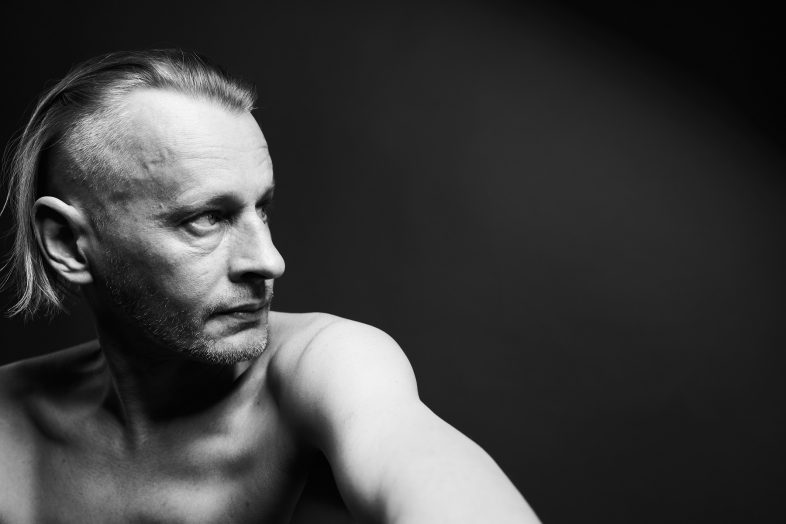
Photo: Craft Magazine
Initially, hearing a musical about Kharkiv performed in Polish felt unfamiliar to me. However, I soon grasped a fundamental truth: when a message holds deep significance, it transcends linguistic barriers. In this instance, language not only serves the narrative but also enriches it. The production, which eventually evolved into a full-scale performance, was the result of a collaboration between Ukrainian and Polish artists. The original script, commissioned by the Polish theatre, was penned by Serhiy Zhadan. The translation of Kharkiv Kharkiv into Polish was entrusted to the esteemed Adam Pomorski, a translator renowned for his work on literary classics such as Goethe and Eliot, as well as contemporary Ukrainian poetry. Composing the music for this play presented its own challenges, which were expertly navigated by young Israeli composer Noam Silberberg. Arriving in Warsaw from Israel in 2015 without knowing a word of Polish, Silberberg not only mastered it over time but also immersed himself in performing and recording traditional Polish songs. Securing his involvement in the musical was a fortunate turn, bringing a unique and valuable perspective to the production.
As is often the case when passion and professionalism come together, the performance has been met with great success, playing to full houses every time. Despite its grand impact, the production features just four actors on stage. Modest Ruczynski takes on the role of theatre innovator Les Kurbas, a character who, interestingly enough, bears a striking resemblance not only to Kurbas himself but also to Misko Barbara.
Misko Barbara and Kharkiv
This wartime period is reshaping Ukraine in profound ways, not just through destruction and death but also by bringing to light forgotten meanings, cultural codes, and erased names, often with striking relevance. Much like the Executed Renaissance a century ago, Kharkiv and its vibrant urban culture are experiencing a resurgence, revealing the depth and significance of their heritage in the present moment.
Misko Barbara, originally from Lviv, arrived in Kharkiv in 1998 with little more than ambition and no place to stay. Over the next two decades, he became a pivotal figure in the city’s cultural scene, transforming its artistic landscape. Starting as a dramatic actor, he co-founded the acclaimed Arabesky Theatre and became a central force in Kharkiv’s vibrant cultural life. Reflecting on the early 2000s with a close friend who was a Law Academy student at the time, we reminisced about the era’s energy. It was a time of rush to catch performances, with director Andriy Zholdak (now based abroad) at the helm, and a whirlwind of apartment concerts and daring creative experiments. Misko was at the heart of it all, radiating an aura that anything was possible. His remarkable creativity and fearless spirit became synonymous with Kharkiv, even as he continued to perform with his band, Mertvyi Piven, a project to which he devoted half of his life.
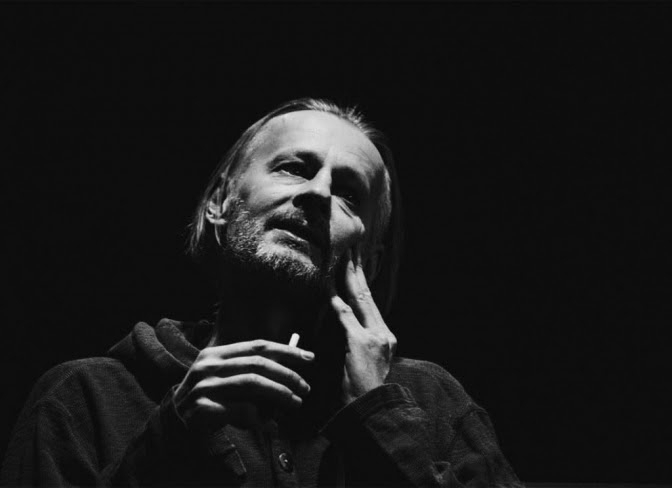
Photo: Tvoye Misto
Despite the typical rock star image that often shadows musicians, Misko Barbara was a rare exception—intelligent, reserved, intellectual, and deeply kind. Even now, years after his death, it’s almost impossible to find anyone with a negative word to say about him.
Recently, the community proposed naming a small alley after him to honour someone who epitomised the true spirit of Kharkiv—someone who fell in love with the city and dedicated himself to its cultural life. Yet, this suggestion was turned down, leaving the alley with a bland, neutral name: ‘Pryvitnyi’ (Friendly).
This kind of neutral naming, with terms like ‘Apricot’ or ‘Happy’, carries echoes of the Soviet tradition of obscuring true meaning. At a time when we face the harsh realities of Soviet-era crimes and the ongoing conflict with Russia, which has led to repeated acts of genocide against Ukraine, such neutrality feels not only surreal but deeply offensive. While renaming streets is meant to be a step toward decommunisation, it often ends up reflecting the very ‘Soviet’ mentality it aims to move away from.
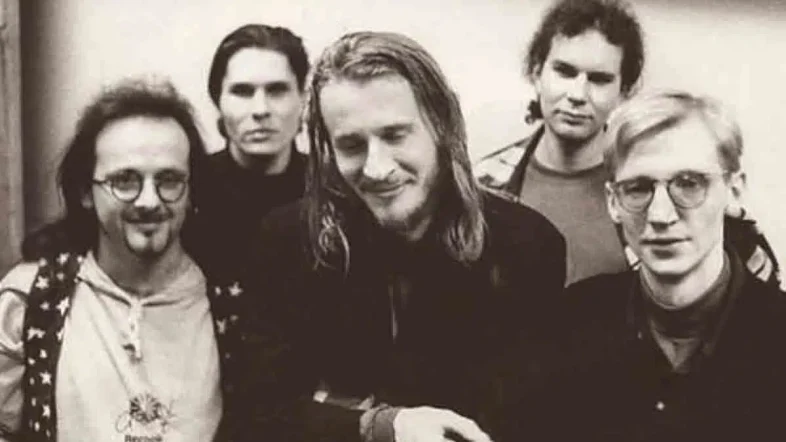
Photo: salvemusic
It’s understandable that street names might seem like a minor concern amidst Ukraine’s multitude of pressing issues. Yet, one of Russia’s tactics involves erasing tangible evidence of cultural and historical significance—dismantling cultural and religious monuments and dismissing influential artists by declaring, “they were all Russian anyway.” In such a context, a name—or the lack thereof—can dictate whether a person is remembered or forgotten. Take Misko Barbara, for instance. His lyrics are cherished by people across generations, and his song My pomrem ne v Paryzhi (We Won’t Die in Paris) won the Grand Prix at the iconic Chervona Ruta festival—a beacon of independence and a launchpad for numerous artists. This song remains a cornerstone of Ukrainian culture. For someone with such a legacy, renaming a small alley takes on profound significance. It becomes more than just a change in nomenclature; it symbolises the ongoing struggle against forces aiming to undermine Ukrainian identity. Each detail, each small step, and every seemingly insignificant decision serves as a reminder of the persistent challenge to preserve and honour Ukraine’s heritage.
«One day, spring will return from the Southern Regions of the Homeland…»
When Misko was no longer with us, when Russia invaded Ukraine, when Kherson was occupied, and a considerable chunk of Ukraine’s south still remained under occupation, this line took on a completely different meaning.
Kharkiv and the Kharkiv region have turned into a stronghold in the east, bravely battling day by day while still nurturing a rich cultural legacy. Despite the constant attacks, the art residency at the Slovo House (where leaders of the 1920s generation lived and were later persecuted by the Soviet regime) keeps going strong. Misko Barbara, who not only celebrated the 1920s generation but also promoted and performed their works, might not be here in person, but his spirit lives on through the stories shared by his friends, theatre and music colleagues, and all the devoted fans. They hold onto the hope that “one day, spring will return from the southern regions of the homeland,” as well as from the east, north, and all the areas under occupation by the aggressor.
And Kharkiv will proudly honour the name of someone who loved it deeply.