Near the Kyiv bypass, tucked between high-rise buildings and small shops, the faint scent of freshly baked bread drifts from unassuming doors. This warm aroma has lingered day and night for the past three years, carrying all the way to Donetsk, Zaporizhzhia, Kherson, Mykolaiv, Chernihiv, Sumy, and Kharkiv regions. It is the scent of over two million loaves of bread, baked and sent free of charge across Ukraine by the team of bakers led by Liubov Dubova at the café-bakery Peremoha.
Three bakers, two thousand loaves
In the warm basement of the bakery, the ovens hum, and shelves are lined with freshly baked loaves. Three bakers move with practised ease; each one focuses on their own task. One loads the oven while another handles the dough or stacks the loaves, weaving effortlessly around trays and tables in the cramped space. Sometimes, they work shoulder to shoulder, the steady rhythm of the equipment filling the air. Overseeing it all is head baker Iryna Borysenko, joined today by Oleksandr Borysenko and Sasha Bernadskyi. The trio has worked side by side for years.
“How do you manage in the summer?” I ask, feeling the warmth radiating from the equipment.
“Summers are hot, of course, with all the heat from the ovens,” Iryna replies, adjusting the oven temperature to 180 degrees for a freshly loaded batch. “But there’s a silver lining — the bread rises faster. When you’re baking large batches, it’s a real help.” She glances at the dough. “Today, though, it’s cold and drafty, so it rises more slowly.”
“At first, we were baking 40 to 50 loaves a day,” says Oleksandr, the older of the two men. “But then it grew… a hundred, two hundred, even a thousand!”
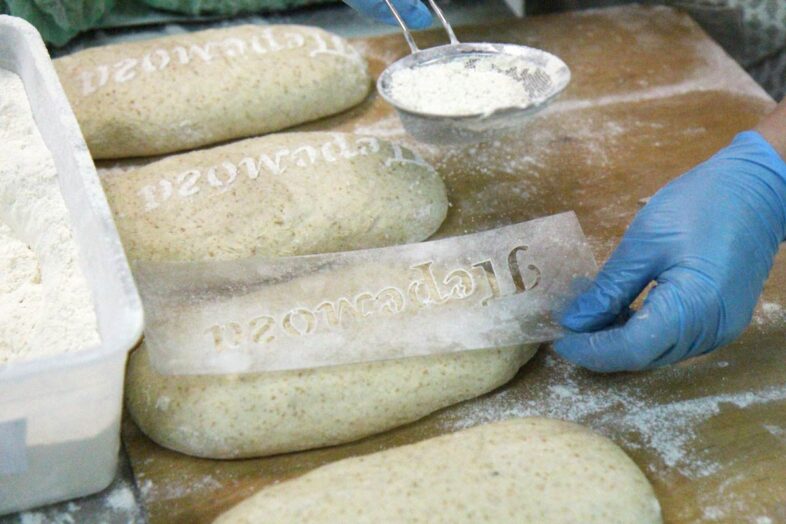
Dozens of loaves were pulled from the ovens before my eyes. The bakers exchanged only a few words, barely pausing to discuss the oven temperature or check on the bread’s progress. Most of the time, they worked in sync without speaking, instinctively knowing when to knead the dough or help stack loaves into crates. Their hands moved with practiced precision, each motion fluid and quick—so much so that it felt like they had an extra set of hands hidden in the shadows. The loaves waiting to be baked were already lined up on the table. Iryna took a sieve filled with flour in one hand and a stencil in the other, dusting each loaf with flour before stamping it with its name: Peremoha (“Victory” in Ukrainian).
Today, the bakery produces 100 loaves an hour, sometimes reaching as many as 3,000 in a single day. This was a far cry from what Liubov could have imagined when she first opened the small café-bakery in 2021. Back then, they focused on artisanal sourdough and treats, but when the full-scale invasion began in February 2022, they made the difficult decision to close. Yet, in those early, chaotic days of spring 2022, the bakery found a new purpose: baking bread for volunteers.
“Like many Ukrainians, we thought we might have to leave, because we didn’t know what the future held,” recalls Liubov. “But within days, we realised there was no bread in the Kyiv region.”
The bakery still had flour reserves, but between Liubov and Kyiv lay the perilous Zhytomyr Highway. Determined to keep the bakery running, they turned to social media, seeking volunteers to help bake bread. The first to respond was a young university student who had no baking experience but was eager to learn. He quickly adapted, welcoming others to join him. Despite knowing him only from his online message, the team entrusted him with the keys to the bakery.
The first volunteer set up a folding bed in the basement, started baking loaves—imperfect but heartfelt—and welcomed others who came to help, working around the clock. Among the volunteers were surgeons, manicurists, hairdressers, dentists, artists, musicians, and even a few professional bakers. Some came across the call on social media; others joined because they lived nearby. They stayed for days, months, and even years. That’s how Sasha, who has now been working for nearly three years, became part of the team.
Today, the team has grown to 19 people, working in two shifts, each lasting up to ten hours, sometimes longer. Sasha explains, “It depends on the bread.” Before the bakery had a generator, power outages would leave the electric ovens idle for hours, disrupting the baking cycle. Now, with the generator in place, the equipment only pauses briefly during the shift change between the day and night crews.
As production ramped up, a new challenge emerged. Flour and salt quickly vanished from store shelves as deliveries were halted due to the dangerous conditions surrounding Kyiv. In response, Liubov turned to social media, asking for donations of flour, salt, and oil for the bakery. This sparked a wave of volunteer support.
“By morning, there were five kilograms of flour and a bottle of oil by the door,” Liubov recalls with a smile. “People began offering their own supplies and asking for bread in return. We gave it to them. We have these notebooks, which I call ‘Books of Life.’ Volunteers would write in them: ‘A grandmother brought two kilograms of flour and asked for a loaf of bread,’ or ‘This person brought this, and that one brought that.’”
Just as yeast needs sugar to thrive, the bakery needed donations to keep going. The community responded, bringing in even the smallest bags of sugar and flour. The bakery also found support from businesses, receiving a large shipment of “Amina” flour from Agro-Yug-Service, a company that works with small farmers in the Mykolaiv region. Ukrainian grain travelled from the south to Kyiv to be turned into bread, which was then sent back to people in Mykolaiv.
Thanks to a dedicated network of volunteers, the bakery even received flour from farmers in Zakarpattia.
“Last week, a volunteer from Lviv came to pick up bread. He later shared what we were doing with farmers in Zakarpattia. They milled five tonnes of flour themselves, arranged transport, and delivered it to us,” Liubov explains.
This volunteer network became a lifeline for the bakery. Despite the unpredictable supply of donations, they never ran out of flour. The community’s unwavering support not only kept the ovens running but also made the bakery one of the most recognised volunteer organisations providing aid to soldiers and people in conflict zones.
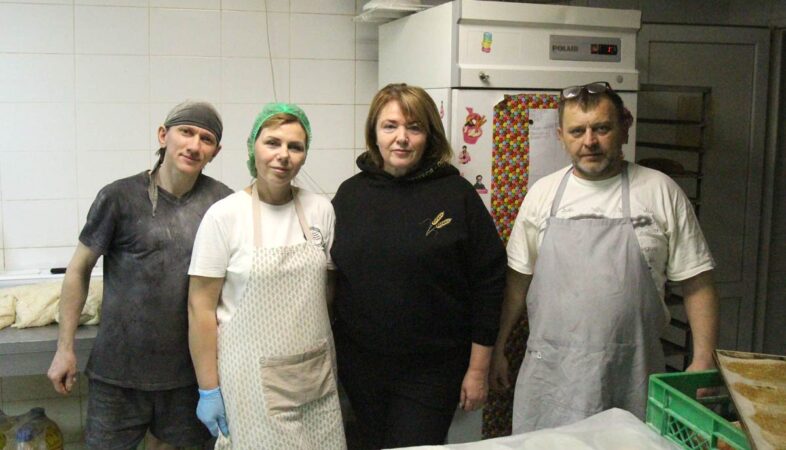
From left to right: Oleksandr Bernadskyi, Iryna Borysenko, Liubov Dubova, Oleksandr Borysenko
Everyday bread
On the bakery wall, a collage shaped like Ukraine features photos of people who’ve received aid. Soldiers, children, and pensioners are all pictured holding loaves of bread, their faces a mix of gratitude and determination. Behind them, charred buildings stand as silent reminders of the war. One image shows a batch of bread being delivered over a destroyed bridge in Chernihiv, a massive package lowered by a crane.
“At first, we focused on people living nearby,” recalls Liubov. “We also supplied the territorial defence units stationed here. During the first six months, we delivered bread to two hospitals—Shalimov and Amosov—where many of our defenders were being treated. The director of Amosov, who was living at the hospital at the time, would personally come down to collect the sacks.”
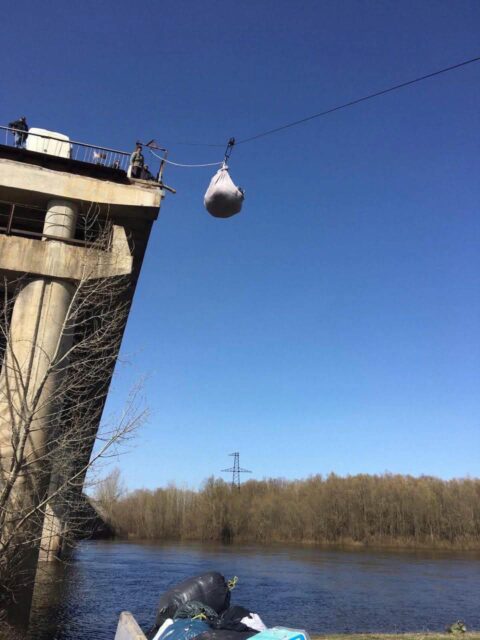
The more I hear about these bread deliveries, the more amazed I am. How did this small bakery manage to reach so many towns? How did they get the bread to places where other aid couldn’t? The answer lies in the remarkable network Liubov Dubova and her team have built. She tells me about a recent gathering of Christian volunteers in Chernivtsi, where 500 people came together. Nearly everyone she met there mentioned distributing “Peremoha” bread. Thanks to Ukraine’s united church communities, the bakery has established trusted contacts in even the most remote villages. Working alongside service members and other volunteer groups, they’ve created a network that can achieve the seemingly impossible.
One of the bakery’s most reliable allies is Nova Poshta. Back in 2022, Lyubov reached out to the company’s leadership for help, and their response was swift: the first shipments would be free as long as detailed reports were provided. Since then, Nova Poshta has been delivering bread daily. Lyubov jokes that the staff at the nearest branch aren’t too thrilled with their client, as they now load over a thousand loaves each day—a task the bakers are incredibly grateful for. The rest of the bread is collected by military personnel and volunteers. Lyubov explains that the key to their successful partnership is meticulous reporting, which has earned the bakery a reputation as a trusted and reliable partner, along with an archive full of photos of grateful recipients.
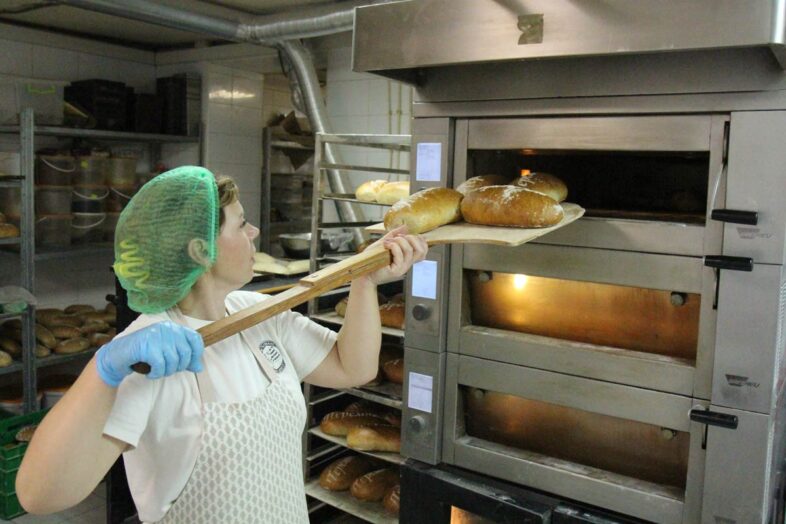
The ‘Peremoha’ recipe
The bread from those first batches, distributed free of charge, quickly earned the nickname “Volunteer Bread.” Each loaf was unique, much like the hands that kneaded it. The shape varied—from round to oval—and the recipe evolved, eventually taking on a new name. By May, it was christened “Peremoha” (“Victory”), with the name stencilled onto each loaf using flour. Initially, the letters were drawn by hand, but it wasn’t long before a stencil was used to create the now-iconic inscription.
“Bakers know that sourdough bread is a loaf that grows with love—it’s a slow process,” Lyubov explains. “So, we realised that making proper sourdough, as we had dreamed, wasn’t feasible because we needed to bake a lot of bread. Instead, we opted for a recipe without additives, made with yeast.”
The bread recipe is simple—just flour, oil, salt, sugar, yeast, and water. Occasionally, farmers deliver bran along with the flour, which is mixed in to create a hearty bran bread. The bakers guard the proportions closely, preserving the mystery behind its distinctive flavour. At first glance, the recipe might seem unremarkable, but the glowing reviews from customers and volunteers tell a different story. Many describe the bread with deep affection, saying it reminds them of the homemade loaves from their childhood—loaves you can no longer find in stores.
Holding a still-warm slice from a loaf gifted by the bakery’s owner, I found myself wondering if people from all corners of the country could really share the same memory of childhood bread. By the time I’d devoured half the loaf, I had no more questions.
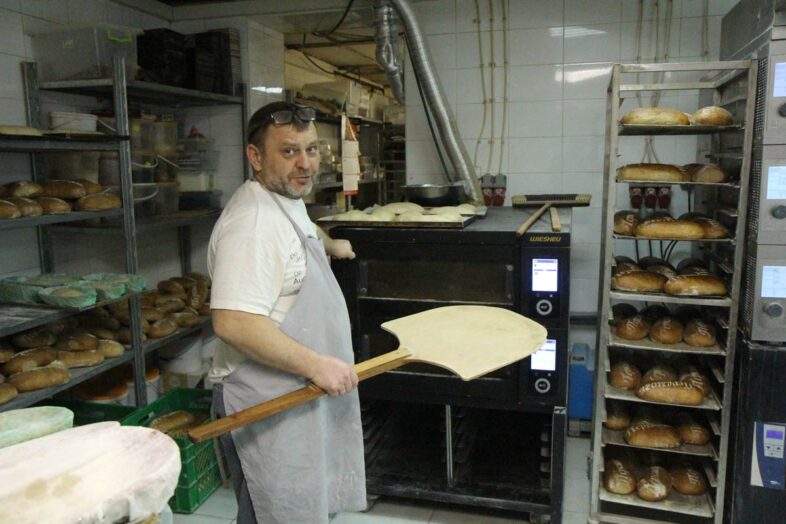
Most cherished clients
Every morning, soldiers arrive at the bakery for fresh bread. Some are stationed nearby, while others take it to their comrades on the front lines. Lyubov fondly calls them “beloved strangers,” always offering each one a complimentary coffee and treat. Lyubov’s youngest son serves in the military, while her husband and eldest son volunteer. Recently, one of the bakers also joined the army.
“We always remember the soldiers. They inspire us to do good, bake bread, and seek out those in need,” says Lyubov.
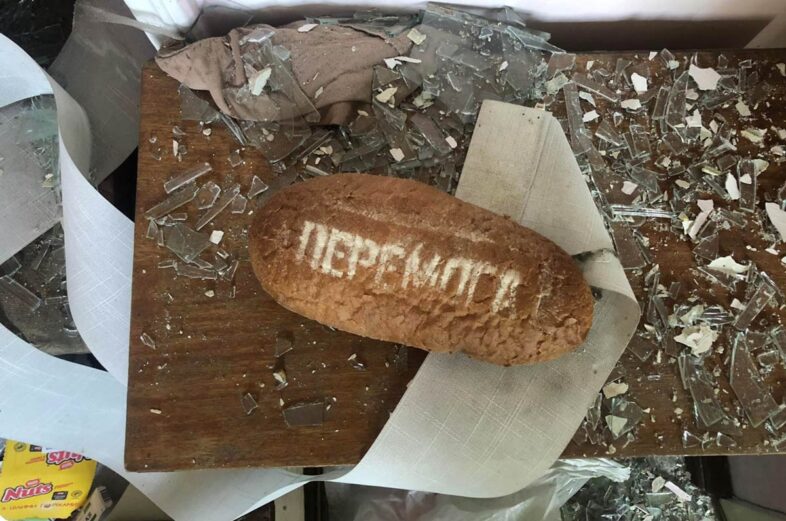
The bakery’s bread has made its way to some of the war’s most dangerous hotspots. In December 2022, soldier Kostyantyn Kravchuk was inspecting a home in Bakhmut, destroyed by a Russian strike. The house, once used by Ukrainian forces, was empty when it was hit. Amid the rubble of bricks and shattered glass, Kostyantyn found an intact loaf, still marked with the word “Peremoha” (Victory).
Moved by the sight, he shared a photo of the loaf on Facebook, where Lyubov saw it. Kostyantyn kept the bread for three months before delivering it to the bakery team during his leave. They agreed to continue baking “Peremoha” together—in the bakery and on the battlefield.
After three years of volunteering, Lyubov Dubova is preparing to launch a new project. Veteran associations and former soldiers have been approaching the bakery, eager for work—whether it’s baking, packing bread, or assisting in any way they can. Lyubov believes that reintegrating veterans into civilian life requires more than just jobs; they need roles where they can find a comfortable space to readjust. The bakery, located in a basement, is not accessible for people with disabilities. But Lyubov’s vision extends beyond hiring veterans—she plans to offer them fair wages and working conditions in an inclusive environment.
Currently, she’s searching for people with experience working with veterans to help set up a new, more accessible bakery. “As one soldier put it, what we need isn’t a head baker but a commander in the bakery,” Lyubov says with a smile.
Lyubov Dubova’s café-bakery is doing what many would consider impossible—providing bread to people in communities where it’s a vital and scarce need. She’s deeply grateful to the individuals and organisations whose support makes it possible to continue baking “Peremoha” bread. Yet, the collective effort of volunteers is constantly threatened by everyday challenges. Café sales alone don’t generate enough revenue to cover utility bills or maintain a steady supply of ingredients for the dough. But despite these hurdles, the bakers remain confident: as long as there are people in need of accessible bread, they will keep baking it.