Since the full-scale Russian invasion began, around six million Ukrainians have left the country, according to UN figures. Ukrainian officials estimate the number even higher, at 7.5 million. Either way, it’s an astonishing scale of displacement.
Some have returned, but no one knows the exact number. Yet a significant number of Ukrainians remain abroad, posing a major challenge for the country. Ukraine needs people to keep its economy running, support future reconstruction, and address its demographic crisis, now among the worst in the world due to low birth rates and high mortality.
Even though life abroad is clearly safer, many Ukrainians choose to stay at home, close to their communities — because that’s where life is being made: the ideas, conversations, and small acts that grow into something bigger. “People want to be where they can see they’re making a difference in their society and their community,” says media and culture researcher and sociologist Oksana Lemishka. “Even in the East, in regions where people are leaving because of life-threatening risks, one of the biggest motivations to stay is the chance to influence the life of their community.”
Integration or assimilation?
The brain drain — the exodus of educated professionals — is one of the trickier aspects of Ukrainians leaving the country. On the surface, it seems straightforward: skilled people leave, and the nation’s potential shrinks. But in a time of serious security threats, the issue is far more nuanced.
Ukraine needs professional voices abroad — not just to exist, but to be truly heard, not simply out of sympathy for a country at war. Ukrainian sociologist Oksana Lemishka recalls one telling experience: “A month before the full-scale invasion, I was at Munich’s Chamber Theatre with director Natalka Vorozhbyt, discussing the role of art during conflicts. After February 2022, they invited me back on stage — not as a sociologist, not as someone who understands art, but as a Ukrainian.”
For Ukrainians adapting to life in a new country, the challenge isn’t to simply blend in, but to integrate strategically while staying connected to their roots.
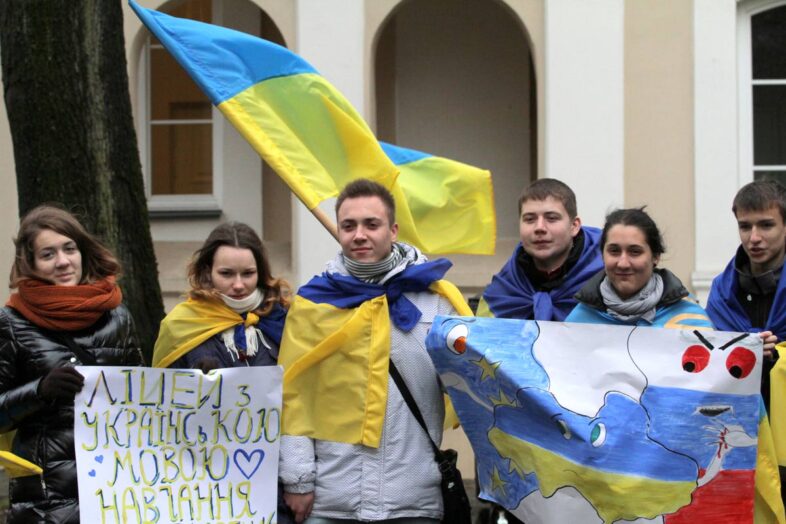
Learning local customs, traditions, and ways of communicating isn’t about losing oneself — it’s about using that knowledge to navigate new environments, achieve goals, and build lasting partnerships with foreign communities based on trust and dialogue rather than assimilation or pity. Understanding the cultural codes of other societies is crucial to being heard as equals. Protests draw attention to the ongoing war in Ukraine, and that visibility is important, but it’s only the first, surface level of engagement. To be recognised on deeper intellectual and cultural levels, Ukrainians need to communicate their experiences thoughtfully, clearly, and intelligently. Awareness becomes the bridge between Ukrainians and foreigners; without it, their voices risk slipping into frustrated monologues.
At the same time, there’s a fragile and often dangerous divide between nationally conscious Ukrainians and those who have assimilated abroad. As Oksana Lemishka points out, “Many people can spend years working abroad without integrating into the local society — and at the same time without remaining active in the Ukrainian one.” This is often the case for economic migrants who, either by choice or circumstance, never find their place in a new country yet have already lost their connection to home.
Education as a point of no return
Many Ukrainian families who have moved abroad report a noticeably higher quality of education for their children, from kindergartens through to schools.
The shortcomings of Ukraine’s educational system are reflected in the results of the 2022 international PISA study. Ukrainian students lagged behind their peers in OECD countries across mathematics, reading, and science. In mathematics, they scored 31 points lower — roughly equivalent to a year and a half of schooling. In reading, the gap widened to 48 points, nearly two and a half years, and in science they trailed by 35 points.
Only 58% of Ukrainian students reached the basic level in mathematics, 59% in reading, and 66% in science — all below the OECD averages, where 69%, 74%, and 76% of students respectively achieved at least basic proficiency.
Of course, it’s important to remember that Ukrainian students took the test in October 2022 — eight months into the full-scale war, amid ongoing attacks on cities, which was undoubtedly a major source of stress. In the spring of 2024, results were also released for a new subject: creative thinking. In the PISA 2022 assessment, Ukraine scored an average of 27 out of 60 points, six points below the OECD average. At the same time, Ukraine’s results were statistically similar to those of Greece and Colombia, both OECD member states.
Considering all these factors, Ukraine’s greatest potential loss may be its children, who are already integrating into foreign societies — attending schools, making friends, and learning new languages. This will be keenly felt in a country whose population is ageing rapidly. Ultimately, whether they remain connected to Ukraine as Ukrainians depends on one thing: whether Ukraine becomes a country they will want to return to.
Reasons to return
The issue of Ukrainians returning home is far from simple and demands a nuanced approach. The biggest hurdle is still the lack of security guarantees, though ongoing reforms, closer ties with the EU, and the state of the economy also play a key role.
Security, however, is a deeply subjective concept. Given the scale and nature of the threats, it doesn’t automatically mean the war has ended or that enemy attacks have fully stopped. As Chatham House researcher Olha Tokariuk told The Ukrainian Week, “One of the participants in my focus group said that for her, safety in Ukraine — and the possibility of returning — depends on whether there’s a strong air defence system over her region, the Odesa oblast. For her, safety simply means knowing there’s real protection, that there’s air defence specifically over where she lives.”
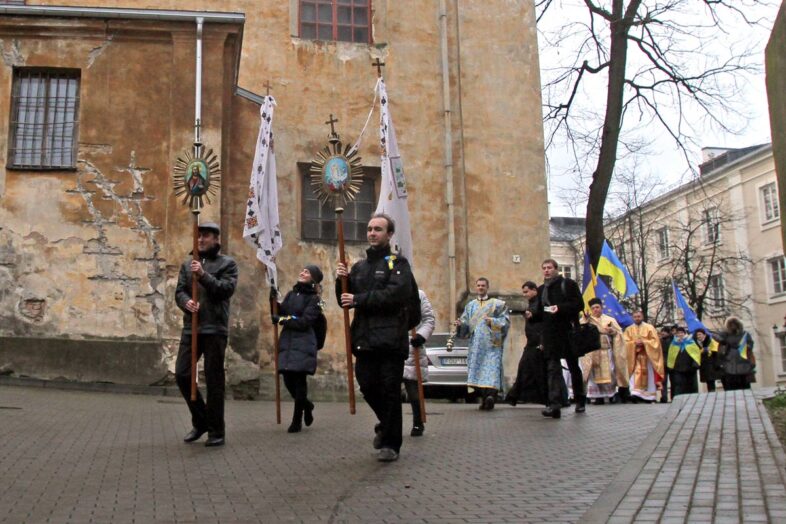
Clear skies over Ukraine: security remains a key factor for those considering returning home
As focus group surveys conducted by Olha Tokariuk reveal, security is only part of the picture when it comes to Ukrainians considering a return home. Equally important are European integration, the continuation of democratic reforms, and, above all, the fight against corruption. Ukraine’s economic resilience, even in the midst of war, also plays a crucial role in maintaining a sense of national identity. Thanks to the efforts of the government and international partners, the economy continues to function, offering hope for a better future. Yet inflation is rising, and there is no guarantee that financial support will last long enough for the economy to fully recover and sustain itself independently.
Access to housing is another critical factor. Many people left during the full-scale war after their homes were destroyed or damaged. For them, leaving Ukraine was a practical necessity — with their physical homes gone, starting over elsewhere was the only option. The state needs to focus resources on ensuring that people can find both housing and work in safer parts of the country, which could also encourage those who have already left to return. The old saying “there’s no place like home” will only hold true if home becomes a place where people can genuinely rebuild their lives.
Working with the diaspora
For many Ukrainians who have been living abroad for years, the question of returning home remains pressing. Yet legislative hurdles often make that journey complicated.
The draft law on restoring citizenship, currently under consideration in Parliament, seeks to tackle several key issues. It would formalise the status of Ukrainians who already hold passports from other countries but want to maintain their connection to Ukraine. It would also allow members of the Ukrainian diaspora — the next generation born abroad — to claim Ukrainian citizenship, making it easier for them to live, work, and integrate into Ukrainian society without unnecessary bureaucratic barriers. If passed, the law would not only facilitate the return of Ukrainians to their homeland but also strengthen the bonds between Ukraine and its global diaspora.
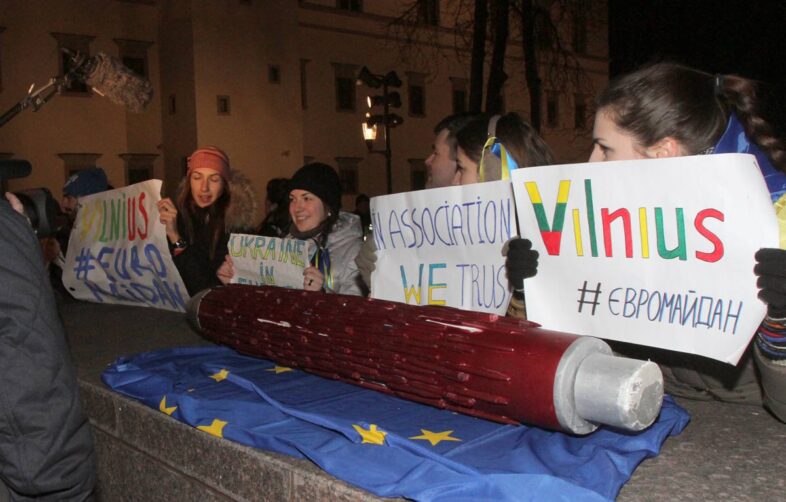
Ukrainians are everywhere: investing in cultural exchange with the diaspora is an investment in Ukraine’s future
Investing in cultural exchange with the diaspora is, ultimately, an investment in Ukraine’s future. Experiences from Greece and Ireland show that summer camps for young members of the diaspora can be a particularly effective way to do this. Programs like Ireland’s The Gathering give participants not only a chance to get to know Ukraine but also to forge lasting connections with other young Ukrainians. This is especially crucial for those who have never been to the country and have only a limited sense of their heritage. Supporting initiatives like these can have a real impact, helping to draw diaspora youth into active engagement with Ukrainian community life.
Lessons from Ukraine
In Ukraine, the question keeps coming up: what more can we learn from Europe to become part of it, not just on paper, but in spirit? These lessons are undeniably important for the country’s ongoing European integration, which is key to encouraging people to return. Yet decades of repression have left a lingering sense of inferiority, which can overshadow what we already have. Ukrainian society doesn’t need a “euro-makeover,” and integration should be about a two-way exchange of values, not treating the EU as a parental figure. Sometimes, this shift in perspective is simply necessary to recognise our own worth, feel our strength, and not only continue the fight but also put into practice the knowledge and experience gained over 30 years of independence.
Despite all the stories about cumbersome Ukrainian bureaucracy, Ukraine is arguably one of the most digitalised countries in the world. According to the Ministry of Digital Transformation, it leads in digitising documents, becoming the first country to give digital records the same legal weight as paper originals. The country was also among the first to roll out electronic driver’s licenses and simplify the registration process for individual entrepreneurs. More than 21 million Ukrainians use the Diia app, covering over half the population. Through it, citizens can even get married entirely online—a feature unmatched anywhere else in the world. Diia also lets users report property damage from shelling, buy or sell vehicles, and register with units working on drones. Meanwhile, the experience of Ukrainian soldiers in the war against Russia is already an important piece of Europe’s security architecture.
Living under constant attacks on the power grid has made Ukrainians unusually prepared for emergencies. A kind of technological gap during the early years of independence taught them to adapt fast, turning mistakes into opportunities for innovations never seen before. Europeans may impress with their stability; Ukrainians with their agility.
“In a post-national world, we are fighting for our nation. And we do it sincerely and for a very concrete reason: we are under attack. This constellation is fascinating for Europe, which had already been considering moving away from the concept of nationhood,” says Oksana Lemishka.