Today, with Kyiv firmly established as Ukraine’s political and cultural capital, it can feel surprising that, not so long ago, another city held more influence. Lviv is often regarded as Ukraine’s Piedmont, and Kharkiv as the heart of nation-building in Slobozhanshchyna. But no less crucial is Odesa, the cultural epicentre of Southern, or Steppe, Ukraine. When we look at the city’s role in shaping Ukrainian culture and identity, it becomes clear that, at times, Odesa was not just influential but pivotal. So, why was this the case? Let’s take a look at five key reasons below.
In the 19th century, Odesa was a hub for literary publications, historical works, periodicals, national-oriented civic organisations, and artistic achievements in Ukrainian culture. Interestingly, many of those behind these accomplishments weren’t even born in the South — but Odesa provided them with the platform to make their mark. Among these figures were Mykhailo Komarov, a leader of the Prosvita society and editor of the Russian-Ukrainian dictionary; artist Amvrosii Zhdakha; architect Fedir Neshturkh; and publisher Yukhym Fesenko, to name just a few.
Moreover, Odesa produced a remarkable number of thinkers and statesmen who played vital roles in shaping Ukraine’s national government during 1917–1921. This includes the renowned philanthropist and founding member of the Central Rada, Yevhen Chykalenko; one of the first prime ministers, Volodymyr Chekhivskyi; Minister of Justice Serhii Shelukhin; Minister of Religious Affairs and Public Health Ivan Lypa; Minister of Foreign Affairs Andrii Nikovskyi; and Ivan Lutsenko, a passionate advocate for the revival of Cossack traditions during Ukraine’s fight for independence, among many others.
First reason: rapid development
Odesa—or Ades, as many Ukrainians affectionately called it—witnessed an extraordinary economic boom in the 19th century. The city’s famed porto-franco status, which allowed duty-free trade, certainly played a part in this growth. But the true catalyst was grain. Throughout the first half of the century, Ukrainian chumaky from the Dnipro region would haul massive caravans of grain to the port, where it was shipped to markets across Europe. In return, goods from all over the continent filled the holds of returning ships—and even granite from Mount Vesuvius, which can still be seen on Italian Street in Odesa today.
Naturally, much of the city’s wealth was in the hands of foreigners. First-guild merchants—primarily Italians, Greeks, and French—were largely indifferent to the Ukrainian national cause. However, as they ascended to official positions, their loyalty to the empire became evident. They rarely missed an opportunity to prove their allegiance to the Russian Empire, often at the expense of the local Ukrainian population.
Ukrainian nobles, by contrast—figures like Pavlo Zelenyi, mayor of Odesa from 1897 to 1905—made significant contributions to the growth of Ukrainian culture. In many ways, Odesa, a bustling city of half a million people, became a kind of “America” for the descendants of Zaporizhian and Black Sea Cossacks, offering a fertile ground for creative and entrepreneurial talents to flourish. Take Anton Shestak, for instance, who was responsible for developing much of the city, or Fedir Nesturkh, whose architectural designs became timeless masterpieces.
The city’s rapid urbanisation was driven by a steady influx of people from rural areas, creating a melting pot of cultures. However, it wasn’t in the political salons that Odesa’s true national identity emerged. As Leonid Smolensky observed, it was on the outskirts of the city and in its lively markets that its vibrant Ukrainian character could most clearly be felt. One piece of evidence? A popular folk song that a Russian-language newspaper published in the early 20th century described life in Odesa using a Ukrainian-language quote: “A v Odesi dobre zhyty, ye shcho yisty, ye shcho pyty…” (“Life in Odesa is good—there’s food, there’s drink…”).
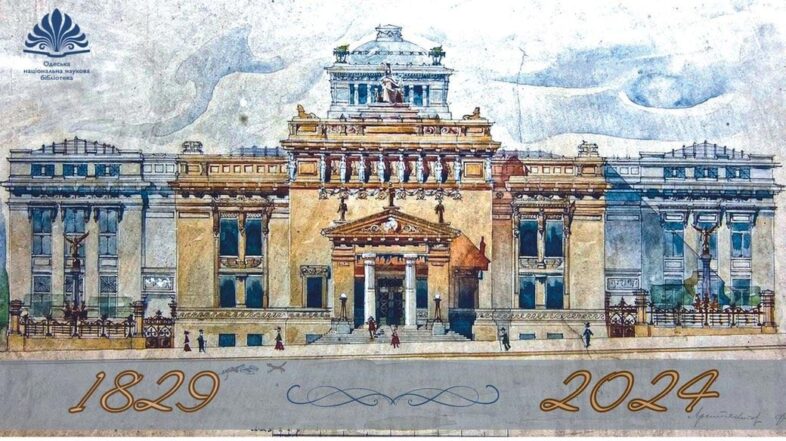
The first public library in Ukraine—the Odesa library—was built by Ukrainian architect Nestrukh
Second reason: the right people in the right places
After the crushing blow to early Ukrainian communities—especially through the ethnocidal Valuev Circular and Ems Ukaz—many Ukrainians across the empire fell silent. The Odesa community, once closely linked to Andriy Zhelyabov, the mastermind behind the assassination of Tsar Alexander II, went underground after facing brutal repression. One prominent member, city councilman Petro Klymovych, shaken by the imperial crackdown, even wrote a “confession” in which he distanced the Ukrainian community from any political movements. His retreat could well have marked the beginning of the complete marginalisation of Ukrainians in the South.
For a time, even the leader of Odesa’s Ukrainian community, the distinguished Sokrat Leonid Smolensky, who had introduced figures like Yevhen Chykalenko and Trokhym Zinkivskyi to Ukrainian identity, lost both his teaching post and the passion that had once driven him.
But then, fortune smiled on Odesa, and its status as the cultural heart of Ukraine began to take shape. The famous historian Riabinin-Skliarevskyi later dubbed the city Ukraine’s “cultural Piedmont” after a lucky turn of events. When the Tsar granted regional governors the power to decide the fate of Ukrainian theatre, the autocratic governor-general of Kyiv, Podillia, and Volyn, Drenteln, swiftly banned it. However, Odesa’s acting governor-general, Dundukov-Korsakov, took a far more open stance, allowing the theatre to thrive. It’s unlikely he did so out of a love for Ukrainian culture—more likely, his decision was driven by his liberal convictions.
As a result, Odesa became the focal point for Ukrainian theatre, which, at the time, was the primary expression of Ukrainian culture. For more than a decade, theatre troupes led by Mykhailo Starytskyi and Marko Kropyvnytskyi rarely ventured beyond the city, cementing Odesa’s position as the cultural heart of Steppe Ukraine. Despite imperial pressure to stage Russian-language productions alongside Ukrainian ones, it was the Ukrainian performances that consistently drew full houses. This was a clear sign of the strong demand for Ukrainian culture within the city.
Thanks to the governor’s relatively liberal stance, it’s likely that Odesa’s censors were more permissive when it came to approving Ukrainian-language books compared to their counterparts in Kyiv or Kharkiv. This leniency allowed figures like Borys Hrinchenko—who faced numerous rejections elsewhere—to finally secure the necessary approvals for his publications, even if it took dozens of attempts.
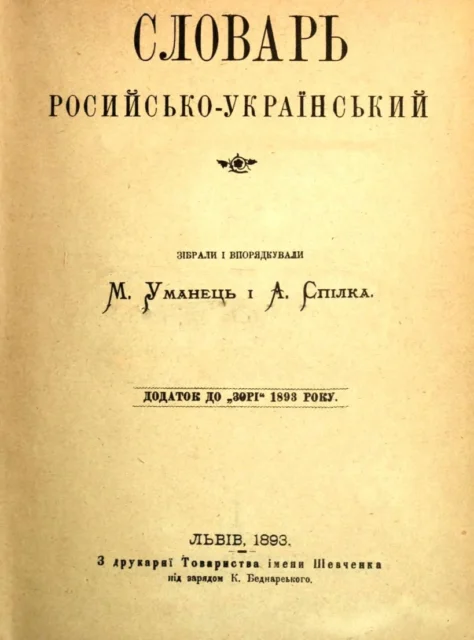
A significant turning point for the community came in 1887 when notary, bibliographer, and lexicographer Mykhailo Komarov moved to Odesa. With deep connections to scattered Ukrainian communities and key figures in the cultural elite, Komarov brought a focused sense of purpose to Odesa’s activists. That purpose would crystallise in the form of the Russian-Ukrainian dictionary.
Komarov had started the work on the dictionary back in Uman, but it was in Odesa, alongside the city’s vibrant intelligentsia, that he truly brought it to life. His flat in the city centre became a buzzing hub for a group of passionate individuals, all working together on a project that would reaffirm the unique identity of the Ukrainian language. The result was the Russian-Ukrainian Dictionary by Umants and the Odesa Society, published between 1893 and 1898, a landmark achievement in Ukrainian linguistic history.
The success of this project set Komarov on a path to becoming a key figure in the development of a national Ukrainian biographical tradition. He later took the helm of the Odesa branch of Prosvita—the first such organisation in Russian-ruled Ukraine—cementing his place as a leading force in the cultural revival of Ukraine.
Third reason: infrastructure and job opportunities
As Odesa grew, so did its infrastructure. The city became a magnet for professionals from across Ukraine, offering more opportunities than most other cities. A snapshot of the local Ukrainian community reveals a mix of minor officials, lawyers, doctors, journalists, and teachers—many of whom found a home in Odesa’s thriving job market.
Take Leonid Smolensky, for instance. He refused to take up a state-appointed position as a teacher in charge of Russifying local children, but still made a name for himself as a visionary historian, working exclusively in private schools. Mykhailo Komarov, after stints as a notary in Kyiv and Uman, finally found stability in Odesa, where he secured a permanent position. Ivan Lypa, drawn by the boom in new hospitals, moved to Odesa knowing he’d find work in the medical field. Ivan Lutsenko not only practised medicine but also pioneered some of the most innovative treatments of the time. Lawyer Serhiy Shelukhin was able to establish a more successful practice in Odesa than anywhere else. Even Vitalii Borovyk, another “Tarasivets,” opened his own bookshop, finding considerable success in the local book trade.
Those who had already secured stable positions often helped friends when job openings arose. Yevhen Chykalenko, for example, assisted Ivan Lypa and Modest Levytsky in finding work, while Mykola Voronyi spent some time in the city, publishing a literary almanac. Ivan Lypa even took in the widow of Pavlo Hrabovskyi, who had nowhere else to go after her husband died in exile. For many Ukrainian figures, Odesa became a refuge—a place where they could find both work and community when their political or civic activities were no longer welcome elsewhere.
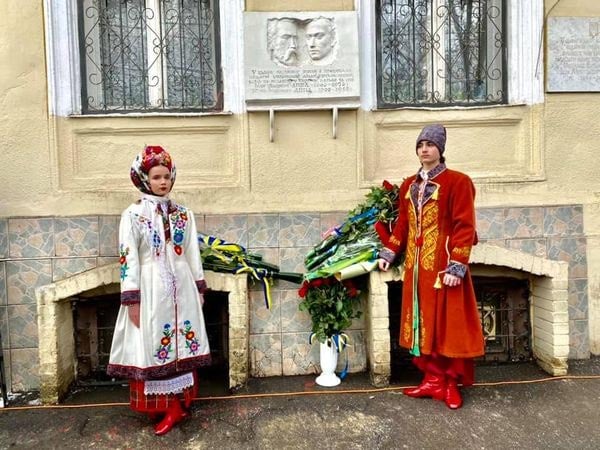
A plaque for Ivan and Yurii Lypa at the location where Ivan Lutsenko’s apartment once stood
Fourth reason: the university
Like Kharkiv and Kyiv, Odesa was granted a university by the empire in 1865, driven by its own interests. It needed specialists in various fields and sought to entrench its imperial influence while continuing its Slavophile expansion. Yet, despite these imperial ambitions, the university became a beacon of true learning and scientific advancement, much like its predecessors. In the 19th century, the rectors and deans were typically loyal to St Petersburg—sometimes even members of the Black Hundreds. But it wasn’t these figures who drew students; rather, it was the brilliant minds among the faculty that attracted the best and brightest.
Odesa University earned lasting distinction through Illia Mechnikov, the first Ukrainian Nobel laureate, who taught there in the 1870s. Other prominent scholars, including physiologist Ivan Sechenov, biologist Oleksandr Kovalevsky, and ophthalmologist Volodymyr Filatov, also lectured at the institution. The university was a breeding ground for many future political figures, too—such as revolutionary Andrii Zheliabov, Ukrainian geopolitician Yurii Lypa, UNR Foreign Minister Andrii Nikovsky, and even imperial Prime Minister Sergei Witte. The list of renowned graduates is no less impressive, with figures like Mechnikov’s collaborator in establishing the world’s second bacteriological station, Mykola Hamaliia, microbiologist Danylo Zabolotnyi, pathophysiologist Oleksandr Bohomolets, historian Mykhailo Slabchenko, and countless others.
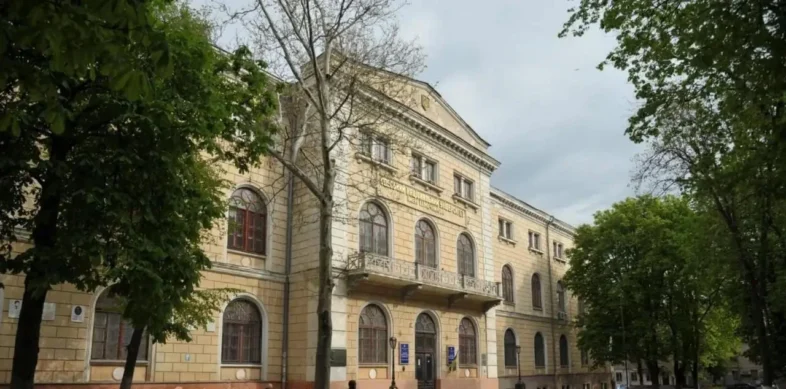
The university became a vibrant hub for the development of science and culture, inevitably reflecting the national aspirations of its students, many of whom were Ukrainian. A striking example of this came in 1907, when Odesa University became the first in Russian-ruled Ukraine to offer a course taught in Ukrainian language. Delivered by historian Oleksandr Hrushevskyi, the brother of the head of the UNR, the optional course was part of the history and philology faculty’s curriculum. Titled “The Internal Structure of Kyivan Rus, the Grand Duchy of Lithuania, and the Kingdom of Poland in the 14th–15th Centuries,” it was an immediate success. Witnesses recall that the course, which was taught in Ukrainian, sparked immense interest, so much so that extra chairs were continually added to the lecture hall where Hrushevskyi lectured.
Fifth reason: the development of publishing
As the largest city in Russian-ruled Ukraine, Odesa became a vital hub for the printed word, which was the primary way information spread in the pre-revolutionary era. The city boasted more printing houses and newspapers than any other in the Dnipro region. A strong tradition of academic publishing had taken root by the mid-19th century, with the Notes of the Imperial Odesa Society of History and Antiquities (first published in 1844, in Russian) marking an early example. However, as bibliographer and Ukrainian community leader Mykhailo Komarov observed, much of the printed material was not focused on culture but driven by commerce. In fact, nearly half of any given newspaper was taken up by advertisements. Yet, amid the commercial clutter, Ukrainians still managed to slip in announcements about new publications, theatre performances, and cultural events.
Thanks to its well-established printing infrastructure, Odesa made it relatively easy for Ukrainians to publish books or even launch Ukrainian-language newspapers—several of which were printed during both revolutions. But there’s a marked difference between a publisher driven purely by commercial interests and one who feels a deep connection to Ukrainian culture. The standout figure in the latter group was Yukhym Fesenko, a Chernihiv native who, from the 1880s onwards, became one of Odesa’s most influential publishers thanks to his entrepreneurial flair. Fesenko’s imprint was diverse—he published everything from religious icons and lavish codices to popular chapbooks and postcards. Well-liked by both locals and his staff, for whom he provided some of the best working conditions of the time, Fesenko was ideally placed to champion the national cause through his work. His printing house produced thousands of Ukrainian artistic, ethnographic, and literary works, making the writings of Shevchenko accessible to the public at affordable prices. In fact, most of the Ukrainian-language print material in pre-revolutionary Odesa came from Fesenko’s press, often funded by him personally.
Sadly, the building that once housed Fesenko’s press has not been preserved. However, efforts to save it from destruction have united the city’s activists. There is still hope that new initiatives, spaces, and platforms can be created to honour this legacy, offering a permanent exhibition that tells the story of Odesa’s Ukrainian community and their remarkable achievements.