City streets stir as the day begins. Cafés, shops and offices lift their shutters. Car horns snap at broken rules and the weary mistakes of sleepless drivers. Along the painted lines of the road, elderly women in yellow safety vests scatter flowers — roses, chrysanthemums, red, pink, white — pulled from bouquets, from their hands, even from buckets.
At nine o’clock a loudspeaker calls on the city to honour Ukraine’s fallen. People step outside, heads lowered, from cafés, shops and offices. Others hurry on, untouched. A mother with her baby bows and rocks the child, soothing it with the Ukrainian anthem — half lullaby, half love song — the same words she sang to her husband when she saw him off to the front only two months earlier. For him, the women in yellow vests have just laid their flowers.
The unseen trauma of one family, mourned with petals scattered across the road markings, becomes a pain that lingers through the whole country, a burden that will weigh on generations to come. War does not pass anyone by. It leaves behind only ashes, ruins, and scarred souls.
And even after the war ends, Ukrainians will not be able to recover or return to peaceful lives without consequences — for their physical and mental health, for bureaucratic processes, for everyday behaviour, for their sense of belonging. This is especially hard for soldiers and their families, who constantly live in parallel realities and need every process around them to be flexible enough for safe and proper adaptation. For veterans it is even more so: returning from the front means the war continues, as problems long hidden rise to the surface.
Hidden wounds of returning soldiers
When soldiers come back from the front line, they cannot reclaim their old sense of belonging or home. Behind them are the trenches, the losses, the sleepless nights, and the moments when death pressed close. And after the battlefield, another struggle awaits — no less brutal: the struggle to adapt, to be understood, to live without pain.
“The greatest new enemy in working with veterans is retraumatisation,” says Kseniia Voznitsyna, director of the Lisova Polyana Mental Health and Rehabilitation Centre. Since Russia launched its full-scale war against Ukraine, bringing veterans back into civilian life has only grown more difficult. Even after treatment and rehabilitation, many return to an atmosphere loaded with constant triggers: the sound of shelling, the news of fallen comrades, the weight of guilt. That last one cuts deepest. As Voznitsyna points out, around 90 per cent of the veterans treated at Lisova Polyana eventually went back to the front.
Despite the growing attention to the traumas of war, the mental health of veterans will demand far more structure, resources and long-term commitment. The stigma attached to the role of soldiers in society twists the process of safe adaptation, breaking the fragile link between “I (as a soldier) — society — war.” Mental balance is the foundation on which everything else rests — rebuilding family ties, re-entering the workforce, reclaiming a place in civilian life. Yet constant triggers keep pulling veterans back, making that step forward painfully difficult.
In April 2023, a soldier named Oleksandr (his name has been changed for security reasons) was gravely wounded and is still in rehabilitation. “I was supposed to be ‘a 200,’ [‘killed’ – ed.] but I was saved. They removed the shrapnel and got me out,” he recalls. When he returned to his unit, fragments from an F-1 grenade tore into him again. Evacuated from the battlefield, he began the long path of recovery. There have been numerous surgeries — and just as crucially, the beginning of work on his mental health.
“Recovery is very hard, not only physically but psychologically. For a long time, the war was my life; I saw what was really happening on the front line, where life and death are divided by a single centimetre. And then I came to Kyiv and saw how many people don’t even think about the fact that the war is still going on — that was hard,” Oleksandr says.
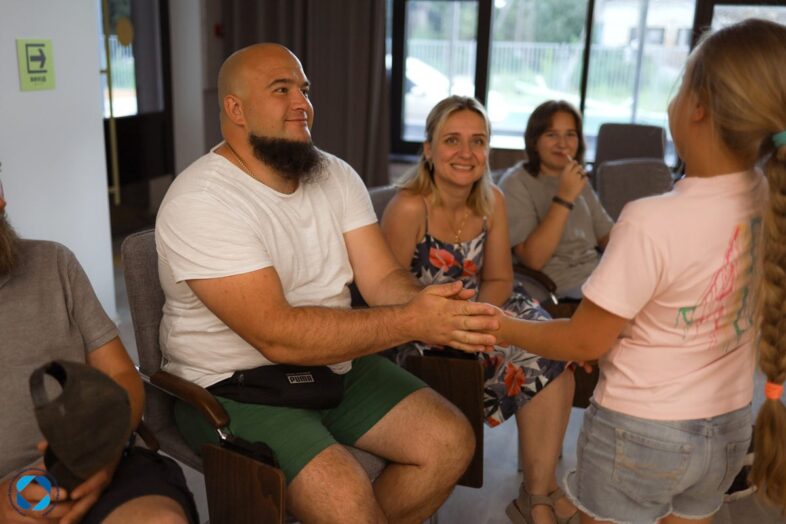
When the safe bubble of conversations with a specialist bursts, soldiers find themselves exposed to an entire range of triggers — above all, society’s lack of readiness to support them, or even simply not to stand in their way. On the advice of a fellow serviceman, Oleksandr turned to the NGO Hromadskyi Dim, which works with veterans and their families. “I understand it’s hard for me, my head is still in chaos. There were moments when the smallest things set me off: in the evening, car headlights made me think of enemy infantry. Now it happens less often, but sometimes the sound of an e-scooter reminds me of a drone. That makes it hard to adjust to civilian life. I still have a long road to full recovery ahead of me,” he says.
Hromadskyi Dim, which runs the initiative Path of Adaptation: Supporting Veterans and Their Families, is one of several institutions in Ukraine putting mental health at the heart of rehabilitation and reintegration for service members. Another is the YARMIZ Centre for Readaptation and Rehabilitation, which focuses on psychosocial support for defenders and their families. Tetiana Ponomarenko, a certified Gestalt therapist and clinical and family psychologist at YARMIZ, stresses that veterans’ well-being is deeply tied to the quality of their family relationships. A reliable, stable family can be an anchor, making the return to civilian life far easier. But family tensions can just as easily magnify the risk of difficult adaptation, deviant behaviour, or even full disadaptation.
Building support for veterans
“Veterans need alternative forms of support — communities and networks where they can connect, learn new skills, and develop new professions… Some NGOs are already stepping into this role,” says Tetiana Ponomarenko. “But these initiatives also need to be scaled at the state level, so that support comes not only from families but from wider communities of like-minded people.”
The main challenge, she notes, is that veteran support remains largely uncoordinated, especially at the state level. Individual initiatives exist, but they are scattered and do not form a coherent system. “Often, veterans have to hunt for the resources they need on their own, which consumes huge amounts of energy and time,” Ponomarenko adds.
Most of this support is provided by charities and NGOs that must independently seek out donors. Critical institutional and financial backing comes from international partners such as UNDP, the International Organisation for Migration, and the German government, through projects like GIZ Ukraine’s “Gender-sensitive approaches to mental health and psychosocial support in Ukraine.” For example, the German government currently funds initiatives run by more than 25 partner organisations working with veterans.
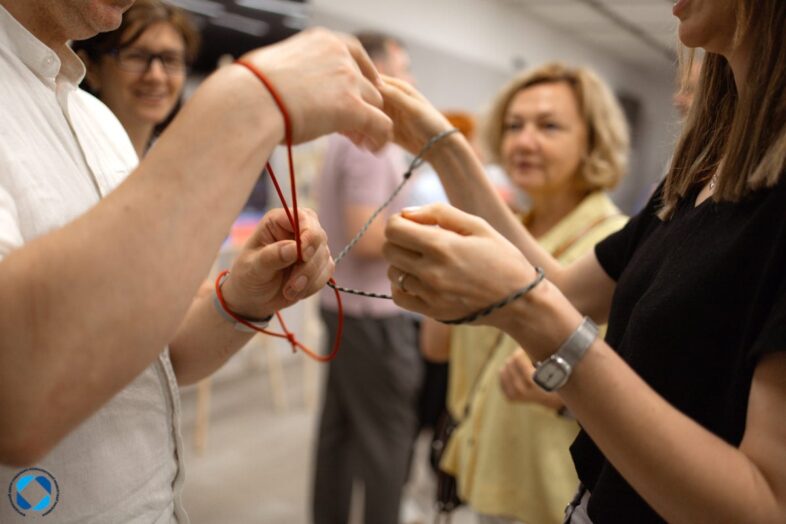
Tragically, in a state of war, every effort to establish stable processes loses its coherence. This becomes yet another barrier for soldiers trying to readapt after returning home. Supporting veterans effectively requires a unified strategy, with clearly defined roles for government bodies, local authorities, and civil society organisations. Particular care must be taken in selecting and training the specialists who carry out these programmes, as the quality of support and the trust veterans place in them hinge on their professionalism. Those working with veterans need to be genuinely committed and ready to handle the unique challenges this work brings.
Always there for them
As part of its national strategy, the Ministry of Veterans Affairs launched a pilot project in 2023 called Veteran’s Assistant, which was expanded the following year to cover most regions of the country. Veterans and combatants, their families, the relatives of fallen defenders, service members preparing for discharge, and even citizens or organisations looking to support veterans can all turn to a Veteran’s Assistant.
These specialists carry out and coordinate a wide range of tasks: acting as a bridge between people and state or local institutions, helping with benefits and payments, connecting individuals to consultations, rehabilitation, and job opportunities, or linking them with other support programmes.
We spoke with Anastasiia Pryimachenko, a Veteran’s Assistant in the Ivankiv community of the Vyshhorod district, in the Kyiv region. Her journey to this demanding role was far from easy. During the occupation of northern Kyiv, more than 20 Russian soldiers took over her home, even setting up a checkpoint in the yard, leaving the house heavily damaged. Together with her husband, now a serviceman, Anastasiia founded the charitable foundation Furious Swallows, which not only raised funds for service members but also provided vehicles, medicines, and even hand-assembled drones. Today, she acts as a crucial link in helping dozens of veterans reintegrate into civilian life. Having lived through her own trauma, she connects deeply with every story she encounters in her work.
“Often you forget about yourself. You give up quiet, peace, even sleep — because you’re thinking about the person who called you outside working hours and needs urgent help,” Anastasiia says.
The hardest part of this work is the emotional strain and the scarcity of resources. Specialists working with veterans — doctors, psychologists, psychotherapists, assistants — inevitably absorb the weight of their stories. At times, the process of providing support slows or even stalls entirely because essential tools are missing, especially when urgent action is needed. These obstacles underscore broader systemic gaps — gaps that could be addressed through coordinated cooperation and a structured approach. Anastasiia adds: “Knowing that you’ve helped someone is what gives you the strength to keep going.”
Recently, the country was struck by the story of an Azovstal defender who survived three years in captivity with a fragment lodged in his heart and, after returning home, underwent a series of critical surgeries. The soldier repeatedly emphasised that war is his job and that he returned to defend his homeland.
For veterans, the role of family, community, and broader networks of support is to remain constantly open and ready for whatever challenges arise. The trauma of war hits in waves of varying intensity, often at the most unpredictable moments. And it does not stop with the small circle of people who witnessed or lived through it — it spreads, like metastases, across the country, sometimes starkly visible, sometimes quietly pervasive.
This means that everyone in society, whether actively involved or simply present, has a part to play in the “healing” of veterans. The road ahead — of loss, recovery, and adaptation — is long and still unfolding.