The Ukrainian Week spoke with Stanislav Ryzhenkov (Morti) — legendary fighter of the Azov Brigade, veteran of the Russian–Ukrainian war, and volunteer adviser to the Kyiv mayor on veterans’ affairs — about the hospital at Azovstal and captivity, the loss of a hand and true brotherhood, who needs veterans and what they themselves need, what the longest day might look like and the best decision in life.
— You have 16 years of service behind you. How and why did you become a soldier? Was it a childhood dream?
— As a kid, I loved watching movies where Sylvester Stallone or Arnold Schwarzenegger would blast through enemies with rifles or rocket launchers — that tough-guy image was definitely exciting. But in reality, it was all about family circumstances: my father died. We lived near Kharkiv, in the village of Vysoke, and my mum worked in the city. While she was at work, my grandmother took care of me. When she passed away, I was left without supervision. And when a kid is left alone like that, trouble starts — school gets neglected, and the partying begins. So the decision was made to send me to the Kharkiv Military Lyceum, which offered intense military and physical training. That was in 2006. I spent years 10 and 11 there — right in that challenging teenage phase.
The lyceum was next to the Kharkiv Air Force University. We saw that whole system, and we were taught military discipline and ethics. Towards the end of our studies, cadets – graduates of the lyceum – would visit and tell us how great it was to be in the military. That’s when I decided to enrol in the Academy of Internal Troops of the Ministry of Internal Affairs. I applied to the automotive department – that’s for deputy company commanders for technical matters, or unit commanders for technical matters. I studied there for four years and, after graduating, I was assigned to Zaporizhzhia. There, I started as a platoon commander and later became deputy company commander for technical matters. Eventually, I transferred to another unit – a kind of special forces unit called “Gepard”. One of our former deputy commanders had transferred there and invited me to join. He said, “Come serve with us, you’ll grow professionally as an officer.” So I transferred and continued serving.
— Were you involved in the Anti-Terrorist Operation (ATO)?
— In June 2014, we were assembled to carry out a combat mission. They gathered officers and contract servicemen, and we headed off to the ATO zone. It felt like we were going on some kind of resort trip — riding on buses, body armour off, rifles lying around somewhere, stopping for a smoke break every half hour. At the time, Mariupol was still under separatist control, so we had to bypass it along the ring road. We arrived at the location of our mission — near the village of Avilo-Uspenka, close to Amvrosiivka. That very first night, we came under mortar fire — and that’s when it really hit us that this wasn’t some walk in the park where you just serve your time and go home.
The next day, they formed a group and told us: “We’re moving out to a position — a checkpoint, where we’ll be stationed for three days.” Those three days turned into what felt like a month. Our supplies were poor, communication was weak, and we had no proper internet. It was hard to find out what was going on in Ukraine. Luckily, a local farmer lived nearby — he’d bring us local gossip, so we had some idea of what was happening around us.
That’s where we had our first combat encounter. Although, it wasn’t exactly a full-scale clash — more like a shootout in the woods. Something was firing back at us from the trees, but it wasn’t clear what. At one point, someone tripped a signal mine — we opened fire into the forest, and suddenly a roe deer burst out and bolted.
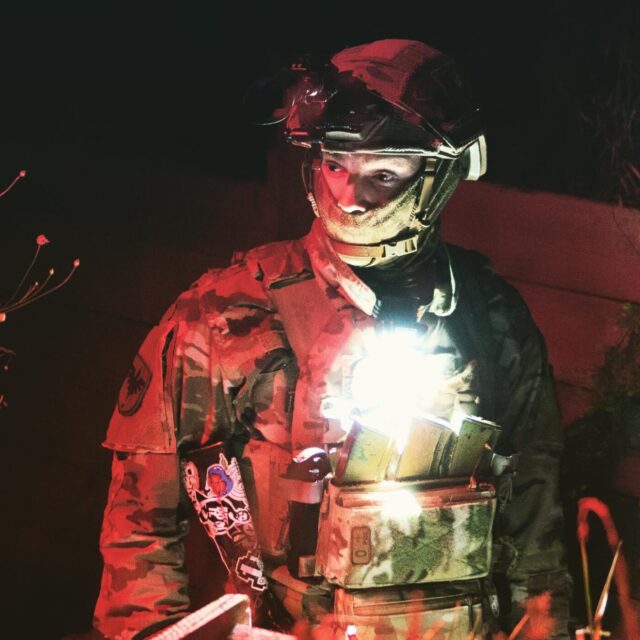
Later, we were pulled back. They told us to withdraw because our base had come under fire. We moved to Berdyansk for a few days of rest before returning to the Uspenka checkpoint on the state border. We took up defensive positions in the nearby villages. At that time, I was doing night patrols — resting during the day and on duty at night. Our position was near a German cemetery from the Second World War. When the Germans learned their grandfathers had fought there, they came and built a beautiful marble memorial.
About three weeks later, we were rotated out. By then, the rides back were no longer relaxed. Instead of buses, we rattled along in an open ZIL truck, rifles in hand, speeding flat out to avoid mortar fire.
— Do you remember the moment when it all turned into a war? When it really hit you that peace was over?
— I think everyone experiences that differently. You start to realise you might not make it to tomorrow — that you could be shot or a mortar could land nearby. And that’s it — life over. But there wasn’t a sharp, dramatic moment of clarity. It was more a fog of confusion: why is this happening? The awareness that you could be killed — yes, that was there. But understanding why — no. That comes later, with time and experience, when things begin to fall into place.
The reality that Russia was the enemy hit me hard and clear. Even though I have many relatives there, I cut off all contact. They used to write to my mother, asking, “What’s happening over there?” That was back in 2014. But I told her I didn’t want to talk to those relatives—we’re at war with them. It was clear even then. And it was obvious this wasn’t some uprising of “miners’ militias,” but a full-scale war involving regular Russian military units.
— How did you end up joining Azov?
— I already knew about units like Azov because we’d been deployed to the ATO zone in Mariupol. At one point, a guy transferred to our National Guard unit for family reasons — his wife and young child lived in Zaporizhzhia, and he wanted to be closer to them.
He’d served in Azov and talked about how they treated their personnel, the level of professional training. I found that really interesting, especially since the regular National Guard units at the time were full of Soviet-style officers, drowning in paperwork, with no real professional training. So I decided to apply through their website. They called me, invited me for an interview. I went, met with a guy named Redis, and he said, “Alright, let’s get your paperwork sorted — come join us directly.”
— Was it a transfer? Or did you have to resign first?
— It was a direct transfer into Azov. Of course, I had to put up with all sorts of nonsense from senior officers — “Oh, you’re going? Going to grow a beard now, become a nationalist…” That kind of thing. Right away, they started offering me a higher position, a better officer rank. But why hadn’t they done that before? When I said, “No, I’m transferring,” the swearing began. That was the attitude. They even made the transfer process difficult, dragging it out.
But honestly, it was the best decision of my life. Azov is the best unit — in terms of attitude, training, motivation, initiative, support — everything. Back then, we didn’t have state backing, no proper equipment or direct supply. There was some support, but Azov was always under scrutiny, constantly targeted by Russian disinformation. In reality, Azov was the most motivated and professional unit you could possibly have under those circumstances.
From March 3, 2018, it felt like a new chapter in my life. In just a few months with Azov, I gained more combat training than I had in ten years with the National Guard.
Then came a deployment with my comrades to the Svitlodarsk bulge for a combat mission. These were real operations — professionally planned and executed. We weren’t there just to “earn our salaries”; we were there to reclaim our land, step by step, by any means necessary. The officers planned the missions, the fighters carried them out, and gradually, we pushed forward. Even then, we tried to recover as much territory as possible. There were a few more deployments after that, though without direct frontline involvement.
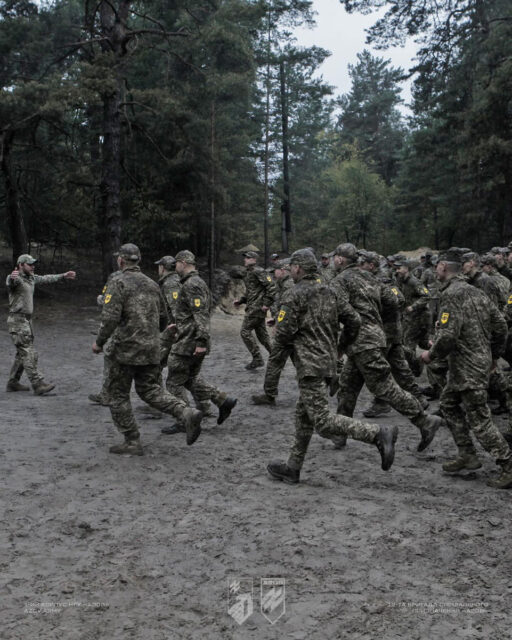
By summer 2022, my contract was due to expire. I had already started learning English, thinking and dreaming about civilian life. I’d enrolled in IT courses — everything seemed to be falling into place. But starting in November 2021, tensions along our state border began to rise. At first, we didn’t fully grasp how serious it would get, but as February approached, the signs became clearer. Unit commanders didn’t rule out the possibility of a full-scale invasion.
So on February 24, I was already with my unit, assigned to repel an amphibious landing. The plan was that the Russians might attempt to land from a warship near the village of Melekine — and we were ready to stop them. We had taken up our positions five days earlier and were waiting. We met the February 24, 2022, right at our posts.
— What scenarios were you preparing for? Did you expect the Russians to advance so quickly from Crimea and surround Mariupol?
— Well, regarding Crimea — that was a major screw-up. A serious screw-up. No one expected they’d get into our rear that quickly. Were we prepared for everything? Yes, we were preparing for all sorts of scenarios. But for them to move in that fast? No. Still, we were ready to meet them wherever they came from. That’s why we stayed at full combat readiness.
— Do you remember the first day of the war?
— I happened to be on duty. Our commander, my comrade Khorus, had just lain down for a ten-minute rest. I opened YouTube and saw a live broadcast of Putin: “I have made the decision — a special military operation.” I said, “Khorus, get up, the war’s started!” — “What are you talking about?” — “Look, it’s been announced.” And from there, it all kicked off.
The first day was the longest day of my life. So much happened — it was just insane. By noon, I felt like a whole week had passed, but it was only lunchtime. And by evening — it was something else entirely. Bombers flew overhead, dropping bombs on our air defence, on Mariupol, on the airport…
But we were ready. Confused about what was happening? Yes. Scared? I wouldn’t say so. There was already this drive to prove ourselves, to put our training to use.
— What positions were you holding in those first days before you were ordered to retreat to Azovstal? How did the withdrawal unfold?
— We were holding the line in the Cheryomushki district, closer to the airport runway on the city’s western side. We held that defensive line from around March 1 until April 15. We waited a few more days for the enemy to arrive from Crimea — no one expected it would happen so fast.
Then everything changed: the Russians split the Mariupol group in two, and command decided to regroup everyone into a single force. The wounded tried to break through to Azovstal in vehicles, while the healthy moved out on foot. There were a lot of us — I just couldn’t tell how many in the dark. It was about six kilometres to Azovstal, but those six kilometres came after everything we’d already been through — after all the battles — and we were exhausted, starving, freezing. That march was unbelievably hard.
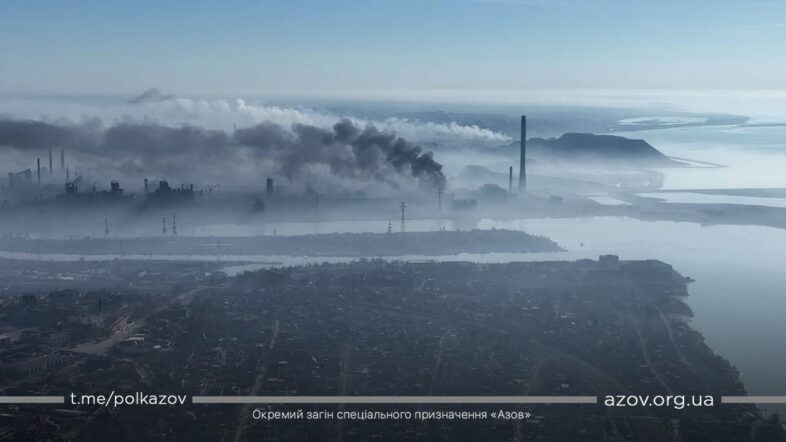
Almost immediately after the foot column set out, we came under artillery fire. The enemy had spotted us, knew exactly where we were, and was fully prepared — we were under constant fire as we moved toward Azovstal. The vehicle columns somehow made it to the far bank, while we entered a ship repair yard in single file. There were dismantled boats and abandoned hangars scattered around. No Russian infantry had appeared yet, and the shelling paused for a while. But to get directly onto Azovstal’s territory, we faced a choice: cross a bridge under enemy fire or ford the river. The guys started searching for boats and improvising rafts. From around nine in the morning until about three in the afternoon, we slowly crossed to the other side. With only an inflatable raft and one boat, it took far longer than it should have.
I was at the rear of the column with my comrades — we were supposed to leave last and provide cover if a fight broke out. As we left the hangar, a heavy artillery barrage hit from two directions. We climbed over a large concrete fence and started pulling the inflatable raft toward us from the other side of the river, but it got stuck somewhere in the middle. Khorus shouted, “Pull it, pull it!” I told him, “It’s not moving!” Our hands were at their limit. He ran over to help, but the raft was stuck fast. Then came another explosion. I dropped down; a shell landed maybe three to five metres from me. I felt a dull blow to my arm. When I opened my eyes, I saw my arm lying at a strange angle. And I knew — this was bad.
I started giving myself first aid, but it wasn’t going well. Khorus was also wounded; he managed to put on a tourniquet himself, then helped me — and in doing so, saved my life. Later, he got on the radio and contacted our friend Redis, saying almost no one was left unscathed — we were all either wounded or already dead. He called for backup to come help us cross the river.
I believe it was our comrades Dubok and Prokuror who came back. They swam across, loaded us into a boat, and ferried us to the other side. Others ran over and helped pull me out. There was a problem: my arm wasn’t completely torn off — it was hanging by tendons. I knew that under those conditions, no one could sew it back on, so I asked if anyone had a knife. I said, “Let’s cut it off — it’s just dangling.” Carrying me with that arm was impossible. Right there on the shore, they cut it off and threw it away. Maybe someday I’ll go look for it…
After that, we lost more men when we came under fire from Russian AGS grenade launchers and “Grads.” It wasn’t just a hellish situation — it was something worse. Artillery, “Grads,” AGS, and small arms fire all at once. They hit us hard. But the guys — real heroes — pulled out the wounded. We got inside a building, and then the fighters returned. By evening, when things quieted down a bit, they evacuated us. They took me to “Zalizyaka” — that was a hospital. They performed surgery, and I finally got to rest.
— What runs through your mind when your arm’s torn off across a river, under constant fire?
— At that moment, I realised dying doesn’t hurt. It’s like falling asleep. After that, I was incredibly thirsty. I even asked Khorus if he could maybe run off, fill his helmet with water from the river, and give us a drink. (He’d been wounded in the legs — editor’s note.) When we moved again, they laid me down on the ground while the others scattered, so not everyone would be hit at once. I lay there staring up at the sky, thinking, “Come on, finish this already, because I don’t want to suffer.” But I never had any dark or despairing thoughts. We’d been trained for this — over and over.
So the first thought was: “This is it.” The second was: “I need to give myself medical aid.” There was no “Help me!” scream or panic. I only asked for help when I realised I couldn’t treat myself fully. But there was no time or space for saying goodbye to life or feeling sorry for myself.
— What are your memories of Azovstal? What was the hospital like, and how were the conditions? How long did you stay there?
— I arrived on April 15th and left under orders for captivity around May 17th, I believe. At first, things were more or less manageable. The room was about 10 metres wide and roughly 30 to 35 metres long. There were around 150 to 200 people packed in. Rows of people, side by side — it felt cramped and uncomfortable, but to a normal observer, it was grim. The scene was tough to take in: bodies, friends — all lying there, some unable to walk, others able, some missing arms or legs, others fainting from severe wounds.
When I was operated on, there were still some painkillers and antibiotics available. But by early May, supplies ran low. They simply gave us “no-spa” [antispasmodic drug – ed.] as a painkiller or analgin—barely enough, mostly to help us psychologically cope. That’s how we stayed, lying there. Nearby was the kitchen, and we were fed three times a day.
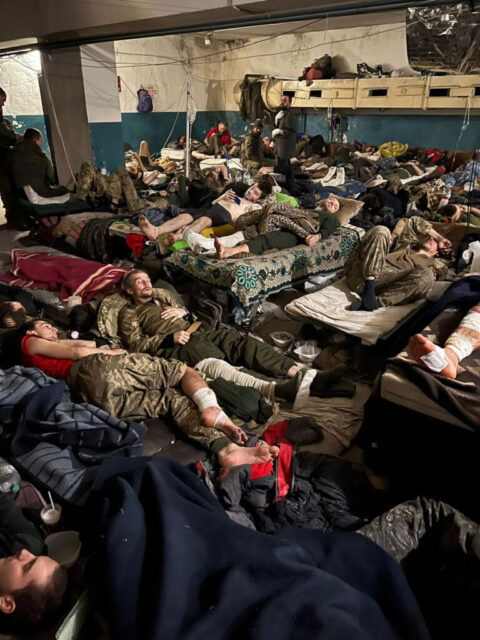
Then a rocket struck the kitchen next door, forcing them to start bringing our food from a different bunker. Three or four guys — I think they were National Guard conscripts — would bang on the door to our bunker, carrying containers on their shoulders. Our daily ration was half a plastic cup from a McCoffee container filled with porridge. That was it.
Another bomb came in shortly after, but I don’t think it exploded. It crashed into the other side of the bunker, breaking through the wall and covering everything in debris. Naturally, the space grew even smaller. The guys from that side began moving over to us, and it became a real crush — everyone piled on top of each other.
The operating room took damage as well. Surgeries were then performed directly in the hallway where everyone was lying. Eventually, some guys showed up and said, “Whoever can walk, gather what’s left of your things and move to another bunker — we need to lighten the load here.”
I decided to go. After three weeks underground, my first thought stepping outside was, “Oh, the sky is blue! Everything’s wonderful.” But no sooner had we emerged than we heard an enemy fighter jet approaching, bombs ready to drop. We dashed for cover in a nearby hangar, listening as the plane neared, bombs falling, then turning away. We ran again. I found myself in a clearing, surrounded by green grass and blue sky — a small moment of relief amid the chaos. We covered about 300 to 400 metres to the “Dzherelo” position, where I reunited with my comrades. We hugged and kissed. I stayed there until we surrendered. The food at “Dzherelo” was better; they immediately handed me a whole bowl of porridge. “Wow,” I thought, “this is like a proper Sunday portion.”
I knew I couldn’t do much to help, but I wanted to. I said, “Let me go upstairs to gather firewood, or I can sit at the radio and keep watch.” Whatever I could do to be useful at the time.