Can the Russians break through Ukraine’s defences, and what can we expect on the front lines — a ceasefire or another enemy push? What role does the Corps system play in the Ukrainian Armed Forces, and what other changes are needed within the military? What sets the Third Assault Brigade apart, what innovations are emerging at the frontline, and how has the war really transformed the Ukrainians? The Ukrainian Week sat down with Maksym Zaychenko, commander of the anti-aircraft missile artillery division of the Third Army Corps, and until recently, of the Third Separate Assault Brigade.
You can read the first part of the interview here.
— How does the U.S. president’s ceasefire announcement impact the situation on the front lines? What’s the current situation in your brigade’s area?
— Honestly, I can’t speak for what the enemy is thinking. For us, nothing’s changed — we’re still fully engaged in our tasks. Our brigade remains responsible for its assigned sector, right on the front line, and no one has pulled us back from our defensive duties. I just came to Kyiv for a few days to handle some organisational matters for a new unit that’s being formed, and then I’ll be heading straight back to the front. While I’m away, my deputy is in charge.
The situation’s much the same for the 3rd Assault Brigade. We’re covering a pretty large stretch of the front, and the enemy attacks every day — there hasn’t been a day without assault operations in the past year. But over the last month and a half, we haven’t lost a single position. In fact, we launched a counterattack and retook the village of Nadiia, which we’re holding now. Russians are trying hard to recapture it.
They’re pushing to reach the Oskil River, aiming to take Borova in our Svatove sector. Similar fighting is happening further north near Kupiansk and further south near Lyman. The Oskil River is a crucial natural barrier — whoever holds its banks controls the staging ground for future offensives. Our mission is to hold the line and stop the enemy from reaching their operational goals.
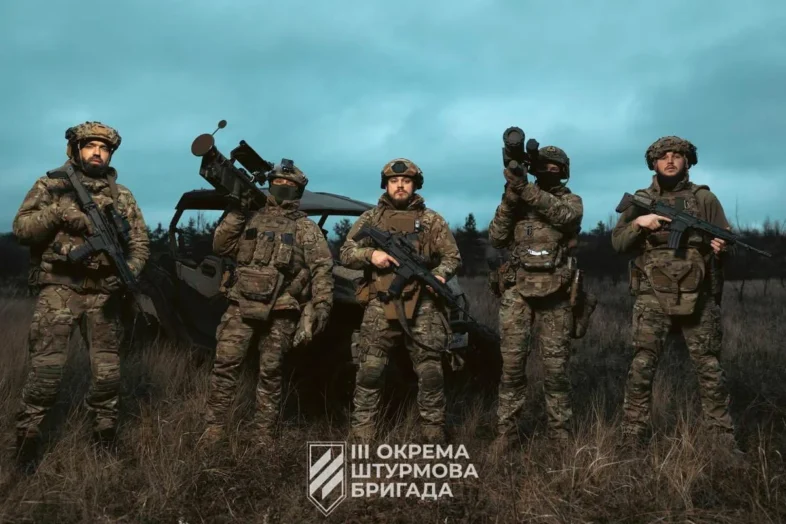
As for the trends, I can say the Russians are ramping up both their troop numbers and operational activity. Whether that’s connected to political statements, I’m not sure. But one thing’s clear: they’re going to keep the pressure on. The big question is how we see this strategically. For us, it’s simple — no matter what ceasefires are announced, the enemy is on our soil and actively fighting, so we have to push back. We’re not just sitting tight; we’re taking the fight to them with our own counteroffensives.
— Should we expect even a temporary lull on the front?
— Honestly, for us, whether there’s a ceasefire or not doesn’t change much. What really matters is whether we can restructure the Ukrainian military to be ready for whatever comes next — whether that’s continued war or a pause in fighting. We’re preparing for every scenario. We know a ceasefire won’t solve the bigger issues. That’s why our mission stays the same: reforming the armed forces.
Even if no ceasefire comes, nothing’s lost. We’ve held the line for three years, launched successful counteroffensives, reclaimed territory, and inflicted heavy losses on the enemy. But the fact remains — the military needs restructuring. That’s exactly why we’ve started shifting to a corps-level system. Whether there’s a ceasefire or not, this process keeps moving forward.
To me, talk of a ceasefire seems aimed more at civilians — maybe to give them some peace of mind. For those of us on the ground, it doesn’t change much. The core problem isn’t going away.
We’re in a long, large-scale war where real progress depends on deep, systemic change. There’s no quick fix on the horizon. What we need is a standing, capable, and reformed Ukrainian military — one that can operate effectively whether it’s war, peace, or ceasefire.
— You mentioned increased enemy activity and a buildup of troops and equipment. Does this mean Russia is gearing up for the much-discussed offensive? What’s your take?
— From what I see, the enemy hasn’t abandoned its goal of controlling Donetsk, Luhansk, Zaporizhzhia, Dnipropetrovsk, and Kherson regions. Militarily, they’re still pushing hard to make that happen.
In our sector, two Russian armies are facing off against the 3rd Assault Brigade — the 1st Tank Army and the 20th Combined Arms Army. The 1st relies heavily on heavy equipment, while the 20th operates with more flexibility, using small assault teams in light, mobile vehicles. These small-unit tactics are tougher to counter since we can destroy their heavy gear relatively quickly. Over the past six weeks, all their attacks have failed. Honestly, they hadn’t made much progress before either. But now we’ve strengthened our position with solid defenses, improved surveillance, and clear response protocols that let us take out enemy forces effectively.
Still, the enemy keeps pushing — increasing troop numbers and sending fresh units, mostly newly mobilized recruits who have undergone some basic training. Unlike earlier in the war, when conscripts were often thrown straight into the fight, they’re now putting more emphasis on preparing their soldiers. That said, when you compare their troops to ours, there’s no contest — our soldiers are far better trained and equipped, by a wide margin.
They’re also steadily improving their reconnaissance gear and electronic warfare systems, which is making it tougher for us to operate in the air. We’re definitely seeing signs of a buildup and stronger resistance. Lately, they’ve been stockpiling more ammo—it’s clear their eastern partners are still backing them. More shells are coming our way than before.
As military professionals, we look at the facts and signs to figure out what the enemy’s up to. Right now, it’s pretty clear they’re gearing up to put on more pressure—and that’s already happening. When it comes to their bigger strategic plans, that’s something Ukraine’s Defence Intelligence is better placed to talk about.
— What are the Russians’ chances of breaking through our defences?
— We’ve been holding the line for three years now. At this point, the Russians just don’t have the capacity to form truly elite units anymore. Strategically and operationally, they’re still somewhat capable—especially with planning—but tactically, their command structure has really weakened. No matter how much they try to train their troops better, coordination between squads and platoons remains a big problem. On the battlefield, we have the edge: we use ground and aerial drones far more extensively, and we’re making the most of our technological advantages.
It’s tough to predict exactly what will happen next. But the fact that we’ve held the Dnipro line, defended Kyiv and Kharkiv, and liberated Kherson and plenty of other territory shows we’ve been learning and adapting since day one of the full-scale invasion. We know what needs to be done, and we’ll keep doing it.
— What’s new on the tech front out by the contact line? Any new robots or gear you’ve been testing? This war’s really become a huge testing ground, hasn’t it?
— There’s actually a lot going on. But here’s the thing: the moment we start talking publicly about a new piece of tech, it’s no longer a secret—and the enemy quickly figures out how to counter it. So, we only discuss things once they’re already known to the Russians.
Right now, the big focus is on unmanned systems: mobile ground platforms, remote-controlled turrets, and weapon systems that can strike targets without a human right there, with operators controlling them safely from behind the lines.
It’s the same with aerial drones—quadcopters and fixed-wing drones flying tactical and operational missions against both ground and air targets.
There’s a huge variety of unmanned systems in use. We’re constantly testing all kinds of new projects—both Ukrainian-made and Western. We put them through their paces—flying them, driving them, evaluating how well they work. Some perform well, others less so. We send feedback, and if the issues get fixed and the system can scale up, we adopt it for frontline use.
A lot of it comes down to technical specs—different control systems, analogue versus digital, video signal transmission. The same goes for electronic warfare: they try to jam us, and we try to get around it by switching frequencies or tweaking firmware. It’s really a high-tech, cat-and-mouse kind of battle out there.
— People often say society feels divided these days: some are fighting, some volunteering, and others seem to have stepped away from the war altogether. What’s your take? Is this a reflection of society itself, or more about leadership missing the mark on things like mobilisation, rotations, and demobilisation?
— The truth is, politicians are a reflection of the society that elects them. The kind of people you have shapes the government and the state. So really, everyone needs to ask themselves: what have I personally done to help bring victory closer? Of course, both the military and civilians face tough, painful questions—not just about mobilisation, but also about service length, logistics, supply. But if I just sit back and blame what the state or leadership has or hasn’t done—and use that as an excuse to do nothing myself—then I’m the one responsible for change not happening. At the core, it’s about personal responsibility.
There are definitely people who have stepped up and taken that responsibility seriously. But this has to apply across the board—including politicians. When you vote, you’re handing someone the authority to make decisions for you. You can’t say, “I voted, so now I’m off the hook for the next five years,” or skip elections and then claim it doesn’t affect you. Responsibility starts with each of us.
It’s the same with those who act like nothing’s happening — just carrying on with their lives as if the war isn’t here. And then there are those who actively support the enemy. That’s a job for law enforcement. There are still plenty of questions about some pro-Russian figures who haven’t been fully held to account. But overall, we’re focused on rooting out clear collaborators with Russia.
As for those pretending nothing’s going on, they’re pretty easy to spot — and it’s definitely frustrating. Still, I believe the real focus should be on encouraging everyone to honestly ask themselves: what have I done to help bring victory closer?
— Has the war truly changed Ukrainians’ attitude toward the state, or is it just a temporary shift that will fade? For example, many school kids in Kyiv still listen to Russian music and don’t seem to reflect much on why the country is at war or what it’s fighting for. You’ve worked with young people—how do we educate the next generation to be aware and ready for future security challenges? How do we shed that colonial baggage?
— Sure, cases like those boys listening to Russian music happen—and they deserve attention. But I wouldn’t paint all young people with the same brush. Many of the young people joining the Third Assault Brigade are actually youth activists. These are the ones who get it—they understand the importance of a strong Ukrainian identity and can explain it clearly to their peers. They know why we need to support, develop, and defend our state. And now, from age 18, there’s a real opportunity for them to join the Armed Forces and step up.
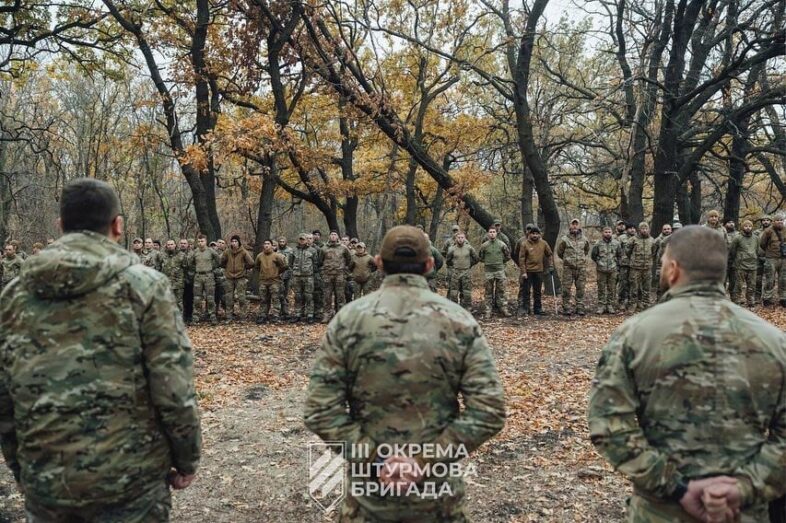
In my view, the war has genuinely changed Ukrainian society — though it’s all relative. Before 2014, during the revolution and the start of the ATO, perceptions were very different. I remember returning to Zaporizhzhia from the ATO when Russian influence was still strong. Back then, we had to explain even the simplest things. But now, after people have seen the war with their own eyes — how a former neighbour, once called a brother, is killing us daily, women and children included — there’s often nothing left to explain. Many now come forward asking how they can help. It feels like the core of those who truly see what’s happening has grown significantly.
Personally, like the comrades I fight alongside, I want Ukraine to be independent and united. A country where we make decisions for ourselves, no matter who’s on the right or left, or what our neighbours call us.
When it comes to the colonial legacy, we can’t afford to repeat the same mistakes. We have to be strong. After all, they’ve made it clear: “We won’t sponsor you forever. You need to stand on your own.”
The number of proactive, determined, and effective people has grown significantly. That’s why I’m confident this story won’t be forgotten for generations. Today, many young Ukrainians truly understand what the country stands for—its national interests and the interests of its people. And this awareness isn’t limited to the military; it’s evident among young scientists, athletes, and IT specialists. I know many personally and see how clearly they define themselves.
When it comes to state policy, we need a comprehensive approach to youth education and engagement. Young people should be encouraged to grow and move in the right direction. That means building infrastructure—places where they can listen to Ukrainian music, watch Ukrainian films, and connect socially. The more quality Ukrainian content there is, the faster it will replace the narratives coming from Russia.
This also means creating spaces to train young people and civilians in practical skills: weapons handling, medical literacy or technology. It has to be a broad effort, with a strong focus on youth. It’s not just about war—someone could face an accident tomorrow and not know how to respond. The state needs to act comprehensively, and hopefully, there will be time and resources to do it. From our side, we’re ready to help. But for now, the priority remains at the front.
— What does victory mean to you?
— To me, victory means the end of the Russian Federation as a military-political force. I’m not sure exactly how that will play out, but given the Kremlin’s attitude toward Ukraine and our identity, it’s clear we’ll always be a threat to them—and they’ll always try to capture or destroy us. So as long as Russia exists as it does today, true victory is out of reach, no matter where our borders are drawn. Even if we went back to the 1991 borders, we’d still face the same threats to our values and way of life.
Victory, for me, means Russia no longer exists in its current form.
— Is this realistically achievable anytime soon?
— I believe it is—maybe more than I should sometimes. Maybe it’s a bit irrational, but having that goal is what matters. Just a few years ago, building something like the Third Separate Assault Brigade seemed impossible, and now we have the Third Army Corps. It all comes down to the goal you set and whether you’re ready to commit fully—sacrificing time, health, everything—for it. I truly believe the Ukrainian people can get there.
The key is not to lose focus or get distracted by other stories. History’s cycles repeat themselves—we’re not the first to fight this fight. There may never be a clear endpoint, but we have to build conditions that deter any neighbor—no matter who—from trying to encroach on us.
Our mission is clear: to ensure Ukraine exists and thrives, to build a system that defends its people’s interests. We need a strong army because relying on outside protection is a dead end—every country looks out for itself. We have to make Ukraine a place where people want to stay, where they want to invest, not run away from.