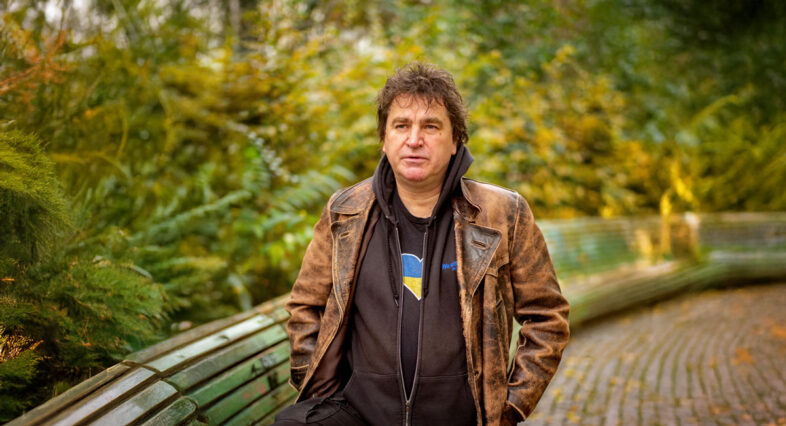
German historian Ilko-Sascha Kowalczuk is one of the leading experts on East Germany’s history. This autumn, he published his latest book, Shock of Freedom (Freiheitsschock), which delves into how the rapid democratic transformation of East Germany continues to influence the political views and ideological choices of its people. With Ukrainian roots, Kowalczuk also studies Eastern Europe and the fight for freedom under the Soviet regime.
In an interview with The Ukrainian Week, Kowalczuk reflects on the deep electoral divide between East and West Germany, the enduring cult of East German identity, and why democracy cannot thrive without active civic participation.
— In this year’s parliamentary elections, the divide between East and West Germany is clear in the voting results. You’ve previously criticised the concept of Ostdeutschtümelei—essentially, the cult of East German identity. How do you interpret this phenomenon, and why is it so crucial to move beyond it?
– I’m an East German myself—I was born and raised in East Berlin. Over the years, I’ve immersed myself in the history of communism, the GDR, and Eastern Europe, writing more than 25 or 30 books on the subject. I’ve also been deeply involved in the process of German reunification and its aftermath, serving as an expert on numerous political commissions for the federal government and parliament for many years.
What has always troubled me in these debates in Germany is the prevailing Germano-centrism. People seem to focus solely on their own issues. If you take part in a discussion here, you might get the impression that we’re living in a poor, third-world country on the brink of dictatorship, with a population facing starvation. At moments like these, I always say, ‘Folks, open a window, let in some fresh air, and look at the world. Then you’ll realise we live in one of the most socially free and economically stable countries in the world.’
That’s not always the case, but it still happens, and East Germany often remains at the heart of these discussions. Many East Germans view their experience as unique—no one, they believe, can truly understand what happened to them because it was all so unjust. Many have embraced the role of the victim, a narrative that is reinforced both by political debates and by many public intellectuals and academics. I belong to a smaller group that pushes back against this mindset.
East Germany is, in fact, one of the most privileged regions in the world. A lot has changed, but East Germans need to step away from this victim mentality, take ownership of their future, and stop expecting the state to solve their problems. To me, that’s the essence of freedom.
For me, freedom means taking responsibility for my own affairs. I don’t wait for someone else to fix things—I act, I step up, and I take control. I feel accountable for what happens just beyond my doorstep. That’s something East Germany still struggles with. There is hardly any genuine civil society that could serve as a counterbalance to representative democracy. Yes, there are volunteer fire brigades and sports clubs, but that’s where it ends. Political NGOs are almost nonexistent, and the few that do exist are weak and marginalised.
That’s why far-right extremism, fascism, old communist ideologies, racism, loyalty to the Kremlin, and hostility towards Ukraine aren’t just fringe issues in East Germany—they are deeply embedded in the fabric of society and are fuelled from within. This makes the situation incredibly complex. In my view, anywhere from half to two-thirds of the population in East Germany seeks to dismantle the liberal state and replace it with a system of majority rule. In many ways, that’s exactly what parties like the Alternative for Germany (AfD) and the Sarah Wagenknecht Alliance represent—a dictatorship of the majority, the very threat warned about as far back as the 19th century, where minority rights are trampled. And this is the very thing that threatens us today.
— How did the concept of the so-called ‘Ostalgie’ (nostalgia for East Germany) emerge, and why does it continue to resonate so strongly with many East Germans today?
– I’d say it all began in 1990, when Helmut Kohl and other West German politicians arrived with promises of democracy, freedom, and economic prosperity. All East Germans had to do was trust them, step aside, and let the process unfold—then life would mirror that of West Germany. But after a while, people realised that change wouldn’t come so quickly, and that led to significant social unrest during the transformation process. Millions lost their jobs.
Many in the East also had unrealistic expectations of life in the West. A lot of them truly believed capitalism was some kind of paradise. It never occurred to them that things might not be perfect, and that some effort would still be required. This disillusionment set in as early as the 1990s, and by then, the post-communists were already gaining ground. This included today’s staunchly anti-Western Left Party, which evolved from the Socialist Unity Party (SED) into the Party of Democratic Socialism (PDS), and had always advocated for leaving NATO.
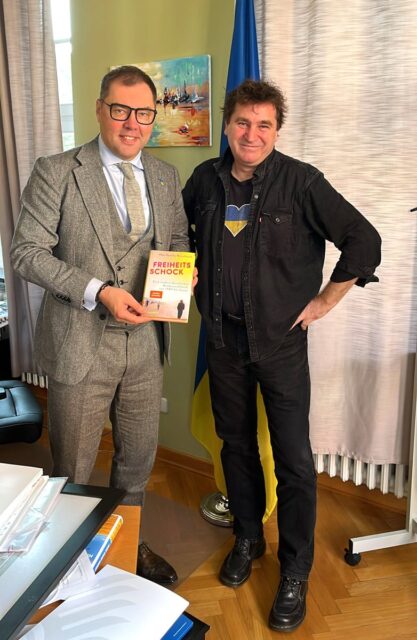
Everything we see today was already present in the 1990s—it never truly disappeared; it was always there, simmering beneath the surface. These heated debates have been ongoing for decades. Around ten years after the revolution, by the year 2000, the first major wave of Ostalgie emerged, peaking in 2003. The word “nostalgia” transformed into Ostalgie—a specific longing for East Germany. In a way, it became an ironic form of resistance by many East Germans against the forced reunification. It was their way of saying that the GDR wasn’t all bad. From this irony, a political movement began to take shape, which political forces later turned into a full-fledged ideological concept.
Travel through East Germany today, and you’ll find a deep-rooted resentment toward the West, democracy, parliamentarianism, the media, and even the very concept of freedom. There’s a striking glorification of the communist past and the GDR dictatorship, which strangely aligns many with Putin. Yet, it’s important to note that most people have little genuine understanding of what actually happened in the Soviet Union.
Putin has become the figure onto whom they project their hatred of the West and the U.S. Of course, Trump complicates things a bit, as he has, so to speak, become a Putinist himself. But that doesn’t faze them in the slightest—in fact, they’ve all embraced Trump.
It’s so irrational that you can’t counter it with arguments or education—hatred, lies, and distortion can’t be fought with reason alone. As long as these views remain confined to a few isolated rural troublemakers, they aren’t a real problem. But when these people start to connect, as they have over the past 20, 15, or even 10 years, it becomes a serious threat to democracy—and that’s exactly what we’re seeing across the Western world today.
Unlike in Poland and other post-Soviet countries, East Germany’s transformation happened virtually overnight. This made it far more difficult because everything changed at an accelerated pace. Yet, at the same time, nowhere else did people land as softly as they did here. Germany’s social welfare system absorbed nearly all the shocks—a luxury no other country had, as they had to build these institutions from scratch.
That was the first wave of transformation, followed by the second—globalisation and digitalisation—which has amplified the fear of loss felt throughout the Western world. But for people in the East, this fear is even more pronounced. They still vividly remember that everything they have now was, in a sense, a gift—and now, it feels like it’s at risk of slipping away.
In France, Spain, or the old Federal Republic, people no longer remember what life was like before, because they’ve always lived as the current generation does. That’s precisely why the experience of double transformation is so fascinating from a scientific perspective. In East Germany, everything happens faster and more radically than elsewhere, making it, in many ways, a laboratory for globalisation.
The radicalisation we’re seeing in East Germany is happening within the country itself. In a few years, the western German states will likely follow suit.
So, in reality, this is a disaster. But it’s also crucial to understand that this is no excuse. Analysing all of this helps explain why so many East Germans support Putin—it’s their most effective way of expressing their hatred towards the West.
— So you’re saying that most Germans never had the opportunity to learn democracy?
— No, they had the opportunity. They just didn’t want to.
— And why didn’t they want to learn democracy? Does it have anything to do with the fact that they first experienced a Nazi state and later life in the GDR?
— Democracy and freedom mean living democratically and freely. There are two levels. The state guarantees democracy and freedom through the constitution, its institutions, parliament, and elections.
However, democracy only becomes genuinely democratic, and freedom is truly liberal, through the active participation and engagement of a country’s citizens. You can’t just stand by, hoping and waiting for the state to do something—you have to do your part.
That means participating in a corrective sense—actively creating civil organisations wherever possible. And this is precisely what East Germany lacks in terms of critical engagement. There were and still are plenty of opportunities to get involved, but most East Germans simply didn’t take them.
One could argue that in the 1990s, most East Germans didn’t have the necessary time to focus on these issues, as they were too busy rebuilding their lives after the transformation. The consequences were dramatic. For instance, in the early years, schools had teachers, but many were mentally absent. Subjects like politics and history were neglected throughout the 1990s. The old teachers were no longer suited to the task, new ones hadn’t yet arrived, and those who could have taught these subjects were often reluctant to do so.
The communist ideology, too, was never fully eradicated from people’s minds—and it still lingers today.
— You have a fascinating family history, which you also touch on in your book Freiheitsschock (“Shock of Freedom”). Could you tell us a bit about your Ukrainian roots?
— My grandfather, Ilko Kovalchuk, was Ukrainian. He came from Falysh, which is now a village in the Lviv region. He fought in World War I and later for the West Ukrainian People’s Republic, and I still have his award from that time. He was a nationalist, fighting both the Poles and the Russians. In 1921, he was sentenced to death, but he was released just before the execution and fled to Bohemia, where there was a large Ukrainian diaspora. That’s where he met my grandmother. My grandfather died in a railway accident shortly before my father was born.
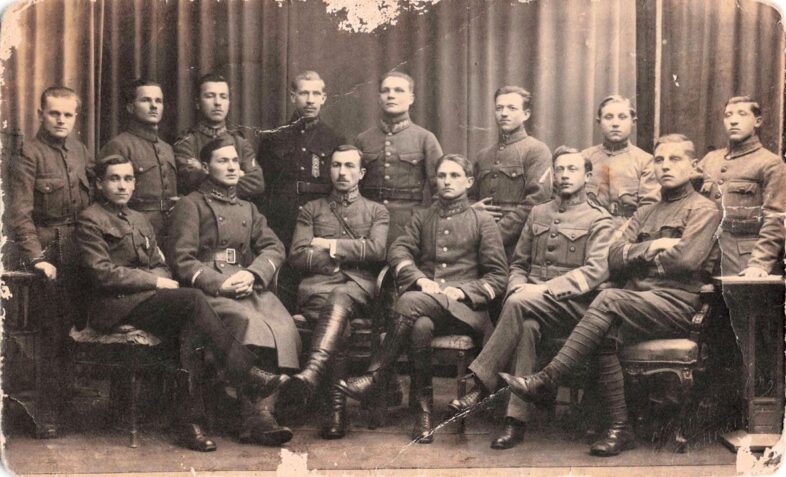
In 1945, my grandmother, father, and aunt were relocated from Bohemia to northern Germany. My father, Ilko-Bohdan Kovalchuk, initially wanted to become a priest, but he ended up becoming a communist instead. He raised me in that communist faith, and as a teenager, this led to many conflicts because I started to develop different views.
Interestingly, despite their strong communist beliefs, both my father and my aunt always maintained a connection to Ukrainian culture. At home, we celebrated Christmas on January 6th, with pies, and my grandfather was a constant presence in our stories—even though his ideology was far removed from the one they embraced.
— Did your Ukrainian roots influence your understanding of freedom?
— I wouldn’t want to create any myths around that. Given my background, I’ve always been deeply interested in Eastern Europe, and my access to the region was mainly through literature.
But I didn’t know much about Ukraine’s opposition movements, or figures like Vasyl Stus, for instance.
What really inspired me, however, was the dissident movement in Moscow—everything that happened there in the 1960s, 70s, and 80s. The founding of the Memorial was especially influential.
I’d be lying if I said my interests were solely focused on Ukraine; I was fascinated by the whole region. But in the 1990s, things changed. A significant part of my library now centres on Ukraine. After the Orange Revolution, I began to engage with the country in a more personal way. I built a new identity, so to speak. It inspired me deeply, and I wrote extensively about it in Germany. I try to share as much as I can about Ukraine here because, unfortunately, most people in Germany still know very little about it.