Over the past thirty years, Chile has carefully built a foreign policy based on respect for international law, state sovereignty, and territorial integrity, alongside a commitment to resolving disputes peacefully and protecting human rights. Add to that an open economy, strong ties to global markets, and active engagement in multilateral frameworks like the OECD, APEC, and the Pacific Alliance, and you get a stable, predictable diplomacy that can handle government changes without sudden swings.
This blend of principle and institutional continuity naturally connects Chile with Ukraine. Both share a commitment to upholding the UN Charter and international legal norms, a practical interest in secure supply chains, and a focus on areas that need common standards — from humanitarian response to tackling transnational crime.
The administration of President Gabriel Boric (2022–2026), while building on Chile’s established foreign policy foundation, has brought in a set of distinctive priorities: “turquoise” diplomacy focused on climate action and ocean protection, a feminist approach, and a consistent universalism in human rights — regardless of the “colour” of offending governments. Combined with a push for regional cooperation and a “smart” lithium strategy, covering environmental standards, local value addition, and technological alliances, this has shaped a practical agenda for Ukraine–Chile engagement. It points to areas where principles and interests meet: supporting multilateral initiatives to uphold the international legal order, contributing to humanitarian demining and security standards, collaborating on “green” supply chains like critical raw materials and the energy transition, and backing scientific, educational, and cultural projects. At this crossroads of values and pragmatism lies the strongest foundation for deepening the Kyiv–Santiago partnership.
Ukraine and Chile established diplomatic relations in 1992, and a landmark visit by the Ukrainian president to Santiago in 1995 saw the signing of the first agreements laying the groundwork for a treaty-based cooperation framework. In the years that followed, while ties did not develop rapidly, occasional meetings gradually took place, often on the sidelines of international organisations.
A key moment in Ukraine–Chile relations came in 2019, with the opening of Ukraine’s diplomatic mission in Santiago, which was upgraded to a full embassy just two years later. This has allowed cooperation to expand across a range of areas — from culture and education to trade and political engagement. At the same time, a reciprocal step is still needed: a Chilean diplomatic mission in Kyiv, which would give the bilateral relationship an extra boost. For now, Ukraine falls under the responsibility of Chile’s embassy in Poland, and until 2014, diplomatic matters were handled through the embassy in Moscow, highlighting the importance of a direct Chilean presence in Ukraine.
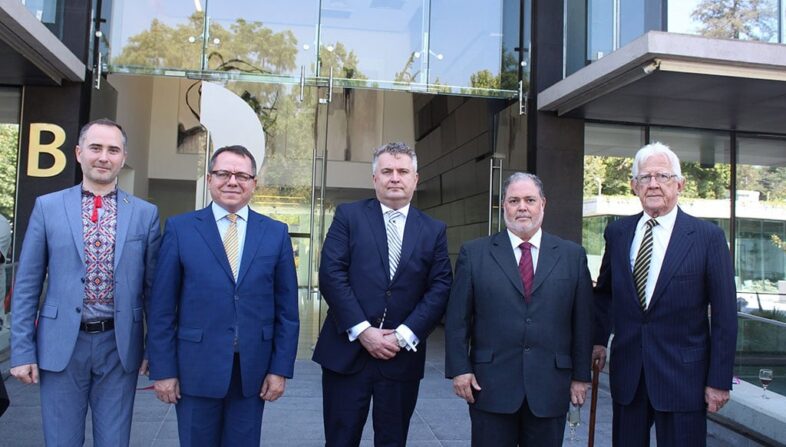
Opening of Ukraine’s embassy in Chile
Chile has consistently and firmly condemned Russian aggression, both in 2014 and 2022. Santiago was among the co-authors of the UN Security Council draft resolution on 15 March 2014, which rejected the so-called “referendum” in Crimea — ultimately blocked by Russia’s veto — as well as UN Security Council Resolution 2166, addressing the investigation into the downing of Malaysia Airlines Flight MH17.
Russia’s full-scale invasion of Ukraine in February 2022 was met with immediate and unequivocal condemnation from both the then centre-right president, Sebastián Piñera, and the newly elected leftist president, Gabriel Boric.
Defying the common — and often not entirely unfounded — perception that left-leaning governments in Latin America tend to side with Moscow as the “heir” of the USSR in a Cold War framework, Boric has become one of Ukraine’s most consistent advocates on the international stage.
At regional summits, Boric has repeatedly described Russia’s actions in Ukraine as “an unacceptable war of imperialist aggression,” urging other Latin American countries to take a clear stand against Moscow. “Today it is Ukraine, tomorrow it could be any of us,” he has warned. His firm moral stance has, however, drawn criticism from some regional leaders. Brazilian President Luiz Inácio Lula da Silva, for example, accused him of a “lack of diplomatic experience” following Boric’s addresses at international forums, exposing deep divisions among Latin American politicians over the war.
Despite such differences, Chile has consistently supported all pro-Ukraine resolutions in the UN General Assembly and has emerged as a trailblazer among Latin American nations in backing Ukraine on the international stage.
In April 2023, Santiago became the first capital in the region where Ukraine’s president addressed the national parliament. Earlier, in August 2022, Volodymyr Zelensky spoke to Chilean students during a special online discussion, and in May of the same year, Chile became the first Latin American country whose parliamentary delegation visited Ukraine in person to witness the impact of the Russian invasion.
Chile has also emerged as a regional leader in supporting international initiatives such as the Ukrainian Peace Formula. President Boric personally took part in the Global Peace Summit on 15–16 June 2024 in Bürgenstock, Switzerland, and was one of only four world leaders invited to speak at the summit’s closing press conference. Chile also joined the International Coalition for the Return of Ukrainian Children and indicated its willingness to host a conference focused on implementing the fifth point of the Peace Formula: “Restoration of territorial integrity and the enforcement of the principles of the UN Charter.”
Boric notably became one of the few world leaders to openly back Zelensky during the high-profile controversy following the contentious White House meeting in January 2025. At the time, he stressed that “the international community must not forget who the aggressor is and who the victim is,” highlighting Chile’s consistent pro-Ukraine stance.
Economic ties between Ukraine and Chile remain relatively modest, but they hold considerable potential for growth. Between 2019 and 2024, bilateral trade between Ukraine and Chile experienced notable fluctuations. The sharpest decline came in 2022, with trade falling 31 per cent compared to the previous year, largely as a result of Russia’s full-scale invasion of Ukraine and the consequent disruption of supply chains. By 2024, trade activity began to recover gradually, with both exports and imports on the rise, signalling a stabilisation of business contacts. Despite this positive momentum, a significant imbalance remains in Chile’s favour: in 2024 alone, imports from Chile reached $56.3 million, while Ukrainian exports amounted to no more than $5 million.
Chile’s exports to Ukraine are dominated by raw materials and agro-industrial products. In 2024, the main categories included prepared and canned seafood worth $16.4 million, frozen fish at $6.8 million, sunflower seeds totalling $5.8 million, exotic fruits at $4.3 million, and grape wine valued at $2.8 million.
Ukraine, meanwhile, primarily exports value-added products to Chile, ranging from petroleum products and space technology, including aircraft and launch vehicles, to knitted garments, ventilation equipment, pharmaceuticals, chocolate, as well as X-ray machines and sports equipment. The emphasis on high-tech goods in Ukrainian exports provides a strong foundation for developing new areas of cooperation between the two countries.
The future of economic ties between Ukraine and Chile will mostly depend on expanding Ukraine’s presence in the Chilean market. Promising areas for growth include high-tech industries, IT, pharmaceuticals, agro-processing, and light manufacturing, while Chile is looking to build partnerships in agricultural logistics, seafood processing, and exporting natural resources with added value.
A notable success story is the entry of the Ukrainian IT company SoftServe into the Chilean market in 2022. Twice named the best employer in Chile for young professionals, the company’s recognition reflects growing trust in Ukrainian high-tech firms and points to the gradual expansion of collaboration in the digital sector.
Ukrainian community in Chile
Another important thread linking Ukraine and Chile, complementing their political and economic ties, is the Ukrainian diaspora. Its roots stretch back to the post-World War II period, when the first members of the community arrived in Chile from European displaced persons’ camps. Among the most notable Chileans of Ukrainian descent are the philosopher Felix Schwartzman-Turkenich and the pianist Fedora Yankelevich de Aberastury. A particularly remarkable figure is Roberto Kozak, an Argentine diplomat of Ukrainian origin, often called the “Latin American Schindler”: during Augusto Pinochet’s regime, he saved over 30,000 people from repression and is now celebrated as a national hero in Chile.
Although the Ukrainian community in Chile is relatively small—around a thousand people, compared with the larger diasporas in neighbouring Brazil and Argentina—it plays a significant role. Its members have preserved their national identity and contributed substantially to raising awareness about Ukraine. Their activity became particularly visible after Russia’s full-scale invasion in 2022: in collaboration with the Ukrainian Embassy in Santiago, they launched information campaigns, cultural events, and charity initiatives aimed at informing the Chilean public about the situation in Ukraine and raising funds for humanitarian aid.
Although activity within the diaspora has eased somewhat recently, following the withdrawal of several key community leaders from public life, its potential remains significant. The community maintains strong links with local cultural and educational institutions, actively engages with Ukrainian networks across Latin America, and collaborates closely with the World Congress of Ukrainians, creating ample opportunities for continued growth and influence.
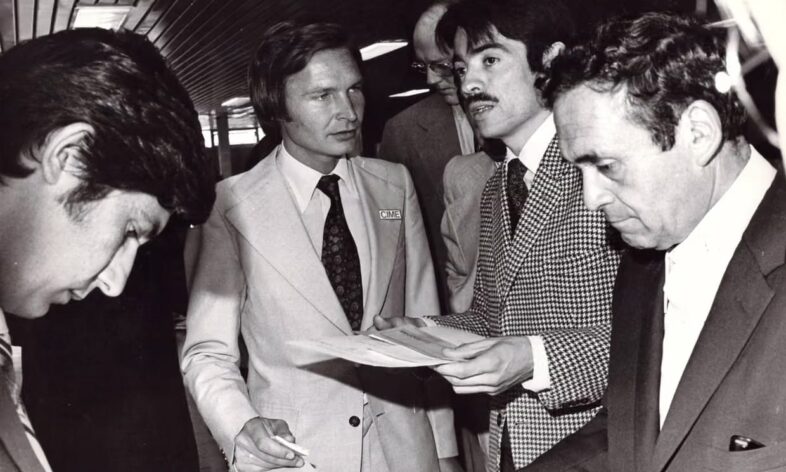
Argentine-Chilean diplomat of Ukrainian descent Roberto Kozak, who saved more than 30,000 people from repression during Augusto Pinochet’s regime (centre). Source: Museum of Memory and Human Rights (Chile)
Moscow’s shadow
When considering Russian influence in Latin America, Chile presents a particular case. Relations between the USSR and Chile were historically fraught: established in 1944, they were twice severed during the Cold War, most notably in 1973, when Augusto Pinochet’s regime, pursuing an anti-communist agenda, completely cut diplomatic ties with Moscow. Relations were only restored in 1990, and after the USSR’s collapse, Russia assumed the role of successor state, seeking to maintain influence in Latin America, including Chile.
Today, Russia–Chile relations are limited, reflecting geographic distance, differing geopolitical priorities, and a lack of deep shared interests. Bilateral trade, which reached $873 million in 2019, had more than halved by 2024, dropping to $398 million—roughly 0.22% of Chile’s total foreign trade.
Russia plays only a minor role in Chile’s economy, and with no reliance on Russian resources in key sectors, Santiago has the flexibility to consistently back Ukraine and take a clear stance against Moscow’s violations of international law.
A notable source of tension in Chile–Russia relations is Moscow’s growing activity in Antarctica, including the discovery of substantial oil reserves by a Russian research vessel. These moves potentially breach the 1959 Antarctic Treaty and have understandably raised concerns in Santiago, as any attempt to exploit resources there would violate international agreements and risk destabilising the region’s fragile ecological balance. In May 2024, in response, members of Chile’s parliamentary defence committee held a symbolic session at the Bernardo O’Higgins Antarctic base, publicly reaffirming Chile’s territorial claims and signalling their readiness to defend sovereign rights. The event highlighted Antarctica as a central element of Chile’s foreign and security policy and made clear that Russia’s actions in the region are seen as a potential challenge to national interests.
Meanwhile, despite limited economic ties and ongoing diplomatic tensions, the Kremlin has sought to leverage soft power and information campaigns to advance its narratives in Chile. During the mass protests between 2019 and 2022, Russian propaganda outlets circulated a significant volume of material aimed at radicalising and destabilising the situation. In the summer of 2025, a high-profile scandal erupted when RT en Español unexpectedly began broadcasting on Chilean free-to-air television, replacing the national channel Telecanal. The move, arranged through an opaque deal involving the Mexican intermediary Unimedios, prompted an investigation by Chile’s National Television Council.
When it comes to the Russian war in Ukraine, Russian media have consistently — and unsurprisingly — spread disinformation, leaning on familiar narratives about “Nazis in Ukraine” and “NATO provocations.” To justify its actions, Russia has also deployed cultural diplomacy channels, including the Russian House, the Aleksandr Pushkin Corporation, and Katerina. Yet, despite the number of institutions and the funding behind them, organisers report very low attendance, showing that Chileans have little interest in Russia’s so-called “cultural” agenda.
Looking ahead, the course of Chile–Ukraine relations will depend a lot on the upcoming presidential elections, with the first round scheduled for 16 November 2025. Current President Gabriel Boric, a vocal supporter of Ukraine, won’t be running again because the constitution doesn’t allow consecutive terms.
In this context, the ruling left-wing coalition held primaries, in which Communist Party candidate Jeannette Jara won decisively with 60% of the vote. The Communists have traditionally pursued an anti-Western line and demonstrated support for Russia: they opposed President Zelensky’s address to the Chilean parliament in April 2023 and publicly blamed the war on the “interventionist policies of the U.S. and NATO.”
Jara’s main challengers are Evelyn Matthei, representing the centre-right coalition Chile Vamos, and far-right politician José Antonio Kast of the Republican Party—both of whom have consistently voiced support for Ukraine. Should either emerge victorious, further political and economic engagement is likely, along with a deepening of cooperation across a number of specific areas. Recent polls offer a note of cautious optimism: in a potential second round, Jara currently trails both rivals.
Humanitarian demining and Chile’s role
Humanitarian demining remains a particularly promising area for potential collaboration. Although Chile possesses a modern arsenal of Western weaponry, the government has made it clear it will not supply Ukraine with arms or ammunition, focusing instead on political and diplomatic backing. The idea of deploying Chilean specialists to assist with demining Ukrainian territory was discussed at the presidential level as early as 2023, yet no concrete progress has been made since.
The Chilean government points to legal restrictions that prohibit sending national troops abroad. Yet the possibility of supplying Ukraine with technical equipment for humanitarian demining remains open and could become a key area of cooperation, particularly given that Ukraine is currently the most heavily mined country in the world. Future decisions in this field will depend largely on the composition of the next government and the position of the parliamentary majority after the elections, as some coalition factions remain sceptical of providing any practical—especially military—assistance to Ukraine.
Given its consistent pro-Ukraine stance, active involvement in international initiatives, regional leadership, and willingness to support Ukraine’s postwar reconstruction, Chile has the potential to become a vital strategic partner for Kyiv in Latin America. Beyond that, it could serve as a crucial “gateway” for expanding Ukraine’s presence across the region, with joint efforts—both bilaterally and through regional organisations—amplifying Ukraine’s voice, strengthening economic ties, and contributing to broader global stability and security.
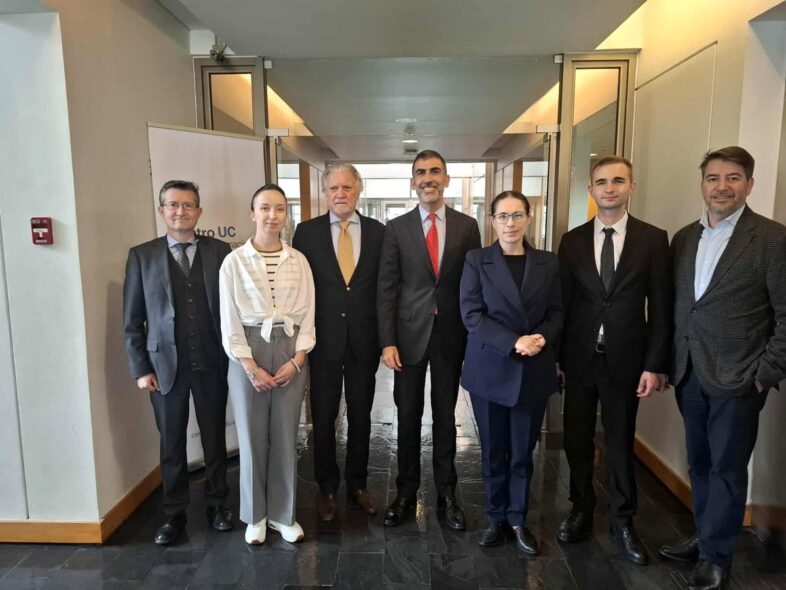
Analysts from the Foreign Policy Council “Ukrainian Prism” together with representatives of the Centre for International Studies at the Catholic University of Chile
The advocacy visit to Santiago in August by the “Ukrainian Prism” team, which included meetings with Chilean diplomats, analysts, journalists, academics, and students, underscored the genuine interest of Chilean society in Ukraine. Despite the country’s geographic distance and the internal and regional challenges Chile faces, local partners follow developments in Ukraine closely, offering sincere support for its struggle for freedom and sovereignty. As President Gabriel Boric has repeatedly emphasised: “Today it is Ukraine, tomorrow it could be any of us.” This shared understanding of the threats to the international legal order provides a strong foundation for a long-term, mutually beneficial partnership between Kyiv and Santiago, grounded in shared values.