While Russia continues to relentlessly bomb Ukrainian cities and launches offensives under the guise of peace talks, the ever-inebriated Medvedev threatens the U.S. with a Third World War, and President Trump spends his days on the golf course, unsure if Putin is pulling the wool over his eyes, some encouraging news has arrived from Berlin. Germany’s Defence Minister Boris Pistorius and Ukraine’s Rustem Umerov have signed an agreement to fund the production of Ukrainian long-range weapons alongside purchases of German-made systems, according to an official statement from the German government.
In addition, Ukraine sealed a contract with German defence industry representatives, anchored by Germany’s commitment to invest directly in weapons manufacturing on Ukrainian soil. The aim is to leverage idle production capacity and existing technology to build modern arms systems.
While the exact types of weapons have not been disclosed, most of the contracted systems are expected to be produced throughout 2025. Officials also noted that the first batches will be deployed within weeks, since these are existing systems already in service that require no additional training for use.
Germany will also maintain its ammunition supplies to Ukraine. Beyond the deliveries already scheduled for 2025, additional shipments of shells are planned for various weapon systems, including air defence platforms. Along with ammunition, Ukraine will receive extra ground weapons and small arms.
Separately, the Ukrainian Ministry of Defence signed a contract with German firm Diehl. According to Ukrainian officials, the deal covers the production of Iris-T surface-to-air missile systems and their associated ammunition. The contract is valued at €2.2 billion.
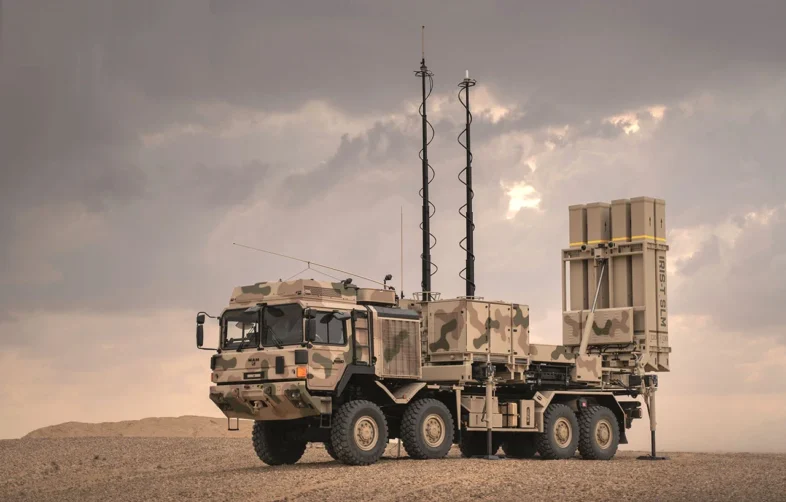
A launcher from the IRIS-T SLM air defence system. Photo: Diehl Defence
Germany will also finance the development and upkeep of repair infrastructure in Ukraine, boosting the resilience of the Ukrainian Armed Forces. To this end, defence companies from both countries have agreed to form a joint venture. While the companies involved have not been officially named, it is likely a collaboration between Ukroboronprom and Rheinmetall.
Since April, Germany has also taken responsibility for funding a significant share of satellite communications for the Ukrainian military, with similar support extended to the military command’s communication networks.
Minister Pistorius has further pledged continued assistance in the medical sector, with Germany financing the supply of medical equipment, including items produced in Ukraine.
The total value of these support measures for Ukraine’s armed forces is estimated at around €5 billion. Direct investments in Ukraine’s defence industry, along with the fostering of partnerships between weapons manufacturers, form a key part of the German government’s long-term strategy to bolster Ukraine’s defence capabilities.