
Why do Americans donate to Ukrainian soldiers, and where does that aid end up in Ukraine? The Ukrainian Week caught up with Larysa Colon (née Androshchuk), a volunteer and board member of Ukraine Forward, a non-profit that’s been supporting Ukraine throughout the war. She shared how the Ukrainian volunteer network in the U.S. came together, how it works, whether Ukrainians living abroad will return after the war, and what the U.S. could learn from Ukraine’s resilience and determination.
Founded in Boston at the outset of Russia’s full-scale invasion, Ukraine Forward quickly became a central hub for support. The shock of Russia’s brutal attack on Ukraine sparked a wave of action from people across the globe, eager to contribute in any way they could to help their homeland. Yet, many were unsure how to best channel their desire to help, unsure of what was needed or how to offer effective support.
In Boston, the community mobilised almost instantly. “Myron Kravchuk, the current president of Ukraine Forward, stepped outside after a church service and called on the local Ukrainian community to step forward and help,” Larysa recalls. “There were so many people willing to pitch in, and it all came together quickly. The momentum took off from there.”
***
— How did you figure out what was needed?
— Myron already had experience — he’d been volunteering since 2014. He worked at the Ukrainian Catholic University and helped run the UCU Volunteer Centre, the “Volunteer Hundred.” We were also in close touch with people on the ground in Ukraine, and right away, they told us: they needed tourniquets, first-aid kits, haemostatic agents.
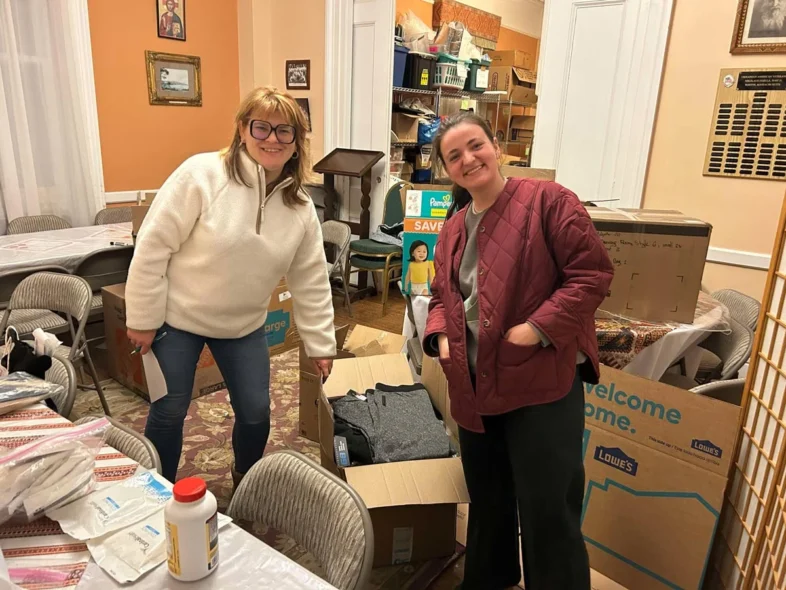
So we put together an Amazon list — a clear, accessible way for people to see what was actually needed. A lot of folks just didn’t know. They were bringing whatever they had at home — leftover prescriptions, sometimes even expired meds — and we couldn’t take that. We needed to make it easy for people to help in the right way. Everyone could pick something from the list based on what they could afford, and then either ship it to us or drop it off at our church.
People donated all kinds of things — nappies, clothing, everything — but we decided early on to focus on saving lives. Shipping was expensive, and we couldn’t send everything. So we prioritised: first, soldiers; then the wounded; then hospitals. That’s still how we operate.
— How large-scale was this aid?
— At the start, it was massive. Everyone was helping Ukraine — my American neighbours, friends, colleagues, even people with no connection to the country. They sent money, bought items from the Amazon list we’d made — whatever they could. Spontaneous collection hubs popped up, organised by Americans themselves. They gathered clothes, baby formula, pet food — anything. The outpouring of support was incredible, and it lasted nearly all of 2022. Everything was for Ukraine.
But over time, it started to fade. Now, it’s barely a flicker of what it was. Back then, in 2022, about 40 people would show up at the church every evening after work to help pack supplies. We shipped aid to Ukraine twice a week. These days, we’re lucky if we do it two or three times a month.
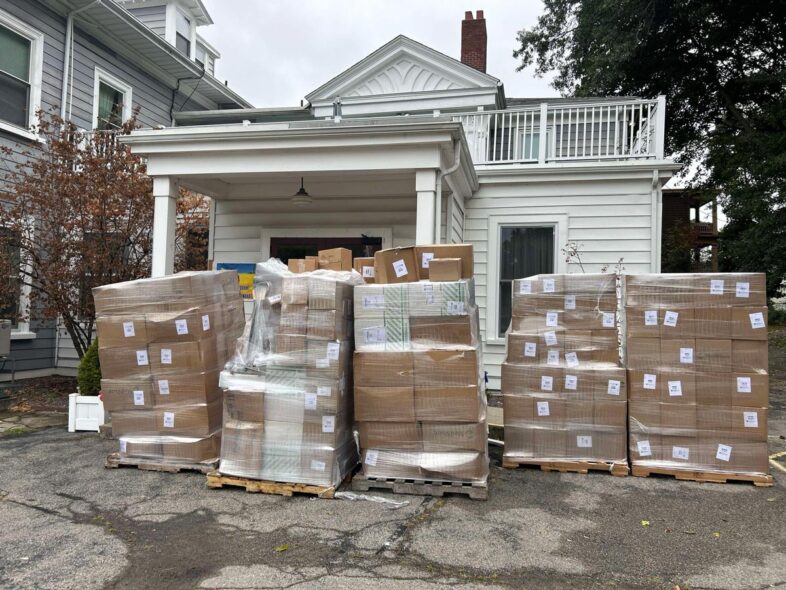
By the end of 2024, we’d built strong partnerships with two major medical aid organisations — MedShare and Globus Relief. They’ve been instrumental in providing equipment for hospitals. American firefighters have also stood with Ukraine from the beginning. They’ve donated used — and sometimes brand-new — fire gear and equipment. We’ve sent a lot of it to fire departments in Toretsk, Kharkiv, and Khmelnytskyi.
— How many volunteers do you have?
— There are about 60 people in the group — especially early on, a lot signed up. Not all of them are active now, but around 20 continue to help regularly. At the same time, we’re seeing fresh faces come in too.
— Who do you send aid to in Ukraine?
— Military units that reach out to us, individual soldiers who contact us directly or through other volunteers, children of fallen soldiers, hospitals, the Caritas, and the children’s medical centre City of Goodness.
The first hospital we supported was the Chernihiv Regional Children’s Hospital. In April 2022, right after the city was liberated, we knew the need there would be immense. I got in touch with the hospital’s chief doctor and asked what they needed. The answer was simple: everything. It’s the only children’s hospital in the region, and it had suffered serious damage.
But the war also created needs we’d never had to consider before. So we shifted our focus to those — like setting up a rehabilitation centre for children recovering from traumatic injuries. We helped equip it so kids could relearn how to walk. When it opened in 2023, the centre treated 11,000 children in its first nine months.
In total, we raised about $65,000 for the centre. There’s still a bit left from that fund, and we’re now using it to buy an orthopaedic drill they urgently need. That’s what we’re working on right now.
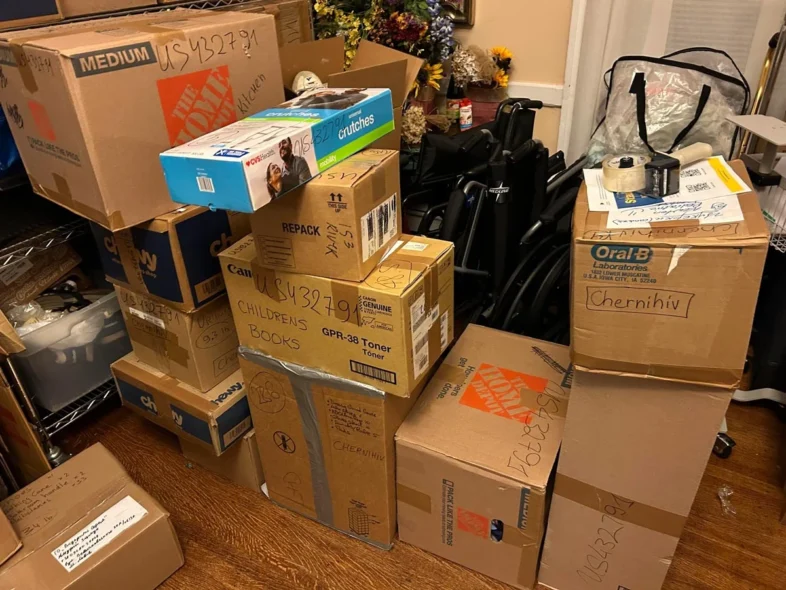
We sent firefighting gear and hospital beds to Toretsk, and delivered medical supplies to Okhmatdyt and Mechnikov Hospital in Dnipro. Right now, we’re supporting hospitals in Ternopil and Lviv, where many wounded Ukrainian soldiers are being treated.
One major effort came from the Hordynskyi family, who raised $45,000 to buy armoured medical evacuation vehicles for the military. Two vehicles have already made it to Ukraine — one for the 113th Brigade and another for the National Guard. The money came from selling artwork by Ukrainian émigré artists, and those same works were later donated to a gallery in Lviv.
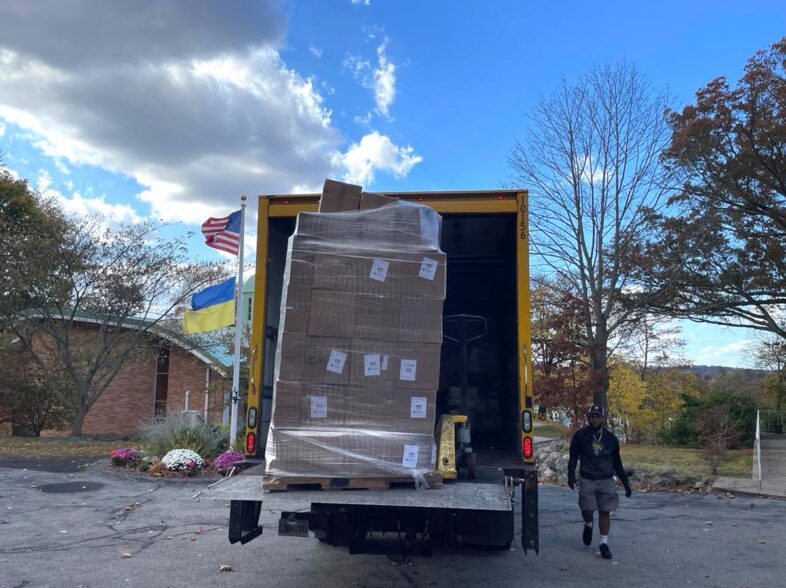
Altogether, since the start of the full-scale invasion, our volunteer group has delivered 32 tonnes of critical humanitarian aid to Ukraine, valued at more than $2.5 million.
— Can you be sure that your aid reaches its intended recipients and not, say, ends up at a market in Ternopil?
— Yes, because we work with people we know — and we receive supplies from people we know. We don’t buy from questionable companies, and all our aid goes through the UCU Volunteer Hundred. Its head, Nazar Duda, and our president, Myron Kravchuk, have known each other since 2014. Everything is built on personal, trusted connections.
When we send something to soldiers, they follow up — they send us photos and let us know it did arrive. If it’s military medical aid, we get feedback on how well it worked. We’re in constant communication. For example, back in early 2022, when soldiers were lacking proper clothing, we sent them gear. Once that need was met, we stopped. Now, the priority is tourniquets. We recently bought Sich tourniquets made in Ukraine — just as good as the American ones, but much cheaper. That way, we’re also supporting Ukrainian manufacturers.
The UCU volunteers have their own network and deliver aid even to the hottest front-line zones. We have a map tracking where everything has gone — it covers nearly all of Ukraine, except for Crimea and Mariupol.
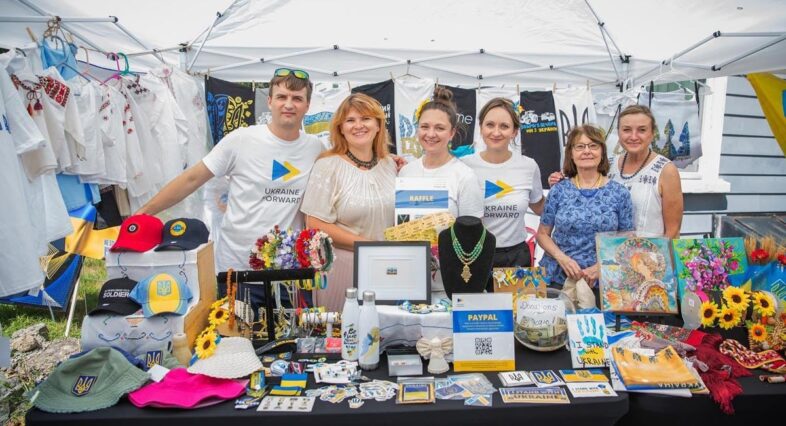
— How has the donation landscape changed over three years of war? How do you keep the fundraising going?
— We have a core group of American donors who’ve stood by us from the start — and they’ve been incredibly generous. In February 2025, during the Boston Malanka, a winter charity ball, we raised $53,000 for tactical medicine. Most of that came from longtime members of the Ukrainian diaspora and native-born Americans. For the second year in a row, Malanka has been our biggest fundraiser. We also run smaller events throughout the year, but they bring in more modest amounts.
Our largest expenses remain shipping aid to Ukraine and buying tactical medical supplies, especially tourniquets.
— Why do Americans give so generously to support Ukraine? Who are these donors?
— Some of them only recently discovered their Ukrainian roots because of the war — people who had grown up thinking they were Russian, including many Jews of Ukrainian descent, now looking at a map and realising their families came from Ukraine.
Others are Americans with no direct ties to the country, but they see Russia’s invasion as fundamentally wrong. For them, it’s a moral and political stand — they believe Ukraine deserves support.
And then there’s a growing number of Ukrainian immigrants who came in the 1990s or 2000s. They’re now established, financially secure, and in a position to give back.
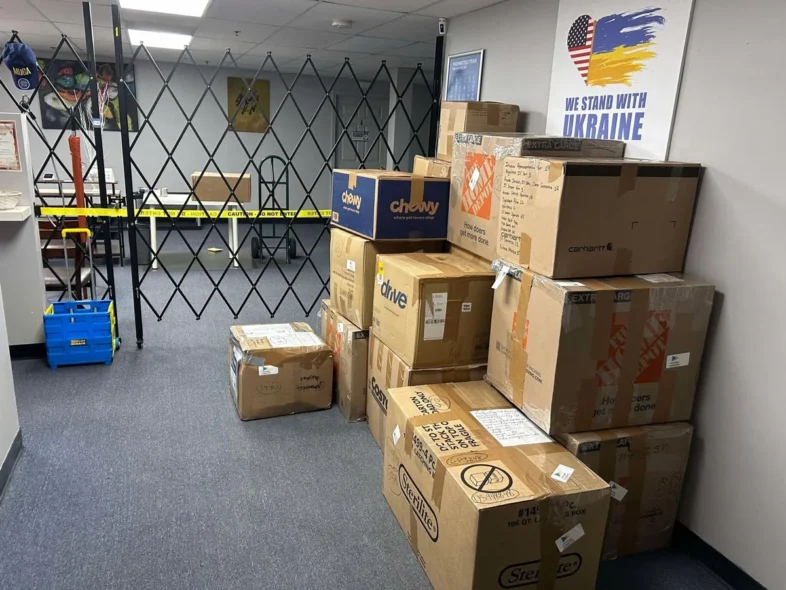
Most of the refugees helping out now are focused on physical tasks. They may not have the financial means to contribute yet, but they’re there, packing and loading supplies. Some have been with us since day one, showing up for every session without fail — you know they’ll always be there. Others come and go, fatigued, as happens with any effort. But there’s a dedicated core that never tires.
One volunteer, Danylo, even kept coming to help out despite having entrance exams for an American university. For him, this work took priority over everything else.
— Are there any difficulties or unpleasant moments in your work?
— There have been a few unpleasant moments, particularly when I was sourcing medical equipment for the Chernihiv hospital in Ukraine. Some sellers, upon discovering I was from America, marked up prices by 25%, even though it was for a children’s hospital. When the price quotes didn’t match the ones listed on their websites, I couldn’t help but wonder why. They claimed the website hadn’t been updated, but when I had friends in Ukraine call to check, it turned out the online prices were still current.
We don’t typically send equipment from America for a few reasons. First, the voltage and frequency in the network are different from Europe. Second, the equipment is expensive, and the insurance only covers it up to the point it reaches Boston. After that, the responsibility for shipping falls on us, so if it breaks along the way, we’re on the hook for repairs, as the insurance no longer applies. Lastly, by buying locally in Ukraine, we support the country’s economy directly, investing in Ukrainian manufacturers. The money stays within Ukraine, which is a key part of why we source equipment here.
We follow this process: the hospital provides us with a list of the medical equipment they need and specifies which manufacturers or suppliers offer it in Ukraine. We then sign a tripartite agreement with both the hospital and the manufacturer, transfer the funds directly to the manufacturer, and they handle the delivery of the equipment to the hospital. We make sure to vet all the companies we work with to ensure they’re legitimate. While we don’t use ProZorro, we still do our due diligence to confirm that the company isn’t a recent, untested player with a questionable track record.
— Is Ukrainian bureaucracy still a problem?
— In the beginning, when the law on transporting humanitarian aid changed, the bureaucracy really increased. Now we have to record everything — down to each item: what’s packed, where it’s going, and who it’s for. It’s time-consuming. It also impacts the carriers. Previously, we could send humanitarian aid alongside regular cargo, but now it’s shipped separately. The carrier waits until the container is full before sending it. So, shipments are taking longer than they did before.
— Why have you been doing this for so long? You haven’t lived in Ukraine for 23 years—what makes it so important to you?
— It’s dear to me, it hurts… I want Ukraine to be independent, to break free from Russia’s grip. Ukraine deserves to be a free European country. We have extraordinary people, I have many friends and family here, and it pains me. I believe we are worth it, and this is our chance to be independent. Perhaps, through this war, we’ll finally become the independent state we deserve to be. Yes, it’s painful, and there are losses.
— You haven’t been to Ukraine for 13 years. What was it like when you saw it now?
— Thankfully, I didn’t witness the war firsthand. I arrived in Lviv, and now I’m in Ternopil… But the presence of the war is undeniable. We visited the Ukrainian Catholic University (UCU) and the Super Humans rehabilitation centre, where prosthetics are made for our soldiers. We saw people without legs, without arms. We met several foreign soldiers, including a number from Colombia, fighting on Ukraine’s side. We also met an American who lost a leg and an eye; he received prosthetics there. He has no connection to Ukraine, no Ukrainian roots, but he came to fight after seeing the war on the news and felt compelled to help.
Ukraine is developing. Every time I come, there’s something new. That doesn’t happen in Europe or America, where things stay the same no matter when you visit. But Ukraine is constantly evolving, and it feels like you’re in a new country every time. That’s remarkable. You won’t find anything like it in Europe right now. I believe this will encourage more people to return to Ukraine because here, there are opportunities that don’t exist elsewhere.
— Do you think people will return?
— They will. They already are. I know a few people who’ve come back, and there are others who are thinking about it. I’m one of them.
— After so many years in the U.S., with a husband, kids, a house, chickens, and dogs, are you thinking about moving back to Ukraine?
— Yes. I’m already thinking about how to make it happen. There are so many ideas, and this trip has inspired me even more. Right now, my son is about to enter university, and I hope he’ll choose something closer to Ukraine, a European university, so he can eventually move here. My husband loves Ukraine — he’s very pro-Ukrainian, even though he’s American. He speaks Ukrainian quite well, and our kids are fluent too. Before COVID and the war, we came to Ukraine every year, and even three out of our four children were baptised here.
— Do you think what’s happening in America is just a temporary phase, and things will go back to normal, or is it something deeper and irreversible? How do you see it from the inside? We’re struggling to make sense of it all from here.
— We don’t understand what’s happening to us either. I think Russia has had a long-term plan, one that it’s been carefully and slowly executing. Specifically, by spreading its influence worldwide. When Ukraine gained independence, we didn’t focus on building connections or strengthening relationships. We were more concerned with ourselves. Meanwhile, Russia was planting its people everywhere. Pro-Russian professors, dating back to the Soviet era, are still teaching in American universities, spreading Kremlin narratives to American society. American professors who visited Moscow were shown only the best, given limited access to the Russian reality. So, they have this false impression of Russia. But they’re influential. They have academic degrees, reputations, and that carries weight. This affects politics and shapes public opinion. A clear example of this misunderstanding came before Russia’s invasion, when the American press repeatedly said that Ukraine would fall in three days, that it wouldn’t stand a chance. Consequently, they argued that sending weapons to Ukraine wouldn’t make a difference.
Russia is actively spreading disinformation and exploiting divisions in society, carefully targeting its weaknesses. A significant part of this strategy has been aimed at religious communities, convincing them that Russia is defending family and Christian values.
No one knows what will happen next. Everything is unfolding so chaotically, like a house of cards—one wrong move and it all comes crashing down. If the foundation is solid, it may hold for a while. But if society doesn’t push back, the collapse could go on indefinitely.
— And how is society reacting? In other words, what are people saying in their kitchens?
— It really depends on who you ask. Some people are in full support of the current situation, while others are strongly opposed.
— So, what should Ukrainians do in this situation?
— Ukrainians need to recognise their own value and potential. Ukraine is fully capable of doing a lot on its own. Relying on others is a naive way of thinking. Neither America nor Russia is going anywhere, so we need to accept that reality and learn to navigate it ourselves. It’s essential that we don’t let them overpower us and that we keep our identity intact.
We need to focus on strengthening Ukrainian diplomacy because we’ve been lacking in that area. Ukrainians need to work with states, not political parties, to ensure that support for Ukraine doesn’t fluctuate with each change of leadership. Look at how Israel does it. We need to be proactive in promoting Ukraine, across all sectors—whether it’s culture, art, sports, or business. We have so much to offer, and we shouldn’t feel inferior.
There are things in Ukraine that surpass other countries. Take the Diia app —it’s incredibly convenient and there’s nothing like it elsewhere. It’s a Ukrainian innovation. Or consider Ukrainian drones, which are inexpensive to produce but outperform costly Western models in terms of their capabilities. Then there’s Super Humans, which not only creates prosthetics for our soldiers but helps them adjust to life after injury. This holistic approach to rehabilitation—working with soldiers and their families—is unique. In the U.S., veterans receive assistance, but it doesn’t extend to their families. Ukrainian volunteers are teaching society how to welcome veterans back into civilian life. This is a powerful experience, one that should be shared with the world.