Nowhere is Iran’s de facto blockade of the Strait of Hormuz — as tensions with the United States escalate — being felt more acutely than in Asia, from Japan to Sri Lanka, regardless of economic weight or geopolitical clout. Roughly a quarter of global oil trade and 20% of liquefied gas shipments pass through this narrow chokepoint. For Asia, the dependence is even more pronounced: 90% of the region’s oil and gas imports move through the strait.
As the Persian Gulf crisis enters its fifth week, the strain is already showing. Fuel prices are rising, some universities have shifted to remote or hybrid learning, and governments are urging people to cut back on travel. Officials are scrambling to secure alternative supply routes and sources. For many, the disruption is starting to feel uncomfortably familiar — echoing the early days of the coronavirus pandemic, when shortages and restrictions reshaped daily life.
“This war has created complex global conditions that could last a long time. That’s why we must stay ready and united. We’ve faced similar challenges before during the coronavirus pandemic — and we got through them because of our unity,” India’s Prime Minister Narendra Modi said on 24 March during a parliamentary session.
“It’s affecting everything. People are on edge. For some, it feels a lot like 2020 during the coronavirus pandemic,” Philippine journalist Monsi Serrano told The Ukrainian Week. Fuel shortages in the Philippines have pushed officials to adopt a four-day workweek, while universities have shifted to hybrid learning. Across the country, travel is being curtailed due to energy constraints, though the government has rolled out measures such as discounted train fares to ease the pressure.
In Japan, “panic” buying of toilet paper — unrelated to energy shortages — has revived memories of the early days of the coronavirus pandemic. Local media note that Japanese consumers behaved in much the same way during the 1973 energy crisis, triggered by the Yom Kippur War. Researchers now view this as a typical middle-class response to periods of uncertainty.
These are just the visible effects. The longer the standoff in the Middle East continues, the more serious and lasting the impact is likely to be.
Gas stations shut, prices climb
On 24 March, Philippine President Ferdinand Marcos Jr. declared a “state of energy emergency,” as fuel shortages hit the country harder than anywhere else in the region. Some 98% of its oil comes from the Middle East, and national reserves, the president warned, could be exhausted by 30 June. Across Asia, fuel prices have risen by an average of 20–30%.
Governments are scrambling to respond. In the Philippines, authorities have rolled out a programme to support those most affected. “We are implementing measures to cut costs. I support this government initiative. They’ve cut railway fares by 50%… Life must go on,” journalist Monsi Serrano explained. With Holy Week under way, many Filipinos are still expected to travel to see family, making the discounts particularly significant.
After the fuel crunch triggered by the partial blockade of the Strait of Hormuz, the United States eased some restrictions on Russian oil, allowing countries to purchase cargoes already at sea until 11 April. Some have moved quickly: AFP reports that a tanker arrived last week at Philippine refiner Petron Corp., while South Korea, according to Reuters, is also preparing to import Russian oil.
Thailand is urging drivers to switch to B20 diesel, a blend containing 20% biodiesel, though it is not suitable for all vehicles. At petrol stations, motorists face either long queues or empty pumps, even as the government insists it holds reserves for 100 days. The shortages are also weighing heavily on farmers.
“Thailand is the world’s second-largest rice exporter after India. Without diesel, you can’t irrigate fields or harvest crops,” a local farmer told The Guardian.
Bangkok is looking beyond restrictions to manage the crisis. On 29 March, reports said Prime Minister Anutin Charnvirakul had reached an agreement with Iran allowing Thai ships and tankers to pass freely through the Strait of Hormuz. Philippine officials are said to be pursuing similar arrangements.

Foreign Minister Tess Lazzaro and Energy Minister Sharon Garin raised the issue of recognizing the Philippines as a “non-hostile country” during a meeting with Iranian Ambassador Yousef Esmaeilzade, according to local media reports. Photo: Philippine Department of Foreign Affairs
South Korea is also urging cuts in energy use, though, as Ukrainian East Asia expert Nataliya Butyrska — recently back from Seoul — told The Ukrainian Week, the measures tied to the country’s fuel crunch are barely noticeable on the ground.
“The South Korean government has drawn up a package of responses in case the fuel crisis worsens. They are also considering economic support measures,” Butyrska said. She added that authorities are weighing limits on private car use if oil prices rise above $120 per barrel. South Korea already has experience with such measures to ease traffic congestion. According to The Korea Times, stricter rules for government vehicles are set to take effect next week, with cars alternating on odd and even days based on licence plates.
Meanwhile, Japan began tapping its strategic oil reserves last week for the first time, bracing for a potential shortage. The country relies on the Middle East for 90% of its oil supply and reportedly holds one of the world’s largest reserves, enough to last 254 days. Another key resource for the region — liquefied gas — is already facing supply constraints, creating serious challenges not only for poorer households but for industry as well.
Coal fills gap as gas supplies tighten
On 31 March, Japanese Prime Minister Sanae Takaichi and Indonesian President Prabowo Subianto met and agreed to “coordinate efforts in energy.” Indonesia is the world’s top coal exporter and a major supplier of liquefied natural gas (LNG). Reuters reports that about a quarter of Japan’s LNG imports come from Indonesia, with Australia and Malaysia also key suppliers, while Middle Eastern countries account for just 11% of shipments. For the rest of Asia, the situation is far tighter, as those countries rely heavily on these sources.
Still, Japan — like others in the region — is turning more to coal. South Korea announced it will delay shutting down coal-fired power plants and has lifted restrictions on coal-based electricity generation. Thailand has boosted output at its largest coal plant in the north, and the Philippines plans to ramp up production at its coal-fired facilities as well.
India generates 70-75% of its electricity from coal and plans to boost production further. At the same time, the country — the world’s fourth-largest importer of liquefied natural gas (LNG) — is feeling the pinch from restricted shipping through the Strait of Hormuz. Two-thirds of India’s LNG imports come from the Middle East, with Qatar alone accounting for 41% of the total.
“It’s becoming increasingly difficult to buy gas cylinders for cooking. Previously, a replacement would arrive within 48 hours, but now the wait can stretch to about a week,” Rudronil Ghosh, a journalist with the Times of India, told The Ukrainian Week. He said small businesses and poorer households are bearing the brunt of the shortage. More than 300 million Indian families rely on gas cylinders, and restaurants, cafés, and canteens depend on them heavily.
“Many restaurants are struggling, and smaller outlets have closed. They have no choice. You can’t freely buy gas cylinders — either you wait too long or pay three times the price on the black market,” Ghosh added.
Fertiliser shortages add to growing crisis
Although the current crisis sparked by the US war against Iran is often called an “energy crisis,” it has also triggered another serious problem—fertiliser shortages and soaring costs—felt not just across Asia but in Ukraine as well. Iran, Saudi Arabia, Qatar, the UAE, and Bahrain are the world’s five main fertiliser exporters, and all rely heavily on the Strait of Hormuz to ship their products.
Unlike oil, countries do not hold strategic fertiliser reserves, making supply chain disruptions harder to manage. The UN Food and Agriculture Organization has already warned that the war could deliver a “serious shock” to global food systems. The UN World Food Programme projects that by 2026, the number of people facing acute hunger worldwide could reach record levels.
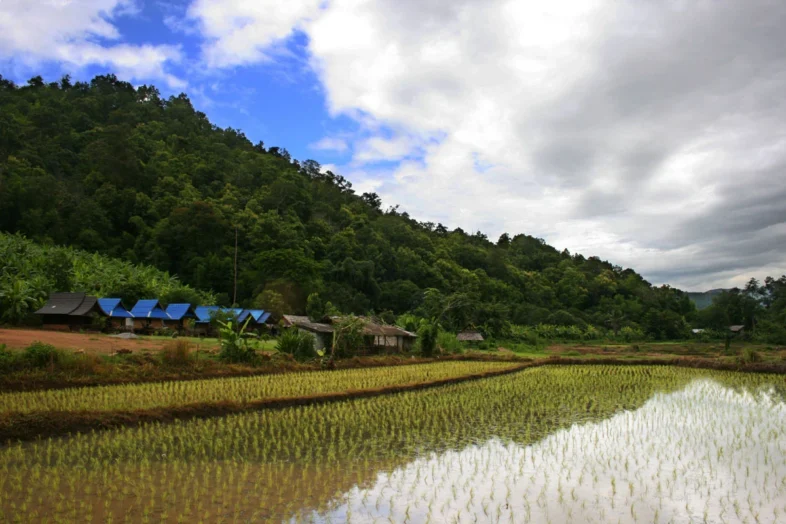
With over 60% of the world’s population living in Asia and the region serving as the planet’s largest agricultural hub, the fertiliser shortage is hitting here far harder than anywhere else.
China: a “quiet” winner or simply in a better position?
In reality, the Middle East escalation is affecting countries worldwide, though some are coping better than others. For now, the advantage goes to two players: Russia and China. Russia is benefiting from a temporary boost in oil revenues, while China—despite its reliance on Gulf oil, which has forced Beijing to raise gasoline and diesel prices since the blockade began—is being called a “strategic” winner, even though the situation still carries major risks.
Iran has long supplied China with cheap oil. By 2025, Beijing was importing 80–90% of all Iranian oil exports, underscoring a deeply established partnership. Still, China has not been immune to the Strait of Hormuz blockade, with some of its vessels caught up in the disruption. Reuters reports that three Chinese ships managed to pass through the strait on 30 March.
Overall, the Middle East war poses potentially serious consequences even for Beijing. Analysts at the Peter G. Peterson Institute for International Economics (PIIE) warn that the greatest risk from the conflict is a deep global recession. China’s export-driven economy counts Europe for 15% of its trade, with Gulf countries also becoming increasingly important markets.
“A prolonged energy shock that plunges Europe and the US into recession would collapse Chinese export orders, worsen the property market crisis, and expose the weakness of domestic demand, already constrained by the property downturn,” the PIIE experts note.
For China, the conflict carries more risks than rewards, which likely explains why Beijing has voiced support for Pakistan’s initiatives to promote peace talks between the US and Iran.