The Ukrainian Week spoke with Kovács Bálint, a journalist for the independent Hungarian weekly HVG—one of the country’s leading economic and political outlets, known for its role in Hungary’s post-communist transition. Kovács covers culture and is also the author of the short story collection What If We Just Slept and the novel They Would Have Cut It Off.
He reflected on the mood in Hungary following Viktor Orbán’s defeat on 12 April, describing a mix of hope and uncertainty.
– After the scenes of celebration on April 12, is the mood across society still running that high—or has reality started to set in?
– For now, with the new government not expected until mid-May, the transition is still playing out, and the mood is one of anticipation—at times edging into anxious anticipation. The Tisza Party came to power on the back of an unusually broad and ideologically diverse coalition: liberals, centre-right voters, disillusioned Fidesz supporters, leftists, progressives and conservatives all backed it as their preferred alternative. That breadth of support now poses an obvious challenge. Péter Magyar will struggle to deliver policies that satisfy all of his voters.
Early tensions are already surfacing. The leak of a potential candidate for education minister has triggered a significant backlash, with critics saying the nominee would be too conservative for their liking—though the appointment has not been confirmed. For now, attention is focused on whether the Tisza Party will follow through on its campaign promises.
– As a journalist, I was on a TV show just hours before the results were announced, where a certain expert argued that Hungarians would vote purely on economic issues—completely detached from the European question and European values—and even suggested the country was drifting away from Europe. What do you make of that?
– I completely disagree. If anything, there were real concerns that voters might still back Fidesz despite the economic situation. After all, Fidesz supporters have shown they’re not easily swayed by massive inflation, low wages, the billions stolen, a record public deficit, or the weak forint against the euro.
I also don’t buy the idea that Hungarians want to distance themselves from the European Union. Poll after poll showed that Viktor Orbán’s anti-EU rhetoric was misjudged—support for the EU remains consistently high, even among Fidesz voters.
In my view, the election ultimately came down to one question: do Hungarians want Viktor Orbán to continue—extending beyond the past 16 years—his so-called illiberal policies that sideline democratic values, fuel rampant corruption, and sustain a system where oligarchs close to Fidesz live in unchecked luxury? And given that, even after 16 years, no opposition force had been strong enough to truly challenge him, the Tisza Party—founded just two years ago—emerged as the only, and perhaps last, viable option for the opposition.
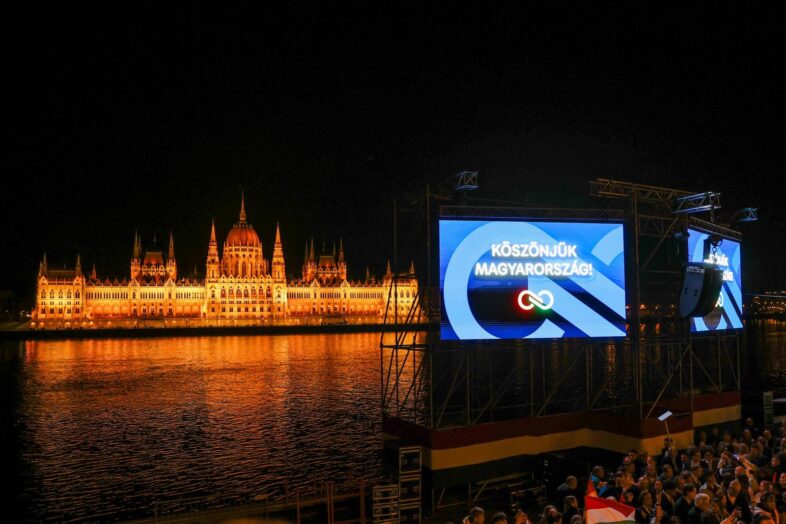
Photo credit: Tisza | Facebook
– What role did young people play in this election?
– A survey published just days before the vote—and one that most closely matched the final result—showed that three-quarters of voters under 30 backed the Tisza Party, while 63% of those aged 30 to 40 also supported it. That alone points to the decisive role younger voters played in shaping the outcome.
Some have framed it this way: a generation born around the fall of Hungary’s socialist regime has now pushed out the politicians who rose to prominence during that transition. What stands out even more is that nearly every Hungarian under 30 supported Tisza. This is the generation that came of age politically under Viktor Orbán—who has been prime minister throughout their adult lives—and their overwhelming backing of the opposition reads as a clear verdict on the future that Fidesz has offered them.
Fidesz politicians, including Viktor Orbán, have repeatedly admitted that they “don’t understand young people.” Even after the election defeat, several pro-government influencers blamed the loss on young voters with what they described as “bad values.”
At the same time, Fidesz offered little to young people during the campaign, while pursuing a series of measures that alienated them: a misguided drug policy that put them at risk, the closure of popular hangouts, restrictions that undermined the music festival scene, and repeated attacks on artists popular with younger audiences.
– What influence, if any, could Viktor Orbán and his allies still have during this transition period?
– In the first week after the election, Fidesz has accepted its defeat with surprising ease and, so far, has not stood in Tisza’s way. That may be because no governing party has suffered a defeat of this scale before, making it difficult to challenge the legitimacy of the incoming government—even for an “illiberal” force like Fidesz.
At the same time, financial data from several companies linked to the party suggest that oligarchs close to Fidesz are now trying to secure the billions they accumulated through dishonest means. The key question is what Péter Magyar will be able to do about this once he takes office.
– What are the prospects for press freedom and freedom of speech, and what needs to change?
– Over the past 16 years, Fidesz has all but dismantled press freedom in Hungary. It shut down or took over the country’s most important media outlets and brought around 80% of the press under its control, including every regional daily newspaper. Public media, meanwhile, has functioned as a round-the-clock channel for Fidesz propaganda.
Outlets under Fidesz control were not allowed to criticise Orbán’s policies; instead, they were required to follow a single, uniform line, relaying government messaging without deviation. Positive coverage of opposition politicians or figures was effectively off-limits. At the same time, the economic playing field was deliberately skewed: state-owned companies were barred from advertising in independent media. The result was that pro-government outlets became extremely wealthy, while independent media—despite reaching far larger audiences—were steadily weakened.
This extended well beyond mainstream news. Smaller professional publications were also affected, with independent art and academic journals shutting down one after another or being pushed to the brink. Even tabloids operated under informal rules, where only celebrities seen as sympathetic to the government could be portrayed positively.
Freedom of speech more broadly has also been eroded. Employees in companies and organisations seeking to stay in the government’s good graces often faced the risk of retaliation if they voiced criticism of Fidesz. Reversing all of this will be essential—but how long it will take, and what obstacles lie ahead, remains unclear.
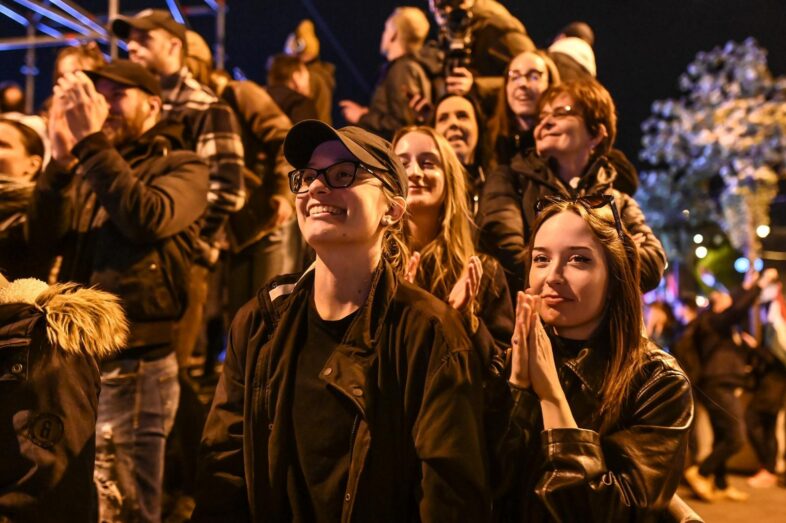
Photo: Tisza | Facebook
– What is actually going on at the Ministry of Foreign Affairs? Péter Magyar and Anita Orbán have alleged that Fidesz officials are destroying sensitive foreign policy documents. What do you know about this?
– If this is indeed happening, it’s being kept out of the public eye. That said, several politicians have shared photos showing large quantities of shredded documents in bins near the Ministry of Foreign Affairs, although it remains unclear what those documents contained.
At the same time, a number of media reports have raised serious questions. Even The Washington Post has written that Hungary’s Foreign Minister, Péter Szijjártó, reported directly to Russia’s Sergey Lavrov during breaks in EU meetings. Audio recordings have also surfaced in which Szijjártó can be heard assuring his Russian counterpart that Hungary would act in line with Russian interests and that Moscow could rely on the support of Hungarian politicians.
Before the election, Viktor Orbán spoke about the foiling of an alleged terrorist attack in Serbia. A significant part of the public suspects this may have been a false flag operation, possibly staged by Serbian President Aleksandar Vučić at Orbán’s request. There is no evidence to support this, but if such claims were true, it would not be surprising if related documents existed.
– When it comes to Ukraine, what do you think is really behind the divide in Hungary? How common are pro-Ukrainian views in society, what’s holding them back, and how much has propaganda damaged any sense of solidarity—and is it something that can still be repaired?
– I believe that inciting hatred against Ukraine was one of the Orbán government’s most serious and unforgivable actions. It was more immoral than any previous hate campaign. For the sake of political gain, they fuelled hostility against a nation currently facing a genocidal war waged by a nuclear power.
Unfortunately, the campaign proved highly effective: according to surveys, a significant part of Hungarian society has come to hold anti-Ukrainian views, with hostility or even hatred replacing earlier solidarity. Yet at the beginning of the war, Hungarians were still helping Ukrainian refugees selflessly.
Fidesz did not really run on a conventional election platform, nor did it set out clear promises about what it wanted to achieve in government. Instead, years ago Viktor Orbán adopted a strategy built on fear, telling Hungarians that they were facing grave dangers—and that only he could protect them from them.
Over the past decade, the government’s list of so-called threats has kept shifting: refugees first, then George Soros, then the European Union, and most recently Ukraine. The core message, however, has remained consistent—that if Hungary fails to block EU support for Ukraine, Ukrainians will take Hungarians’ money, Ukrainian criminals will flood the country, and Hungarian men will be sent off to war. The campaign even went so far as to include an AI-generated video showing a Hungarian toddler’s father being shot in the head on the frontline, presented as the consequence of not voting for Fidesz—and once again blaming Ukrainians.
Nearly 80% of the Hungarian media has continuously carried this messaging, while Fidesz has spent hundreds of billions of forints pushing these narratives nationwide through advertising and billboards.
The damage, in my view, is immense. It has not only reshaped public attitudes towards an innocent nation, but has also, over time, eroded Hungarians’ capacity for solidarity and compassion. Whether that can ever be repaired is an open question.