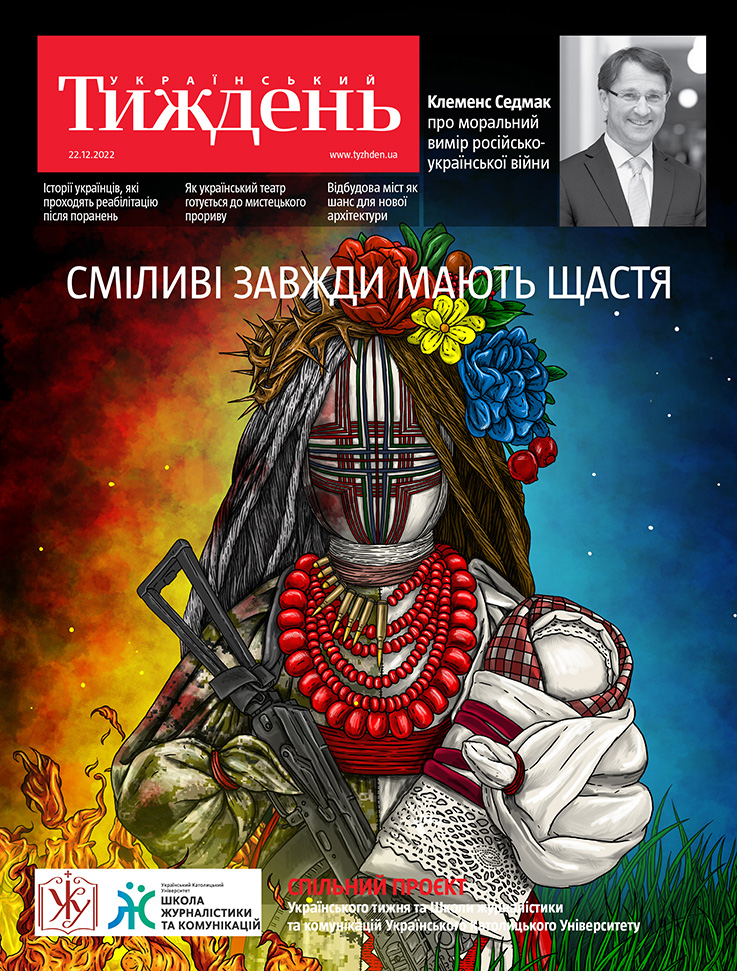
Researcher at the Institute for Interdisciplinary Research on Conflict and Violence at Bielefeld University, Dirk Lampe, spoke to The Ukrainian Week about how Germans perceive security threats from Russia, across age groups, political preferences and socio-demographic lines, and commented on youth protests against the return of conscription and the prospects for these rallies to grow.
— How do most Germans view Russia today: as a direct military threat or more as an abstract geopolitical risk? And how does that perception differ across generations, regions, and social groups?
— Our latest surveys from Conflict Monitor—a series of sociological studies on social conflicts—paint a generally sceptical picture when it comes to security. Only 15% of respondents say the global military situation feels safe, and just 26% feel the same about Europe.
Views on Germany’s own security are more divided. About 37% see the military situation as safe, 31% believe Germany faces a real threat, and another 31% fall somewhere in between. Perceptions of a wider threat to Germany also hinge on whether people think a Russian attack on a NATO country is possible—around 40% do. But that’s not the only factor: the actions of the US administration shape opinions too. Most Germans are sceptical of the Trump administration, and roughly two-thirds expect global military conflicts to increase under current US leadership.
Our data suggest that many Germans view Russia not just as a distant geopolitical risk, but as a real military threat to Europe—and to Germany in particular. That sense of danger only grows when you factor in hybrid tactics like sabotage or other forms of direct and indirect interference.
Other studies point in the same direction, suggesting that a general sense of threat prevails among the public. Depending on the wording of the question and the timing of the survey, roughly 40 to 60% of respondents view Russia as a concrete threat. By contrast, only a minority—around 25 to 30% of Germans—see no danger coming from Russia at all.
Overall, socio-demographic differences in our surveys are relatively modest. Women, higher-income respondents, city dwellers, and residents of western Germany tend to perceive the threat as slightly higher. People with German citizenship also rate the risk somewhat higher than foreign residents or migrants living in the country. There are also minor age-related differences: respondents under 40 are somewhat more likely to view Russia as a threat than those over 60.
The divides are much sharper along political and ideological lines. People on the left or in the centre tend to see Russia as a bigger military threat than those to the right of the political centre. Party preferences reflect this, too. Among supporters of the governing SPD and CDU, roughly 45% see a direct military threat, while about 20% of SPD supporters and 25% of CDU supporters disagree. In contrast, only around 30% of AfD supporters view Russia as a threat, while 53% see no danger at all. The strongest sense of threat comes from Green Party voters, in the pro-European left-liberal and centre-left spectrum.
— Which social groups in Germany are the most divided on attitudes toward Russia—and why?
— Looking at our data, people tend to care most about social conflicts that hit close to home—issues that affect everyday life. Things like social justice, welfare systems, the economy, and domestic and migration policy stand out. By comparison, foreign and security policy topics—like arms deliveries to Ukraine or military reform—rank somewhere in the middle in terms of public attention.
But it’s exactly these foreign policy issues that reveal the sharpest divides. Opinions vary far more here than in other areas, highlighting the real potential for polarisation along clear political and ideological lines. What’s especially striking is that even within a single political camp—AfD voters, for instance—views on Russia can differ dramatically, pointing to internal tensions between national conservatives and the far-right wing.
The divisions are even more pronounced when you look at the political side of things. On the question of expanding Germany’s military support for Ukraine, opinions polarise sharply, with party loyalty emerging as the biggest factor. Green Party voters stand out for their strong support of expanding military aid—54% in favour, 17% against. Support is also solid among voters for the governing parties (SPD: 46% in favour, 22% against; CDU: 52% in favour, 22% against). By contrast, backing is low among AfD (14%) and BSW (13%) supporters.
There are also differences by gender, location, and region: men, city dwellers, and residents of western Germany are more likely to support military aid. But the sharpest splits appear among those on the left or right edges of the political spectrum, while the centre tends to show more uniform views.
Overall, the polarisation on this issue follows a clear political—or even identity-based—logic. It reflects deeper divides in how people see society: liberal versus authoritarian, pacifist versus militarist, pro-European versus nationalist. Given Germany’s history, this isn’t surprising.
Questions of war, peace, and the lessons of the Second World War have shaped German debates about identity since 1945. Today’s foreign policy discussions are just as much about Germany’s self-understanding as they are about actual policy decisions.
It’s worth noting that, contrary to some public narratives, young people aren’t especially sceptical of military aid and don’t ignore potential threats.
— Recently, young people have taken to the streets in cities across Germany to protest the return of conscription, often shouting loud slogans. What’s driving these protests, and how much do they reflect broader social trends?
— As we’ve touched on, given Germany’s history, it’s hardly surprising that the idea of bringing back conscription sparks strong emotions and protests. This isn’t new—similar reactions have popped up in (West) German history whenever major, fundamental decisions were made on military or foreign policy.
Past examples include the decision to rearm (West) Germany and establish the Bundeswehr in 1955, debates over the Vietnam War and the role of Western states in the 1970s, and the NATO dual-track decision in the 1980s. Back then, protests drew anywhere from hundreds of thousands to millions, with public debates involving countless intellectuals, and governments responding with measures that pushed the limits of legitimacy—and sometimes went beyond them.
By comparison, today’s protests look relatively restrained. Part of the reason is that, despite sharp differences, there seems to be some mutual understanding between opposing positions—at least among students. As we noted earlier, young people’s perception of military threats isn’t dramatically different from other groups.
More broadly, it’s not surprising that young people aren’t exactly enthusiastic about government plans, and for a variety of reasons.
Conscription—or any form of mandatory service—feels like an intrusion into lives that many young people already see as restricted or controlled by forces beyond their control. At the same time, debates around it are often framed as a question of fairness.
The younger generation, not without reason, feels short-changed by a string of recent developments: soaring rents and housing costs, the hardships of the COVID-19 pandemic, the prospect of higher social security contributions, delayed action on the climate crisis, gaps in digital infrastructure, an underfunded or dysfunctional education system, and recurring populist narratives portraying young people as lazy. It raises a natural question: what kind of society and state are they actually being asked to serve? And given demographic shifts in German politics, it’s clear that young people’s interests haven’t always been front and centre. In fact, our surveys show this view is shared by a majority of respondents, regardless of age.
This dynamic plays out strongly in debates over conscription, where many young people feel decisions are being made by those for whom the issue no longer matters. Yet it’s worth remembering that most of the older generation served in the military or completed civilian service—and in many cases for longer than the terms currently under discussion. Still, it’s entirely natural—and healthy—for young people to question established arrangements, set their own priorities, and assert their interests loudly. If anything, it would be far more worrying if such a major decision were simply accepted without protest.
— Is there a risk that these protests could be exploited by political forces or outside actors for propaganda? And could student demonstrations shift public opinion on NATO or Germany’s foreign policy?
— Right now in Germany, almost any minor dispute can potentially escalate into a bigger conflict, simply because some political actors know how to profit from stoking tensions. You could call them political “conflict entrepreneurs.” Even from a research perspective, it’s surprising which disputes grab media and public attention—and which fade away. So yes, exploitation is theoretically possible, but in this case, I see little evidence for it, especially when it comes to student protests.
For one, young people aren’t naive—they can read when someone is trying to use them for their own ends. And it’s not a simple situation for critics of the government on military service either. Until recently, the AfD backed a much stricter conscription policy, and now it’s had to shift quickly—partly to maintain its role as a radical opposition to the likely political establishment.
However, the AfD can’t push too hard against military service, since it remains one of its core socio-political demands. At present, the party’s line is that military service in itself is reasonable, but under the current government it should be rejected—a position that doesn’t necessarily sit well with young people. The BSW, another opposition party with strong footholds, especially in eastern Germany, also struggles to win support among younger voters, as its base skews older.
The party most likely to resonate with young people is Die Linke. Popular among younger voters, traditionally critical of NATO, and leaning toward pacifism, it speaks to their concerns. Even so, this stance is largely political, and with many pro-Russian figures shifting to the BSW, it’s hard to see it being exploited for manipulation.
When it comes to the idea of outside actors using these protests for propaganda, sure, it’s always possible—propaganda rarely sticks closely to the facts. Even so, it’s worth remembering that past foreign policy protests, like those in the 2000s against potential German involvement in the Iraq War, were far larger. To spin today’s demonstrations, you’d have to seriously distort both the young people’s positions and the actual scale and nature of the protests. In theory, any social conflict could be exploited this way.
That said, I don’t see these protests having much impact on overall public opinion about NATO or Germany’s foreign policy. While there are some age-related differences on key foreign policy questions, they aren’t dramatic. More decisive factors for attitudes toward NATO and Germany’s role abroad are likely U.S. actions or developments at the EU level.