Mykola Bychuk, an actor, director, and serviceman in the 2nd International Legion from Chernihiv, spoke to The Ukrainian Week about his documentary Liutyi (February), which captures the 2022 siege of his hometown, his experiences in the military, and the moment he discovered during a combat mission that his film had won Best Documentary at Bulgaria’s Vision Independent Zone Film Fest.
Bychuk began his studies in economics at Chernihiv Polytechnic Institute, but by his second year he realised it wasn’t for him. He changed the course, enrolling in the theatre faculty at Kyiv’s Ivan Karpenko-Karyi National University of Theatre, Cinema and Television. At the same time, he started working at Chernihiv Youth Theatre, where he had spent nearly 15 years refining his craft before joining the army.
“Before all this, I was really into rap. I wanted to make a career out of it,” Mykola recalls. “I set myself deadlines. They came and went, but I still didn’t get what I wanted. It wasn’t making me money, and it never became my main job. My band was called Depo 02, and I also performed a lot solo as MC EM. But then the music started changing, becoming more commercial. That new trend just didn’t speak to me — I couldn’t find myself in that new space. So I decided to quit. By chance, I was invited to a theatre studio as an actor. I thought I’d give it a try. Theatre is still a stage — but one where you can talk to people about all sorts of things. That’s how I started working at the Youth Theatre while studying. I also worked on projects with theatres in Zaporizhzhia, Lutsk, and Khmelnytskyi. Later, I moved on to the Chernihiv Drama Theatre.”
— What role stands out the most for you, or one you’re proud of?
— I have a one-man show called Why People Don’t…. It tells the story of a man who decides to say goodbye to life by jumping off the roof of a high-rise. We even started rehearsing on an actual rooftop. We wanted the premiere to take place there. But during one of the rehearsals, the police showed up — the neighbours had called them. They’d seen some guy running around on the roof, shouting. The policemen came in, saying: ‘Easy, calm down, guys …’ They actually thought I was about to jump.
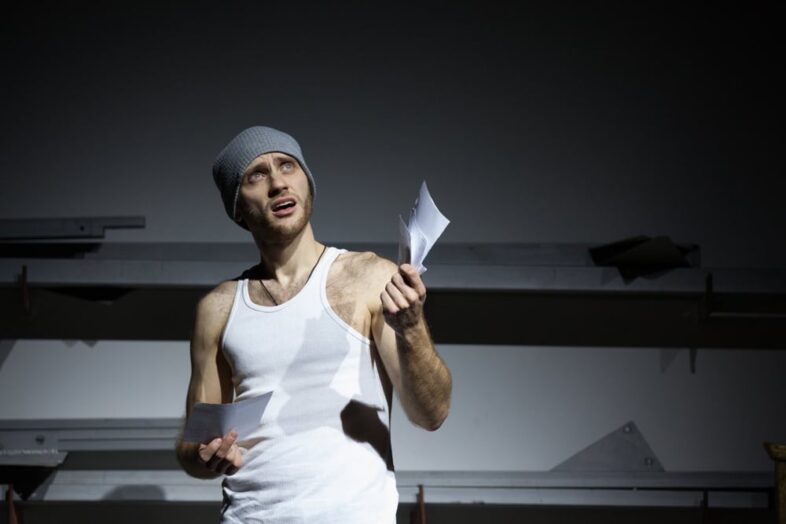
We’re constantly adapting this play to whatever stage we perform on. It tackles big questions. Over time, I’ve changed as a person, and these themes still grab me, still make me want to think about them. There’s also an interactive element with the audience — the way they react and respond is fascinating. And the war has reshaped those meanings in a whole new way. It’s a very raw play, always on edge.
— Do you ever get a chance to step away from the army and perform, like this one-man show?
— No. I’d love to, but it takes time — and in the army, there’s none. Still, maybe one day.
— You’re currently with the 2nd International Legion in the Kharkiv region. Do you ever get a chance to catch a play in Kharkiv after rotations, and how has theatre life changed during the full-scale war?
— “I try to keep up with what’s happening in Ukrainian theatre. Those who want to change, change. Some stay aside from the war. I’ve seen three plays at the Kharkiv-based theatre Nafta. In each of them, the war is there — woven in naturally, never heavy-handed. They strike the balance well, and I think audiences appreciate that.”
But when someone on stage shouts something like “kill the ruskies,” frankly, to me it leaves a bitter taste. I feel like saying: “Then go pick up a rifle and do it yourself.” The stage should be about exploring what’s worth saying, not inciting violence.
The last Nafta production that stayed with me was Orgy of Cyborgs. It reframed the country’s ecological crisis through the prism of war: the creative team travelled to active front-line regions, spoke to people clearing mines, and showed the likely consequences for our soil and water. The work behind it was enormous. It was gripping — and, crucially, it didn’t descend into shouting about the war from the stage.
— How did the full-scale Russian invasion begin for you?
— I was in Kyiv, planning to move there for good. I’d told the theatre I’d stay until the end of the season and had even moved some of my things. It was my third attempt to relocate — that’s where the filming and castings happen. We had even planned performances in Kyiv. But on February 24, I woke up to someone saying, “Kolya, get up — the war has started.” A few of us from Chernihiv were renting a flat in Troieshchyna. That morning, we drank coffee, packed our things, and drove back to our hometown. Petrol stations were jammed, tanks were moving, and explosions were all around. It was a new reality — a terrifying one.
In those first days, every siren twisted my insides. You didn’t know what to do. The only thing we knew was that we had to be home.
We turned the basement of our building into a bomb shelter. It was packed with families. Everyone brought supplies to hand over to the military, dragging in whatever they had at home. We cooked food for the soldiers. Eventually, the supplies ran out. There was a volunteer point in my neighbourhood, so I went there to help. We drove into bombed-out districts, delivering food and essentials to people.
— Is that when you started filming Liutyi?
— Not immediately. It wasn’t until the end of March that I realised I had to tell this story. As an artist, I couldn’t stay silent about what was happening in Chernihiv and across Ukraine. I kept asking myself – what can I do in these circumstances? And then I understood — I could make a film about Chernihiv and the people who kept going about their work, the ones who were keeping the city standing.
We started shooting in April. There was no script, just the idea. At first, there was one cameraman, then he disappeared, so I began filming on my phone until another cameraman joined later. Everything depended on the moment — if something happened, we went and filmed it. Only later, once I had enough footage, did I start shaping a script and a structure. When I needed material, I turned to Suspilne Chernihiv, and they shared footage with me. I also put out a call for residents of the city to send in their videos.
Later, I was invited to present the film in Paris on 21 September 2022. We poured all our energy into finishing the edit. The screening took place in Alain Delon’s former apartment, now home to some institution. The contrast was stark — coming straight from war-torn Ukraine to France, where everything felt so light and effortless, with fashion shows and that whole world going on.
The French said they needed more material like this. They felt they weren’t getting enough insight into Ukraine. Projects like this, they said, could help keep international attention on the war. When I returned to Ukraine, I started submitting the film to various festivals. Then, at a festival in Bulgaria, my film won. I only found out while going through basic military training. But it didn’t stop there — the film was also noticed at festivals in Germany, Poland, and the United States, screening around the world to show support for Ukraine.
— You’ve been in the military for a year and a half now. How did you end up in the Armed Forces of Ukraine, specifically in the 2nd International Legion?
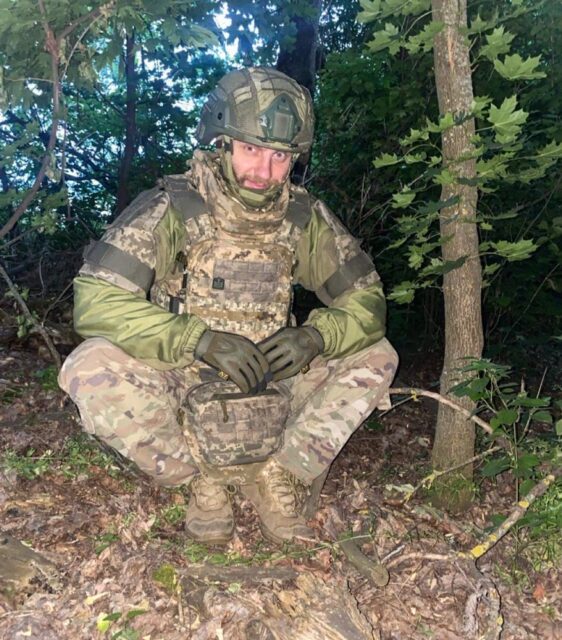
— The theatre got an order that it was time for the men to update their details at the enlistment office. About 15 of us were mobilised. I already knew people in the 2nd International Legion, so I always knew I’d try to join this battalion. People come to the Legion voluntarily and consciously; there are a lot of foreigners here, and I’d heard plenty of positive feedback from friends already in the unit. I like the way people are treated here. The command genuinely cares about keeping the personnel safe, and everything is done properly, respectfully. And just as important — the team itself. Its quality comes from the fact that no one is forced to be here.
— You often post videos from the Kharkiv region on social media. Do you think you’ll ever make a film about the Legion?
— I’ve realised there’s just not enough time in the army to shoot a proper film. You go to a position, come back, need a bit of rest to recharge, and then it’s straight back to work. I’d really love to focus on a film, and we’ve already started laying some groundwork. I want to tell the story of the Legion, of the people who come to join us. And there are so many remarkable Ukrainians here whose stories deserve to be told. The 2nd International Legion is a unique battalion — it deserves wider recognition.
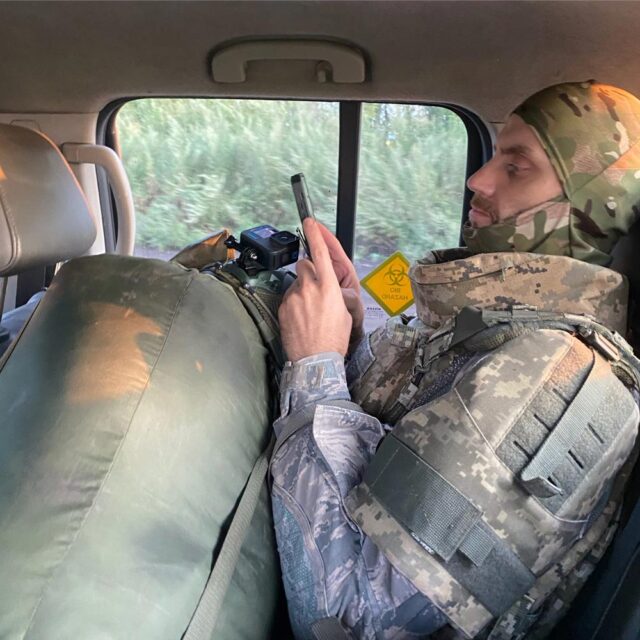
I post videos on social media so people can see and understand what life is really like here. Not everyone grasps it. It feels like civilians and soldiers are living in completely different worlds. You have to remember the price that’s paid for every single day.
The other day, we were on rotation. They stopped us in the middle of a field. The guys shouted that they had a “300” [wounded – ed.]. They threw a wounded soldier into the back of our pickup and we rushed him to the medics. There was blood everywhere. Their vehicle had been hit by an FPV drone, and the injured man was cut by shrapnel. On the way, he asked to have the tourniquet removed because it was hurting. Of course, no one took it off.