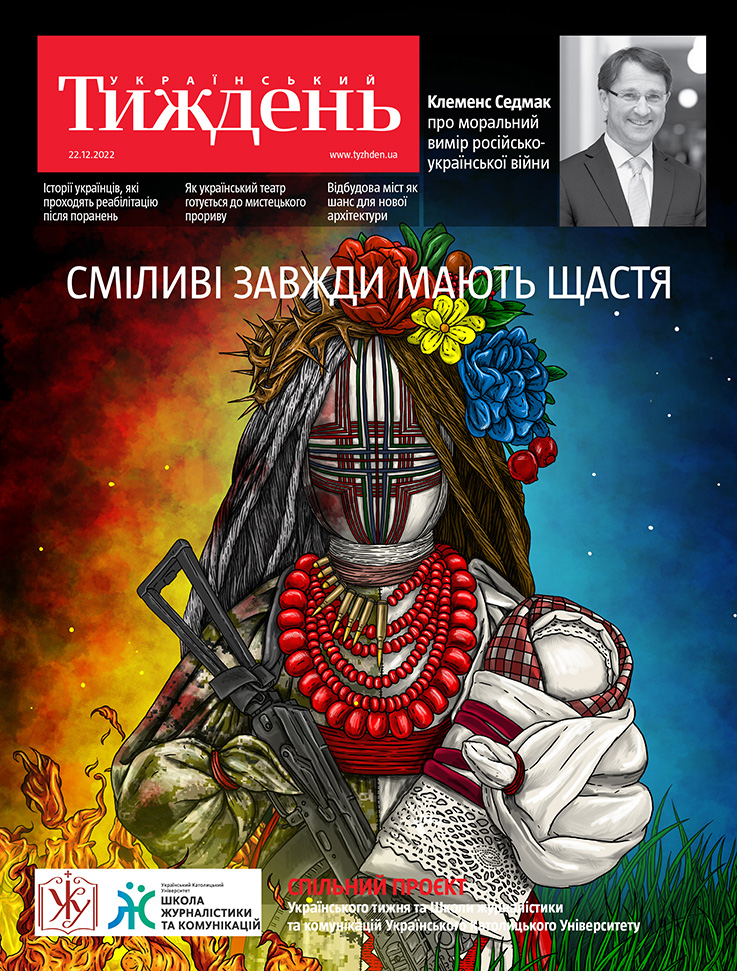
– First of all, thank you very much for your position and support. It’s really important for us, Ukrainians, to know that you’re helping change the way our proper names are used — for example, using the correct form “Kyiv.” I think by now, pretty much everyone, including most international media, has got that right.
– At The Guardian, we actually made the change before 2022. I can’t remember the exact year, but it was somewhere around 2018 or 2019. But back in 2014, when I said, “No, we need to change this,” there was some resistance. I was told by the guy in charge of our house style (we call it “house style”) that we could make the change once the conflict with Russia had been settled. And I remember saying, “Look, I’m not sure it is going to be settled. I just think it’s the right thing to do, because it’s the right thing to do.” So, we changed it.
By 2022, we managed to update everything, including “Chornobyl,” which feels a bit strange if you’re used to spelling it with an “e.” But actually, even if you think about the recent book “Chernobyl Roulette,” you see that this transition is happening slowly.
Overall, I’d say that journalists, politicians, and to some extent ordinary people have learnt a great deal—about Ukraine, its history, culture, language, historiography, and traditions. But there’s still a long way to go.
One of them was my friend Andriy Kurkov, who sat down with me and explained that Ukrainians were pursuing freedom, that there were hundreds of political parties, that they would elect someone, then hate them, and try to get rid of them. And that, you know, the most important chapter in my book was called “Horizontal.” The idea being that, essentially, as Leonid Kuchma said, bless him, “Ukraine is not Russia.” It’s a horizontally organised society. Any attempt to impose a tsar or some kind of autocrat just doesn’t stick. Yanukovych tried it twice—first in 2004, then again in 2014—and both times, Ukrainians revolted.
You know, universities, newspapers, politicians—most people now have a much clearer idea of what Ukraine really is. I actually stopped reading Russian novels some time ago—even before 2020, in fact. I just stopped.
I’ve been trying to read more Ukrainian fiction, poetry—really all sorts of things. It’s been fascinating. All of Serhii Plokhy’s work, or Yaroslav Hrytsak’s. Contemporary writers like Serhiy Zhadan. And Andriy Kurkov, just for the pleasure of it—he’s such a great storyteller. And so on. But it’s not a finished process. There’s still a huge amount of great Ukrainian literature that hasn’t been translated yet. For me, as a journalist, the big question is: how do you keep telling the story of the war in a way that still feels engaging and original, more than three years into a full-scale invasion?
Which is why I try to find something that’s visually striking or unexpected. It might be land robots, interceptor drones, or changes along the front line. Or I might do a piece about the evacuation of those 11th-century kamyani baby—the stone idols. They’re these ancient sculptures of women from the medieval period. Some of them are still close to the front line, and people are moving them, getting them to museums before the Russians show up and destroy them.
– You were one of the few who predicted the war was inevitable. Do you think anything could have been done to prevent it?
– You know, maybe more people would have believed you after 2014. I mean, that’s both a serious point and a bit of a joke.
The joke answer is this: when I was writing Invasion in 2022, I’d come here. I saw Bucha. I was in Mariupol just before the full-scale invasion. And then I’d sit down to write, and sometimes I’d find myself crying as I typed. It felt like therapy—literary therapy, in a way. I was right in the middle of it, and writing helped me process it. And my wife said, “Don’t call the book Invasion. Call it I f*cking told you so.” So, yes—in a way, we were right. But I wouldn’t want to be right.
I think, fundamentally, the West suffered from a failure of imagination. A failure to grasp what Russia really was—or what it had turned into. I’d been there for four years. And eventually, I fell into the mincer. I was kicked out—thrown out, really. I wrote a whole book about it, Mafia State, which was also published in Ukraine. It laid out the harassment I went through at the hands of the FSB, both me and my family.
So I had a very personal sense of just how ruthless the regime could be, how completely without limits. I’d also covered the war in Georgia and saw first-hand how Russia viewed what’s often called the “post-Soviet space”—a phrase I really can’t stand—but to them, it was their sphere of influence.
Russians never truly accepted that Ukraine was a sovereign country. Or Belarus. Or the Baltics. Even Finland. Central Asia. Georgia. These were all places they felt entitled to dominate. And with Ukraine, especially after reporting from Donetsk and Luhansk in 2014, I saw the so-called “Russian Spring” unfold. I wrote about it for The Guardian. I covered it all.
Then, in the spring of 2021, there were these massive military exercises. More and more troops moved into Belarus and Crimea. Mobile hospitals, tents, blood banks, incinerators. And I just thought: it’s going to happen.
There were two major projects in Russia when I was there, from 2007 to 2011. One was the kleptocracy project, to steal as much money as possible. The other was the neo-imperial project, to “make Russia great again.” While I was there, the first one, the stealing, was the bigger priority. But the older Putin got, and the more delusional he became, the more important the second one, the imperial project, became.
I think Putin is an old man in a hurry. A psychopath in a hurry, basically. He believes only he can achieve this ‘great historical mission’: reuniting Ukraine, Belarus, and Russia.
– Was it that no one wanted to see it, or that everyone saw it but didn’t want to act?
– There were nuances. I think the Brits had a better understanding of what Russia really was, largely because of those insane assassinations on British soil. I wrote a book about one of them—the murder of Alexander Litvinenko here in the UK.
You know, Russia’s threat can sometimes feel a bit abstract. But everyone can understand the image of two bungling assassins wandering around London with a tube of poison, slipping it into someone’s tea and killing them. That’s it—Novichok. I’m half-joking, but still: it’s not a complicated story to follow.
After 2006, people in the UK started to get it: this regime was strange, dangerous, deeply sinister. And then, when it happened again with Sergei Skripal, the penny dropped for a lot more people. They saw it was seriously messed up. But recognising it and actually doing something about it are two different things. I mean, when Litvinenko was poisoned, the UK expelled three Russian diplomats. That was it. And after Skripal, yes, the measures were a bit tougher—but still, broadly speaking, the Western response remained conventional. Symbolic. And Putin didn’t care.
At every stage, he does something that once felt unthinkable—sending assassins across Europe, launching a war in eastern Donbas—and then he waits. He watches for the reaction. And when all he gets is a statement of “deep concern” or some symbolic gesture, he carries on.
I think in 2022 Putin miscalculated. He assumed it would play out the same way again, that the West would huff and puff but ultimately do very little. But more than that, I think his biggest mistake was believing that the Ukraine of 2022 was still the Ukraine of 2014.
– In Ukraine, there’s a belief that if the country had fallen within three days, the West wouldn’t have offered any meaningful response.
– That’s what Putin believed—that Ukraine in 2022 was still the Ukraine of 2014. That there was still a big chunk of the population sympathetic to Russia, a small, corrupt, pro-Western elite at the top, and a weak, disorganised Ukrainian army.
He thought he could sweep all of that aside, and that people would greet Russian troops as liberators. And if they didn’t, well, there were ways to deal with that. But essentially, he expected it to be quick and uncomplicated. And to be fair, that’s not entirely detached from what Luhansk and Donetsk were like back then. I was there. I’d say roughly 30% of the population supported Russia. So there were people you could work with.
But by 2022, all that had changed. There was hardly anyone left to work with. Maybe a few old ladies here and there, but beyond that, no.
Ironically, Putin had ‘Ukrainised’ Ukraine. He’d made it more united, more progressive, more European, and more determined than ever to join NATO and the EU. The country had changed.
Putin hadn’t.
– In your book Invasion, you noted that before 2022, the West didn’t fully grasp what Putin was—or just how brutal and ruthless he could be. Many didn’t believe Russia would be reckless enough to launch a full-scale war. Do you think that after 2022, the West began to see more clearly what Russia really is?
– Actually, the response from the international community—the democratic world—was quite impressive. It wasn’t perfect, but there was genuine moral support. Back in 2022, many countries, including my own, opened their doors to Ukrainian refugees, mostly women and children, who arrived in large numbers—five million, six million.
Ukraine was also supplied with weapons. Of course, it would have been better if all this had come earlier, but it did happen, and we have to acknowledge that.
I was in Kyiv at the time, and even Zelenskyy didn’t seem entirely convinced a full-scale invasion was imminent. Maybe he did believe it and was just trying to keep people calm, but almost everyone I spoke to in Ukraine didn’t expect the war to escalate the way it did.
Ukraine was already at war. People were already dying in places like Avdiivka, on the front lines east of Mariupol. There had already been 10,000 casualties. There was the ATO. People thought they understood the limits of what Russia intended.
Yet when the invasion came, it was a genuine shock.
And when the full history is eventually written, serious questions will have to be asked: why didn’t the U.S. government prepare more? Why wasn’t Ukraine’s SBU ready? Why weren’t the bridges blown up? And so on.
But for now, those questions will have to wait.
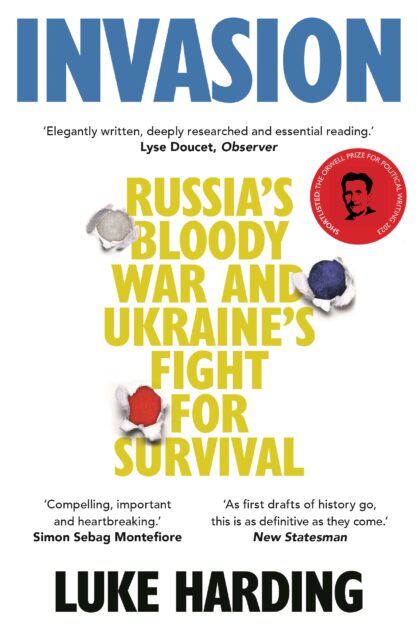
– Do you think the West still sees a distinction between Putin and the Russian public? Or are they starting to think the two can’t really be separated anymore?
– The Russian liberal view, basically, is that it’s all about Putin and the bad actors around him—that most Russians have simply been misled, victims of propaganda, ordinary people trapped in a system. But the idea that “we’re not this evil clique, this cabal, this mafia state—it’s just a handful of people at the top,” doesn’t really hold up when you consider the scale of the war.
From the Ukrainian perspective, this isn’t just Putin’s war. It’s Russia’s war. Over a million Russians are dead or wounded—that’s a huge number of people actively involved.
So I’d say I broadly agree with the Ukrainian view: this is Russia’s war. That means most Russians bear some degree of guilt and complicity. One problem I faced was that I stopped talking to the people in Moscow I used to know. By 2022, we just couldn’t agree on even the basic nature of reality anymore.
When you try talking to Russians about the war, there tend to be two typical responses. The first is the familiar state propaganda line: “It’s the West’s fault. NATO expansion. The fascists,” and so on.
But if you push back—if you say, “That’s not true. I was in Bucha. I saw what happened,” or, “Zelenskyy is Jewish, his relatives died fighting the Nazis. He can’t really be a fascist, can he?”—then the second response comes out: “We’re just small people. What can we do?”
That’s where you hit a wall of fatalism, a shrug. Russia has become a morally degraded, even bitter society. Some Russians understand that—and many of those have left the country. We can have honest conversations about the Russian opposition, of course. But the reality is that most Russians support Putin.
– Let’s say Putin dies tomorrow — do you think that would change everything?
– Well, again, there’s a serious answer and a not-so-serious one.
The not-so-serious answer is: how would we even know? I’ve spoken to people who say Putin has body doubles, and those doubles have their own doubles. Maybe the doubles even have stand-ins for their days off. There are countless “Putins” out there.
I think Putin encourages that myth deliberately—because only a truly powerful wizard could have multiple versions of himself. Honestly, I’ll only believe Putin is dead when Dmitry Peskov announces he’s alive. That’s when I’ll know for sure. I’ve known Peskov for a long time, and he lies about absolutely everything.
Now, the serious answer: I think we’ll see another version of Putin. Someone very similar, from the same elite, someone who also hates Ukraine, sees it as a lost province that must be brought back into Greater Russia, and shares the same prejudices—both against Ukrainians and the West.
But I also believe that when Putin dies, it will open a real opportunity for Ukraine—politically, and maybe even militarily. There will be fierce infighting in Moscow among oligarchs, the FSB, the GU, and the armed forces. This isn’t just about power; it’s about billions—tens, maybe even hundreds of billions of dollars. Plenty of people will be pushed out of windows. Right now, it’s roughly one person a week. But if Putin falls, that number will spike dramatically.
There will be real chaos, because Russian society is far weaker than it looks. It may seem like this immense Tatar-Mongol monolith—and to some degree, it is—but underneath, it’s quite fragile.
I was in Ukraine during Prigozhin’s near-coup. Putin was visibly terrified, and nobody really stepped up to defend him. So I think, with a strong enough push, the regime might crack. I’m not saying it would collapse completely, but serious problems would certainly emerge.
– From the very start of Russia’s full-scale invasion in 2022, we believed Europe was next — maybe not immediately, but within a decade or two, countries like Poland, Estonia, Latvia, and other EU members would be at risk. The UK understood this completely, and we’re very grateful for that. But within the EU, some countries don’t seem to share that view — Slovakia, Hungary, Austria to some extent, and a few others. Why do you think that is? What makes them sceptical that Russia might push further?
– I think the most important factor is our proximity to Russia and the weight of historical memory. What happened to Finland isn’t so different from what’s happened to Ukraine—85 years apart, but both marked by the Winter War, territory lost, and lives taken. Every Finn remembers talking to their grandparents about it.
There’s a clear divide between the Nordic and Baltic countries—those who share borders with Russia and the Baltic Sea, and who understand the threat because they’ve experienced Russia’s attempts to undermine them—and the Western European countries like Spain, Portugal, and Italy, which are much further removed.
France’s position fluctuates. Slovakia and Hungary are currently run by pro-Russian administrations. Whether that reflects the will of their people is another question—but politically, they don’t seem to count much in this context.
I think the bigger point is that Western politicians simply aren’t willing to be fully honest with their own people about what this all really means. Because if Russia takes Ukraine and then keeps pushing forward, it means we’d have to massively rearm society — spending far more than 2 or 2.5 per cent of GDP on defence.
That means tough choices—less money for health, education, culture. We’d have to change how we live. We’d have to learn how to shoot again. My dad’s still alive; he’s 85. His brother, who’s passed, did military service—but my dad never did, here in the UK.
That’s how long ago we abolished any kind of military service. Almost no one in the UK can shoot a gun, except a few farmers and some posh types. We shut down our tank factories. We’re only just starting to rebuild ammunition production, but we never made shells before. And when it comes to drones? We’re really still figuring that out.
That’s the challenge with democracy right now. Imagine a leader saying, “Vote for me—but heads up, you’ll probably be poorer, your sons might have to fight a war, and buckle up, because the next two or three decades are going to be really tough.” It’s not exactly a message that wins hearts.
And that’s the problem. It’s funny—if you look at the two kinds of coalitions, you’ve got the coalition of the winning, which is democratic countries where things are slow, painful, done by consensus, and involve a lot of talking. Then you’ve got the axis of autocracy, or “crink,” which is China, North Korea, Iran, Russia, maybe Laos—I don’t know who the hell else is joining.
There’s no real dialogue there. It’s more like a shadowy handshake between Kim Jong Un and Sergey Lavrov, or Putin, with deals done behind closed doors—North Korea sends 30,000 soldiers and millions of artillery shells. They just do whatever they want.
That’s the crux of the struggle between autocracy and democracy: the autocrats are ruthless and, frankly, more efficient.
– Some conservatives in the US believe this isn’t a war they want to get involved in. But if Russia crosses Ukraine and moves onto NATO’s eastern flank, wouldn’t the US need to step in to save Europe again, just like in the First and Second World Wars?
– Well, the question is, would the US save Europe again? I’m not sure they would.
I think the world has really changed since Trump came back for a second term. Some of it’s familiar from his first time — all the talk about Greenland, Panama, Canada as the 51st state, and basically saying the EU was set up to screw America. It’s hard to know where Trump really stands because he zigzags so much, but there’s no doubt the transatlantic relationship is in serious trouble.
Europeans know they’re probably on their own. If Russia invaded, say, Lithuania to try and link up with the Kaliningrad area, would Trump ride to the rescue? I don’t think so. He’d say, “Not our problem.”
So I don’t think anyone is under any illusions. The America that talked in idealistic terms — about values, solidarity, freedom, liberty, being a shining city on a hill — that’s over. We’re in a new world now, where great powers run the show, and smaller countries just have to suffer what they must. It feels like the world is shifting towards the kind of vision Russia prefers — one where might makes right, power and force rule, and the line on the map is drawn by the boot of a soldier. But I don’t think this is over. We don’t have to accept that Russia’s model, their geopolitical vision, is going to be the blueprint for the rest of the century.
We’re still in the game, and Ukraine hasn’t lost. Ukraine can still win.
– Biden’s administration delivered aid packages to Ukraine very gradually, with lots of promises but a slow, drawn-out process. Now things seem even more confusing — Trump appeared keen to push Ukraine towards a deal, even if it meant territorial concessions. But lately, he’s clearly unhappy with Putin. How do you make sense of all this?
– Last October and November, after Trump’s win, I had a lot of conversations with people here, connected to the administration. They were saying things like, “Maybe he’ll surprise us, maybe he can turn things around, maybe there’s an opportunity here. Kamala would have been like Biden — just slow death — but with Trump…” I’m not sure if they really believed it or were just trying to come to terms with the reality that Trump was back. But I kept saying, “Trump won’t bring you anything good, he’ll betray you, and he doesn’t care about Ukraine.” Then there’s the whole backdrop of his impeachments and Russian propaganda, which has been incredibly effective at shaping much of the Republican Party’s mindset.
And it’s not just people like Elon Musk or Tucker Carlson. These powerful figures are openly anti-Ukrainian and pro-Russian. They buy into any nonsense that comes from Moscow — not only that, they spread it, amplify it, creating this kind of subtle atmosphere of hostility towards Ukraine that runs deep within the Republican Party.
The Republican Party isn’t the party of Ronald Reagan anymore — which pretty much sums up the whole idea of the American empire. Now, it’s Donald Trump’s party. And whatever he does, Trump is easily the most pro-Russian president in American history.
There have been plenty of them, but no one’s been as friendly to a criminal like Putin as Trump. He sees Putin as his friend, and Zelenskyy as his enemy.
Sure, there are phases, and some people still lean on him. Obviously, some in the Republican Party continue to support Ukraine, and Europe largely backs Ukraine, too. But what has Trump done in his first six months back in office to actually push back against Russia? Can you name one thing? Nothing. No sanctions, no big weapons packages, no serious financial aid.
Russia’s been rehabilitated. There’ve been peace talks in Saudi Arabia, promises of action in “two weeks,” over and over — but nothing really moves forward. There’s been some rhetorical criticism, calls of “Putin’s gone crazy,” talk of isolating him — but that’s about it. I don’t think Trump is Ukraine’s friend. Zelenskyy’s strategy of trying to please him at all costs might be the only option. And you have to treat what Trump says as genuine, even though everyone knows he’s lying.
– Do you see Trump’s July 14 statements as a major shift in his Russia policy? Committing $10 billion in weapons to NATO — which effectively means Ukraine — is a significant move. But why give Russia 50 days? It seems he’s reluctant to impose those full 100% tariffs, doesn’t it?
– I don’t see Trump’s approach to Russia as a major shift. Sure, there have been some tonal changes — he’s sounded a bit friendlier towards Zelenskyy and slightly more critical of Putin. But the reality is, Trump isn’t really stepping up support for Ukraine in any big way. We’ll have to see the details of the billions in weapons promised, but after speaking with Major General Vadym Skibitskyi, the deputy chief of the Ukrainian General Staff, he told me Ukraine still doesn’t know what’s coming next. So, I think we need to be really cautious.
And the 50-day plan? To me, that just looks like a green light for Putin to keep murdering and bombing Ukrainians. If Trump truly wanted to get tough on Russia, he’d have done it straight away — sanctions, more sanctions, secondary sanctions. But he hasn’t.
My sense is he won’t do it in 50 days either. He doesn’t want to hurt Russia financially. He doesn’t actually want to break with Putin.
– What do you make of Ukraine’s strategy in these circumstances? After all, they still have to deal with Trump. What should we be paying attention to here?
– I think Ukraine has to work from where America is now. It’s better to assume the US is stepping back—because that gives you strategic clarity about what needs to be done. And if that doesn’t happen, well, great—that’s a pleasant surprise.
So the focus has to be on working with the Europeans—pushing them to scale up their own defence industries and supply more weapons. And at the same time, Ukraine needs to keep doing what it’s already been doing quite well: producing things domestically. Everything from drones that can intercept other drones, to developing—maybe in partnership with the Germans—your own version of a Patriot missile system, or whatever else is needed on the battlefield.
Ukraine is already the world’s biggest drone producer, but it has the potential to become a cutting-edge military power across the board. There’s huge talent here—brilliant engineers, creative minds. Yes, there’s bureaucracy, but nowhere near the levels you see in Russia. People here can take initiative, build things, try things out, fail, improve, and try again. That spirit needs to keep going—fast.
– One thing Trump did well, even if indirectly, was push Europe to take more responsibility for its own defence, with the $800 billion package and the plan Brussels introduced in March.
– You know, every politician has their own cheat sheet on how to handle Donald Trump. Rule one: don’t contradict him—like Zelenskyy did back in February. Rule two: pretend what he’s saying is real, even when it’s complete nonsense. Rule three: give him an easy-to-digest win. Probably the most shameless example of that is Mark Rutte, the new NATO Secretary General, and the message he sent to Trump.
“Wonderful daddy, we love you. Thanks to your wise leadership, we’re now spending more on defence.” It’s nauseating. But that’s apparently how the game is played. You hand Trump something simple, something he can brand as a victory, something he can sell. That’s it. This isn’t 19th-century statecraft—it’s not Bismarck, it’s not Kissinger.
– Do you think Russia will attack a NATO country within the next two years? And if so, do you believe Article 5 will come into effect?
– No, I don’t think it would happen within two years. I think Putin would at least want to have locked in everything on his NATO wishlist first. Whether he can do that in two years—maybe, maybe not—I don’t know. But I think he’ll want something he can show to the Russian public before launching into another war.
I do think he’s absolutely capable of attacking a NATO country. And the window to do that would definitely be while Trump is in office. Now, we don’t know—maybe we get Trump followed by eight years of J.D. Vance, in which case American democracy is done. It’s not going to survive twelve years of those guys. But the Russians are deeply paranoid. They believe all sorts of conspiracy theories. Maybe they even think the Democrats could come back.
As for Article 5, I think there would be a European response, definitely. I think Britain would be involved, France too. The Hungarians wouldn’t, the Turks wouldn’t.
So I think we’re likely to see a kind of split—there’ll be a fast-track NATO, or a sort of “NATO Plus,” that actually does something, and then a slow-track NATO that just sits it out.
I’m not convinced this idea of everyone acting together is really going to hold. I remember back in 2010, I was in Moscow—just before I was kicked out of Russia after the war in Georgia—and I went to Crimea. There was a lot of talk in Moscow about Putin taking Crimea. I spoke to pro-Russian politicians in Simferopol. I wrote about it for The Guardian, and in my book Mafia State. I sketched out how easy it would be to raise the Russian flag in Sevastopol harbour and take the lot. At the time, I didn’t quite believe it—but people were saying it. And then it happened. Then came the full-scale invasion.
So I think you’d have to be very stupid or very naive to believe Putin couldn’t go further. If he isn’t stopped, he will. He’s like a psychopath—an old man in a hurry—and he’ll keep going if he thinks he can. It’s up to us to stop him.
– And one last question about our cooperation. In January 2025, Ukraine and the UK signed a 100-year partnership agreement. What do you think this agreement really means? Could it be a signal to Putin?
– I don’t think it’s a message for Putin—he doesn’t care. But I do think it reflects something real. There are two interesting things about the UK.
One is that, on a human level, people in Britain genuinely support Ukraine. A lot of people hosted Ukrainian refugees—some are still living here, others have moved on. But I’d be walking through a little English village in the middle of nowhere and I’d see a Ukrainian flag flying on a medieval church. I hadn’t even seen them fly a British flag up there before—it was astonishing.
And usually in politics, it’s the politicians who try to steer public opinion. But when it comes to Ukraine, the public already got it. It was intuitive—people just understood. The second point is that there’s really no major political party in the UK that supports Putin.
The Reform Party flirted with the idea, but their leader—Nigel Farage —was shrewd enough to realise that backing Putin simply doesn’t win votes. So across the board—left, right, centre, the Greens, the SNP—they all support Ukraine.
It’s a completely different kind of conversation here, compared to the US, where Ukraine has unfortunately been dragged into domestic politics—caught up in the hyper-partisan mood on Capitol Hill, where hating Ukraine became a way of signalling loyalty to Donald Trump.
You’ve got Republican senators tweeting the most idiotic stuff—accusing Zelenskyy of persecuting Christians, of being corrupt, of stealing money. Saying things like, “We shouldn’t send weapons because we want peace.” There’s none of that in Britain. The tone is far more sensible, far more generous.
While I’m not a huge fan of Boris Johnson, I do think what he did for Ukraine was pretty good. In a way, just because he started talking early about a Ukrainian victory, about the idea that Russia could actually be beaten, he helped people realise it was possible.