Since Russia launched its full-scale invasion, Ukraine has been working to raise its profile across Africa—building political ties and opening new embassies across the continent. But there’s still a long road ahead. What will it take to make these efforts truly effective? Which narratives strike a chord in Ukraine’s favour, both in Africa and beyond? And why is it vital for Ukrainians to understand Africa’s own struggles if they hope to earn its support?
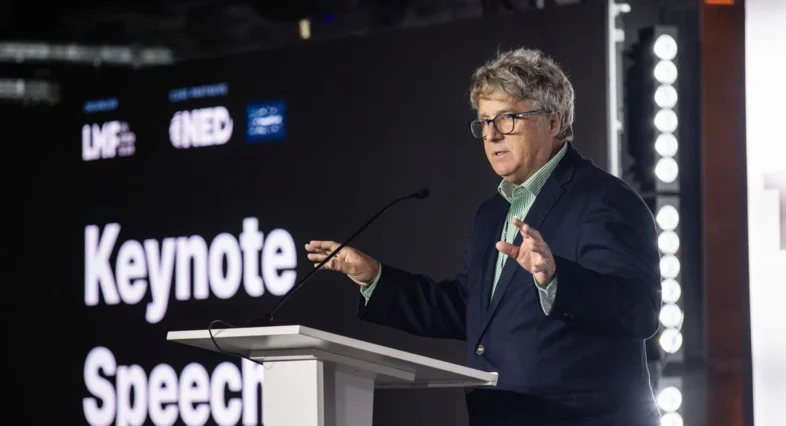
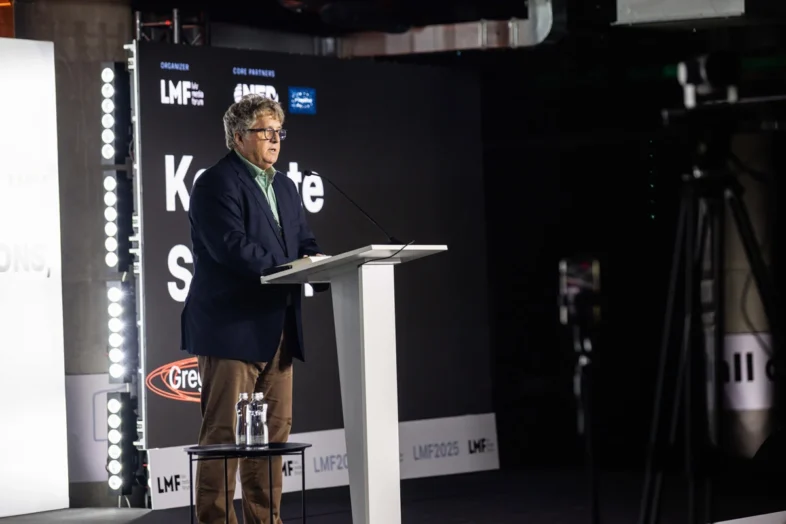
To explore these questions, The Ukrainian Week spoke with Greg Mills, director of the South African think tank the Brenthurst Foundation, advisory board member at the Royal United Services Institute (RUSI), and author of more than a dozen books.
— President Volodymyr Zelensky’s recent visit to South Africa marked the first by a Ukrainian president since independence. In recent years, Ukraine has been stepping up cooperation with African nations. How, in your view, can these relationships be made more effective?
— Most African states have continued to vote in support of Ukraine at the UN, though it’s no longer as overwhelming as it once was. Instead of 50 out of 55 countries backing Ukraine, it’s closer to 30 now, with many abstentions and a handful of votes against. There are a few reasons for this shift. For one, many African countries don’t see the war as theirs—it’s viewed as a European conflict, and they’re reluctant to be drawn in. Those who do stand with Ukraine tend to do so on principle: this is a clear violation of sovereignty and a breach of international law. That matters deeply in Africa, where borders were carved out by colonial powers, and there’s a real fear that redrawing one boundary could unravel others.
But those who don’t back Ukraine have their reasons too. For one, they want to avoid getting involved. Many see the war as a colonial struggle—just one that now involves the West—and prefer to keep their distance. Others sympathise with Russia for a variety of reasons. A big part of this comes from the legacy of national liberation movements supported by the Soviet Union, China, or the Eastern Bloc. This is especially true in southern Africa—places like Zimbabwe, South Africa, Namibia, Angola, and Tanzania—where former liberation movements still hold power.
Then there’s the China factor. Over recent years, China has become a major player across Africa. Many countries are watching closely how Beijing navigates the conflict, often following its lead. China is a key investor, lender, and supplier across African markets, which gives it significant influence.
On top of that, a small group of countries in the Sahel—Niger, Burkina Faso, Mali, and the Central African Republic—are openly pro-Russian. They cooperate with Moscow militarily and have hosted Wagner Group forces, so they rely directly on Russian support to maintain the security of their regimes. Meanwhile, others, like Eritrea, consistently vote with Russia. Eritrea is politically isolated and often described as Africa’s equivalent of North Korea.
In my view, the African public is generally sympathetic to Ukraine—at least, that’s what our opinion polls suggest, based on surveys in four or five countries across the continent. Even when governments are indifferent or lean towards Russia, ordinary people tend to side with Ukraine. I suspect that’s because they see echoes of Vladimir Putin’s regime in the way many of their own countries are run.
These governments are often built on repression and fear rather than respect for human rights and equality—values that, as I mentioned at the Lviv Media Forum, many Africans genuinely prefer.
This, to me, is one of the greatest paradoxes: most Africans would rather live in a country like Ukraine, yet find themselves governed by regimes more akin to Russia’s—at least when it comes to democracy and liberal values. It exposes a deep challenge and tension across the continent: around 70% of Africans consistently say they prefer democracy as a system of government, yet over 90% live under some form of authoritarian rule. Some of these regimes are extreme, like in Eritrea or the Sahel, while others are more mildly authoritarian—but the disconnect is stark.
In my view, Africa simply hasn’t been a priority for Ukraine until now, largely because there are so many other urgent concerns demanding attention. Building meaningful ties with the continent is undoubtedly an ambitious and costly endeavour—especially in the midst of a full-scale war, when Ukraine’s diplomatic position is precarious. After the Cold War, Russia inherited most of the Soviet Union’s diplomatic relationships and the prestige that came with them—connections forged during the era of liberation movements. Ukraine, by contrast, had to start almost from scratch.
What’s more, in wartime, you tend to deal with problems as they come. It’s hard to branch out into new diplomatic territory when your survival depends on maintaining long-established alliances—primarily with the West, in Ukraine’s case.
So no, Africa hasn’t really been a priority. But as the war goes on, that’s starting to change. It’s clear Ukraine needs to widen its diplomatic reach and start forging ties beyond its usual allies.
The irony is that this opportunity was, in part, created by Donald Trump, whose pressure on South Africa over its ties with Iran and other non-aligned countries opened a door that Ukraine can now begin to walk through.
As a result, South Africans have felt the pressure and are now scrambling to improve relations with the U.S. Back in February, Trump signed an executive order effectively sanctioning aid to South Africa — citing, among other things, “unfair racial discrimination” against Afrikaners, the descendants of Dutch settlers who, under apartheid until 1994, denied the Black majority basic rights. Pretoria is now eager to repair ties and wary of further sanctions. The U.S. is South Africa’s second-largest trading partner and its biggest source of direct investment.
This creates a kind of schizophrenia in South Africa: on one hand, the economy runs on Western capital and investment; on the other, the country preaches — and I use that word deliberately — a more radical stance on international affairs and politics. This position is deeply rooted in the legacy of the liberation movement, which came to power with a radical agenda but soon realised that the rules of geography and arithmetic are less flexible. They’ve had to adopt a more cautious, pragmatic approach to economic policy. So yes, it’s a form of schizophrenia — and it became starkly visible with Trump’s arrival.
— Would you say that one of the reasons President Volodymyr Zelensky was invited to Africa is because of the pressure South Africa’s been facing from the Trump administration?
— Absolutely. That’s definitely a key factor pushing South Africa towards talks and what looks like a more balanced role in its engagements. Since the full-scale invasion began, Pretoria has claimed neutrality, but in reality, it hasn’t been neutral. South Africa regularly holds naval drills with Russia, marks various events alongside them, and its officials frequently travel to Moscow. And, of course, it’s part of BRICS—which includes Russia.
With Trump, it was as if we were caught skinny-dipping. The emperor has no clothes—we were exposed, and suddenly needed to find something to cover ourselves with. Thanks to Volodymyr Zelensky’s visit, we managed that. It’s given South Africa a way to show a more balanced foreign policy stance and to position itself as a more constructive player on the world stage.
— From Ukraine’s perspective, Russia’s actions in the Sahel look like a textbook case of neocolonialism—and many make the same case about China’s role in Africa. Yet, people across the continent don’t seem to see it that way. Why don’t Russia and China come across as neocolonial powers to Africans?
— There are definitely contradictions, especially when you consider Russia’s war in Ukraine. The Kremlin’s attempts to erase Ukrainian culture and identity are, without doubt, neocolonial or imperial behaviour. But Russia’s approach in Africa is different. It’s not neocolonialism in the classic sense; it’s far more blunt and self-serving. Russia backs illegitimate governments that seized power through force or unlawful means, intervening not to stabilise but to secure political and financial gains for itself. Rather than addressing the root causes of instability in these countries, their involvement only deepens the crises.
Their methods are crude, driven by a narrow, short-term view of security—not the security of the countries themselves, but the security of local elites. And, of course, there’s the motivation of resource extraction, especially minerals. So despite echoing some of Africa’s colonial history, the Russians have still managed to win support within certain African circles.
It’s strikingly ironic that South Africa—a country that emerged from the trauma of apartheid into a democracy, and whose iconic leader Nelson Mandela declared in 1993 that human rights would be the cornerstone of its foreign policy—has taken this position.
The reasons behind that position are complex, as I’ve tried to explain. But that doesn’t mean it’s without serious flaws. For South Africa, strengthening ties with Volodymyr Zelenskyy was, to some extent, an opportunistic move.
There’s another interesting dimension here. Most African countries were genuinely caught off guard by Trump’s threats to cut aid. Africa has long been the largest recipient of international aid, largely because it is home to the largest share of the world’s poorest people. We know aid is far from a perfect tool. It’s often misused, abused, and mismanaged, and it’s not especially effective at building state capacity—that has to come from within. But aid remains a vital lifeline for people facing urgent humanitarian crises.
Part of the ambivalence many Africans have felt towards Ukraine stems from its long-standing message to the world—not just in the past three years, but for much longer—that Ukraine is a victim in need of support to stand up against a powerful, aggressive state.
Over the past three years, Ukraine has been promised some $300 billion in aid—though how much of that has actually made it to the ground remains unclear. This influx of support has, inevitably, undercut some of the arguments African countries might have used. Ukraine’s message during this period—one of vulnerability and urgent need—resonated in a way that felt familiar to many African experiences. But strategically, it’s not sustainable. People grow weary of charity; their attention shifts elsewhere and their donations follow.
If Ukraine can shift its narrative to one of strength, resilience and agency—highlighting its ability to transform itself with international support—it’s far more likely to connect with a wider audience and win broader support across Africa.
The Ukrainian government has made visible efforts to deepen ties with the continent: opening nine new embassies, launching the “Grain from Ukraine” initiative, and broadening its diplomatic reach despite limited resources. But such efforts cannot exist in a vacuum. They require a clear strategy and a compelling narrative. So what is the ultimate aim?
The goal is to bring more countries over to Ukraine’s side, strengthening its security and global standing—particularly at the UN. But to do that, Ukraine needs a far more compelling narrative: one that focuses on self-reliance and active leadership, not just reliance on the West.
Of course, that raises a thorny contradiction: if you’re so strong, why do you still need foreign aid? This tension is nothing new—international politics and the stories nations tell about themselves are always a delicate balancing act.
— Ukraine played an active role in supporting African countries during the Soviet era. Many African leaders studied there, and some liberation fighters were even trained in Ukraine. But has that history faded? Do people across the continent still remember those ties?
— As I mentioned, Russia has largely claimed that legacy as its own. They have a straightforward and consistent narrative aimed at African countries—one Ukraine could learn from. The message is: “We helped you when we could. Now these guys [the Ukrainians] are backed by NATO, the West, your exploiters, the very people we fought against.”
I do think people remember that support was given, but the generation that experienced it firsthand is mostly gone. For example, nearly a third of the military wing of South Africa’s dominant party, the African National Congress (ANC)—known as Umkhonto we Sizwe, or “Spear of the Nation”—were trained in Ukraine, near Odesa. And beyond military ties, there were educational ones too; many Africans came here to study, including the father of Zhan Beleniuk.
Ukraine has so far failed to actively draw on this shared history, allowing Russia to claim it instead. Now, Ukraine needs to reclaim that story, but in a way that highlights three key points: first, its democratic values; second, its fight against imperialism and the erasure of its culture; and third, its resilience—the David versus Goliath struggle driven by its own agency. The first two points inspire empathy, while the third signals strength and self-determination. Together, these threads offer a powerful foundation for building relationships with African countries. If a fourth point is needed, it would be cooperation grounded in these shared principles.
Politically speaking, the greatest leverage lies in appealing to Africa’s widespread desire for democracy. At its core, we are democratic by nature.
Finally, Ukraine must tread carefully when engaging with non-democratic regimes. If you want Africans to see your struggle as their own, you need to recognise theirs too. In other words, there can be no contradiction between the nature of the regimes from which you seek support and your own values. Trying to build partnerships with authoritarian governments risks cutting the very branch you’re sitting on.