
The Ukrainian Week spoke with Stanislav Ryzhenkov (Morti) — legendary fighter of the Azov Brigade, veteran of the Russian–Ukrainian war, and volunteer adviser to the Kyiv mayor on veterans’ affairs — about the hospital at Azovstal and captivity, the loss of a hand and true brotherhood, who needs veterans and what they themselves need, what the longest day might look like and the best decision in life.
You can find the first part of the interview here.
— When you were ordered to surrender, how was it explained to you? And how did you react?
— Just to clarify, it wasn’t exactly an order to surrender but to end the defence of Mariupol. After that, under agreed terms, we went into captivity.
What were we thinking? Maybe we felt we’d done our job — pulling some of the enemy forces onto ourselves. So many guys had already died… But after our comrade Redis gave that speech, saying, “To the last drop of blood,” I truly believed we’d stay and fight to the very end. Like tunnel rats, taking out the Russians right there underground.
Was it the right call? It saved most of the guys’ lives. I believe the command made the right decision. Could we have kept going in those conditions? Honestly, I don’t know enough to say for sure. We trusted our commander completely. As for what happened afterwards — with the guys still in captivity — well, the Russians, as usual, don’t honour any agreements.
Was it scary? Definitely. There was a lot of uncertainty — not knowing what tomorrow would bring or if we’d be mistreated. Yeah, we were fully aware of that.
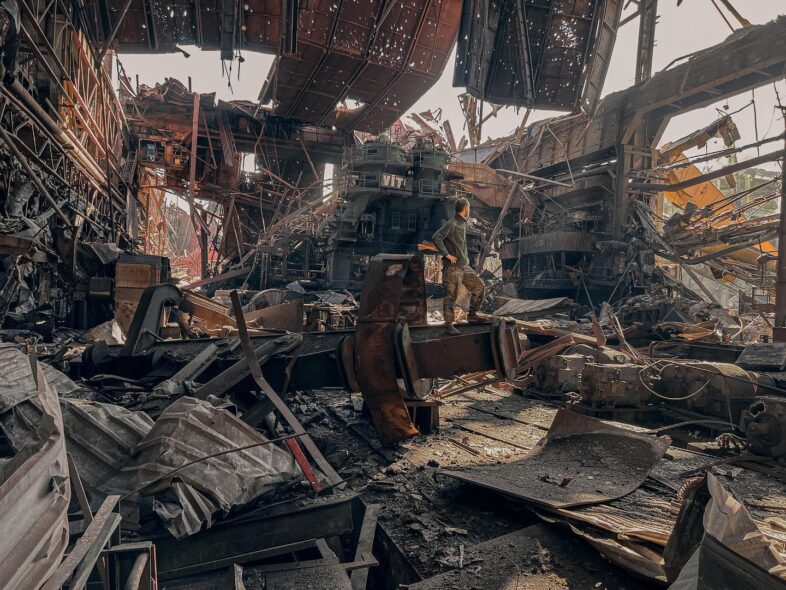
Photo: instagram @kztsky
— How did they treat you?
— The Russians had a negative attitude, but I wouldn’t say they barked at us like dogs. The DPR [a Russian-installed “Donetsk People Republic’s” – ed.] guys, though—they really were barking like mad dogs. Completely rabid.
I was lucky because I ended up in the first prisoner exchange as an amputee. At the time, there were others with similar or even worse injuries. They didn’t abuse me—no physical violence, no mistreatment. But others, of course, weren’t so lucky. Those who went through it talk—off camera—about how unpleasant it really was.
— Did they try to break you psychologically? Interrogate you or mess with your mind?
— From the very first interrogation, I took a clear position. When they asked, “Who was shooting?” I’d say, “That one.” Then they’d ask, “Where is he?” I’d reply, “He’s dead.” “Who gave the order?” — “That one.” — “Where is he?” — “Dead.” I used the names of fallen comrades so I wouldn’t put the others in captivity with me at risk. Yes, we must honour and glory to the fallen. But, in that moment, I had to do it—to protect the living and avoid being tortured.
— Were you ever trained on how to act in that kind of situation?
— No. I heard that some of our specialised units—snipers or scouts—received that kind of training. But for us, as a line unit, unfortunately, we didn’t have anything like that.
— What were the living conditions like? How did they feed you?
— We were kept in a two-story barracks with about 150 people. It wasn’t too cramped. The water came from a river. They brought both drinking and technical water in the same tank, and it stank like a river or a pond. They fed us bland porridge. For lunch, we got what I’d call cabbage compote—it barely resembled soup, more like compote. And a small piece of bread with every meal.
Once, they gave out toothpaste—but no toothbrushes. Actually, they first searched us and confiscated all the toothbrushes, then handed out toothpaste. It was the only thing that tasted sweet. I didn’t even brush my teeth with it—just nibbled on it slowly. It had a pear soda flavour—pretty decent, actually.
We made playing cards out of cardboard and played Mafia. The guys carved backgammon and domino sets out of walnut shells—things like that. We tried to make our time there feel a little brighter.
— Were you forced to do any work?
— They were more afraid of Azov [members – ed.] than we were of them. They had other prisoners doing work, but not our unit. They seemed almost spooked by us. There was one very special moment when Redis came back. He walked into the barracks and said, “Glory to Ukraine!” and we all replied, “Glory to the heroes!” You could see their knees shake instantly.
— Was Redis there with you the whole time?
— I don’t remember exactly, but I think he came and then they took him away again a few days later.
— Did you believe you’d make it back home?
— The hope dies last. We believed. And I hope the guys still in captivity believe they’ll come home too. I trust the government will do everything it can to bring our heroes back.
When they were taking us for the exchange, it still hadn’t fully sunk in that we might actually be swapped. They brought us to Vasylivka—we waited an hour—then moved us a bit closer to Zaporizhzhia; we waited another hour or so. Some guy from the Akhmat [Ramzan Kadyrov’s “Chechen” unit – ed.] unit came by and started rambling, “Why do you need this war? You’ll lose anyway.” Just spouting nonsense. Even then, we weren’t sure the exchange would happen.
Even after we were released, it took about two weeks before it felt real. It was like my thoughts and soul were still back there. Slowly, it began to sink in.
— After everything you went through, what did the freedom feel like?
— I valued freedom before, but now I truly understand that our freedom—Ukraine’s and Ukrainians’—comes at the cost of the lives and health of those defending it on the front lines. Without their sacrifice, we wouldn’t even be sitting here having this conversation. That’s why freedom is one of the most precious things we have today. Freedom and independence.
Unfortunately, not everyone understands that value. Some people are just mentally exhausted by the war—that’s honestly a kind of madness. But thankfully, there are still plenty of conscious, aware individuals.
We need to recognise that many of the most motivated, socially active Ukrainians—those who went to the front in the early days or joined later—are being wounded or killed. And with them, we’re losing a vital part of society that should be playing a crucial role in rebuilding the country and strengthening our independence.
— Can society change so that even those who feel “tired” of the war begin to understand this? How do you connect with people like that?
— We should’ve started yesterday—planting the basics: patriotism, love for the state and our homeland—in every sphere: social media, television, schools, kindergartens. People need to understand what evil is, what freedom means, what independence really is, and who they have to thank for being able to speak freely, go for walks, and enjoy life. They need to grasp that, unfortunately, we have a mad neighbour—and this wasn’t our choice. This message has to be delivered across all platforms and sectors.
It has to be something people come to on their own. You can order or force it, but at the end of the day, they’ll still say, “So what?” But if they come to understand it themselves, then you get a conscious citizen—someone who respects the state, values their language, and genuinely wants to do better for themselves and those around them.
— I’ve often noticed people looking away when they see someone in a wheelchair or missing an arm. Is it possible to overcome that instinct and replace it with respect and gratitude? How can Ukrainian society adjust to these new realities and build healthier relationships?
— It really comes down to awareness—individual awareness. People need to be talked to, things need to be explained. There should be training sessions and awareness meetings in both private companies and public institutions. Maybe even special sessions where a psychologist comes in and says: this is normal, these are people who fought for our statehood, freedom, and independence. Treat them calmly. They’re not outcasts. They’re people just like us.
This has to be taught in schools. Children need to understand that a veteran isn’t just some grandma or grandpa who fought in 1939–1945, but someone right here, next to us—a bus driver, a member of parliament, a lawyer, a shop assistant—any of them could be veterans. We need to involve more veterans in the workforce. Let them explain: “I lost my legs because I was doing my duty, completing a combat mission. But today, I’m here working alongside you. Don’t look away.” Parents should tell their children that veterans aren’t scary—they’re the heroes of our time, and we should be grateful to them for the country we still have.
In Kyiv, I’ve noticed people often come up to thank me for my service. That means something is starting to change. And it feels really good—to know that people understand you weren’t just “off somewhere” doing who-knows-what, but that you were protecting them directly. It feels really good to be thanked like that.
— You’ve left the military, but after returning from captivity and completing rehab, you chose to rejoin. What drove you to come back? Many would think: you survived, it’s over, that should be enough.
— I think our unit had a slightly different mindset. The drive to avenge our fallen brothers, our friends who were killed — that’s what pushed me to return to the army.
When I came back, with the experience I’d gained, I started handling shifts, communications, and targeting for strike drones. Of course, it was the pilots who carried out the strikes, but through that coordination — if I can put it that way — I ended up taking out far more enemies than I ever could with a weapon in hand. I honestly enjoyed the whole process. Especially once we got those drones like “Baba Yaga,” Heavy Shot, Nemesis — that was something else.
There was one moment when we and the guys sent a battalion group to Terny, to a breach point — and we gave the Russians absolute hell there.
— You’re now a volunteer advisor to the mayor of Kyiv on veterans’ affairs. How did that role come about, and how much influence do you have over veteran policy in the city?
— After leaving the military, I ran into a serious problem: veterans are basically left on their own. You’re discharged, and then it’s up to you to figure out where to find work or how to navigate rehabilitation.
We do have the Ministry of Veterans — and that’s a good thing. There is a veteran policy, but it’s not quite what it should be. It’s fragmented. You get a bit of psychological help here, a bit of financial aid there, and then you’re told to go look for a job somewhere else. There’s no unified system — no clear path for a veteran from the front line back to civilian life. Veterans shouldn’t be running around trying to figure out where to go. They should understand the system. You show up — they guide you. You don’t have to choose where to go; you choose what to do. Want to do this — go here. Want to do that — go there. Get a job here, an interview there, or go study something so you can get work in the future. I realised that something had to change. And who’s going to do it if not us?
I started talking to my fellow soldiers, and through their recommendation I met the mayor of Kyiv. We had a conversation and found common ground in our vision for solving veterans’ issues in the city — and that’s how I became an advisor on veterans’ affairs. For now, my role is to advise and communicate.
Kyiv has a strong support system for veterans — everything is gathered in one place, which is already a big step forward, though it’s still somewhat fragmented. But the fact that it’s centralised is progress. You can access everything through a single website. Still, there’s more work to be done. Many veterans remain passive. After injuries, for example, some might shut down and stay at home. That’s why I want to develop a system that creates more points of contact between veterans and city authorities. So active veterans can come to places like the Military Hub and bring along friends who might be socially withdrawn. This way, we can bring veterans together in these hubs and ensure they receive fair, high-quality support.
I see it as my duty. I’ve simply changed fronts. Veteran policy, public service — that’s a front too, one where we have to fight. Fight for fair, quality support for veterans, be the voice of those who might not be heard, those who feel uncertain or afraid to re-enter society. We need to go out there and make it all work — build the system, communicate. There’s a lot of work ahead.
— What are the biggest issues or even failures in the state’s veteran policy? And how do you think those can be addressed?
— The main failure is the lack of a unified platform. We have Reserv+ for everyone liable for military service, Army+ for those currently serving, and Diia for civilians. But there’s no platform for veterans — something that would guide them through their journey from rehabilitation to employment, helping them become active, motivated members of society who contribute positively.
We’re also falling short when it comes to bureaucracy. There’s always an overload of paperwork. That’s why we need to move towards digitalisation — it would make things much more convenient. This is already happening in Kyiv: you submit your documents once on paper, and if another service needs the same ones, they’re automatically pulled up digitally. It’s incredibly useful. You don’t have to keep running around collecting certificates, standing in lines, or arguing with clerks.
Above all, it’s about respecting the veteran — someone who comes in and receives quality service, support, and the feeling that the city genuinely cares. In this sense, Kyiv could serve as a model for the entire country. The city is trying to cover nearly all the key areas. But scaling that to the national level — that’s the Ministry of Veterans’ responsibility.
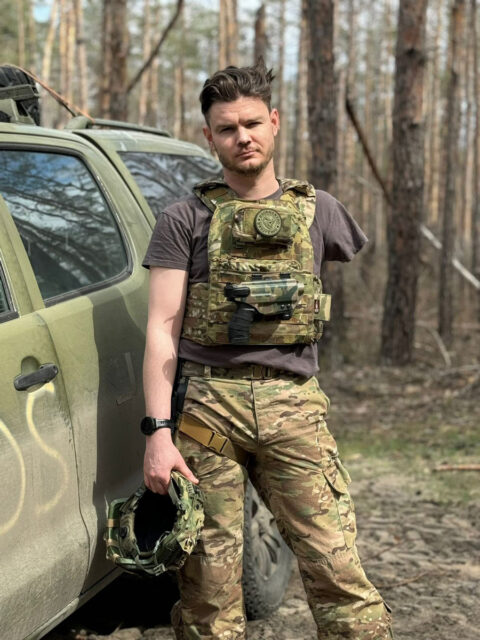
We still have major problems providing housing for veterans. There’s this lingering sense that if you get in line this year, maybe your grandchildren will receive housing. This issue needs to be resolved through changes in legislation, but again, those changes have to happen at the state level. Once that’s done, the city could build on it. That would motivate veterans to keep working. They’d see that someone actually cares about them. If displaced veterans get housing, they’ll be more invested in continuing their work—in public service, the private sector, developing themselves, paying taxes—and that benefits everyone.
To give you a clearer picture of the veteran support system, I’ll share my own experience. I’m still liable for military service. My deferment ends tomorrow, and they could call me back. Even though I was discharged, I went to the Territorial Recruitment Centre, and they told me, “You are partially deployed, you need to come for the medical commission.” I passed that medical commission, and now it’s been four months—while by law, it should only take a month and ten days—with no result. “Call back in two weeks, call again, maybe somewhere, sometime…” I think there are many cases just like this.
That’s why we need digitalisation—creating secure registries where these processes can be handled more easily. We also need to motivate the people working directly in hospitals, mainly by offering better salaries, so they understand the impact of their work and perform their duties properly. I believe a lot hinges on this.
It’s crucial to involve those directly affected in improving legislation, so they truly understand the issues. Perhaps veterans with medical backgrounds could help. Some deputies have military experience, but there aren’t many. Most don’t really grasp what’s needed and may simply rubber-stamp laws into ineffectiveness.
— How would you describe the current state of our military rehabilitation system? I know progress has been made and there are some good examples, but what challenges still remain?
— A good example is the “Angels” patronage service from Azov, which took care of us after captivity. If a service like that were in charge of veteran policy, I think it would be much better. You don’t have to worry about anything—they watch over you like a small child: “Go here, get that test, have that surgery.” They explain and guide you through everything—consultations, state support, prosthetics. They’re always improving, gaining experience, learning who provides better prosthetics, who doesn’t, and who might be obstructing the process or even laundering money. I know such cases have happened.
At the state level, they’ve started creating similar support services, but these still need development. This kind of help is mainly for those currently serving or wounded. I don’t know much about support specifically for veterans.
What we really need is a system. Rehabilitation exists, but it’s not part of a cohesive system—it’s fragmented. After rehabilitation, you’re left to figure out what comes next: do you need psychological help or not? These services aren’t gathered in one place. For example, I visit the Ministry of Veterans’ website—the process is underway, but it feels like a ship without a course. It’s a big ship, and everything’s there, but it’s unclear where we’re headed.
If all these elements were connected into a clear support system—so that the moment someone leaves service, they know exactly where to turn, and their path begins: rehabilitation, services, consultations, benefits, financial aid, followed by training and employment—that would be a truly effective veteran policy.
— What role should veterans play in rebuilding the country? Should they be involved in government and politics? And should veterans get special preferences for public office, like in Israel, where service is required for certain positions?
— Veterans absolutely need to be involved in every aspect of state policy. Every institution should include people who understand the value of freedom, who know firsthand how our independence was won, and who have seen their comrades fall. But, of course, not every veteran is ready to step into a managerial role immediately. Preparation is key. We have to train veterans, help them develop skills in administration and state-building, and then promote them.
Should they get a position just because they’re veterans? No. But there should be support—protection in training, education, and when they’re ready to take on those roles. If they have the desire and ability, we must help them prepare and succeed in public service. The system should allow them to fully realise their potential as civil servants and leaders.